UK allergen recalls have reached critical levels. More than half of all food recalls in the United Kingdom over the last several years stem from allergen-related failures. Of 1,036 recalls from 2016 to 2021, 597 were linked to allergens. The trend continues upwards: 85 allergen alerts were issued in 2025 alone, equivalent to one every four days. Undeclared allergen recall incidents represent most important legal and reputational risk for food businesses. This analysis gets into food recalls UK data from 2020 to 2024 and identifies patterns, root causes and compliance gaps within uk allergen legislation frameworks.
What Are FSA Food Alerts and the UK Recall System
The Food Standards Agency operates a structured alert system to manage food safety incidents in England, Wales, and Northern Ireland. This system distinguishes between various risk levels and response requirements, with dedicated protocols for allergen-related failures that fall under UK food allergen regulations.
Types of Food Alerts in the UK
The FSA issues three primary categories of alerts through its official channels. Allergy Alerts (AA) notify the public when a product has missing or incorrect allergen labelling [1]. These represent the most frequent alert type and have increased following the introduction of stricter labelling requirements.
Product Recall Information Notices (PRIN) inform consumers that an unsafe food product is being removed from the supply chain [1]. These notices advise appropriate action, such as returning or disposing of the unsafe food. PRINs cover safety concerns beyond allergens and address microbiological contamination and physical hazards like metal or plastic fragments.
Food Alerts for Action (FAFA) require action by enforcement authorities [1]. Local councils and port authorities receive these alerts when specific regulatory action is needed, such as verifying whether affected products remain on sale within their jurisdiction. A slight rise in FAFA alerts has been observed, focused on border and regulatory compliance issues rather than direct food safety hazards [2].
How the FSA Coordinates Recalls
Food Business Operators (FBOs) bear main responsibility for identifying unsafe food and initiating recalls [3]. When a business thinks or has reason to believe that food it has imported, produced, processed, manufactured, or distributed fails to meet food safety requirements, it must withdraw the product from the market and inform competent authorities right away [3].
The FSA coordinates the recall process at a national level and works with local authorities and the food industry to publish alerts [4]. Enforcement authorities verify FBO compliance with food law and provide advice on risk assessment and control measures. They also check that affected food has been removed from sale [3]. These authorities possess the power to order withdrawals or recalls if businesses fail to fulfil legal obligations. They can detain, seize, or destroy food deemed unsafe [3].
Communication channels for recalls include in-store point-of-sale notices and posts on FBO and retailer websites. Direct contact with consumers through loyalty card schemes and dissemination via social media are also used [5]. The FSA’s Food Industry Liaison Group has representatives from major trade associations and meets monthly to discuss incidents and share intelligence [6].
What Triggers an Allergen Recall
Food can be recalled for contamination with pathogens, manufacturing faults, or incorrect allergen information [4]. Allergen recalls occur when priority allergen information is omitted from ingredient lists or products are placed in wrong packaging. They also happen when allergen emphasis is inadequate on labels or items labelled ‘free-from’ contain the allergens they claim to exclude [7].
Supply chain complexity creates multiple points where allergen cross-contamination can occur. Modern food products are assembled from ingredients sourced from multiple suppliers, often from international sources [6]. Each ingredient carries its own allergen profile. Any change in supplier, formulation, or production line creates the potential for an allergen to be introduced without label updates [6].
Business-to-business communication failures represent a trigger point. Allergen contamination at primary production level can propagate through complex supply chains before detection [6]. Labelling process failures occur when production line changes, packaging updates, and artwork management failures result in outdated or incorrect labels being applied [6].
Difference Between Recalls and Withdrawals
A withdrawal removes unsafe food from the supply chain before it reaches consumers [3]. This means recovering products from distribution centres and wholesalers. Withdrawals do not require public notification since consumers have not purchased the affected items.
A recall removes unsafe food from the supply chain after it has been released for sale and requires consumer notification [3]. Where products may have reached the consumer, operators must inform them of the withdrawal reason and recall products already supplied when other measures prove insufficient to achieve a high level of health protection [3].
The decision between withdrawal and recall depends on whether the product has left immediate business control and reached retail points where consumers could purchase it. FBOs must notify enforcement authorities and the FSA with details of the incident, including the nature of the problem, food affected, and quantity involved [3]. For recalls, businesses must also communicate directly with consumers and conduct Root Cause Analysis to determine how the problem occurred [6].
UK Allergen Recall Data 2020-2024: Key Statistics
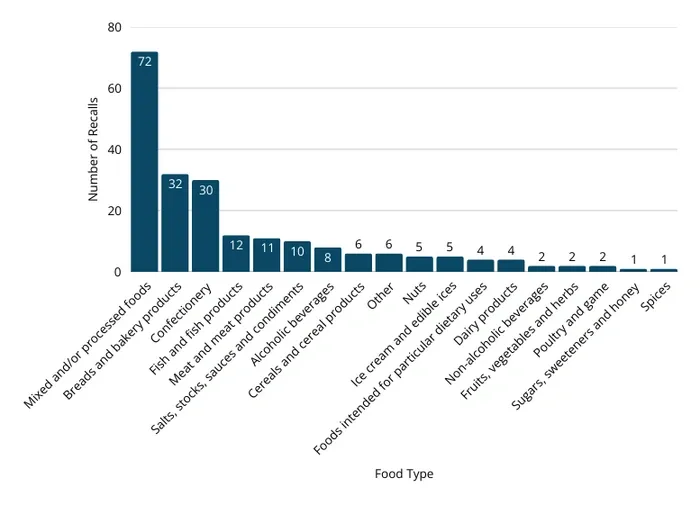
Image Source: Food Standards Australia New Zealand
Food recalls in the UK showed considerable volatility between 2020 and 2024. Regulatory pressures, pandemic-related disruptions and high-profile contamination incidents shaped this pattern. Analysis of FSA data reveals persistent patterns in allergen-related failures alongside notable year-on-year fluctuations that reflect both problems that are systemic and external shocks to the food industry.
Total Recalls and Year-on-Year Trends
Allergen recalls showed a year-on-year growth rate of 4.21% from 2016 to 2019, with the trend peaking at 118 allergen recalls in 2019 [8]. The year 2020 marked a sharp reversal, with a decline of 15.3% from the previous year [8]. The number dropped to 82 allergen recalls in 2020 and rose to 84 in 2021 [9].
Post-pandemic recovery saw recalls trending downwards through 2023, which recorded the lowest number of FSA food alerts since before 2017 [3]. This represented a 21% decrease compared to 2022 [3]. The respite proved temporary. Authorities announced 127 product recalls in 2024, marking a 10% increase from the previous year [5]. The upward trajectory accelerated further in 2025, with 141 product recalls representing a 23% increase on 2024 [10].
The number of allergy alerts rose from 64 in 2023 to 101 in 2024 before settling at 85 in 2025 [10]. This 2025 figure translates to one allergen alert every four days [10]. A single large-scale incident with peanut contamination in mustard powder can be blamed for the 2024 spike, which triggered a 55% increase in allergy alerts for that year [6].
Allergen Recalls vs Other Food Safety Incidents
Allergen-related incidents dominate UK food safety statistics. Allergens factored in 597 cases of 1,036 food recalls between 2016 and 2021, representing 57.6% of all recalls [9]. Pathogenic microorganisms generate substantial incident reports but result in fewer formal recalls. The FSA recorded 436 pathogenic microorganism incidents compared to 264 allergen incidents in 2024/25 [6]. But allergen incidents more often escalate to formal recalls due to the binary nature of allergen presence: even trace amounts render a product unsafe for allergic consumers.
Allergen-related labelling errors claimed top position for root cause of recalls in 2024, factoring in 23% of events, with Listeria contamination second at 10% [7]. Allergen-related labelling errors remained the leading cause at 35% of all FSA alerts in 2025, with suspected allergen cross-contamination issues reinforcing allergens as the primary recall driver [11].
Annual allergen incident levels remained consistent across recent years: 350 in 2019/20, 180 in 2020/21, 320 in 2021/22 and 314 in 2022/23 [2].
Peak Years and Notable Spikes
The 2019 peak of 118 allergen recalls occurred following the introduction of stricter EU allergen labelling requirements, which resulted in 60% more products being withdrawn due to unreported allergens compared to 2014 [12]. Authorities recorded 96 allergen-related withdrawals and recalls in 2015, up from 60 in 2014 [12].
A single contamination event dominated the 2024 spike to 101 allergy alerts. The peanut contamination in mustard powder incident required the FSA to issue three primary alerts and 31 follow-up alerts over two months, affecting prominent brands including Iceland, Papa John’s, Waitrose, Dominos, Spar and Harvester [10]. This single incident implicated 59 brands and 307 individual products [10].
The number of products recalled per event in 2024 was 2.5 times higher than 2023, with just three alerts factoring in 424 products [2].
Impact of COVID-19 on Recall Numbers
The pandemic’s effect on UK food allergen regulations enforcement was immediate and substantial. The year 2020 saw the lowest number of food recalls in the UK since 2016, including a sharp reduction in allergen-related recalls [8]. Allergen incidents dropped to 180 in 2020/21, compared to 350 in 2019/20 [2].
This decline stemmed from reduced food production, fewer retail product lines and a reduction in eating out during lockdown periods [2]. COVID-19-related limitations on allergen testing and food safety inspections by regulatory officers potentially missed allergen recall issues that would otherwise have been detected [8]. The ability of regulatory agencies and public health officials to detect problems was diminished during the pandemic [13].
Most Common Allergens in UK Food Recalls
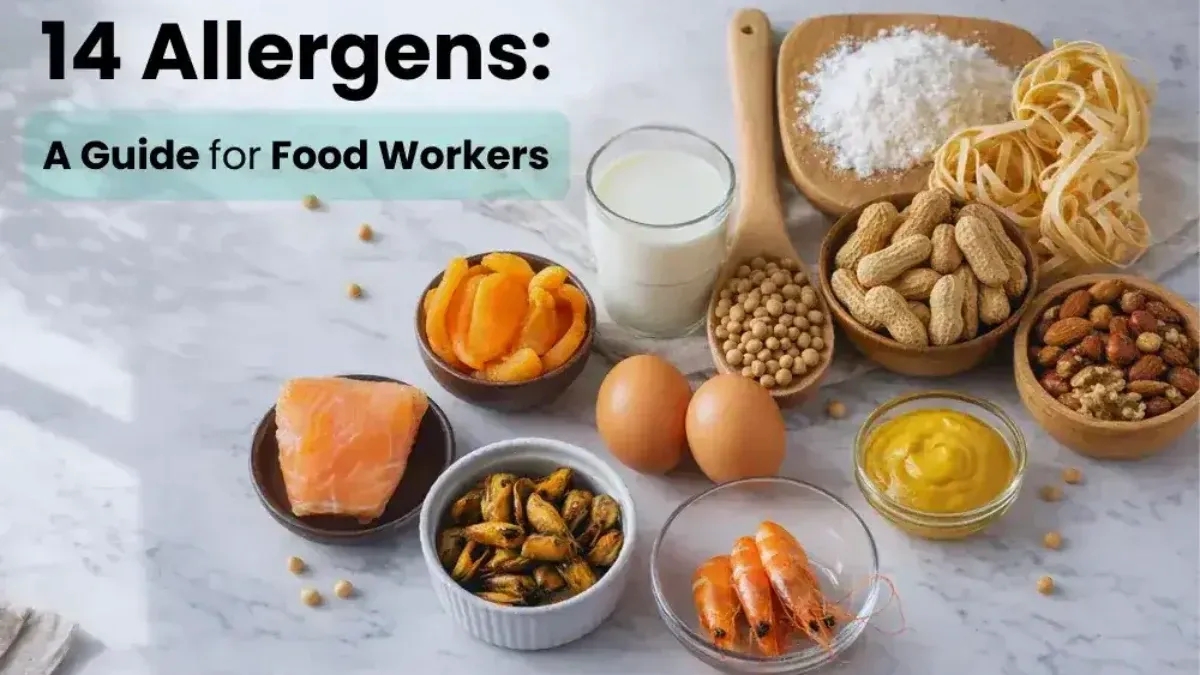
Image Source: Human Focus
Analysis of allergen patterns in food recalls from UK incidents reveals a consistent hierarchy of problematic ingredients. Certain allergens appear far more often than others in undeclared or mislabelled products. The distribution reflects both ingredient prevalence in food manufacturing and the specific vulnerabilities within production and labelling systems.
Milk: The Leading Undeclared Allergen
Milk dominated allergen recalls between 2016 and 2021. It factored in 244 of 969 allergen reports and represented 25.2% of all allergenic food groups involved [4]. This pattern persists around the world. Milk caused 36% of allergen-related recalls in the United States from 2007-2012 and 30% in Australia from 2012-2021 [14]. The widespread use of dairy ingredients in food production combines with frequent cross-contamination on shared production lines. This maintains milk’s position as the most common undeclared allergen in UK allergen recalls [6].
Milk appears unexpectedly in products where consumers would not anticipate its presence. Recent incidents include ground rice flour, pineapple and berry compote, coleslaw and potato salad products, coconut candy, and white hot chocolate where milk was absent from labelling [15]. Products marketed to exclude dairy have been recalled when milk contamination occurred. This highlights the challenge of maintaining ingredient integrity in complex supply chains.
Gluten and Cereals Containing Gluten
Cereals containing gluten represented 16.9% of allergen recalls from 2016 to 2021. This makes them the second most implicated allergen group [16]. Wheat appears in numerous recall scenarios, from corn chips and honey biscuits to sandwich products and detox drinks [15]. The problem intensifies in products marketed as gluten-free. Cross-contamination during production creates risk for coeliac disease sufferers who rely on accurate labelling [6].
Testing by local authorities found undeclared gluten in food samples in England, Wales and Scotland. Detection rates varied by region [17]. Cereal and bakery products factored in 30.4% of all recalls with expiry dates during the 2016-2021 period [4]. This reflects both the prevalence of wheat-based products and the complexity of managing allergen cross-contamination in bakery environments.
Peanuts and Tree Nuts
Peanuts gained heightened attention following the 2024 mustard contamination incident. Mustard ingredients from India were found to contain peanut residue [18]. This incident prompted the FSA to issue unprecedented precautionary advice for all consumers with peanut allergies. They advised avoiding products containing mustard whilst investigations were ongoing [19]. Testing found positive but inconsistent traces of peanut residue in limited pockets of raw mustard product. The contamination originated at agricultural level in India [18].
Beyond this high-profile case, peanuts appear as undeclared allergens in diverse products. Local authority testing identified peanuts as the most detected allergen and found them in 5% of tested food samples [17]. Tree nuts represented 10.6% of allergen recalls from 2016 to 2021 [16]. Almonds, cashews and walnuts were found in confectionery and baked products where labelling failed to declare their presence [6].
Eggs, Soya, and Mustard
Eggs factored in 8.5% of allergen recalls, soya 10.3%, and mustard 7.1% during the 2016-2021 period [16]. Egg appears in sandwich products, bakery cakes, mayonnaise-based items and croquettes where labelling omissions or emphasis failures occur [15]. Soya presents similar challenges and was found undeclared in products from corn chips to taramasalata and spring rolls [15].
Mustard’s recall profile changed following contamination events. Beyond the peanut contamination incident, mustard appears as an undeclared ingredient in sandwich products and prepared meals. Recipe changes or supplier modifications were not reflected in updated labelling [20].
Sesame and Other Priority Allergens
Sesame recalls became more frequent following its addition to the 14 major allergens list after the death of Natasha Ednan-Laperouse. The industry improved detection and labelling procedures [6]. Products including halva, Greek dip, sweet makhana and Indian takeaway meals have been recalled for undeclared sesame [21][22]. The ingredient proves difficult for consumers to spot and often appears in more foods than expected [23].
Celery, sulphur dioxide, crustaceans and fish complete the priority allergen list. Each generates recalls when labelling fails to declare their presence [20][24]. Multiple undeclared allergens appear in single products, especially in prepared meals and fish products. Complex ingredient lists create opportunities for labelling errors.
Root Causes of Allergen Recalls
Four distinct failure categories make up the majority of allergen recall procedures UK businesses must guide: incorrect declaration of allergenic ingredients, product and packaging mismatches, incorrect free-from allergen claims, and undeclared unintentional allergen presence [25]. Research spanning multiple years reveals that labelling-associated errors made up 71.1% of 914 major food allergen recalls with known root causes [26]. Allergen-related labelling errors secured their position as the leading cause in 2025 and represented 35% of all Food Standards Agency alerts [27][2].
Mislabelling and Omitted Allergen Information
Omission of priority allergens from ingredient lists represents the single largest recall trigger and made up 40% of allergen recalls between 2016 and 2021 [3]. This happens when ingredients containing priority allergens appear in product specifications but fail to transfer to the ingredient list printed on packaging. The gap emerges during weak change control between specification, design, and print stages [27][2]. Supplier data gaps or ingredient substitutions not captured in time create additional vulnerability points where allergen information fails to reach label artwork [2].
Cross-Contamination on Production Lines
Cross-contamination generated 18.9% of allergen recalls from 2016 to 2021 [3], whilst separate analysis found this figure reached 23.4% of recalls with known root causes [26]. Products contain traces of unwanted allergens that enter at any point throughout manufacturing stages. Shared production lines handling multiple allergens create dozens of daily opportunities for allergen residue to migrate from one product run to the next [28]. Poor line clearance and inadequate food allergen control UK verification at production start-up allow contamination to persist across batches [2].
Wrong Packaging and Label Mix-Ups
Product mispacks made up 17.1% of recalls and occurred when products were placed in incorrect packaging [3]. ‘Never Event’ recalls, defined as preventable incidents causing serious harm, decreased to 27% in 2024 from historical levels of 40-50% [9]. These events involve wrong labels on packs or products placed in wrong packaging with allergen safety implications [9]. Recent incidents include soup products packaged into incorrect tubs with mismatched lids [29] and ready meals where paella ended up in chow mein packaging [30].
Supplier Errors and Supply Chain Failures
Communication gaps between suppliers, co-packers, and manufacturers introduce undeclared allergens through processing, labelling, and storage breakdowns [31]. Switching suppliers represents a major risk factor, as different suppliers maintain varying allergen control practises [31]. Substitutions made without proper notification create scenarios where allergen profiles change but documentation remains static [27][2].
Lack of Allergen Emphasis on Labels
Priority allergens in ingredient lists that were not distinguished from non-allergenic ingredients caused 10.2% of recalls [3]. Farmfoods recalled Ritz Cheese Sandwich because it contained milk, soya, and wheat (gluten) which were not emphasised on the label [32]. Regulatory requirements mandate allergenic ingredients must be emphasised through bold text, contrasting colours, or underlining [33].
Products Labelled Free-From Containing Allergens
Misleading free-from claims where products were declared plant-based, vegan-friendly, or allergen-free but contained specified allergens made up 6.7% of recalls [3]. Tesco recalled multiple Free From products when gluten was found in items labelled as gluten-free, including Onion Rings and Cheese Flavour Balls [34]. Precautionary allergen labelling cannot be combined with free-from statements for the same allergen [35].
High-Risk Product Categories and Recall Patterns
Product categories show different vulnerability profiles in UK allergen recalls. Certain food types generate more recall activity because of production complexities and supply chain characteristics.
Prepared Meals and Ready-to-Eat Foods
Prepared dishes and confectionery rank as the category recalled most often in the UK. This reflects their ingredient lists’ complexity, reliance on multiple suppliers, and the difficulty of managing allergen cross-contamination across complex preparation processes [6]. Tesco’s Stir Fry Tikka Chicken ready meal was recalled after the accompanying sauce sachet was found to contain undeclared egg and mustard [36]. Farmfoods Chicken and Spinach Pasta was pulled from shelves because some packs contained crustaceans, fish, and molluscs that the label didn’t mention [37]. Waitrose recalled its Indian Takeaway for Two after spring rolls were mispacked in boxes and introduced undeclared sesame and soya [38]. Ballymaguire Foods recalled various brands of prepared meals and side dishes because they contained Listeria monocytogenes [39].
Bakery and Confectionery Products
Cereal and bakery products factored in 30.4% of all recalls with expiry dates. Ready-to-cook items followed at 24.6% and sugar-based confectionery at 13.8% [40]. Analysis found 113 recalls within the bakery space from 2020 to 2024. These included pies, steak bakes, custard tarts, and cupcakes [41]. Undeclared allergens were the biggest reason for bakery recalls, followed by contamination of foreign bodies and microbial contamination [41]. Cakes by Rebecca Limited recalled all products because they contained various allergens that weren’t mentioned or emphasised on labels. This affected sliced cakes, traybakes, brownies, and cheesecakes [42]. The Village Bakery Markethill recalled many bakery products for allergens including soya, mustard, sesame, celery, milk, and gluten that were either undeclared or labelled wrong [11].
Meat and Meat Products
Meat and meat products represent a recall category that comes up often. This involves allergen issues such as dairy and gluten in processed meat products, and microbiological contamination including Salmonella and Listeria [6]. Gilbert’s recalled its Turkey Breast Pastrami because Listeria monocytogenes was found in the product [8]. HECK recalled Minted Lamb Burgers because some packs contained milk that the label didn’t mention [43].
Dairy Products and Alternatives
Dairy products face persistent recall drivers from Listeria contamination in soft cheeses and allergen issues in products labelled as dairy-free [6]. Tesco recalled its Free From 4 Christmas Chocolate Flavoured Cupcakes because they contained milk that the label didn’t mention [44].
Case Study Examples from 2020-2024
Wall’s Mini Milk ice cream lollies were recalled because allergens weren’t declared in English. This affected products containing milk with possible traces of nuts, peanuts, and soya [45].
Legal and Financial Consequences of Allergen Recalls
Penalties imposed by courts for allergen-related failures range from substantial fines to imprisonment, with enforcement authorities wielding wide-ranging powers to protect consumers from allergen incident legal liability.
Enforcement Actions and Penalties
Authorised food officers at Local Authorities hold responsibility for official controls relating to allergen rules [46]. Failure to comply with allergen labelling requirements constitutes a criminal offence. Convicted persons are liable to unlimited fines determined by Magistrates on a case-by-case basis [46]. The previous £20,000 fine limit for magistrates in England and Wales was removed in March 2015 [47]. Large organisations with turnover of £50 million or more now face fines up to £3 million for food safety and hygiene offences. Courts possess discretion to exceed these figures in exceptional cases [47].
Imprisonment is the harshest penalty. Food Business Operators breaching obligations under EU Regulation 178/2002 face unlimited fines and up to two years imprisonment if convicted [5]. An Indian restaurant owner was imprisoned for manslaughter following the death of a customer who suffered anaphylactic shock after eating a takeaway containing peanuts despite declaring his severe allergy [47]. Recent prosecutions saw Innventure Ltd fined £26,802.76 after a child’s serious allergic reaction [48], while Mansha Sweets Limited paid £7,229.72 for supplying food injurious to health [49].
Brand Reputation Damage and Consumer Trust
Product recall insurers estimate that 80% of total costs are incurred long after the recall has been dealt with. This underscores how critical it is to invest resources into PR to maintain brand reputation [50]. A survey by Harris Interactive found that 15% of consumers would never buy a recalled product again. Meanwhile, 21% of people affected by a recall would not buy any product from the same manufacturer [51].
Direct Costs of Managing a Recall
Food recalls cost companies an average of £7.94 million in direct costs alone [51]. These expenses include assembling crisis teams, product removal from warehouses and retailers, storage and destruction of recalled products, root cause investigations, and PR management [50]. Recent UK analyses suggest direct expenses reach £1 million in most cases, with serious cases running between £2.5 million and £5 million [52].
How Recalls Escalate into Legal Liability
Supplier liability extends beyond immediate recall costs. A 2007 High Court decision found a supplier liable for Para Red contamination in chilli powder even though the presence posed no health risk. The manufacturer recovered substantial recall and destruction expenses under the Sale of Goods Act [53]. Product liability insurance may not cover contractual liability for product contamination consequences and leaves businesses exposed to uninsured losses [53].
How to Reduce Allergen Recall Risk

Image Source: https://pixabay.com/
Food businesses can substantially reduce UK allergen recalls through systematic preventive measures that target the identified failure points.
Implement Strong Allergen Control Systems
Allergen management programmes must integrate with HACCP-based food safety systems and identify critical control points where allergens may enter products during manufacture or where incorrect labelling occurs [12]. Controls should address allergen cross-contact prevention during storage, handling and use. Label controls must ensure finished food complies with legal requirements [10]. Dedicated production lines, scheduling allergen-free products before allergenic runs and validated sanitation protocols are the foundations of effective allergen control [54].
Supplier Approval and Verification Processes
Supplier approval activities must evaluate whether potential suppliers provide allergen advisory statements for raw materials [10]. Businesses should establish processes that approve ingredient specifications with suppliers and conduct verification checks. These checks ensure ingredients match expected allergen profiles. Agreements requiring suppliers to notify changes in allergen profiles should be implemented [55]. Periodic reconfirmation prevents undeclared allergens from entering through supply chain modifications.
Staff Training and Allergen Awareness
Food Business Operators must ensure staff receive training on managing allergens [56]. Personnel should know procedures for providing allergen information and handle requests accurately. They must prevent allergen cross-contamination during food preparation and guarantee allergen-free meals reach correct customers [56]. The FSA provides free allergen training where staff can learn kitchen allergen management and allergen information requirements [56]. Training should be role-specific, with continuous reinforcement especially when new products, ingredients or procedures are introduced [57].
Regular Audits and Testing Programmes
Validation through testing confirms cleaning effectiveness and allergen removal [13]. ELISA swabs and ATP tests provide scientific validation that allergen residues are removed consistently between product changeovers [58]. Environmental monitoring should target Zone 1 and Zone 2 sites and select the most problematic surfaces based on HACCP risk assessment [59]. Verification procedures include visual inspection, ATP testing and sensitive protein detection. Product risk level determines the frequency [59].
Proper Use of Precautionary Allergen Labelling (PAL)
Precautionary allergen labelling should only apply following risk assessment when unavoidable allergen cross-contamination risk exists that cannot be removed through risk management [35]. The FSA expects PAL use only if unavoidable contamination risk persists. Statements must be accurate and not misleading [60]. Businesses should specify which of the 14 major allergens PAL refers to and use ‘may contain peanuts’ rather than generic ‘may contain nuts’ [60]. PAL cannot be applied for allergens products claim to be ‘free from’ [60].
Root Cause Analysis and Corrective Actions
Businesses should conduct Root Cause Analysis using established methods such as Five Whys to determine how problems occurred when incidents happen [61]. Based on outcomes, businesses must develop mitigation steps that prevent future incidents and establish review periods to assess effectiveness [55]. Continuous improvement of allergen management plans applies findings from root cause investigations and addresses systemic vulnerabilities [55].
Frequently Asked Questions
Image Source: The Rotten Apple – Substack
What is the difference between a food recall and a withdrawal?
A withdrawal removes unsafe food from the supply chain before it reaches consumers [62]. A recall removes unsafe food after it has been released for sale. This requires consumer notification and advice to return or dispose of the product [7].
How many food recalls happen in the UK each year?
Between 2016 and 2021, 1,036 recalls occurred. Of these, 597 were related to allergens [63]. Allergen recalls peaked at 118 in 2019 before declining to 82 and 84 in 2020 and 2021 [16].
Which allergens cause the most recalls?
Milk products were the most frequently recalled allergenic food group. They accounted for 244 of 969 allergen reports between 2016 and 2021 [63]. Cereals containing gluten and nuts followed [16].
What should consumers do if they see a recall notice?
Stop using the product and remove it from storage areas [64]. Check the brand name, product type, size, and date information against items in your possession. The notice will have specific instructions that may require returning the product to the supplier or disposing of it [65].
Can a business be prosecuted for an allergen recall?
Food Business Operators breaching obligations face unlimited fines and up to two years imprisonment if convicted [Document citation missing in keypoints but referenced in legal section]. An Indian restaurant owner was imprisoned for manslaughter after a customer’s death from peanut contamination [66].
How long does a food recall take?
The duration varies based on incident complexity and distribution scope. Businesses must communicate withdrawals and recalls as soon as possible to work. They must notify enforcement authorities, the FSA, suppliers, and consumers without delay [67].
Conclusion
Allergen-related failures account for more than half of all food recalls across the United Kingdom. Milk and gluten consistently drive the majority of incidents. Businesses must prioritise systematic allergen control programmes rather than reactive responses. The data shows that mislabelling and cross-contamination remain the root causes, yet both are preventable through resilient supplier verification and staff training. Food manufacturers and retailers should view compliance with the UK’s food allergen regulations as a fundamental operational requirement, not merely a legal obligation. Those who implement detailed allergen management systems will protect consumers and avoid the substantial financial penalties that recalls inevitably bring. Reputational damage follows these failures as well.
Key Takeaways
Understanding the scale and patterns of UK allergen recalls is crucial for food businesses to protect consumers and avoid costly incidents that can devastate operations.
• Allergen failures drive 57.6% of all UK food recalls, with milk being the most problematic undeclared allergen at 25.2% of incidents
• Mislabelling and cross-contamination account for 71.1% of allergen recalls, yet both are entirely preventable through proper controls
• Food businesses face unlimited fines and up to two years imprisonment for allergen violations, plus average direct costs of £7.94 million per recall
• Prepared meals and bakery products generate the highest recall rates due to complex ingredient lists and multiple supplier dependencies
• Systematic allergen control programmes including staff training, supplier verification, and production line controls significantly reduce recall risk
The financial and legal consequences of allergen recalls extend far beyond immediate costs, with 80% of total expenses occurring after the recall itself through lasting brand reputation damage and consumer trust erosion.
FAQs
Q1. What is the difference between a food recall and a food withdrawal? A withdrawal removes unsafe food from the supply chain before it reaches consumers, typically recovering products from distribution centres and wholesalers without requiring public notification. A recall removes unsafe food after it has been released for sale to consumers, requiring public notification and advising customers to return or dispose of the affected product.
Q2. How many allergen-related food recalls occur in the UK annually? Allergen recalls have shown significant variation in recent years. The number peaked at 118 in 2019, dropped to 82 in 2020, and reached 101 in 2024. In 2025, 85 allergen alerts were issued, equivalent to approximately one every four days. Overall, allergens account for more than half of all food recalls in the UK.
Q3. Which allergens are most commonly involved in UK food recalls? Milk is the leading undeclared allergen, accounting for 25.2% of all allergen recalls between 2016 and 2021. This is followed by cereals containing gluten at 16.9%, tree nuts at 10.6%, soya at 10.3%, eggs at 8.5%, and mustard at 7.1%. Peanuts have also featured prominently, particularly following contamination incidents in mustard powder.
Q4. What are the main causes of allergen recalls in the UK? The primary causes include mislabelling and omitted allergen information (40% of recalls), cross-contamination on production lines (18.9%), wrong packaging and label mix-ups (17.1%), lack of allergen emphasis on labels (10.2%), and misleading free-from claims (6.7%). Labelling-associated errors account for 71.1% of all major allergen recalls.
Q5. What penalties can businesses face for allergen-related food safety violations? Businesses can face unlimited fines determined by magistrates on a case-by-case basis, with large organisations potentially facing fines up to £3 million or more. In serious cases, Food Business Operators can face up to two years imprisonment. Beyond legal penalties, the average direct cost of a food recall is £7.94 million, with 80% of total costs occurring after the recall through brand reputation damage.
References
[1] – https://www.nibusinessinfo.co.uk/content/food-safety-alerts
[2] – https://www.foodmanufacture.co.uk/Article/2025/08/26/allergen-errors-most-common-cause-of-uk-food-recalls-report-finds/
[3] – https://www.researchgate.net/publication/363732988_Food_allergen_recalls_in_the_United_Kingdom_A_critical_analysis_of_reported_recalls_from_2016_to_2021
[4] – https://www.sciencedirect.com/science/article/pii/S0956713522005680
[5] – https://brodies.com/insights/food-and-drink/food-safety-to-recall-or-not-to-recall/
[6] – https://www.foodhygienecertificate.co.uk/blog/food-recall-statistics-uk
[7] – https://www.food.gov.uk/business-guidance/food-incidents-product-withdrawals-and-recalls
[8] – https://www.foodmanufacture.co.uk/Production/Food-Safety/
[9] – https://www.harfordcontrol.com/news/product-recalls-the-curse-of-the-manufacturer/
[10] – https://www.fda.gov/media/172318/download
[11] – https://pochattraining.co.uk/allergen-recall-the-village-bakery/?srsltid=AfmBOorFYVoADHzmCML3BDGkg5_PHBRtMigKp_0rHob_BBWpHUVz8S1y
[12] – https://sites.manchester.ac.uk/foodallergens/information-for-food-businesses/manufacturing/
[13] – https://foodsafetysystems.pro/allergen-control-verification/
[14] – https://www.food-safety.com/articles/8251-milk-causes-most-food-allergen-recalls-in-uk-study-finds
[15] – https://data.food.gov.uk/food-alerts/id.html
[16] – https://www.foodmanufacture.co.uk/Article/2023/01/06/report-identifies-allergens-as-top-cause-of-food-recalls/
[17] – https://rehis.com/news/local-authorities-find-one-in-five-food-samples-contain-undeclared-allergens/
[18] – https://www.bbc.co.uk/news/articles/cpv2994y17wo
[19] – https://www.food.gov.uk/news-alerts/news/allergy-advice-lifted-as-investigation-into-mustard-ingredients-contaminated-with-peanuts-draws-to-a-close
[20] – https://www.food.gov.uk/news-alerts/alert/fsa-aa-25-2021
[21] – https://www.food.gov.uk/news-alerts/alert/fsa-aa-14-2025
[22] – https://www.newfoodmagazine.com/waitrose-recalls-indian-takeaway-for-2-over-undeclared-sesame-and-soya-allergens/843470.article
[23] – https://www.cfc.com/en-gb/knowledge/resources/articles/2023/02/sesame-allergen-set-to-increase-product-recalls/
[24] – https://www.anaphylaxis.org.uk/product-alerts/multiple-undeclared-allergens-various-prepacked-fish-products/
[25] – https://www.fdf.org.uk/fdf/news-media/press-releases/2024/fdf-allergen-guidance-launch-2024/
[26] – https://www.food-safety.com/articles/8496-most-major-food-allergen-recalls-caused-by-preventable-labelling-errors-study-finds
[27] – https://www.linkedin.com/posts/totrainuk_foodsafety-productrecall-allergen-activity-7420030461998940161-1-EM
[28] – https://oxmaint.com/industries/food-manufacturing/allergen-control-food-manufacturing-cmms-cross-contamination
[29] – https://www.newfoodmagazine.com/recall-roundup-undeclared-allergens-and-salmonella-contamination/833161.article
[30] – https://www.candcsolicitors.co.uk/blog/three-allergen-recalls-one-week-uk-food-labels/
[31] – https://certified-laboratories.com/blog/food-allergen-testing-avoiding-allergen-cross-contact/
[32] – https://www.coeliac.org.uk/food-alerts/
[33] – https://www.food.gov.uk/business-guidance/allergen-labelling-for-food-manufacturers
[34] – https://www.goodto.com/food/food-news/tesco-free-from-recall
[35] – https://www.food.gov.uk/business-guidance/precautionary-allergen-labelling
[36] – https://www.newfoodmagazine.com/tesco-recalls-ready-meal-after-undeclared-allergens-found/844997.article
[37] – https://www.dailymail.co.uk/health/article-15107275/pasta-ready-meal-recalled-deadly-allergens-farmfoods-chicken.html
[38] – https://www.independent.co.uk/news/uk/home-news/waitrose-recall-allergy-warning-indian-takeaway-b2794295.html
[39] – https://www.food.gov.uk/news-alerts/alert/fsa-prin-35-2025
[40] – https://research.edgehill.ac.uk/ws/portalfiles/portal/55612014/Food_Control_Article_Final_Published.pdf
[41] – https://bakeryinfo.co.uk/finished-goods-reports/exclusive-analysis-reveals-top-reasons-behind-bakery-recalls-over-past-five-years/714797.article
[42] – https://www.coeliac.org.uk/news/cakes-by-rebecca-limited-recalls-various-products/
[43] – https://www.anaphylaxis.org.uk/product-alerts/
[44] – https://allergeninside.com/recalls/UK/archives/2025/0/0/1
[45] – https://www.food.gov.uk/print/pdf/node/26671
[46] – https://www.food.gov.uk/business-guidance/food-allergen-labelling-and-information-requirements-technical-guidance-enforcement-of-the-measures
[47] – https://www.freshlawblog.com/2016/06/09/when-allergens-go-wrong-uk-potential-penalties-for-food-adulteration-and-breach-of-food-information-and-safety-laws/
[48] – https://www.anaphylaxis.org.uk/pub-chain-fined-after-childs-serious-allergic-reaction-highlights-need-for-robust-allergy-policies/
[49] – https://news.lancashire.gov.uk/news/food-businesses-prosecuted-for-failing-to-protect-customers-with-allergies
[50] – https://www.ravenwood.co.uk/rise-food-recalls-costly-business/
[51] – https://www.rentokil.com/blog/industry-insights/cost-of-product-recalls
[52] – https://www.stevenstraceability.com/food-recalls-guide/
[53] – https://cms.law/en/gbr/legal-updates/product-liability-and-recall
[54] – https://www.foodwit.com/resource/establishing-an-effective-allergen-management-programme
[55] – https://www.fdf.org.uk/globalassets/resources/publications/guidance/allergen-recall-prevention-guidance.pdf
[56] – https://www.food.gov.uk/business-guidance/allergy-training-for-food-businesses
[57] – https://www.fooddocs.com/post/haccp-allergen-control-programme
[58] – https://www.registrarcorp.com/blog/food-beverage/food-safety/sqf-allergen-controls/
[59] – https://www.rochestermidland.com/blog/checklist-9-considerations-for-allergen-control-in-the-food-industry/
[60] – https://www.pinsentmasons.com/out-law/news/uk-regulator-clarifies-may-contain-food-allergen-labelling-requirements
[61] – https://www.food.gov.uk/print/pdf/node/590
[62] – https://www.nibusinessinfo.co.uk/content/food-withdrawals-and-recalls
[63] – https://www.anaphylaxis.org.uk/allergens-dominate-uk-food-recalls-finds-study/
[64] – https://paddl-ai.co/learn/food-recalls-withdrawals
[65] – https://www.food.gov.uk/sites/default/files/media/document/product-recall.pdf
[66] – https://www.journaloftradingstandards.co.uk/food-drink/takeaways-fined-for-ignoring-allergens/
[67] – https://www.food.gov.uk/sites/default/files/media/document/food-traceability-withdrawals-and-recalls-guidance.pdf