 Food allergen control UK manufacturers implement can be a matter of life and death. Around ten people die from allergic reactions to food every year in the UK, and over 2 million people live with diagnosed food allergies. The UK has some of the highest prevalence of allergies globally, with more than 20% of the population affected by allergic disorders. These figures show why allergen legislation UK businesses must follow has become increasingly stringent, especially after Natasha’s Law in 2021. This complete guide covers allergen management in everything related to food manufacturing, from understanding the 14 food allergens UK regulations specify to implementing reliable allergen labelling and control systems.
Understanding the 14 Food Allergens in UK Manufacturing
What are the major food allergens
UK legislation requires manufacturers to declare 14 specific allergens when present in food products as ingredients, processing aids, or any other substances in the final product [1]. These allergens represent the most common sources of severe allergic reactions [2]. Consumers may experience allergies or intolerances to other ingredients, but food law requires that these 14 allergens be declared [1].
The regulated allergens are:
- Celery – stalks, leaves, seeds, and celeriac root
- Cereals containing gluten – wheat (such as spelt and Khorasan wheat/Kamut), rye, barley, and oats
- Crustaceans – prawns, crabs, lobsters, crayfish, and scampi
- Eggs – all egg products and derivatives
- Fish – all fish species with fins
- Lupin – seeds and flour from certain lupin species
- Milk – lactose and all dairy products
- Molluscs – mussels, oysters, scallops, snails, squid, and octopus
- Mustard – seeds, powder, and liquid mustard
- Peanuts – groundnuts and all peanut derivatives
- Sesame – seeds and sesame-derived products
- Soybeans – soya products like flour, tofu, and soy sauce
- Sulphur dioxide and sulphites – at concentrations that exceed ten parts per million [1]
- Tree nuts – almonds, hazelnuts, walnuts, brazil nuts, cashews, pecans, pistachios, and macadamia nuts
The threshold for sulphur dioxide and sulphites is different from other allergens. Declaration becomes mandatory when concentrations surpass 10 mg/kg or 10 mg/litre in products ready to consume [3].
Why these specific allergens are regulated
These 14 allergens were selected because they cause the majority of serious allergic reactions [2]. Food businesses face legal obligations to protect customers with food allergies, as allergen exposure can produce fatal risks. The concentration threshold exists for sulphur dioxide because people with asthma face a higher risk of reactions to this preservative [4].
The regulatory framework is different from other countries. The US system identifies nine major allergens, while UK allergen legislation follows European standards that recognise 14 allergens [1]. This difference matters for manufacturers who operate in international markets.
The selection of these specific allergens reflects clinical and scientific assessment of which ingredients pose the greatest risk to public health. The Food Standards Agency bases these requirements on evidence of allergenic potential and the severity of reactions these ingredients can trigger [1].
Common sources of allergens in manufacturing
Food manufacturers encounter these allergens in many ingredients and products. Celery appears in stock cubes, soups, and celery salt. Cereals containing gluten feature in flour-based products like baking powder, batter, breadcrumbs, bread, cakes, couscous, pasta, pastry, sauces, and fried foods dusted with flour [4].
Crustaceans present in shrimp paste, used in Thai and south-east Asian curries or salads. Eggs appear in cakes, meat products, mayonnaise, mousses, pasta, quiche, sauces, pastries, and foods brushed or glazed with egg [5]. Fish ingredients occur in fish sauces, pizzas, relishes, salad dressings, stock cubes, and Worcestershire sauce [4].
Lupin flour and seeds can be found in certain breads, pastries, and pasta. Milk serves as a common ingredient in butter, cheese, cream, milk powders, yoghurt, foods brushed or glazed with milk, and powdered soups and sauces [5]. Molluscs appear in oyster sauce and fish stews.
Mustard ingredients feature in breads, curries, marinades, meat products, salad dressings, sauces, and soups. Tree nuts occur in breads, biscuits, crackers, desserts, nut powders (often used in Asian curries), stir-fried dishes, ice cream, marzipan, nut oils, and sauces [4]. Peanuts appear in biscuits, cakes, curries, desserts, satay sauce, groundnut oil, and peanut flour.
Sesame seeds feature in bread (hamburger buns in particular), breadsticks, houmous, sesame oil, and tahini. Soya appears in bean curd, edamame beans, miso paste, textured soya protein, soya flour, tofu, desserts, ice cream, meat products, sauces, and vegetarian products [5]. Sulphur dioxide and sulphites occur in dried fruit (raisins, apricots, prunes), meat products, soft drinks, vegetables, wine, and beer [4].
Manufacturers producing items like mayonnaise must declare eggs, whilst those making curry pastes need to identify mustard seeds. This widespread presence of allergens across manufacturing processes makes strong allergen management systems essential for food businesses.
UK Food Allergen Regulations and Legal Compliance
Image Source: Food Standards Agency
UK Food Allergen Regulations and Legal Compliance
Food Information Regulations 2014
The Food Information Regulations 2014 establish the domestic enforcement framework to support Regulation (EU) No 1169/2011 on the provision of food information to consumers [1]. These regulations serve dual purposes: implementing EU requirements and taking advantage of derogations and national measures permitted under European law [1].
The FIR 2014 came into force on 13th December 2014 and extended allergen rules to all food sold non-prepacked. This included loose items and catering situations [6]. The UK adopted a national measure that allows businesses to provide allergen information through any means they choose, including orally, with the exception of foods supplied via distance selling [1].
Food businesses operating under whose name products are marketed bear main responsibility to ensure food information accuracy [1]. Manufacturers producing food to sell through wholesalers, caterers, or other third parties must ensure information on all mandatory particulars is provided at each stage [1]. This obligation creates a chain of responsibility throughout the supply chain.
Natasha’s Law requirements for PPDS foods
Domestic regulations introduced in UK nations came into force on 1st October 2021 and required prepacked foods meant to be sold direct to display specific information on packaging [1][7]. These requirements, known as Natasha’s Law, arose following the tragic death of Natasha Ednan-Laperouse in 2016 after she consumed a sandwich containing undeclared sesame [6].
PPDS foods must display three elements on packaging or attached labels:
- The food’s name
- A full ingredients list
- Allergenic ingredients emphasised within that list
The allergenic ingredients must be emphasised every time they appear in the ingredients list. Businesses can use bold type, capital letters, contrasting colours, or underlining [7]. Food businesses packing products on site bear responsibility to ensure labelling accuracy [7]. So businesses must implement processes to update information when suppliers change or ingredients vary [7].
Wales and Northern Ireland introduced their regulations first, followed by England. Scotland implemented theirs later in 2021 with a similar coming into force date [1]. To do this, businesses operating in multiple UK nations needed to ensure compliance with each jurisdiction’s specific requirements [1].
Food Standards Agency guidance
The Food Standards Agency oversees food safety and hygiene in England, Wales, and Northern Ireland [7]. The agency provides technical guidance to help food businesses understand and implement allergen requirements [1]. This guidance clarifies labelling obligations and offers best practise advice to achieve compliance [7].
Local authorities enforce food information regulations within their respective areas and monitor businesses to ensure standards are met [7]. The FSA produces decision tools to assist businesses in determining whether products qualify as PPDS and provides detailed technical guidance on allergen labelling and information requirements [8][7].
Legal obligations for manufacturers
Manufacturers face overarching obligations to comply with all food labelling requirements issued under food law and relevant national provisions [1]. They must verify that these requirements are met throughout their operations. Food businesses may modify information provided to them but become responsible to ensure the accuracy of any changes made [1].
Failure to comply with allergen information requirements exposes businesses to enforcement action from local authorities [9]. An improvement notice may be issued if businesses fail to act on advice given [9]. Non-compliance with improvement notice requirements results in penalties, and businesses have 14 days to appeal from the date of issue [9].
Businesses may face prosecution in some cases related to allergen failures [9]. Beyond legal consequences, manufacturers risk financial and reputational damage and the possibility of causing serious illness or death to customers [9]. The enforcement framework applies whatever the business size, affecting cafes, delis, bakeries, and supermarkets [6].
References to EU legislation in FSA guidance should now be regarded as assimilated law where applicable to Great Britain, following the transition from retained EU law on 1st January 2024 [9][9]. Businesses moving goods from Great Britain to Northern Ireland must think over the Windsor Framework arrangements adopted on 24th March 2023 [9][9].
Allergen Risk Assessment in Food Production
Identifying allergen hazards in your facility
Allergen risk assessment determines the risks stemming from unintentional allergen presence in manufacturing environments [1]. The main goal is understanding the likelihood of unintentional allergen cross-contamination across the supply chain, from raw materials through to finished products [6].
Manufacturers must first identify potential allergen sources at their premises. This has foods or ingredients that intentionally contain allergens, such as peanuts, milk, eggs, or sesame seeds used in specific products [6]. Ingredients that may unintentionally contain allergens are just as important and include those with precautionary allergen labels or supplier information that indicates potential allergen presence [6].
Allergen mapping provides an effective tool to identify and track allergens throughout a facility [10]. A multidisciplinary team with technical, quality, production, procurement, and maintenance staff conducts the most effective assessments [10]. The process begins by listing all raw materials alongside the allergen status of each ingredient, processing aid, work-in-process, and rework product [10]. This list requires cross-referencing with current product specifications to confirm all declared allergens have been captured [10].
Assessing cross-contamination risks
Cross-contamination evaluation considers multiple factors that influence allergen transfer. The physical nature of ingredients plays an important role in risk assessment [6]. Milk powder represents a greater risk in situations where airborne contamination of products is possible, whilst liquid milk may be of less concern with sufficient separation through physical barriers, distance, timing, or cleaning [6].
The physical form of ingredients affects how allergens spread in food products evenly. Allergens in powder form distribute more throughout a product evenly than particles such as lumps, seeds, and nuts, which may appear as hotspots delivering higher allergen doses to consumers [6].
Manufacturers should assess routes through which cross-contamination could occur during handling, storage, preparation, production processes, packing, or distribution [6]. The geography of the manufacturing environment matters. The assessment must evaluate how control measures reduce or eliminate allergen cross-contamination risks effectively [6].
Risk analysis has four stages: risk assessment (what is the risk?), risk management (can the risk be managed and what actions could reduce it?), risk communication (how should the risk be communicated?), and risk review (has the risk changed and how often will the system be reviewed?) [6].
Documenting your risk assessment
Food business operators benefit from documented and detailed allergen management policies and procedures specific to their operations [9]. Documentation allows businesses to demonstrate they are taking necessary steps to eliminate or reduce the likelihood of unintentional allergen presence [9].
The documented assessment should identify steps in operations that pose likelihood of allergen cross-contact and assess the level of risk to consumers at those steps [9]. Manufacturers must find out which ones are critical and implement effective allergen management procedures to prevent or minimise allergen cross-contact at identified critical steps [9].
Allergen risk assessments can integrate with HACCP plans or exist as separate documents using the process flow from HACCP to evaluate allergen risks in isolation [6]. When undertaken separately, assessments should remain piecemeal rather than part of a defined systematic process [11].
Reviewing and updating assessments
Manufacturers should review allergen management procedures periodically, especially when operations change [9]. Change management triggers include formulation changes, ingredient supply modifications, and documentation process updates [9].
Businesses must also monitor and document allergen management procedures to ensure continuing effectiveness [9]. Suppliers require familiarity and compliance with food allergen specifications, whilst customers need timely notification of any changes to product allergen profiles [9]. Personnel awareness and adherence to allergen management procedures remains fundamental throughout the review cycle [9].
Implementing Allergen Management Systems

Image Source: Food Safety Assist
Implementing Allergen Management Systems
HACCP principles for allergen control
HACCP systems are the foundations for effective food allergen control UK manufacturers require. Allergens must be identified as potential hazards and recorded in HACCP documentation [12]. In fact, food allergens rank among the key hazards in the HACCP concept, especially when you have chemical hazards [12].
Safe food products require that HACCP systems be built upon a solid foundation of prerequisite programmes [7]. These programmes provide the environmental and operating conditions needed for production of safe, wholesome food [7]. Allergen management practises should be part of good hygiene practises and, when appropriate, HACCP systems in manufacturing, retail and food service [7].
Manufacturers must identify allergen hazards during hazard analysis and specify appropriate control measures in the HACCP plan, either as critical control points or operational preventive measures [12]. This proactive and preventative approach addresses allergens before cross-contact occurs, rather than reacting after incidents happen [7].
Supplier approval and ingredient verification
Strong relationships between raw material suppliers and manufacturers promote product safety when managing allergens [10]. Supplier approval acts as a supply chain risk mitigation process and ensures raw materials, ingredients and services meet safety, quality and regulatory standards before entering production [10].
Manufacturers should require allergen information on every ingredient specification and establish procedures to review new ingredients before approval [13]. Suppliers must provide relevant certifications and documentation that demonstrate compliance with food safety standards, including certificates of analysis for raw materials and food safety plans [10]. Manufacturers can then identify not just ingredient contents but also production environment risks, such as whether sugar comes from facilities that also pack milk powder [13].
Suppliers require familiarity and compliance with food allergen specifications [7]. When suppliers make changes, such as adding soy to a flavouring, manufacturers need notification before that ingredient reaches production lines [13]. Manufacturers must also notify customers in a timely manner of any changes to product allergen profiles [7].
Segregation and storage procedures
Segregation of allergen-containing ingredients minimises cross-contact risks in facilities [8]. Separate storage areas, such as dedicated allergen storage rooms or shelving, provide physical separation for allergen and non-allergen-containing ingredients [8].
When dedicated areas are not available, procedures should establish staging and storage of food allergens and allergen-containing ingredients below non-allergens [8]. This prevents inadvertent cross-contact if packaging material becomes damaged and subsequent leakage occurs [8]. Raw ingredients containing food allergens should be stored in sealed plastic bins that are marked or colour-coded [10].
Air flow controls in facilities prevent airborne allergen particulate matter from entering allergen-free zones, such as introducing positive air pressure environments in packaging areas or using micro air filtration [8].
Production scheduling strategies
Production run scheduling provides the quickest way to prevent allergen cross-contact [8]. Manufacturers should implement production scheduling to separate manufacture of allergen-containing products from non-allergen-containing products by time [8].
Production order establishes a sequence whereby food with the fewest allergens or no allergen is produced first and food with the most allergens is produced last, coupled with effective allergen cleaning and sanitation procedures between changeovers [8]. Adding allergenic ingredients as late in the production process as possible minimises equipment and time that production areas contact allergens [8].
Clustering allergen-containing runs reduces the number of required changeovers and allergen cross-contact risk [8]. Advanced scheduling software can group similar products together or arrange allergen-containing products at end of production runs, reducing cleaning frequency [14].
Staff training and competency requirements
Food business operators must ensure staff receive training on managing allergens [15]. Staff should know procedures when asked to provide allergen information, be trained to handle allergen information requests and know risks of allergen cross-contamination when handling and preparing foods and how to prevent this [15].
Training should identify allergens and hazards they present to sensitive individuals, cover principles of allergen cross-contact prevention and cover the processor’s allergen cross-contact prevention protocols, including corrective actions and required recordkeeping [8]. Personnel must be aware of and follow allergen management procedures [7]. Staff should be retrained at least once a year [16].
Preventing Allergen Cross-Contamination in Manufacturing
Image Source: Food Manufacture
Preventing Allergen Cross-Contamination in Manufacturing
Equipment and utensil separation
Clear labelling systems reduce cross-contamination risk during food production and handling [6]. Workers can designate separate equipment and utensils for allergen-containing products through consistent labelling. This minimises unintentional allergen transfer [6]. Colour-coded cleaning equipment provides visual difference for allergen-free preparation areas [17]. Manufacturers should think over using colour-coded cleaning tools, overalls, aprons and gloves. These minimise cross-contact and highlight allergen handling areas [18].
Equipment management requires dedicated tools and apparel for different allergen profiles [19]. Facilities benefit from limiting the amount of equipment exposed to allergens. Proper cleaning of in-process and holding totes is essential [20]. Meticulous cleaning of utensils and equipment becomes mandatory when equipment shares allergen and non-allergen production [19].
Cleaning validation and verification protocols
Cleaning validation confirms that procedures sufficiently remove allergens or reduce them to acceptable levels [11]. BRCGS Clause 5.3.8 requires cleaning methods to be validated for effectiveness and verified routinely [11]. Validation addresses whether cleaning methods remove allergens effectively. Verification demonstrates previously validated protocols remain effective [21].
Validation should focus on worst-case scenarios. Use allergens present at high levels, with high protein content and difficult to clean from lines [1]. Quantitative ELISA testing provides protein detection and results within ranges. This makes it the recommended method for allergen cleaning validations [1]. Lateral Flow Immunoassay can be used among quantitative tests for ongoing verification. It saves time and allows on-site testing [11].
Industry best practise requires repeating validation three times. You must achieve non-detectable results for all post-clean and next off-line samples in consecutive rounds [1]. ATP swabs alone are not recommended for allergen cleaning verification. ATP appears in most foods and lacks allergen specificity [22]. Validation should occur annually, when introducing new products or allergenic ingredients, when implementing new cleaning procedures or equipment, or when modifying cleaning frequencies [22].
Air handling and environmental controls
Air flow controls prevent airborne allergen particulate matter from entering allergen-free zones [23]. HEPA philtres capture ≥99.97% of particles at 0.3 microns, while high MERV-rated philtres suit staged filtration systems [24]. High Care zones require finer filtration, often HEPA or equivalent. Low Risk areas may operate with pre-philtres and secondary stages effectively [24].
Positive pressure in High Care areas prevents contaminated air from entering controlled spaces. Air flows outward when doors open or leaks occur [24]. Pressure differentials require measurement, monitoring and maintenance to remain effective [24]. Regular maintenance of ventilation systems will give efficient function and improves indoor air quality continuously [6]. Hoovering up with HEPA philtres removes allergens from surfaces and work areas [6].
Rework and waste management
Rework storage requires appropriate, secured containers with allergens identified clearly [25]. Tracking systems must establish inventory controls and document rework use [19]. Standard operating procedures should manage and document rework control. This verifies it is always used in like-for-like products [25]. Manufacturers should review rework use within HACCP plans and set out how and when rework can be used, including traceability records [25].
Allergen Labelling Requirements for Manufacturers
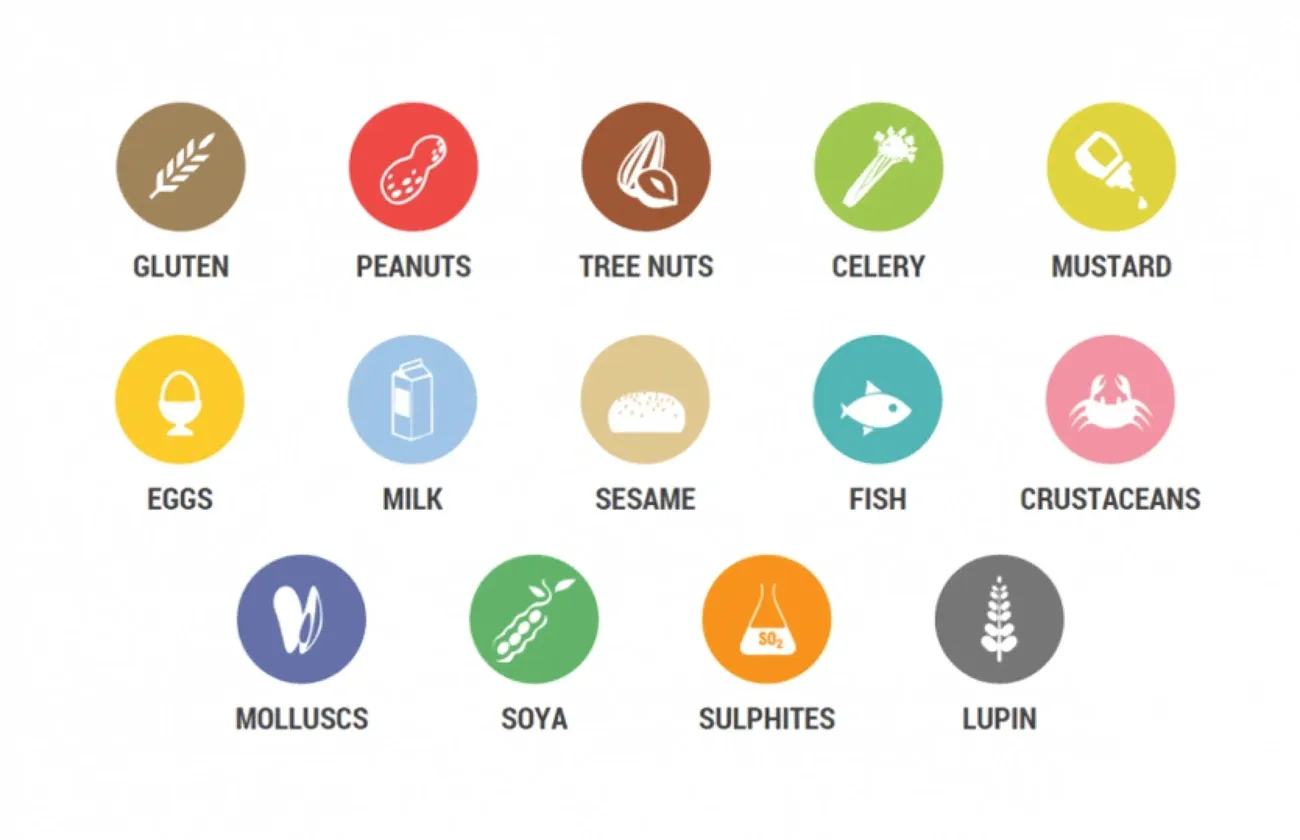
Image Source: Nutritics
Allergen Labelling Requirements for Manufacturers
Prepacked food labelling rules
Manufacturers producing prepacked food must follow allergen labelling requirements set out in Food Information to Consumers Regulation. Prepacked food refers to any food put into packaging before being placed on sale, where the food is either fully or in part enclosed, cannot be altered without opening or changing the packaging, and is ready to sell [9].
Products containing any of the 14 allergens as an ingredient or processing aid must include this information on the label [9]. Prepacked food must have an ingredients list, with allergenic ingredients emphasised in some way each time they appear [9].
Emphasising allergens in ingredient lists
Allergenic ingredients require emphasis through bold type, contrasting colours or underlining [9]. This emphasis applies each time the allergen appears in the ingredients list [9]. To cite an instance, an ingredient list might read: “Water, Carrots, Onions, Red Lentils (4.5%), Potatoes, Cauliflower, Leeks, Peas, Cornflour, Wheat flour, Salt, Cream, Yeast Extract, Concentrated Tomato Paste, Garlic, Whey (Milk), Sugar, Celery Seed” [9].
Allergenic ingredients must be declared with clear reference to the allergen and ensure uniform understanding [9]. Examples include tofu (soya), tahini paste (sesame) and whey (milk) [9]. Allergen advice statements can explain how allergen information is presented, such as “Allergen Advice: to find allergens, see ingredients in bold” [9].
Precautionary allergen labelling guidance
Precautionary allergen labelling should only be used when a risk of allergen cross-contact within the supply chain is identified that cannot be removed through risk management actions, following a risk assessment [7]. Excessive use limits consumer choice and devalues the warning to consumers [7].
General or blanket statements, such as “may contain allergens”, could be deemed misleading because they are unlikely to be based on an assessment of the risk to each of the 14 regulated allergens [7]. PAL should not be used as a substitute to good food hygiene and safety practises [7].
When to use ‘may contain’ statements
Manufacturers should apply PAL as the final step in a process of risk analysis of allergen cross-contact within the food supply chain [7]. If a risk of allergen cross-contamination exists that cannot be removed, the label should include statements such as “may contain X” or “not suitable to someone with X allergy” [9].
Precautionary allergen labelling should not be used in combination with a free-from statement to the same allergen [7]. A food cannot carry both labels, such as “free-from milk” and “may contain milk” [7]. The use of PAL when no genuine risk has been identified could be considered misleading food information [7].
Traceability and Product Recall Procedures
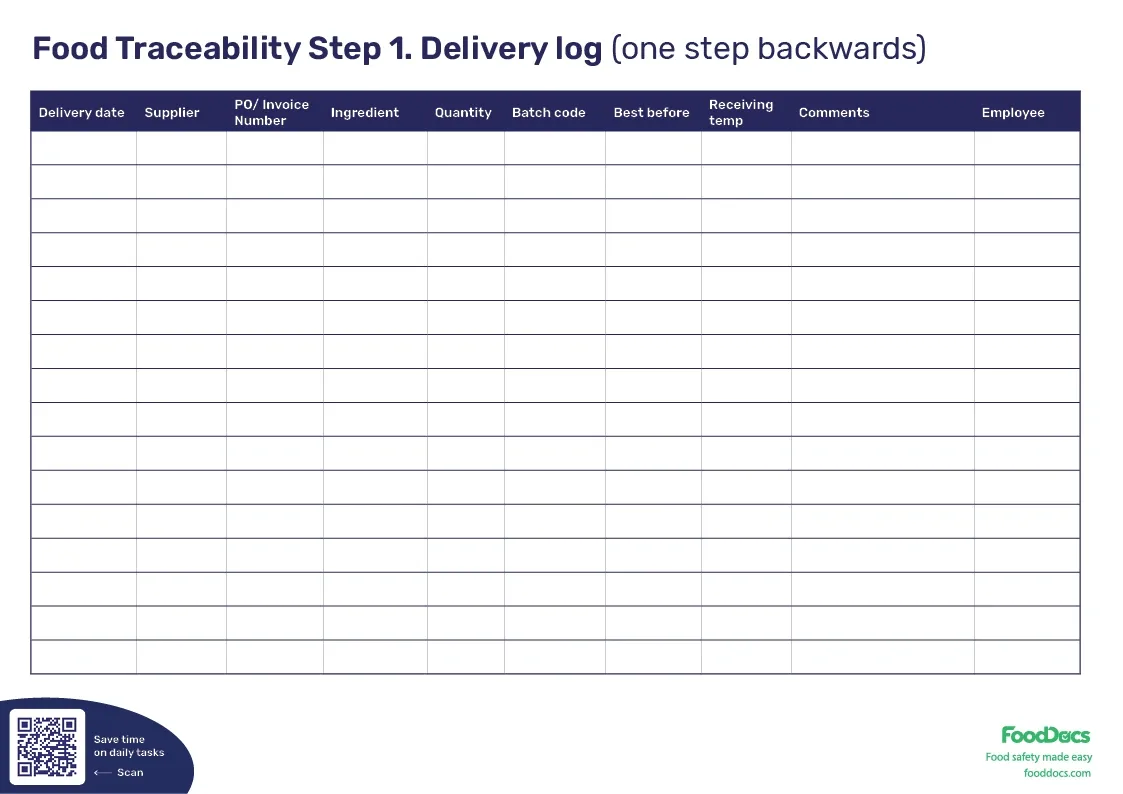
Image Source: FoodDocs
Traceability and Product Recall Procedures
Establishing traceability systems
Traceability modules track each ingredient batch from facility entry through production to finished product batches [26]. This capability proves critical when you find undeclared allergen contaminants at supplier level and allows instant identification of affected products that require recall or withdrawal [26]. Manufacturers can verify that no allergen-containing ingredients were mixed into allergen-free products [26]. The system provides automatic compilation of paper trails as production runs and lot numbers are logged [26].
Batch coding and record keeping
Batch records document raw materials becoming finished goods and detail processing dates, lots and quantities of materials used, staff involved, and equipment used [10]. These records ensure supply chain traceability and make them vital to ensure quality assurance and regulatory compliance [10]. Electronic batch records created by manufacturing software with traceability functionality allow automated lot tracking [10]. This virtual paper trail identifies root causes of issues and traces product non-conformities back to specific stock lots, workstations, or employees [10].
Product withdrawal vs recall
Withdrawal removes unsafe food from the supply chain before it reaches consumers, whilst recall removes food that already reached consumers [12]. Manufacturers who find harmful, unfit, or non-compliant food must withdraw or recall products and notify competent authorities right away [12]. Supplier and customer records remain a legal requirement to maintain [12].
Managing allergen-related incidents
FSA publishes allergy alerts when products are recalled due to undeclared allergens [26]. Recalls get pricey through retailer reimbursements, handling returns, and damaged customer trust [26]. Root cause analysis determines how and why problems occurred and enables effective long-term preventative actions [12]. Enforcement authorities forward root cause analysis results to FSA to identify industry-wide best practise [12].
Meeting BRCGS Allergen Requirements and Industry Standards
Image Source: Mérieux NutriSciences AQ
BRCGS allergen management expectations
Allergen management under BRCGS represents a fundamental clause, with clause 5.3 designated as critical [16]. Failure to comply results in major non-conformity and automatic audit failure [16]. Allergen management affects all aspects of the Standard. Failures can lead to allergen issues even when allergens are not mentioned in requirement wording [8].
Incorrect allergen management causes the most product recalls [13]. Root cause analysis identifies three main failures: unintentional allergen presence through cross-contact or wrong recipe use, mis-packing from insufficient changeover controls, and wrong packaging labels from specification errors or ineffective change management [13]. BRCGS requires a documented allergen management plan that serves to identify, control, educate and communicate allergen risks from raw materials through finished products [13].
SALSA certification requirements
SALSA certification demands well-laid-out approaches underpinned by meticulous documentation and proactive risk management [27]. The core requirements include complete records for supplier management, cleaning schedules and product traceability [27]. Staff training remains critical, with all employees understanding food safety protocols through ongoing refresher courses [27].
Knowing how to work with HACCP is critical, as the SALSA Standard requires those responsible for HACCP to have appropriate training and demonstrate competence in HACCP principles [28]. SALSA audits require 5-6 hours [29].
Audit preparation and documentation
Manufacturers should review all food safety documentation well before audit dates and check for expired supplier certifications [14]. HACCP plans require review at least four times a year [14]. All management must attend opening meetings [14]. Pre-assessment audits reveal blind spots before official certification audits [16]. Manufacturers have 28 days to complete corrective actions after audits [14].
Conclusion
Effective allergen management protects consumers while safeguarding businesses from pricey recalls and reputational damage. Manufacturers need strong systems at every stage of production to track 14 allergens, follow stringent UK regulations, and reduce cross-contamination risks.
Detailed allergen control plans, staff training programmes, and confirmed cleaning procedures create a foundation for compliance. Accurate labelling and traceability systems provide the final safeguards that consumers depend upon.
Manufacturers who invest in detailed allergen management systems meet legal obligations and build customer trust. Treating allergen control as a priority rather than an afterthought proves essential for long-term success in UK food manufacturing.
Key Takeaways
Effective allergen control in UK manufacturing requires comprehensive systems spanning risk assessment, staff training, and regulatory compliance to protect consumers and avoid costly recalls.
• UK law mandates declaration of 14 specific allergens, with Natasha’s Law requiring full ingredient lists on prepacked-for-direct-sale foods since October 2021.
• Implement HACCP-based allergen management systems with validated cleaning protocols, equipment segregation, and production scheduling to prevent cross-contamination.
• Conduct thorough allergen risk assessments identifying all potential contamination sources, documenting procedures, and reviewing systems when operations change.
• Use precautionary allergen labelling (“may contain”) only after risk assessment confirms genuine cross-contamination risks that cannot be eliminated through control measures.
• Establish robust traceability systems with detailed batch records enabling rapid product withdrawal or recall when allergen incidents occur.
Remember: allergen failures cause the majority of food recalls and can result in serious harm to consumers. Treating allergen management as a critical business priority rather than a compliance afterthought ensures both consumer safety and business protection.
FAQs
Q1. What are the 14 allergens that must be declared on food labels in the UK? UK legislation requires manufacturers to declare 14 specific allergens: celery, cereals containing gluten (wheat, rye, barley, oats), crustaceans, eggs, fish, lupin, milk, molluscs, mustard, peanuts, sesame, soybeans, sulphur dioxide and sulphites (above 10mg/kg), and tree nuts (almonds, hazelnuts, walnuts, cashews, etc.). These allergens must be declared when present as ingredients, processing aids, or any other substances in the final product.
Q2. What is Natasha’s Law and how does it affect food manufacturers? Natasha’s Law came into force on 1st October 2021 and requires prepacked for direct sale (PPDS) foods to display the product name, a full ingredients list, and emphasised allergenic ingredients directly on the packaging. This legislation was introduced following the tragic death of Natasha Ednan-Laperouse in 2016 and applies to food packed on-site for consumer sale, requiring businesses to update information whenever suppliers or ingredients change.
Q3. How can food manufacturers prevent allergen cross-contamination in production facilities? Manufacturers can prevent cross-contamination through several methods: using dedicated equipment and colour-coded utensils for allergen-containing products, implementing production scheduling that runs allergen-free products first, maintaining physical separation in storage areas, establishing validated cleaning protocols between product changeovers, and controlling air flow to prevent airborne allergen particles from entering allergen-free zones.
Q4. When should manufacturers use “may contain” statements on food labels? Precautionary allergen labelling such as “may contain” should only be used after conducting a thorough risk assessment that identifies a genuine risk of allergen cross-contamination that cannot be eliminated through control measures. It should not be used as a substitute for good hygiene practises or applied as a blanket statement. The labelling must be specific to identified allergens and cannot be combined with “free-from” claims for the same allergen.
Q5. What are the key requirements for BRCGS allergen management certification? BRCGS requires a documented allergen management plan that identifies, controls, educates, and communicates allergen risks throughout production. Clause 5.3 on allergen management is designated as critical, meaning failure to comply results in major non-conformity and automatic audit failure. Manufacturers must implement validated cleaning procedures, maintain comprehensive traceability systems, provide staff training, and conduct regular risk assessments to meet certification standards.
References
[1] – https://www.rssl.com/insights/food-consumer-goods/designing-a-successful-allergen-cleaning-validation-strategy/
[2] – https://www.allergyuk.org/types-of-allergies/food-allergy/top-14/
[3] – https://menuguide.pro/food-allergens/
[4] – https://www.food.gov.uk/sites/default/files/media/document/top-allergy-types.pdf
[5] – https://www.ncass.org.uk/news/what-are-the-14-main-allergens/
[6] – https://safetyculture.com/topics/allergen-management
[7] – https://www.food.gov.uk/business-guidance/precautionary-allergen-labelling
[8] – https://www.brcgs.com/product/effective-allergen-management/p-10304/
[9] – https://www.food.gov.uk/business-guidance/allergen-labelling-for-food-manufacturers
[10] – https://www.chemicalindustryjournal.co.uk/keeping-perfect-batch-records-in-chemical-manufacturing
[11] – https://www.klipspringer.com/blogs/allergen-cleaning-validation-a-practical-guide-for-food-factories/
[12] – https://www.food.gov.uk/business-guidance/food-incidents-product-withdrawals-and-recalls
[13] – https://www.brcgs.com/media/2170588/allergen-mgt-22-sample.pdf
[14] – https://documentcompliance.com/resource/tips-for-preparing-for-a-brcgs-audit/
[15] – https://www.food.gov.uk/business-guidance/allergy-training-for-food-businesses
[16] – https://fsns.com/how-to-prepare-for-a-brcgs-food-safety-audit/
[17] – https://www.thesafetyexpert.co.uk/prevent-allergen-cross-contact/
[18] – https://www.fdf.org.uk/globalassets/resources/publications/guidance/allergen-recall-prevention-guidance.pdf
[19] – https://certified-laboratories.com/blog/food-allergen-testing-avoiding-allergen-cross-contact/
[20] – https://www.rapidmicrobiology.com/news/avoiding-allergen-cross-contamination-points-to-consider
[21] – https://www.factssa.com/news/infographic-the-difference-between-allergen-cleaning-validation-and-verification/
[22] – https://www.fda.gov/media/129671/download
[23] – https://www.fda.gov/media/129670/download
[24] – https://www.hvds.co.uk/managing-food-allergies/
[25] – https://info.allergenbureau.net/infographic/rework/
[26] – https://www.myfoodsafe.co/post/allergen-control-and-labelling-a-practical-guide-for-small-uk-food-and-drink-producers
[27] – https://foodcompliancehq.com/article/show/achieving-salsa-certification-guide
[28] – https://www.salsafood.co.uk/learning/allergen-management
[29] – https://www.highspeedtraining.co.uk/hub/what-is-salsa-accreditation/