
 Wrong labels account for 75% of food recalls, highlighting failures in allergen management systems throughout the UK food industry. Food allergies affect between 1-2% of the UK population. Getting it wrong with allergenic ingredients can be life-threatening. Strong allergen risk assessment UK protocols are now essential to comply legally and protect consumers. This piece gets into legal requirements under UK food safety law, HACCP integration principles and step-by-step risk assessment methodology. We also cover cross-contamination evaluation techniques and documentation standards that meet regulatory expectations and protect allergic consumers.
What is allergen risk assessment and why is it essential
Image Source: High Speed Training
Definition and core purpose of allergen risk assessment
Allergen risk assessment represents a systematic process used to understand the likelihood of unintentional allergen cross-contamination across the supply chain, from raw materials to finished products [1]. This methodical evaluation identifies and assesses allergen-related risks through analysing raw materials, scrutinising potential cross-contact hazards during production, and confirming precise allergen labelling [2].
The core purpose centres on determining where allergens could unintentionally enter food products that are not intended to contain them. Food businesses must review which allergenic foods or ingredients could get into contact with their products, how cross-contamination could happen, and the routes through which allergens might transfer [1]. The physical nature of particular ingredients, whether liquid, powder or pieces, and the geography of the manufacturing environment play the most important roles in this evaluation [1].
Risk analysis operates through four distinct stages that are the foundations of effective allergen control [1]. Risk assessment establishes what the risk is. Risk management determines whether the risk can be managed and what actions could reduce it. Risk communication addresses how the risk should be communicated to relevant parties. Risk review examines whether the risk has changed and establishes appropriate review frequencies [1].
The role of risk assessment within allergen management systems
Allergen risk assessment functions as an integral component of effective allergen risk management in industrial food manufacture [3]. While allergen management systems provide the overarching framework for controlling allergenic ingredients, risk assessment delivers the analytical foundation that drives control decisions.
Food manufacturers must think over allergens when undertaking their HACCP assessment, which identifies whether an allergen can be eliminated or informs the processes needed to manage the risk [1]. A separate allergen risk assessment can be undertaken and utilises the process flow from HACCP to review allergen risks in isolation [1]. This dual approach will give allergen hazards dedicated analysis within the broader food safety framework.
The assessment informs control measure identification and selection. Manufacturers require suitable analytical methods to identify and calculate allergenic cross-contamination during food production [3]. These same analytical tools then verify the efficiency of measures targeted at allergen reduction, such as cleaning plant and equipment between product changeovers [3].
Supplier management feeds directly into risk assessment quality. Good supplier management informs decisions on appropriate frequency of checks on raw materials and specification checks [1]. Businesses must review whether incoming foods or ingredients unintentionally contain allergens and examine precautionary allergen labels and supplier information showing potential allergen presence [1].
How allergen risk assessment protects allergic consumers
Risk assessment protects allergic consumers through multiple mechanisms that address both immediate safety and quality of life over the long term. The main goal centres on preventing allergic reactions by facilitating cross-contamination prevention through appropriate labelling and product safety [2].
Clinical evidence supports the protective function of documented risk assessment. Reference doses calculated from provocation data demonstrate that 95-99% of allergic individuals would tolerate foods assessed using established reference thresholds [3]. Reference doses for peanut, milk, eggs and hazelnut protect 99% of allergic individuals, whilst reference doses for soy, wheat, cashew, mustard, lupin, sesame seed, shrimp and fish provide protection for 95% of affected allergic individuals [3].
Risk assessment enables food businesses to make evidence-based decisions about control measures and labelling. Precautionary allergen labelling should only be used where a risk of allergen cross-contamination has been identified that cannot be removed [1]. This approach prevents the overuse of precautionary statements that can misrepresent real risks and reduce consumer confidence.
The assessment process identifies critical control points where allergens could be introduced or cause cross-contamination [4]. Businesses can implement targeted interventions that address actual hazards rather than theoretical concerns by evaluating how control measures reduce or eliminate cross-contamination risk [1]. This systematic approach protects allergic consumers and will give a high quality of life for those affected [3].
Legal requirements for allergen risk assessment in the UK
Image Source: Food Standards Agency
Food Safety Act 1990 and due diligence obligations
The Food Safety Act 1990 establishes the legal foundation for allergen risk assessment UK obligations through its due diligence defence provisions. Section 21 of the Act stipulates that food businesses must prove they took all reasonable precautions and exercised all due diligence to avoid committing offences [5]. This defence requires businesses to demonstrate they carried out all reasonable checks of their food in all the circumstances. Alternatively, it was reasonable for them to rely on checks the person who supplied the food carried out [6].
Due diligence extends beyond reactive measures. Food safety systems records, HACCP procedures in particular, demonstrate compliance and prove that businesses want to follow necessary safety standards to make food safe for consumption [6]. The legislation makes it an offence to sell or process food for sale which does not meet its requirements [5]. Then businesses must establish documented evidence that allergen risks have been reviewed and controlled in a systematic manner.
The Act’s enforcement mechanism operates through local authorities who monitor and ensure food safety standards are met in their respective areas [7]. Failure to comply can result in improvement notices, and businesses that do not meet notice requirements face penalties [5]. This legal framework makes allergen management a matter of legal obligation rather than voluntary good practise.
Food Information Regulation (FIR) requirements
The Food Information Regulations 2014 impose specific requirements on food businesses to provide allergen information to customers [8]. Under Article 9(1)(c) of the FIC, all food business operators must declare the presence of any of the 14 major allergens listed in Annexe II to the Regulation, whether used as an ingredient or processing aid [9]. This requirement became law in December 2014 and mandates businesses to provide information about allergenic ingredients used in any food they sell or provide [10].
Food manufacturers must think over allergens at the time they undertake their HACCP assessment. This assessment identifies whether an allergen can be eliminated or informs the processes needed to manage the risk [8]. Good Manufacturing Practise requires a commitment to ensure products meet food safety, quality and legal requirements through appropriate manufacturing operations. This includes effective food safety systems and hazard analysis principles [8].
Natasha’s Law came into force on 1 October 2021 and further amended the FIR to require businesses to label all food that is pre-packed for direct sale (PPDS) with a full list of ingredients and the 14 allergens emphasised in bold [11]. These legislative changes bring allergen information provision in line with labelling for prepacked food and reduce consumer confusion [9].
Which organisation identified the 14 allergens
The Food Standards Agency, as the central authority for food safety and food standards, developed allergen management guidance for businesses [11]. The 14 allergens listed in Annexe II of the FIC are recognised as the most common ingredients or processing aids that cause food allergies and intolerances [9]. These allergens have been prioritised as the most potent and prevalent allergens affecting consumers in the UK and EU [10].
EU legislation retained at the time the UK exited the EU became assimilated law on 1 January 2024 and was published on legislation.gov.uk [5]. References to any legislation in FSA guidance with ‘EU’ or ‘EC’ in the title should now be regarded as assimilised law where applicable to GB [1].
Documentation and evidence expectations under UK law
Documentation requirements under UK law extend beyond simple ingredient lists. Environmental Health Officers expect to see relevant allergen control measures documented in food safety management systems [12]. Members of professional bodies must familiarise themselves with control measures in risk assessments and adapt them where necessary so they are applicable to their business. They must also ensure proper implementation [12].
Precautionary allergen labelling presents specific documentation challenges. Although PAL is voluntary food information under the FIC, it should only be used at the time a risk of allergen cross-contact within the supply chain is identified that cannot be removed through risk management actions, as determined by a risk assessment [8]. The use of PAL at the time no genuine risk to the consumer has been identified could be misleading food information [8]. Any voluntary food information must comply with Chapter V of the FIC requirements. These requirements specify that voluntary statements must not mislead consumers or be ambiguous or confusing [9].
Integration of allergen risk assessment with HACCP and food safety management systems
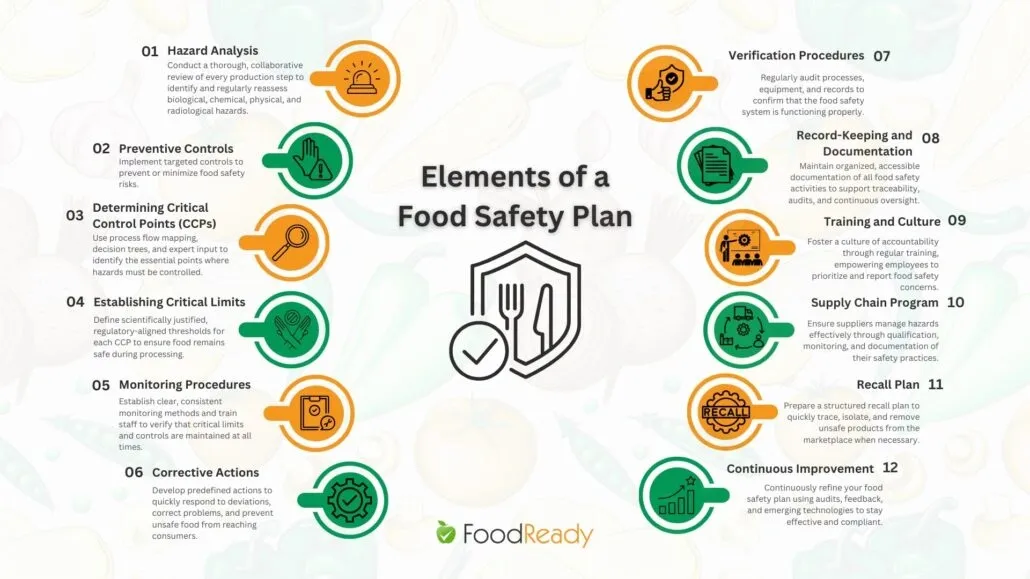
Image Source: FoodReady AI
HACCP-based food safety systems provide the structural framework within which allergen risk assessment operates. Research shows that risk assessment focused almost exclusively on microbiological risks rather than those from allergen cross-contact. HACCP was not routinely used to inform allergen risk assessments [13]. But regulatory expectations have moved considerably. Food businesses should see allergen management as an integral part of existing food safety management rather than a completely new or separate system [8].
HACCP principles and allergen hazard analysis
HACCP requires the identification of allergen hazards, also classified as chemical hazards [14]. Food safety systems based on HACCP principles address safety through the analysis and control of biological, chemical, and physical hazards from raw material production, procurement and handling, to manufacturing, distribution and consumption of the finished product [5]. Allergens fall within the chemical hazard category, which has allergens and radiological substances.
The HACCP plan needs to identify any potential allergen hazards that may occur at each step in the process [14]. The HACCP team reviews the ingredients used in the product during hazard analysis. They also review the activities conducted at each step in the process and the equipment used, the final product and its method of storage and distribution, and the intended use and consumers of the product [5]. The team develops a list of potential biological, chemical or physical hazards based on this review. These hazards may be introduced, increased, or controlled at each step in the production process.
Control measures or allergen preventive controls that work will need to be documented to control this potential risk [14]. Allergens are a chemical hazard and should be part of the hazard analysis for each ingredient containing allergens, and for each process step where allergens are handled [6]. Where allergens are monitored at a step, such as review of allergen scheduling and label reviews, those actions should be part of the hazard analysis as a description of the control.
Linking allergen risk assessment to prerequisite programmes
All food businesses must have prerequisite programmes (PRPs) in place. These are the conditions and activities necessary to maintain a hygienic environment [15]. There are 14 EU recognised allergens and controls must be put in place to prevent their unintentional presence in foods from cross-contamination [15]. PRPs can be used to control allergens based on two approaches: by keeping allergens out of the premises through good supplier control, or by implementing strict measures to minimise the potential for cross-contamination.
An allergen control plan functions as a life-blood prerequisite programme to the HACCP food safety system. It focuses on allergenic hazards [16]. PRPs can control the majority of hazards, so they are the foundations for the HACCP-based procedures that businesses implement [15]. HACCP-based procedures focus on controlling the steps which are critical to ensure the preparation of safe food once PRPs are in place.
Prerequisite programmes such as current Good Manufacturing Practises (cGMPs) are an essential foundation for the development and implementation of successful HACCP plans [5]. The production of safe food products requires that the HACCP system be built upon a solid foundation of prerequisite programmes. The existence and how well prerequisite programmes work should be assessed during the design and implementation of each HACCP plan. All prerequisite programmes should be documented and audited regularly.
Arrangement with HACCP documentation and verification activities
Monitoring usually has some element of record-keeping, which may be managed to keep manually or through digital systems [9]. The goal of any monitoring activity is to provide sufficient evidence that any limit of acceptability has been met. Common allergen management monitoring requirements are manual recording and the application of corrective actions when the results of monitoring are found to be outside acceptable limits.
Verification is the act of reviewing, inspecting, testing, checking, auditing, or otherwise establishing and documenting whether items, processes, services, or documents conform to specified requirements [9]. Verification is the detailed review of all food safety and quality system elements to confirm that they are developed, documented, implemented, monitored, and reviewed in a way that works. Corrective actions and preventative actions should be implemented when non-conformances are identified through the verification process. This ensures they do not affect how well the food safety and quality system works.
Verification is the process of gathering evidence to provide a scientific basis for the documented act of showing that a procedure, process, and activity will lead to the expected results consistently [9]. Common sources of verification are regulatory and legislative standards, finished product specifications and customer requirements, industry codes of practise and guidelines, verified research, historical product and process control outcomes, and analytical testing.
ISO 22000 and food safety management system integration
ISO 22000 now has specific allergen requirements due to the publication of the basic requirements programme PAS220 [7]. Businesses can choose their own prerequisite programme within ISO 22000, though Codex documents or the prerequisites programme from the HACCP certification scheme are often used for this purpose. Specific requirements regarding allergen management are part of paragraph 10.3.
The requirements stipulate that labelling the presence of allergens due to cross-contamination is mandatory, both for consumer products and products intended for further processing [7]. Cross-contamination must be prevented. Rework may only take place in products that contain the same allergens, or is permitted if the allergens are removed or destroyed demonstrably. Personnel must receive training so that they are aware of the risks of allergens and the actions in their work during production that influence them.
Compliance with allergen management requirements needs the establishment of multiple documented management systems, each addressing specific aspects of allergen control [17]. These documented systems form an integrated allergen management programme that functions as a subset of the broader food safety management system, with clear linkages to HACCP planning, prerequisite programmes, and good manufacturing practises.
Step-by-step allergen risk assessment methodology
Effective allergen risk assessment methodology requires a structured, multi-disciplinary approach with technical, quality, production, procurement, innovation and maintenance personnel [10]. This team-based model mirrors HACCP principles and addresses allergen-specific hazards through systematic evaluation stages.
Hazard identification: allergenic ingredients and sources
Hazard identification begins with compiling a detailed list of all raw materials, processing aids, work-in-process materials and rework products. Teams cross-reference this against current product specifications to confirm all declared allergens have been captured [10]. You must verify this list against actual products stored in warehouses and new product development areas to confirm inventory accuracy [10]. The physical form of allergens determines contamination risk profiles. Powdered allergens such as flour, milk powder and soy isolate present greater airborne spread risks compared to particulate allergens like sesame and tree nuts. These spread through personnel movement and cleaning practises [10]. A finished product allergen matrix documents allergens present in finished products and informs production scheduling decisions [10].
Cross-contact risk evaluation in production
Cross-contact evaluation gets into environmental contamination sources at receival and storage areas, ingredient weigh-up stations, transfer protocols, production processes and packing operations [10]. Assessment teams walk through facilities and follow process flow diagram sequences. They identify allergen presence and cross-contact possibilities at each step [10]. Critical evaluation points include segregation effectiveness between allergens and non-allergens, storage configurations that prevent allergen spills onto non-allergenic materials, designated utensils for allergen weigh-up, dust extraction systems for powdered ingredients, verified cleaning processes between production runs, protective clothing protocols, air-conditioning outlet locations and waste-handling procedures [10].
Process mapping and flow diagrams
Current process flow diagrams for each unique production process serve as guides for querying potential allergen cross-contamination from equipment and environment [10]. These diagrams enable systematic looks at ingredient flow, equipment contact points and environmental exposure risks throughout manufacturing sequences.
Risk scoring: likelihood versus severity matrix
Risk assessment uses semi-quantitative estimation to determine whether hazards are likely to occur. Teams express this as risk scores by multiplying hazard severity scores by likelihood scores [11]. Likelihood scores range from unlikely (score 1), likely (score 2) to very likely (score 3) [11]. Hazard severity depends on possible consequences, scored on a three-point scale: minor injury or effect (score 1), major injury or effect (score 2) or death (score 3) [11]. Allergen severity assessment depends on the allergenic ingredient’s characteristics and the sensitised individual’s response spectrum. This ranges from mild reactions to fatalities [11]. Hazard characterisation thinks about the physicochemical nature of allergens, associated protein levels, heterogeneous or homogeneous distribution, recipe concentration, aerosol or dust generation potential, existing barriers restricting allergen spread, processing levels undergone and equipment configuration affecting cleaning ease [11]. Calculation of hazard ratings uses numerical data including potency scores derived from threshold studies, allergenic protein content percentages and physical form scores. These scores measure dilution potential through processing stages for liquids, powders, viscous pastes and particulates [11].
Control measure identification and selection
Assessment teams distinguish probable risks from remote contamination opportunities after risk identification [10]. Probable risks require practical and workable control measures to eliminate, reduce or prevent allergen contamination [10]. Control measure rigour determines cross-contamination likelihood and provides confidence in operational practises [10]. Designated allergen storage and handling areas must be identified on floor plans. Teams communicate corresponding control measures to staff [10].
Validation of control measures
Validation quantifies otherwise subjective qualitative assessments and represents a fundamental component of HACCP systems [11]. ISO 22000 and PAS 220 standards require formal validation of critical control points and prerequisite programmes [11]. The allergen mapping process provides validation evidence for finished products with allergen ‘free from’ claims. It delivers rationale for allergen cross-contact labelling decisions [10]. Validation outputs feed into allergen control plans, documentation systems including standard operating procedures and work instructions, and training programme development [11].
Assessing cross-contamination risks in production environments
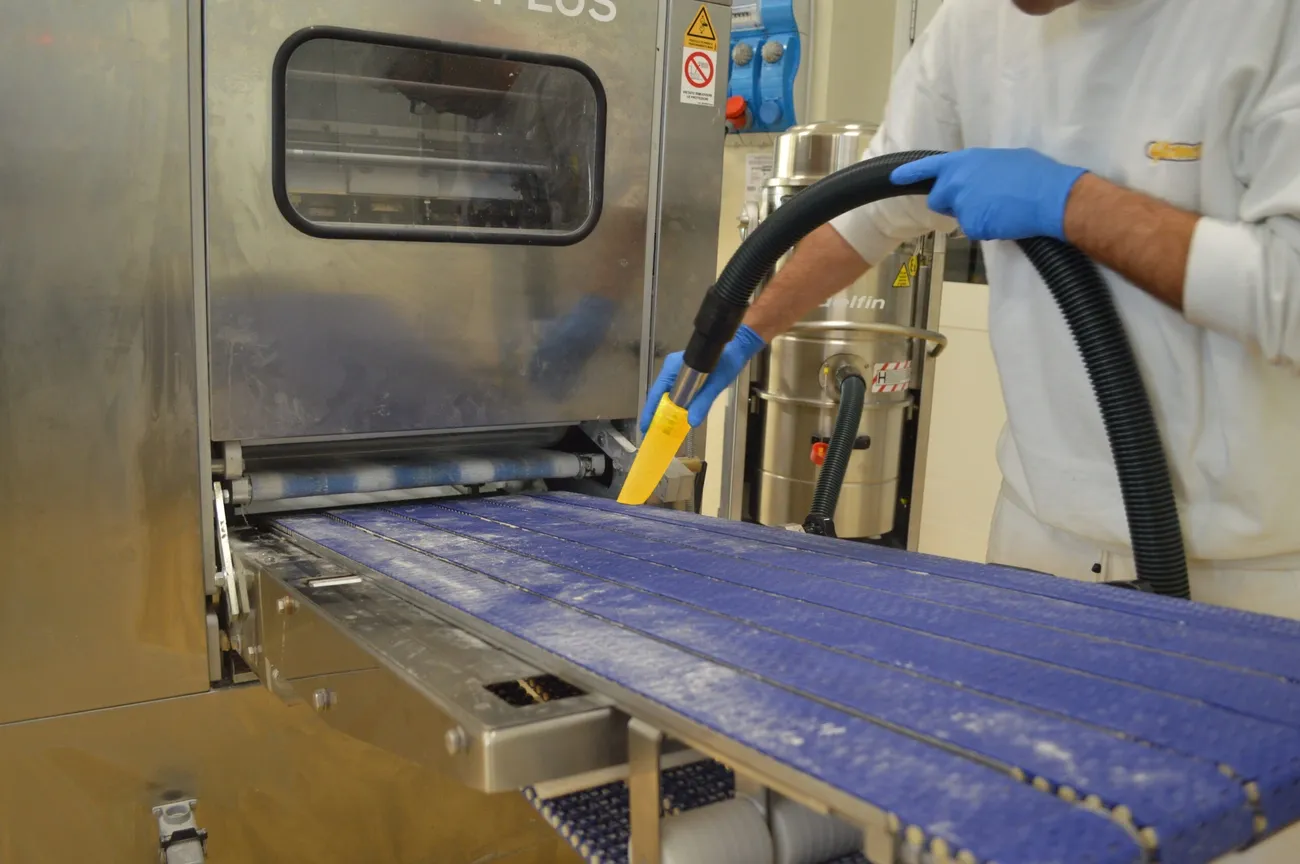
Image Source: Delfin Industrial
Cross-contamination assessment gets into multiple risk vectors in production environments of all types. Staff need training on allergen cross-contamination risks when they handle and prepare foods and on prevention methods [18]. Assessment teams assess potential sources during processing, manufacturing, handling, transport and storage [1].
Environmental risks and allergen spread
Airborne particles from allergenic ingredients like flour or nut powders travel through air and settle on surfaces [19]. Facilities that switch between allergen-containing and allergen-free product lines need verified removal of allergenic proteins through environmental monitoring programmes [20]. Air flow controls prevent airborne allergen particulate matter from entering allergen-free zones [21].
Equipment configuration and cleaning ease
Shared equipment creates cross-contact opportunities through dust, residues and changeover errors. Deep fat fryers used for battered fish cannot cook gluten-free chips in the same oil [22]. Equipment must be capable of cleaning that works with verified protocols [1].
Production scheduling and segregation practises
Production scheduling by allergen sequence reduces cross-contamination. Food prepared from least allergenic to most allergenic prevents unintentional allergen introduction [1]. Grouping similar allergen profiles minimises changeovers [23].
Personnel practises and allergen handling risks
Food handlers wash hands between preparing different dishes to prevent allergen transfer [22]. Hand sanitising gel does not remove allergens sufficiently [24]. Personnel movement from clean to dirty areas needs controlled pathways [25].
Raw material and supplier risk inputs
Supplier approval processes incorporate allergen risk assessment, continuous monitoring and immediate notification of allergen profile changes [23]. Incoming deliveries need verification before unloading starts [8].
Documentation requirements and maintaining robust allergen risk assessments
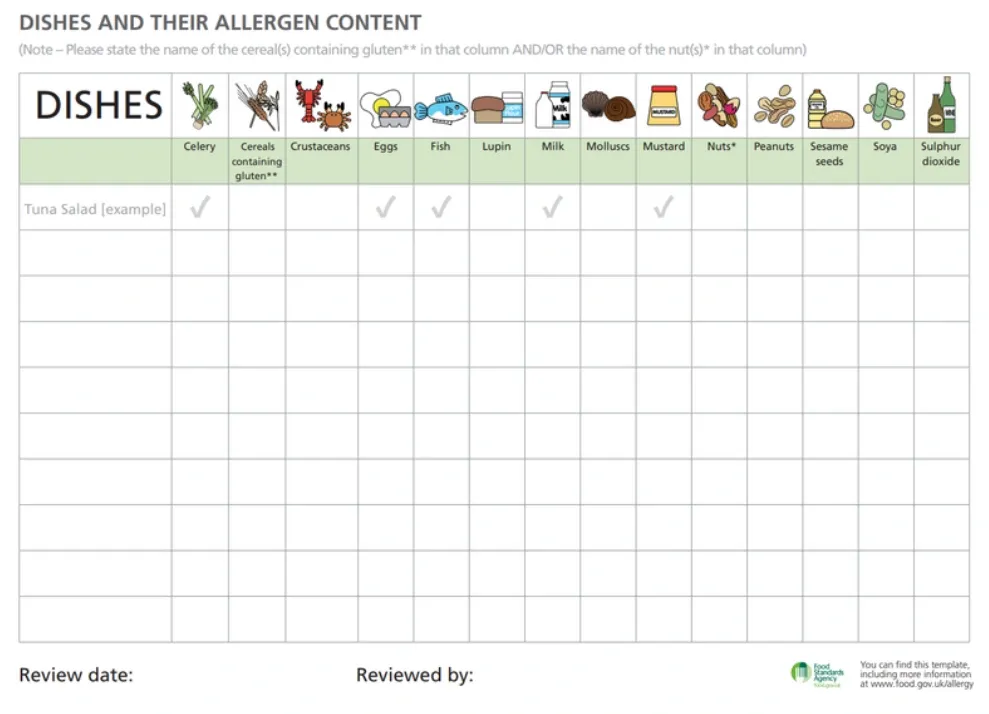
Image Source: The Safety Expert
Essential documentation components
The quickest record-keeping systems blend allergen status into existing operational paperwork. This includes delivery invoices and checklists [8]. Procedures must identify dedicated personnel responsible for updating written allergen information when recipe or ingredient changes occur [12]. Accurate recipe lists provide clear allergen declarations for all served foods [12]. Documentation extends to cleaning instructions for premises, equipment and work tools [12]. Staff training records show annual allergen and food hypersensitivity education [12].
Difference between theoretical risk assessment and ground validation
Theoretical assessments identify potential risks through facility walkthroughs and hazard documentation [26]. Ground validation requires testing to confirm allergenic components remain in final products and at what concentrations [27]. Cleaning validation testing provides objective evidence that removal procedures eliminate allergen proteins. Theoretical assessments merely document cleaning protocols without verification [28].
Review frequency and triggers for reassessment
Assessment frequency depends on operational scale, manufacturing complexity and product diversity [5]. Annual reviews represent best practise, alongside reassessments triggered by production process changes, raw material modifications or regulatory updates [5]. Menu changes prompt risk assessment reviews, with intervals ranging from every six months to whenever supplier changes occur [6].
Common mistakes and weak risk assessments identified in audits
Intervention records revealed allergen control assessments were of poor quality occasionally, with insufficient information showing full officer evaluation [29]. All but one of these five cases showed inappropriate follow-up action. Recurrent contraventions remained unaddressed and compliance timelines were extended repeatedly [29]. SME businesses conducted piecemeal assessments focusing on select allergens rather than complete evaluation of all allergens present during production [6].
Linking risk assessment outputs to allergen control plans
Risk assessment findings must feed into operational controls to protect allergic consumers. The assessment determines whether current controls manage identified risks and identifies areas that need improvement.
Translating risk assessment findings into control procedures
Control procedures address specific hazards identified during assessment. Documented procedures that eliminate identified risks record which products contain allergens and separate them from allergen-free products. HACCP-based allergen cross-contamination analysis has identifying incoming allergens through raw and prepacked suppliers, passing on precautionary information from suppliers, identifying potential cross-contact opportunities on premises, assessing likelihood at each potential issue point, determining hazard ratings, and establishing appropriate control measures.
Training programmes and communication requirements
Staff training transforms risk assessment outputs into practical allergen management. Personnel must complete up-to-date allergen training within the past 12 months, demonstrate confidence in answering customer queries, understand current business procedures, and prove they can follow these procedures. Training should make awareness and competence easier in avoiding allergen cross-contact and cover labelling application accuracy.
Label management and precautionary labelling decisions
Precautionary allergen labelling requires justification through meaningful risk assessment applied to responsibly managed operations. PAL should only be used when genuine, unavoidable allergen cross-contact risk exists that cannot be removed through risk management actions. Blanket statements like “may contain allergens” could be deemed misleading because they lack assessment of cross-contamination risk for each of the 14 regulated allergens. Businesses should avoid pairing precautionary labelling with free-from statements for the same allergen.
Cleaning validation and its role in risk reduction
Cleaning validation gives objective evidence that removal procedures eliminate allergen proteins. Validation should focus on worst-case scenarios and choose targets present at high levels with high protein content that prove difficult to clean. ELISA testing offers quantitative results for protein detection, whereas visual inspection remains the gold standard when particulate residues present concern. Successful validation requires three consecutive rounds achieving non-detectable results for all post-clean and next off-line samples.
Practical allergen risk assessment examples and case studies
Image Source: Food Safety Magazine
Example: Strong allergen risk assessment in bakery operations
A Christchurch bakery conducted confirmed changeover testing between sesame-containing and non-sesame products. After low sesame batches (0.5% sesame), protein was not detected in any of 17 dough samples that followed [30]. After high sesame batches (6% sesame), sesame appeared in only two of 29 samples at 3-4 ppm concentrations [30]. The bakery incorporated mixer wash steps between high-sesame processing and showed how documented control measures reduce cross-contact frequency and concentrations by a lot.
Example: Weak risk assessment and compliance failures
Mohammed Zaman’s Indian Garden restaurant substituted almond powder with cheaper peanut-containing ground nut mix without allergen risk reassessment. This resulted in customer Paul Wilson’s death from anaphylactic shock and a manslaughter conviction [31]. A Hertfordshire restaurant served allergen-containing food despite parents raising concerns twice, and this led to a severe child reaction and £26,802.76 fine [32]. An NSW manufacturer faced repeated recalls for undeclared walnuts and almonds and ended up receiving combined fines of £38,119.69 plus £16,677.36 costs [33].
Lessons from industry audits and inspections
Audits identified allergen control assessments as poor quality with insufficient evaluation evidence at times [reference from previous context]. Four out of five cases showed inappropriate follow-up with recurrent contraventions unaddressed [reference from previous context]. SME businesses conducted piecemeal assessments on select allergens rather than complete evaluations.
Allergen risk assessment example for UK food businesses
Caterers must document hazards (ingredient changes) and identify who faces harm (allergic customers). They need to record current procedures (allergen separation) and specify further actions (staff notification of changes) [13].
Frequently asked questions about allergen risk assessment
Image Source: GOV.UK
Businesses question their legal obligations and practical implementation approaches at the time they develop allergen risk assessment UK programmes.
What happens if cross-contamination cannot be avoided?
Food businesses must inform customers when allergen-free dishes cannot be provided due to unavoidable cross-contamination risks. You explain your inability to confidently cater for specific needs with care, and this remains acceptable and legally prudent.
Who enforces allergen information regulations?
Local authorities enforce allergen information regulations. Failure to comply can result in action from the local authority and financial penalties. Reputational damage may follow.
Must staff receive allergen training?
Food businesses must ensure staff receive training on allergens. Training should cover allergen handling and cross-contamination prevention. Customer communication protocols matter too. Good practise means you record all training given to staff and deliver refresher training at intervals.
Can precautionary labelling substitute for proper risk assessment?
Precautionary allergen labelling decisions should only follow detailed risk analysis of allergen cross-contact within the food supply chain. Precautionary statements when no genuine risk exists could be misleading food information under FIC requirements.
How frequently should risk assessments be reviewed?
Businesses must review allergen information when new dishes, ingredients, suppliers, menus, equipment or facilities change. This living document requires updates with each delivery or ingredient purchase to maintain accuracy.
Conclusion
Allergen risk assessment is a legal obligation for UK food businesses, not optional practise. The systematic methodology outlined here provides the framework you need to protect allergic consumers and demonstrate due diligence under the Food Safety Act 1990 and Food Information Regulations. HACCP system integration and documented evaluation of cross-contamination risks are the foundations of compliant allergen management. Businesses must establish strong documentation and conduct regular reviews. Staff training needs to arrange with assessment findings. This approach prevents life-threatening incidents and satisfies regulatory expectations when done right.
Key Takeaways
Allergen risk assessment is a legal requirement under UK food safety law, not optional practise, with documented evaluation essential for due diligence defence under the Food Safety Act 1990.
• Systematic risk assessment methodology must identify allergenic ingredients, evaluate cross-contamination routes, score likelihood versus severity, and validate control measures through testing • Integration with HACCP systems is mandatory, treating allergens as chemical hazards requiring dedicated analysis within broader food safety management frameworks • Documentation must include comprehensive hazard identification, control procedures, staff training records, and regular review triggers when ingredients or processes change • Cross-contamination assessment examines environmental risks, equipment configuration, production scheduling, personnel practises, and supplier controls across all facility areas • Precautionary allergen labelling requires justification through meaningful risk assessment and should only be used when genuine, unavoidable cross-contact risks exist
Effective allergen risk assessment protects allergic consumers through evidence-based control measures whilst ensuring legal compliance. The structured approach prevents life-threatening incidents, satisfies regulatory expectations, and demonstrates professional food safety management that courts and enforcement officers expect to see during inspections and audits.
FAQs
Q1. What is the purpose of conducting an allergen risk assessment? An allergen risk assessment systematically evaluates the likelihood of unintentional allergen presence in food products through cross-contamination. This process examines raw materials, production processes, and equipment to identify where allergens could unintentionally enter products not meant to contain them, enabling businesses to implement appropriate control measures and make informed decisions about allergen labelling.
Q2. Is it legally required to document allergen risk assessment findings? Yes, UK food businesses must document their allergen risk assessment findings as part of their legal obligations under the Food Safety Act 1990 and Food Information Regulations. Documentation demonstrates due diligence and proves that businesses have taken all reasonable precautions to identify and control allergen hazards, which is essential for regulatory compliance and enforcement purposes.
Q3. How many allergens must be declared on food labels in the UK? UK food businesses must declare the presence of 14 major allergens on food labels as required by the Food Information Regulations 2014. These allergens, listed in Annexe II of the regulation, include common ingredients such as milk, eggs, nuts, gluten, and fish, and must be emphasised in bold within ingredient lists for pre-packed foods and foods pre-packed for direct sale.
Q4. How does allergen risk assessment integrate with HACCP food safety systems? Allergen risk assessment functions as an integral component of HACCP-based food safety management systems, with allergens classified as chemical hazards requiring dedicated analysis. The HACCP plan must identify potential allergen hazards at each process step, whilst allergen control measures are documented as prerequisite programmes that form the foundation for critical control points and verification activities.
Q5. How often should allergen risk assessments be reviewed and updated? Allergen risk assessments should be reviewed annually as best practise, with immediate reassessment triggered by significant changes such as new ingredients, supplier modifications, recipe alterations, equipment changes, or regulatory updates. Menu changes, production process modifications, and any incidents involving allergen control failures also require prompt review to ensure continued effectiveness of control measures.
References
[1] – https://www.food.gov.uk/business-guidance/precautionary-allergen-labelling
[2] – https://foodindustryhub.com/food-industry-knowledge-centre/know-allergen-risk-assessment/
[3] – https://pmc.ncbi.nlm.nih.gov/articles/PMC4792368/
[4] – https://www.neogen.com/fr/aunz/neocenter/blog/strengthening-food-safety-the-role-of-allergen-testing-in-safe-food-production/?srsltid=AfmBOoqgtkjbeRrNxMVh-a6PBu3E-0L0tKsXlETuzeUpfGQmYb-tGh_A
[5] – https://certified-laboratories.com/blog/how-to-conduct-an-allergen-gap-assessment/
[6] – https://www.food.gov.uk/sites/default/files/media/document/Precautionary Allergen Labelling – risk analysis SME FBOs_Clean_May 2022.pdf
[7] – https://www.allergenenconsultancy.nl/en/nieuws/iso-22000-nu-ook-allergeneneisen?srsltid=AfmBOopuRkvF5sSWUSk_fTh0D_z6LQVXeWg85Mtp0eMgwQ0qOZCAHwmb
[8] – https://www.fooddrinkeurope.eu/wp-content/uploads/2022/04/FoodDrinkEuropes-Guidance-on-Food-Allergen-Management-for-Food-Manufacturers-2022.pdf
[9] – https://haccp.com/information/allergen-management/
[10] – https://www.bsigroup.com/globalassets/localfiles/en-za/Food Documents/allergens-facility-mapping-guide.pdf
[11] – https://www.ifst.org/sites/default/files/s_flanagan_2011_ed_0.pdf
[12] – https://www.food.gov.uk/business-guidance/allergen-checklist-for-food-businesses
[13] – https://www.preston.gov.uk/media/1011/Food-allergen-risk-assessment/pdf/Food-Allergen-Risk-Assessment-for-Caterers.pdf?m=1558616112273
[14] – https://haccpmentor.com/allergen-management-programme/
[15] – https://www.fsai.ie/business-advice/running-a-food-business/food-safety-management-system-(haccp)/prerequisite-programmes
[16] – https://www.fooddocs.com/post/haccp-allergen-control-programme
[17] – https://foodindustryhub.com/fsqms-guide/management-of-allergens/
[18] – https://www.food.gov.uk/business-guidance/allergy-training-for-food-businesses
[19] – https://www.labaml.com.au/2026/03/30/hidden-dangers-is-allergen-cross-contamination-undermining-your-food-safety/
[20] – https://www.neogen.com/en/usac/neocenter/blog/environmental-monitoring-for-food-allergens/?srsltid=AfmBOoriII3pJMVswfO_5f-oF6XZEyx_LLtmgIXMFlnw5Bh8Z8Iy5dr2
[21] – https://www.fda.gov/media/129670/download
[22] – https://www.virtual-college.co.uk/resources/food-allergen-training-for-food-handlers
[23] – https://www.fdf.org.uk/globalassets/resources/publications/guidance/allergen-recall-prevention-guidance.pdf
[24] – https://www.foodallergyawareness.org/food-allergy-and-anaphylaxis/cross-contact/cross-contact/
[25] – https://www.crbgroup.com/insights/food-beverage/allergens-food-manufacturing
[26] – https://www.highspeedtraining.co.uk/hub/food-allergen-risk-assessment-checklist/
[27] – https://www.food.gov.uk/business-guidance/4-allergenicity-assessment-within-supplementary-guidance-to-applicants-for-assessment-of-cell-cultivated-products-ccp-in-food
[28] – https://www.qualityassurancemag.com/article/common-errors-in-allergen-management/
[29] – https://www.food.gov.uk/our-work/audit-of-allergen-controls-and-relevant-open-audit-actions-1
[30] – https://www.mpi.govt.nz/dmsdocument/22408-Allergens-in-food-processing-Industry-case-studies
[31] – https://www.anaphylaxis.org.uk/my-account/media-centre/membership-news/non-compliance-with-allergen-information-laws/
[32] – https://www.servelegal.co.uk/news/allergen-compliance-failures-can-cost-lives
[33] – https://www.foodauthority.nsw.gov.au/sites/default/files/_Documents/casestudies/manufacturer_allergen_case_study.pdf