 Undeclared allergens now account for over half of all food recalls in the UK and nearly half of global food safety incidents. This makes HACCP allergen control a critical priority for food business operators. Given this risk, effective allergen management requires full integration into HACCP systems rather than standalone protocols. This has identifying where rework poses an allergen risk and establishing allergen-specific Critical Control Points. Food business operators must also understand what to do while reviewing allergen control systems to ensure compliance and consumer safety.
What is HACCP Allergen Control and Why It Matters
Defining HACCP Allergen Control Programmes
A HACCP allergen control programme represents a systematic, risk-based approach that food businesses use to identify, control and prevent allergenic ingredients from causing unintended exposure to consumers. HACCP methodology categorises allergens as chemical hazards. They require the same rigorous analysis and control measures applied to microbiological and physical hazards. This classification will give allergen management appropriate priority within food safety management systems.
The programme includes documented policies and procedures covering the entire food chain, from raw material sourcing through processing, packaging and service. Allergen management practises form part of good hygiene practises (GHPs). Where appropriate, they must be integrated into HACCP systems in manufacturing, retail and food service operations. The approach is proactive rather than reactive and focuses on preventing hazards before detection in finished products.
Food business operators should identify steps in their operations that pose the likelihood of allergen cross-contact. They assess the level of risk to consumers at those steps and determine which are critical. Effective programmes implement controls to prevent or minimise allergen cross-contact and monitor these procedures. They document their continuing effectiveness. Supplier approval processes, cleaning validation, production scheduling and staff training programmes are the foundations of complete allergen control systems.
Legal Requirements Under UK Food Law
Food business operators in the retail and catering sector are required to provide allergen information and follow labelling rules as set out in food law. Article 9(1)(c) of the FIC requires all FBOs to declare the presence of any of the 14 major allergens listed in Annexe II to the Regulation, whether for use as an ingredient or a processing aid.
The 14 allergens recognised under UK food allergen regulations include cereals containing gluten (wheat, rye, barley, oats), crustaceans, eggs, fish, peanuts, soybeans, milk, tree nuts, celery, mustard, sesame seeds, sulphites above 10mg/kg or 10mg/L, lupin and molluscs. If a food contains or uses an ingredient derived from one of these substances and it remains present in the finished product, information regarding the allergen must be provided to the consumer.
The Food Information Regulations 2014 place mandatory obligations on food businesses to handle and manage food allergens in food preparation effectively. Legislation amending the FIR came into force on 1 October 2021 to improve provision of information for prepacked for direct sale (PPDS) foods. Labels must now include the food name and a full ingredients list with emphasised allergens. This change brings allergen information in line with prepacked food labelling and reduces consumer confusion.
Local authorities enforce allergen information regulations. Failure to comply can result in improvement notices and penalties. Beyond regulatory consequences, businesses face financial and reputational damage if they fail to meet allergen information requirements. Food businesses must make sure staff receive training on allergens and maintain accurate allergen information, as providing food that could be deemed unsafe carries severe legal consequences.
Why Allergens Must Be Fully Integrated into HACCP
Around 6% of the UK adult population have a food allergy, a figure that excludes those with food intolerances [1]. More than that, 1 in 100 people have coeliac disease, a genetic and autoimmune disease triggered by eating gluten [1]. A tiny amount of a food ingredient can produce an allergic reaction. Symptoms range from mild itching and rashes to severe reactions that include vomiting, diarrhoea, difficulty breathing and anaphylaxis [1].
There is no cure for food allergy or coeliac disease. The only way to manage these conditions is to avoid food that triggers the abnormal immune response. Food businesses must provide consumers with clear and accurate information about allergenic ingredients to allow safe food choices. The unintentional presence of allergens in food must be prevented or minimised through preventive measures via GHPs and HACCP-based controls at appropriate stages in operations.
Controlling allergens as an integral part of the HACCP programme allows businesses to demonstrate they are taking all necessary steps to eliminate or reduce the likelihood of an allergen being unintentionally present. This systematic approach increases accuracy of allergenic ingredient declarations and provides opportunities to demonstrate adequate skills and knowledge in allergen management. It reduces risk to consumers from unintended allergen presence.
Integration makes sure allergen hazard analysis receives equal attention to other food safety risks during HACCP studies. Manufacturers should focus on risks associated with process steps whilst thinking about plant activities such as material sourcing, formulation of new products and management of plant trials when conducting hazard analysis on a given product. This integrated approach makes sure that allergen hazards identified during these activities are controlled as part of prerequisite programmes or at critical control points as appropriate.
Understanding the 7 HACCP Principles for Allergen Management
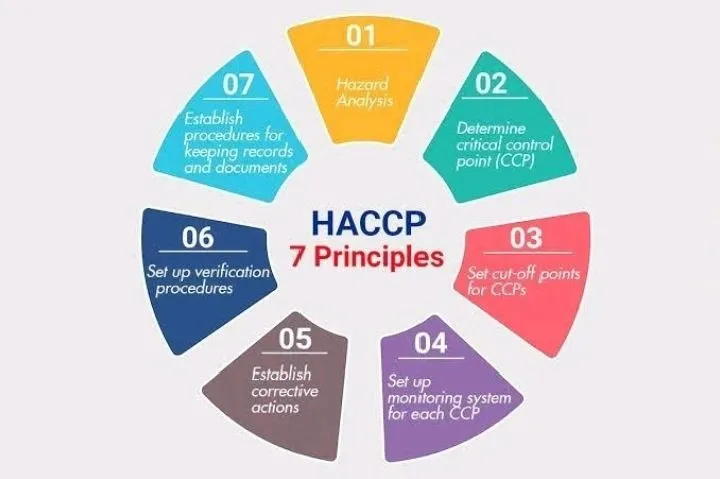
Image Source: LinkedIn
HACCP’s systematic framework operates through seven interconnected principles that provide food business operators with a structured methodology to manage allergen hazards throughout production processes. Food businesses must treat allergens with the same rigour as biological and physical hazards when applying these principles to allergen management.
Principle 1: Conduct Hazard Analysis for Allergens
The hazard analysis is the foundation upon which effective HACCP allergen control systems are built. Food business operators must develop a detailed list of allergen hazards that are reasonably likely to cause injury or illness if not controlled effectively [1]. This analysis should think over ingredients and raw materials, each step in the process, product storage and distribution, and final preparation and use by the consumer.
Manufacturers should focus on risks associated with process steps when conducting allergen hazard analysis. They must also think over other plant activities such as material sourcing, formulation of new products, and management of plant trials [2]. The analysis must identify where allergens could be removed or substituted from food products. It must also identify risks of allergen cross-contact during food processing where allergens could contaminate food products [3]. A full hazard analysis is critical. The plan will not work whatever how well it is followed if hazards warranting control are not identified [1].
Principle 2: Identify Critical Control Points (CCPs) for Allergens
A critical control point is defined as a step at which control can be applied and is key to prevent or eliminate a food safety hazard or reduce it to an acceptable level [1]. The HACCP team must determine which steps are critical to ensuring allergens are declared properly after hazard analysis. This has reviewing recipes and labels on compound ingredients, ensuring correct ingredients are used, and ensuring correct products are packed in correct packages with correct labels [2].
Complete and accurate identification of CCPs is fundamental to controlling food safety hazards. Manufacturers should identify steps in the operation that are critical to allergen declaration and cross-contact prevention [2]. The information developed during hazard analysis is key for the HACCP team in identifying which steps in the process qualify as CCPs for allergen control.
Principle 3: Establish Critical Limits
Critical limits represent maximum and minimum values to which a biological, chemical, or physical parameter must be controlled at a CCP. This prevents, eliminates, or reduces to an acceptable level the occurrence of a food safety hazard [1]. Critical limits for allergens may include absence of allergens, specific cleaning validation thresholds, or procedural requirements for segregation and storage controls.
These limits must be observable and measurable. They must also be subject to immediate monitoring [4]. Critical limits for allergen management often involve validation of cleaning effectiveness. Cleaning procedures must demonstrate allergen removal to safe levels [5]. The limits should not be confused with operational limits set for reasons other than food safety.
Principle 4: Set Up Monitoring Procedures
Monitoring is a planned sequence of observations or measurements to assess whether a CCP is under control. It also produces an accurate record for future use in verification [1]. This helps track operations and makes action possible before a deviation from critical limits occurs.
Monitoring for allergen controls might involve using rapid allergen detection kits or protein swabs to verify cleaning effectiveness. It might also involve conducting routine verification after cleaning and before production of allergen-free products begins [5]. Monitoring must be capable of being made whilst processing is in progress. This allows appropriate corrective actions in good time.
Principle 5: Define Corrective Actions
Corrective actions become necessary where deviation from set critical limits occurs [1]. An important purpose is to prevent foods which may be hazardous from reaching consumers. Food businesses must set clear procedures for responding to allergen deviations. This has segregation of affected product and root cause analysis.
Corrective actions must be put in place quickly and effectively. This ensures food which cannot be proven safe does not get distributed for sale [6]. This has documented investigation of what caused the deviation, how long operations were out of compliance, how much product was affected, and who will ensure implementation of corrective action.
Principle 6: Implement Verification Procedures
Verification activities determine the validity of the HACCP plan. They also confirm the system operates according to the plan [1]. Regular internal audits of production systems should verify that product formulation matches records of allergenic ingredient use. Final products must match ingredients specified on labels. Allergen cross-contact controls must be put in place properly [2].
Principle 7: Maintain Documentation and Records
The existence and effectiveness of prerequisite programmes should be assessed during HACCP plan design and implementation [1]. All prerequisite programmes require documentation and regular auditing. Records must demonstrate monitoring activities, verification results, corrective actions taken, and staff training attendance. This provides traceability and accountability throughout allergen management systems.
Allergen Hazard Analysis Across Your Processes

Image Source: FoodDocs
The main purpose of an allergen risk assessment is to understand the likelihood of unintentional allergen cross-contamination across the supply chain, from raw materials to finished product. You can undertake a separate allergen risk assessment and use the process flow from the HACCP to assess the allergen risks in isolation. This establishes both on-site risk points and risks from incoming ingredients.
Identifying Allergen Hazards in Raw Materials
The first step in allergen hazard analysis is to identify incoming allergens through both raw and prepacked food suppliers. Food operators can only perform risk assessment when they possess correct information about the complete allergen status of raw materials and ingredients used. This requires knowledge of each supplier’s understanding and application of allergen management.
The assessment should think about whether any foods or ingredients entering premises contain allergens such as peanuts, milk, eggs, or sesame seeds used in some products. Foods or ingredients that could contain allergens unintentionally are just as important. To name just one example, incoming materials with precautionary allergen labels or supplier information suggesting potential allergen presence. Good supplier management informs decisions on appropriate frequency of checks on raw materials and specification verifications.
Process-Specific Allergen Risks
The physical nature of particular ingredients being used and geography of the manufacturing environment represent critical factors in process-specific allergen risks. A liquid and a powder represent different types of risk. Milk powder may represent greater risk in situations where airborne contamination of products is possible. Liquid milk may be of less concern if sufficient separation exists through physical barriers, distance, timing, or cleaning between products.
The physical nature of ingredients affects how allergens may spread in food. Allergens in powder are more likely to spread in a product than particles such as lumps, seeds, and nuts. These may appear as hot-spots and deliver higher doses of allergen to consumers. The assessment must think about how allergen cross-contamination could happen during handling, storage, preparation, production processes, packing, or distribution. It must also assess how likely cross-contamination will happen and in what amount.
Rework is an Area of Allergen Risk
Rework refers to finished or partially finished products reincorporated into the manufacturing process. Work-in-progress consists of partially finished products between different production stages. Both rework and work-in-progress can increase the risk of introducing allergens. This happens either by erroneous addition of allergen-containing rework into a product that does not contain specific allergens as ingredients, or by cross-contact of allergen-containing materials with non-allergen-containing materials through shared containers or utensils during holding or storage.
You must have defined procedures for handling rework in production. The principle should be ‘identical into identical’, meaning rework should go into another batch or run of the same product. Where this is not practicable, allergen-containing rework should only be used in product after a risk assessment and risk communication controls. Rework that contains allergens should be stored in sturdy containers with secure covers in designated areas. These areas should be marked and labelled with all food allergens highlighted and properly inventoried.
Cross-Contamination Pathways and Decision Trees
Allergen cross-contact can occur at every stage of the food chain. Many potential vectors exist within a manufacturing setting such as personnel, environment, equipment, utensils, and spillages of allergenic material. The routes through which cross-contamination could happen require systematic identification. Production sequences that result in unintentional presence of an allergen from a product produced earlier constitute potential pathways. So do inadequate or ineffective equipment cleaning procedures at product changeover and improper use or handling of allergen-containing ingredients. All require control measures to prevent or minimise likelihood of allergen cross-contact based on risk assessment conducted by food business operators.
Determining Critical Control Points and Control Measures
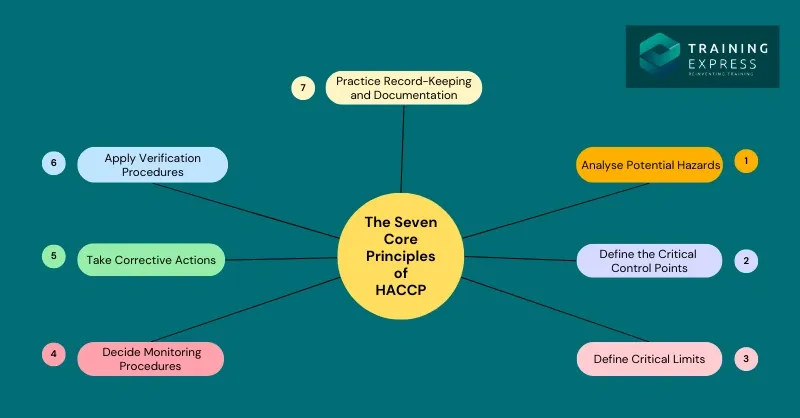
Image Source: Training Express
Critical control points for allergens differ from general food safety CCPs in both application and determination. A step qualifies as a CCP when you can apply control and it remains vital to prevent, eliminate, or reduce a food safety hazard to acceptable levels. This covers points where you can prevent, eliminate, or reduce hazards through measures like ingredient verification, product formulation control, and cleaning verification for allergens.
What Qualifies as a CCP for Allergens
You must address the potential hazards that could cause illness or injury if left uncontrolled when determining CCPs. Steps with label verification, recipe review, and compound ingredient assessment often qualify as CCPs for allergen management. The process’s complexity and the variety of hazards present determine how many CCPs are needed. A decision tree proves useful during this process, though it should not replace expert knowledge. Facilities preparing similar food items can differ in hazards identified and steps designated as CCPs due to variations in layout, equipment, ingredient selection, and processes used.
Difference Between CCPs, PRPs, and OPRPs in Allergen Control
You need to understand the difference between prerequisite programmes (PRPs), operational prerequisite programmes (OPRPs), and CCPs for effective allergen control integration. PRPs establish simple conditions and activities needed to maintain a hygienic environment throughout the food chain, suitable for producing safe food. These controls operate outside the process and address general hygiene through pest control, personal hygiene, and cleaning programmes.
OPRPs represent control measures identified through hazard analysis as needed to control the likelihood of introducing food safety hazards or contamination in products or processing environments. OPRPs are product or process-specific and require measurable or observable criteria, unlike PRPs. Cleaning verification through ATP or allergen swabs to verify cleanliness before starting production constitutes an OPRP for allergen management. These one-off controls address hazards that do not vary within the process.
CCPs monitor controls for hazards that can vary during the process and require critical limits based on regulatory standards, by contrast. Cooking requires limits of internal temperature as a CCP, whilst allergen cleaning verification may function as an OPRP with defined acceptance criteria rather than critical limits. The significant difference lies in whether the step is part of the production process or can be removed without affecting production safety.
Establishing Critical Limits for Allergen Management
Critical limits for allergens must be observable, measurable, and subject to live monitoring. Physical critical limits may cover absence of allergens or specific temperature controls, whilst procedural critical limits include supply from approved suppliers with specific allergen controls in place. These limits distinguish between safe and unsafe operating conditions at CCPs and must be based on science, derived from regulatory standards, literature surveys, experimental results, or expert consultation.
Segregation and Storage Controls
Physical separation is the foundation of preventing allergen cross-contact. You should store ingredients containing allergens at floor level or lower shelves, though vertical segregation may involve stacking like allergens above each other where materials share the same allergen. Suitable physical protection such as cardboard pallet covers between each pallet becomes needed where racking is unavailable and pallets require stacking. All ingredient packaging should remain sealed, with packs resealed after use to maintain integrity.
Cleaning Validation Thresholds
Selecting something present at high levels with high protein content and difficult to clean proves most effective when choosing a target for allergen cleaning validation. The validation should demonstrate cleaning works in the most challenging situations and use worst-case scenarios rather than targets that are easy to clean. ELISA testing is recommended where possible as these tests detect protein and provide quantitative results. Industry best practise requires repeating validation three times and achieving non-detectable results for all post-clean and next off-line samples in consecutive rounds.
Monitoring Procedures and Corrective Actions
Effective execution of allergen monitoring and swift corrective responses distinguish compliant operations from those facing recalls and enforcement action. A planned sequence of observations or measurements makes up monitoring to assess whether a CCP remains under control and to produce accurate records for future verification [1]. This systematic approach serves three distinct purposes within HACCP allergen control frameworks.
How to Monitor Allergen Controls Effectively
Tracking operations becomes possible through monitoring, allowing action before deviation from critical limits occurs [1]. Intervention can bring the process back into compliance before a CCP deviation materialises at the time monitoring indicates a trend towards loss of control. Second, monitoring determines the moment loss of control occurs and a deviation happens at a CCP, exceeding or not meeting a critical limit [1]. Third, it provides written documentation for verification purposes.
Continuous monitoring is always preferred if feasible [1]. Physical and chemical methods enable continuous monitoring in many situations. Personnel who monitor CCPs must be trained in the monitoring technique for which they are responsible and fully understand the purpose and importance of monitoring. They must remain unbiased in monitoring and reporting, and accurately report results [1]. Assignment of responsibility for monitoring represents an important consideration for each CCP. Specific assignments depend on the number of CCPs, control measures and complexity of monitoring [1].
Recording and Tracking Allergen Monitoring Data
Documentation is the life-blood of allergen control verification. Tracking both positive and negative findings over time helps distinguish one-off incidents from ongoing issues. This makes it easier to identify sanitation, training or equipment problems [7]. Then each monitoring step requires documentation to ensure traceability and compliance with FSMA and GFSI requirements [7].
Corrective Actions for Allergen Deviations
Corrective actions become mandatory where deviation from critical limits occurs [1]. These actions should determine and correct the cause of non-compliance, determine disposition of non-compliant product and record corrective actions taken [1]. Specific corrective actions should be developed in advance for each CCP and included in the HACCP plan. The plan specifies what is done at the time deviation occurs, who is responsible for implementing corrective actions and that records will be developed and maintained [1].
Operations must reclean and retest right away at the time positive results emerge during allergen testing [7]. Production may be held until follow-up testing confirms the line is clear for higher-risk findings [7]. Root cause analysis becomes vital at the time repeated positives emerge, analysing equipment design flaws, missed cleaning schedules or gaps in hygiene practises [7].
When and How to Respond to Allergen Incidents
Food allergen incidents demand immediate structured response. Food businesses should have incident response plans in place that outline procedures to follow if an allergen incident or complaint is reported [8]. This has reacting appropriately, understanding what arose, investigating and checking allergen management systems and confirming whether negligence occurred [8]. The goal is to understand what happened, determine if failures existed, prevent reoccurrence and make improvements [8].
The Role of Prerequisite Programmes in Allergen Control

Image Source: Lark
Prerequisite programmes establish the operational foundation upon which HACCP allergen control systems work. All food businesses must have PRPs as simple conditions and activities to maintain a hygienic environment [9]. These controls operate independently of HACCP but support allergen hazard prevention through systematic management of suppliers, sanitation, scheduling, personnel and infrastructure.
Supplier Approval and Allergen Specifications
Food operators can perform risk assessment only when they possess correct information about the complete allergen status of raw materials and ingredients used [10]. This requires knowledge of each supplier’s understanding and application of allergen management. Raw material, packaging, labelling and specifications declarations must describe allergen status in full [10]. A change notification process must be in place with suppliers. This ensures newly identified allergen risks for ingredients already being supplied are notified and can be acted upon [10].
Cleaning and Sanitation Programmes
Appropriate cleaning procedures prevent allergen cross-contact in processing facilities, especially when you have allergen-containing and non-allergen-containing foods manufactured on the same processing lines [11]. Validation of cleaning procedures should occur at least annually, when introducing new products or allergenic ingredients, when implementing new cleaning procedures or equipment, or when modifying cleaning frequencies [11]. Chlorinated alkaline detergents prove most effective for removing proteins from stainless steel surfaces. Typical use solutions contain 0.1-1.0% NaOH or KOH and 60-1,000 PPM sodium hypochlorite [12].
Production Scheduling and Changeover Procedures
Production planning should include the order in which different products are manufactured and packaged [10]. Production runs would always be scheduled beginning with formulas that have the least amount of allergens and moving to those with more allergens [13]. Managing allergen changeover can be very challenging in food plants, especially when you have different allergens handled on the same line or piece of equipment. Production planning techniques are used to reduce changeovers [13].
Staff Training and Allergen Awareness
Food business operators must ensure staff receive training on managing allergens [14]. Staff should know procedures when asked to provide allergen information and be trained to handle allergen information requests with accuracy. They must guarantee allergen-free meals are served to the right customer and know the risks of allergen cross-contamination when handling and preparing foods and how to prevent this [14].
Equipment Design and Segregation
Proper facility layout and design can help reduce the risk of allergen contamination in food manufacturing facilities [15]. Where possible, areas and equipment should be dedicated to a specific allergen profile within a production facility. This includes weighing equipment, scoops and utensils, and containers [10]. These tools and aids should be colour coded or labelled, or a validated cleaning programme should be in place [10].
Verification, Validation, and Documentation Requirements
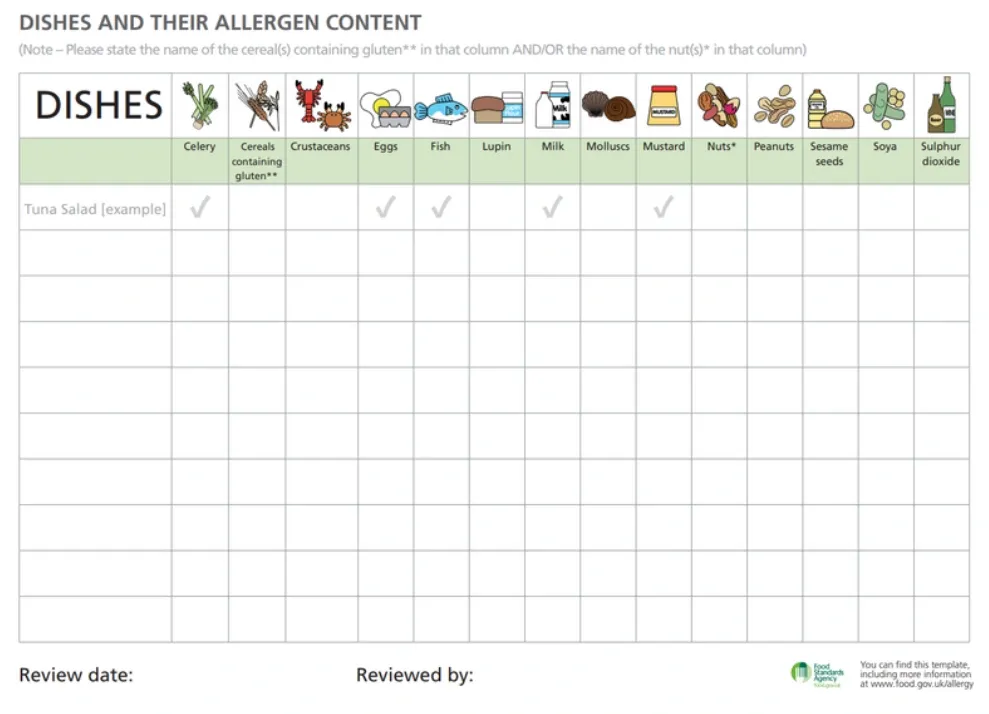
Image Source: The Safety Expert
Verification of Allergen Controls Within HACCP
Verification activities determine the validity of the HACCP allergen control plan and confirm the system operates according to documented procedures. Regular internal audits of production systems should verify that product formulation matches records of allergenic ingredient use and that final products match ingredients specified on labels. Allergen cross-contact controls must be implemented as documented. Product testing for undeclared allergens may be worth thinking about as appropriate for verification on occasion.
Validation Methods for Allergen Management
Validation provides scientific evidence that procedures, processes and activities lead to expected results on a consistent basis. Cleaning validation follows best practise and involves analysis that confirms defined cleaning procedures remove allergenic food from specific processing lines or equipment in an effective and reproducible manner. Industry best practise requires repeating validation at least three times. Validations should be reviewed at routine intervals, at least once a year, or at the time parameters change such as products, machinery or cleaning procedures.
What Should an FBO Do at the Time of Reviewing Allergen Control Systems
Food businesses should review allergen control systems at the time customer complaints regarding allergic reactions are received, changes to raw materials or suppliers occur, manufacturing processes are altered, new machinery is introduced or cleaning practises are modified. Regular reviews ensure programmes remain up-to-date and work as intended.
Record-Keeping and Traceability Requirements
Accurate record-keeping is critical to allergen management within food safety programmes and must be efficient. Documentation should be integrated into existing operations. Delivery invoices and checklists can record allergen status and maintain version history as the single source of data for artworks, recipes and technical documentation.
Common HACCP Failures and Audit Expectations
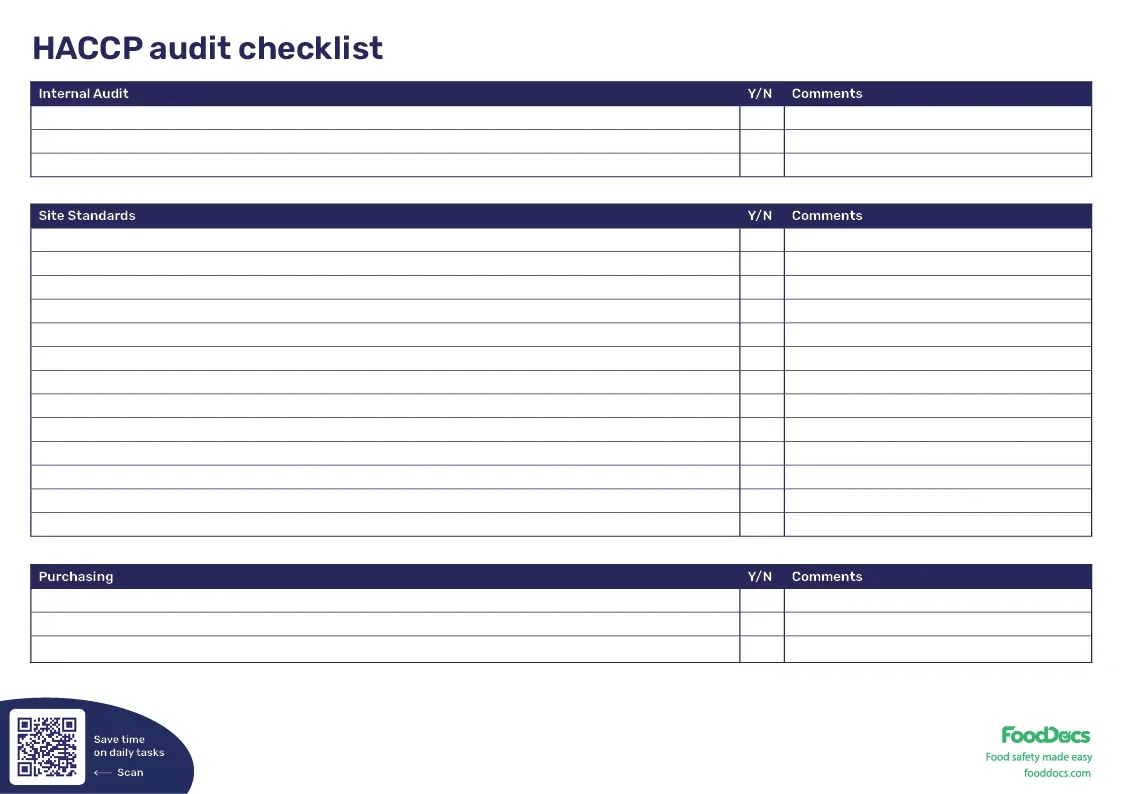
Image Source: FoodDocs
Typical Allergen Control Failures in HACCP Plans
Root cause analysis reveals three main failure categories: unintentional allergen presence through cross-contact during production or accidental addition via incorrect recipes, mis-packing where insufficient changeover controls result in wrong packaging usage, and labelling errors stemming from specification mistakes, inadequate change management, or printing control failures [16]. Common processing errors include inadequate cleaning of shared equipment, improper rework handling without ‘like into like’ practises, ingredient switching without allergen assessment, and infrequent HACCP plan reviews [17]. Packaging changeover represents a critical vulnerability that requires specific HACCP plan inclusion [18].
BRCGS and SALSA Audit Requirements
Undeclared allergens account for 47% of food recalls, with milk representing the leading undeclared allergen and packaging errors constituting the most common root cause [18]. BRCGS standards require allergen management in all Standard aspects, where failures to meet requirements can precipitate allergen issues during production cycles [16]. SALSA mandates documented allergen cross-contamination risk assessments with controls that include specific cleaning schedules, segregated storage, and process separation by area or time [19].
Retailer Standards for Allergen Management
Retailer specifications just need reliable allergen controls confirmed through periodic testing. Cleaning confirmation requires non-detectable allergen results in three consecutive rounds for post-clean and next off-line samples [20].
Real-Life Examples of Effective HACCP Allergen Integration
Sporadic milk protein detection in supposedly milk-free batches was traced to transport of open raw material containers through areas where milk powder had been used. This demonstrates how critical traffic flow controls are [21].
Practical Steps to Strengthen Your HACCP Allergen Control Systems
Written allergen control programmes with scheduling, cleaning confirmation, and label verification at each production run address compliance gaps [22]. Continuous training, appropriate environmental monitoring programmes with proper sampling plans, and method confirmation that ensures test applicability to sample matrices strengthen HACCP allergen control systems [23].
Conclusion
Effective allergen management just needs full integration into HACCP systems rather than standalone protocols. Food business operators who apply the seven HACCP principles to allergen hazards create resilient controls that protect consumers and satisfy regulatory and retailer requirements.
Success requires rigorous hazard analysis, defined CCPs, validated cleaning procedures and detailed prerequisite programmes. These elements work together to prevent cross-contact and ensure accurate allergen declarations.
Food businesses should review their allergen control programmes, strengthen documentation practises and maintain staff training. Integrated HACCP allergen control systems reduce recall risk by a lot and demonstrate steadfast dedication to consumer safety when implemented the right way.
Key Takeaways
Effective allergen management requires full integration into HACCP systems rather than standalone protocols, as undeclared allergens now account for over half of all UK food recalls.
• Apply all seven HACCP principles systematically to allergen hazards, treating them with equal rigour as biological and physical food safety risks.
• Establish allergen-specific Critical Control Points (CCPs) at ingredient verification, cleaning validation, and label verification stages to prevent cross-contamination.
• Implement robust prerequisite programmes including supplier approval, production scheduling, and validated cleaning procedures as the foundation for allergen control.
• Conduct regular verification through internal audits, cleaning validation testing, and documentation reviews to ensure continuous compliance with regulatory requirements.
• Develop comprehensive corrective action procedures for allergen deviations, including immediate product segregation, root cause analysis, and system improvements.
When properly implemented, integrated HACCP allergen control systems significantly reduce recall risk whilst demonstrating commitment to consumer safety and regulatory compliance across the entire food chain.
FAQs
Q1. What role does HACCP play in managing food allergens? HACCP provides a systematic, risk-based framework for identifying, controlling, and preventing allergen hazards throughout food production. It treats allergens as chemical hazards requiring the same rigorous analysis and control measures as microbiological and physical risks, ensuring allergen management receives appropriate priority within food safety systems.
Q2. What are the seven HACCP principles applied to allergen control? The seven principles are: conduct hazard analysis for allergens, identify Critical Control Points (CCPs), establish critical limits, set up monitoring procedures, define corrective actions, implement verification procedures, and maintain documentation and records. Each principle must be systematically applied to allergen management to create effective controls.
Q3. How many steps are involved in implementing a complete HACCP system? A complete HACCP implementation involves 12 steps, which include assembling and training the HACCP team, describing products and processes, identifying intended users, constructing and validating flow diagrams, conducting hazard analysis, determining CCPs, establishing critical limits, and implementing monitoring, corrective action, verification, and documentation procedures.
Q4. What are Critical Control Points for allergen management? Critical Control Points (CCPs) for allergens are specific steps where control can be applied to prevent, eliminate, or reduce allergen hazards to acceptable levels. These typically include ingredient verification, recipe review, cleaning validation, and label verification stages where allergen presence must be monitored and controlled.
Q5. Why must allergens be integrated into HACCP rather than managed separately? Integration ensures allergen hazards receive equal attention to other food safety risks during systematic analysis. With around 6% of UK adults having food allergies and allergens accounting for over half of food recalls, integrated HACCP systems provide comprehensive control, accurate allergen declarations, and reduced consumer risk whilst demonstrating regulatory compliance.
References
[1] – https://www.fda.gov/food/hazard-analysis-critical-control-point-haccp/haccp-principles-application-guidelines
[2] – https://www.fao.org/fao-who-codexalimentarius/sh-proxy/en/?lnk=1&url=https%253A%252F%252Fworkspace.fao.org%252Fsites%252Fcodex%252FStandards%252FCXC%2B80-2020%252FCXC_080e.pdf
[3] – https://www.food.gov.uk/business-guidance/precautionary-allergen-labelling-checklist
[4] – https://myhaccp.food.gov.uk/help/guidance/principle-3-establish-critical-limits
[5] – https://foodsafetyassist.co.uk/types-of-critical-control-points-in-food-safety/
[6] – https://www.foodsafetynews.com/2018/03/haccp-principle-no-5-establish-execute-corrective-actions/
[7] – https://www.neogen.com/en/usac/neocenter/blog/environmental-monitoring-for-food-allergens/?srsltid=AfmBOorCoN6c25mZu1LJpR0xClI5Dc21ErgoQZ6r_mknJ065Vnxw0VUM
[8] – https://www.ncass.org.uk/membership/case-studies/food-allergen-incident/
[9] – https://www.fsai.ie/business-advice/running-a-food-business/food-safety-management-system-(haccp)/prerequisite-programmes
[10] – https://www.fooddrinkeurope.eu/wp-content/uploads/2022/04/FoodDrinkEuropes-Guidance-on-Food-Allergen-Management-for-Food-Manufacturers-2022.pdf
[11] – https://www.fda.gov/media/129671/download
[12] – https://www.solenis.com/en/resources/blog/best-practise-standard-sanitation-operating-procedures-for-allergen-control-in-food-processing/
[13] – https://www.qualityassurancemag.com/article/aib1015-managing-allergen-changeover-cleaning/
[14] – https://www.food.gov.uk/business-guidance/allergy-training-for-food-businesses
[15] – https://www.crbgroup.com/insights/food-beverage/allergens-food-manufacturing
[16] – https://www.brcgs.com/media/2170588/allergen-mgt-22-sample.pdf
[17] – https://www.food-safety.com/articles/6738-writing-and-implementing-an-allergen-control-plan
[18] – https://assets.allergenbureau.net/uploads/2024/10/AB_WW-road-show-2024asiafinal.pdf
[19] – https://www.ifst.org/sites/default/files/SALSA – Issue 5 Guidance Notes.pdf
[20] – https://www.factssa.com/news/the-building-blocks-of-a-recall-proof-allergen-control-plan/
[21] – https://www.food-safety.com/articles/5979-allergen-haccp-programme-case-study
[22] – https://www.afyafoodsafety.com/top-10-food-safety-compliance-mistakes-and-how-to-fix-them/
[23] – https://www.qualityassurancemag.com/article/common-errors-in-allergen-management/