
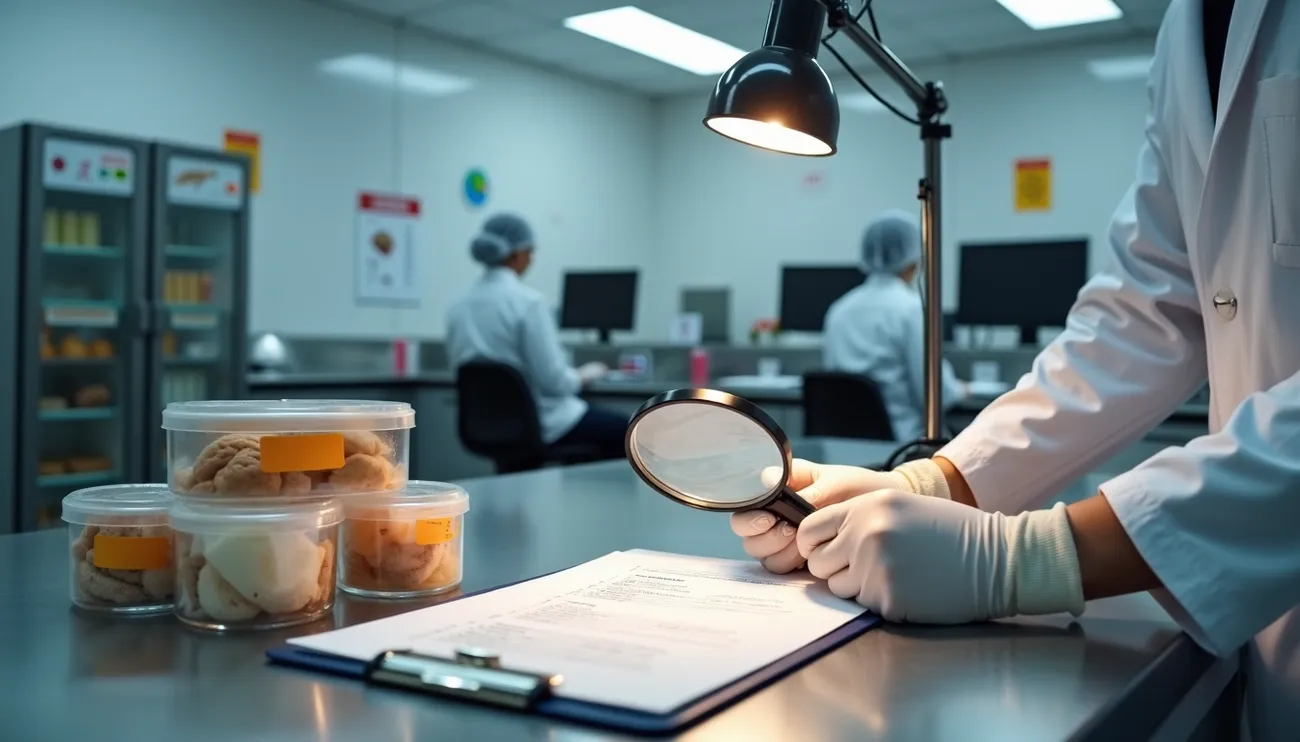
Allergen recall procedures in the UK require careful understanding. The FSA manages around 300 allergen-related incidents each year that affect more than two million people with food hypersensitivities. Food-induced anaphylaxis causes up to ten deaths each year in the most serious cases. Allergen recall statistics reveal that labelling errors and packaging mismatches cause most product recall procedure failures. This piece provides a step-by-step framework to manage allergen recalls, from FSA notification to root cause investigation, and addresses critical risk areas including how rework is an area of allergen risk.
Understanding allergen recalls in the UK
What constitutes an allergen recall
Allergen recalls occur when food products contain incorrect or missing allergen information that poses serious health risks to consumers with food hypersensitivities. A food incident that requires recall action happens when concerns around safety or quality make protective measures necessary for consumers, especially those with allergies to the 14 regulated allergens under European regulation [1].
The majority of allergen-related recalls stem from labelling and packaging errors. Omitting priority allergens from ingredient lists represents the main trigger and factored in 40.0% of all allergen recalls [2]. Incorrect allergen declarations occur when allergens used on purpose are not declared the right way, such as allergen information not appearing in English or lacking proper emphasis as required by law [3]. Product-to-packaging mismatches create dangerous situations where items are packed into wrong packaging, or outdated labels get applied during production runs [4].
False free-from allergen claims present high risks, as allergic consumers rely upon these declarations to make safe food choices. When products labelled as free from specific allergens contain them through either intentional inclusion or unintentional cross-contact, immediate recall becomes necessary [3]. Cross-contamination issues represent another category, where allergens incorporate into products through shared equipment or facilities without subsequent declaration on labels [4].
Withdrawal versus recall: key differences
The difference between withdrawals and recalls carries operational and legal significance for food allergen control UK compliance. A withdrawal removes unsafe food from the supply chain before it reaches consumers and limits the incident’s scope to business-to-business communications and internal supply chain management [1].
A recall applies when unsafe food has already reached consumers and requires public notification that advises appropriate action. Consumers may receive instructions to return products to point of purchase or dispose of unsafe food safely. When businesses believe unsafe food has reached consumers, they must inform the FSA incidents team, which may issue formal recall notices [1]. This fundamental difference shapes response procedures, with recalls demanding broader communication strategies and consumer-facing notifications beyond internal supply chain actions.
Allergen recall statistics and industry trends
Allergen recalls dominated UK food safety incidents from 2016 to 2021 and represented 57.6% of all food recalls at 597 incidents from a total of 1,036 recalls during this period [2]. The data reveals troubling patterns in UK allergen recalls frequency and causes. Annual allergen-related recalls increased consistently until 2019 and peaked at 118 recalls before decreasing to 82 and 84 in 2020 and 2021 respectively [2]. The reduction potentially resulted from direct and indirect COVID pandemic impacts alongside improved labelling practises [2].
Milk emerged as the most recalled allergenic food group and factored in 25.2% of allergen recalls [2], with 244 mentions across the 969 total allergen references in 597 recall events [2]. Cereals containing gluten, nuts, soya, and eggs followed in frequency. More than a quarter of recalls involved at least two allergenic food groups in single events, which demonstrates the complexity of allergen management in a variety of product formulations [2].
Analysis of 2025 data shows allergen-related labelling errors remained the top cause of food recalls, with 35% of all FSA alerts resulting from allergen issues [2]. Eight major retailers including Lidl, Waitrose, Tesco, Sainsbury’s, Asda, Co-Op, and Morrisons issued the highest frequency of recalls, with Lidl alone issuing 25 recalls due to allergen information not being labelled in English [2]. This pattern persists despite modern facilities and indicates that larger operations face challenges in maintaining consistent UK food allergen regulations compliance across high-volume production lines.
It also shows that 6.0% of recalls with expiry dates had passed their best-before or use-by dates at recall time, with 14 products carrying use-by dates that were microbiologically unsafe for consumption beyond those dates [2]. Cereal and bakery products factored in 30.4% of all recalls with expiration dates [2] and highlight timing vulnerabilities in allergen recall procedures UK implementation.
Legal framework and FSA notification requirements
Image Source: Food Standards Agency
Legal framework and FSA notification requirements
UK food safety law obligations
Food businesses operating in the UK must comply with multiple layers of allergen legislation that create binding obligations for product safety and information disclosure. The Food Information Regulations 2014 establishes the primary framework and mandates that food business operators provide accurate allergen information for both prepacked and non-prepacked food and drink [2]. This legislation works alongside Regulation (EC) No.178/2002, which sets out fundamental food safety traceability, withdrawal and recall requirements that apply across the supply chain [4].
Food businesses must declare the presence of any of the 14 major allergens listed in regulatory annexes, whether used as ingredients or processing aids [2]. The manner of presentation carries legal weight. Allergen information must appear in an available location and be positioned where it remains visible and legible [2]. The information must be indelible on food labels to withstand normal handling and must not be hidden, obscured or interrupted by other written or pictorial matter [2].
Natasha’s Law introduced stricter requirements for prepacked for direct sale (PPDS) foods starting October 2021 [5]. This legislation requires full ingredient and allergen labelling on all food made on premises and prepacked for direct sale. It covers items such as pre-wrapped sandwiches, cakes and salads that are already in packaging before customers order [5]. Food businesses must ensure labels include the food’s name and a full list of ingredients with emphasised allergens, bringing PPDS allergen information in line with labelling for prepacked food [2].
Authorised food officers at Local Authorities hold responsibility for official controls relating to allergen rules and enforcement [4]. Dual enforcement exists in England where county councils carry a duty to enforce the Food Information Regulations whilst district councils possess the power to enforce elements of these regulations [4]. Food officers receive encouragement to discuss and reach understanding on local enforcement approaches.
FSA notification timelines and procedures
A food business operator must take action right away if it thinks over or has reason to believe that food it has imported, produced, processed, manufactured or distributed fails to comply with safety requirements. The business must start procedures right away to withdraw the food from the market where it has left the original food business operator’s control and inform the competent authorities [4].
Operators must inform consumers of withdrawal reasons in an accurate way where products may have reached consumers and, if necessary, recall products already supplied when other measures prove insufficient to achieve a high level of health protection [4]. The notification obligation extends to the FSA incidents team when businesses believe unsafe food has reached consumers, and a recall notice may need issuing at that point [1].
Notification timelines carry significance under food allergen control UK requirements. Businesses must not delay notification [4]. Businesses should provide whatever details are available rather than waiting to compile complete information if all information is not ready at the time of discovery. This notification requirement applies right away, whatever the status of full root cause analysis.
The FSA receives notification of and manages around 300 allergen-related incidents each year [6]. Enforcement authorities receive instructions to forward results of food businesses’ root cause analysis assessments to the FSA for further analysis. This enables identification of long-term preventative actions and application of best practises across the food industry [1].
Legal liability and enforcement actions
Failure to comply with requirements set out in Regulation 10(1) and (2) of the Food Information Regulations on labelling of allergenic ingredients constitutes a criminal offence [4]. This criminal liability extends to failures in providing allergen information for non-prepacked foods and PPDS in manners other than those provided for in food information legislation [4].
Persons convicted of offences under the Food Information Regulations face liability to fines that are unlimited [4]. Magistrates determine fine levels on a case-by-case basis and think over the severity and circumstances of violations. So businesses face substantial financial exposure beyond the direct costs of product recalls, which can range from £1.5 to £10 million per incident excluding crisis management, legal fees and brand rehabilitation expenses [5].
Local authorities enforce UK food allergen regulations through a graduated approach [2]. Enforcement begins with advice from local authorities when businesses fail to comply. Local authorities may issue improvement notices if businesses fail to act on this advice [2]. Businesses have 14 days to appeal improvement notices from the date of issue [2]. Failure to meet requirements of improvement notices results in penalty issuance, and businesses may face prosecution in some cases [2].
But the FSA has advised that except where circumstances require action right away, local authorities should take proportionate and risk-based approaches to breaches [5]. Minor errors receive treatment through extra guidance and support rather than fines right away during early months following new legislation implementation [5]. This proportionate approach reflects recognition of industry pressures whilst maintaining expectations that businesses demonstrate efforts toward compliance and allergen incident legal liability management.
Step-by-step allergen recall procedure
Detecting the allergen incident
Safety concerns surface through multiple channels. Businesses may find allergen issues themselves during routine testing, receive notifications from suppliers or customers further down the supply chain, or respond to consumer complaints about products already consumed [2]. Customer feedback about adverse reactions or labelling discrepancies requires immediate attention and investigation [2].
Internal detection mechanisms include environmental monitoring through allergen swabs, clean-in-place system verification, and final product testing at critical control points such as ingredient receiving, mixing and packaging stages [7]. Detection represents the first step where businesses must take any food safety concern seriously and determine whether immediate allergen recall procedures UK activation becomes necessary [2].
Risk assessment and decision-making
Food business operators bear responsibility for carrying out risk assessments and making decisions regarding food safety when a hazard surfaces [8]. Technical expertise may be required to understand hazards involved and adverse effects that can arise if consumed [8].
A detailed risk assessment should include hazard identification, hazard characterisation through qualitative or quantitative evaluation of adverse effect nature, and exposure assessment of intake that’s expected [8]. Risk characterisation integrates these elements to estimate risk and associated uncertainties. Consideration must extend to intended use of food, target consumer groups and potential risks associated with those groups consuming the product [8].
Factors requiring evaluation include which allergenic foods could contact products without intention and amounts of allergenic food needed to provoke reactions in allergic people [9]. How common adverse reactions are to particular foods matters. Whether population subgroups have increased risk and how cross-contact could happen also need assessment [9]. The amount of allergen triggering reactions ranges from a tenth of a milligramme in rare cases up to several grammes. Variation between individuals and allergens is considerable.
Initiating the recall process
Businesses should assemble a team to manage the process and ensure sufficient personnel help throughout after identifying food requiring recall [2]. The team must gather necessary information including food details, hazard nature, how the hazard occurred and problem extent [2].
Businesses have affected products in their control. Products sharing the same fault, such as those processed through faulty machinery, must be checked and removed from production lines [2]. These products require separation from safe food right away [2].
Product retrieval and quarantine
Unsafe food must be stored away from non-affected food in quarantined areas with clear labelling [8]. Businesses need to maintain accurate traceability and disposal records of recovered unsafe food [8]. Communication should continue between food business operators, enforcement authorities and business customers throughout the incident [8].
All customers affected or expected to be affected by harmful food products must receive notification using effective communication methods with accurate information [2]. Monitoring progress throughout the product recall procedure ensures effectiveness and maintains dialogue with enforcement authorities and the FSA.
Disposal and corrective actions
Unsafe food must be treated as food waste if it cannot be made safe [8]. Where unsafe food contains products of animal origin, businesses should handle it according to Animal By-Product Regulations or relevant waste disposal legislation [8].
Corrective actions address original causes, which vary. Products containing undeclared allergens can be rectified through packaging changes or recipe modifications [2]. Documentation remains essential and provides evidence that investigations were conducted with appropriate inputs considered and balanced, objective studies completed [4].
Closing the recall
The cause of the incident, level of public health risk and mitigating action taken to reduce or remove immediate risk inform when food withdrawals or recalls can be closed [8]. Businesses should review root cause analysis results to understand how and why incidents occurred and identify actions to prevent future occurrences [4].
Internal escalation and incident response planning
Image Source: Food Standards Scotland
Internal escalation and incident response planning
Establishing an incident response team
Successful allergen recall procedures UK implementation depends on pre-established teams with roles that are defined. Organisations should form complete recall response teams with representatives from multiple departments, each contributing unique expertise [5].
The Recall Coordinator serves as the central point of contact and overall team leader. This person coordinates all recall activities, ensures compliance with timelines, makes critical decisions when consensus cannot be achieved, and reports to executive leadership [5]. This role requires strong leadership, crisis management experience, strategic thinking and excellent communication skills. Businesses should select someone with authority to make quick decisions and solid understanding of supply chain, safety regulations and products [10].
Quality Assurance representatives function as technical experts in product specifications and quality systems. They conduct root cause analysis, identify scope of affected products and formulate corrective action plans [5]. Legal Counsel ensures regulatory compliance throughout the recall process, manages liability considerations, reviews external communications and engages with regulatory bodies [5].
Communications specialists oversee all internal and external communications. They create messaging for customers, employees, stakeholders and media whilst safeguarding brand reputation [5]. Customer Service leads represent the consumer viewpoint and establish protocols to manage questions and gather feedback. Supply Chain managers handle logistical aspects including product retrieval, transportation or disposal of recalled items, and distribution of replacement products [5]. Financial Controllers oversee recall expenses, monitor costs, handle refunds and compensation, and work together with insurance providers [5].
Escalation protocols and decision-making authority
Organisations require internal escalation protocols with thresholds that are clear for when frontline observations trigger formal review [11]. The FSA provides triggers for escalation based on hazard factors, perception, scale and integrity considerations [12].
Hazard factors include potential for big health impact where problems can make people severely ill, cause death or lead to long-term health impairment. They also include potential for consumer harm such as financial loss or public distress [12]. Perception considerations review whether incidents could lead to national media coverage or loss of consumer confidence on a large scale. Scale assessment determines if incidents operate on national, European or international levels [12]. Integrity factors get into suspected breaches in supply chain integrity on broad scales or evidence of organised criminal activity that is widespread [12].
Decision-making frameworks should establish tiered authority structures. Level 1 allows individual team members to make routine decisions within their responsibility areas. Level 2 requires approval from the Recall Coordinator for decisions that are most important. Level 3 mandates major decisions, such as changes in recall scope and substantial financial commitments, receive approval from executive leadership [5].
Role of traceability systems and batch identification
Traceability systems enable businesses to make information available during incidents [9]. Fast, informed decisions depend on structured, current and complete data. This includes lot numbers, production codes, production and distribution records, customer and location data for affected shipments, complaint logs and quality test results linked to batches [11].
Defining batches of food remains key for good traceability and may help limit amounts requiring withdrawal or recall [9]. Regulation (EC) No. 178/2002 considers whole batches, lots or consignments unsafe unless demonstrated otherwise [9]. Advanced barcode reading technology enables manufacturers to verify labels and track batches linking allergen-containing ingredients to finished goods. It also scans barcodes for data capture from raw material intake to final shipment [13].
Rework is an area of allergen risk
Rework refers to finished or partially finished products reincorporated into manufacturing processes. Work-in-progress consists of partially finished products between different production stages [7]. Both increase risks of introducing allergens, either by erroneous addition of allergen-containing rework into products not containing allergens as ingredients, or by cross-contact through shared containers or utensils during holding or storage [7].
Since rework containing allergens is risky to handle, processors should assess their rework processes and identify cross-contact opportunities or accidental inclusion of unintentional allergens. They should develop written procedures preventing occurrence [7]. Controls include storage of rework materials in labelled closed containers that indicate contents with consistent coding. This coding identifies product, batch code and “REWORK” designation [7]. Storage should occur in designated areas that are marked. Whenever practical, measures should require adding rework back into production of only the same finished products rather than products with allergen components that are similar [7].
Communication strategy during allergen recalls
Notifying the FSA and enforcement authorities
Food business operators must communicate as soon as possible for withdrawals or recalls due to food safety issues to work [9]. FBOs are required to notify their enforcement authority and FSA right away with details of the incident. These details cover the nature of the problem, food affected, quantity, and action taken or proposed to prevent risk [14].
Businesses should not delay notification [9]. All information may not be readily available, but businesses should provide whatever details are available rather than postponing communication [9]. FBOs should use reporting mechanisms that are already in place for notifying the FSA [9]. Regulatory guidance contains communication templates that assist FBOs in notifying enforcement authorities with structured and complete information [9].
Drafting effective recall notices and allergen warnings
Consumers should receive accurate information, and the communication method must work in informing them of the food recall and action to take [9]. Recall notices must include product description with multiple descriptors such as product name, brand, type and package size that help consumers identify affected items. Identification codes including UPC or GTIN, sell by/use by dates, expiration dates and lot codes assist precise product matching.
The notice should state the reason for recall and specify the type of allergen involved. Contact information for the responsible party lets consumers ask questions. Instructions on handling or disposing of the product, among refund policies, complete everything in essential notice elements. Press releases should express empathy and apology to consumers while explaining corrective actions taken to eliminate the problem cause.
Communicating with retailers and supply chain partners
FBOs must notify their suppliers and business customers, including brand owners [9][14]. Retailers sell branded products subject to withdrawal or recall and should cooperate as necessary with the FBO responsible for managing the incident [14]. An up-to-date contact list of internal and external contacts in the withdrawal/recall plan proves essential. Businesses must account for data protection requirements for getting, storing, handling and disposing of personal data [14].
Public communication and consumer protection
Consumer notification applies only in recall cases where unsafe food has reached consumers [9][14]. Best practise dictates that FBOs should notify relevant consumer organisations during a food recall [14]. Businesses should notify consumer, allergy and patient support organisations as appropriate for incidents with allergen issues [9]. These organisations maintain contact details for vulnerable individuals with food allergies, intolerances or sensitivities. This enables direct notification of at-risk consumers about recall information [9].
Root cause investigation and preventive actions
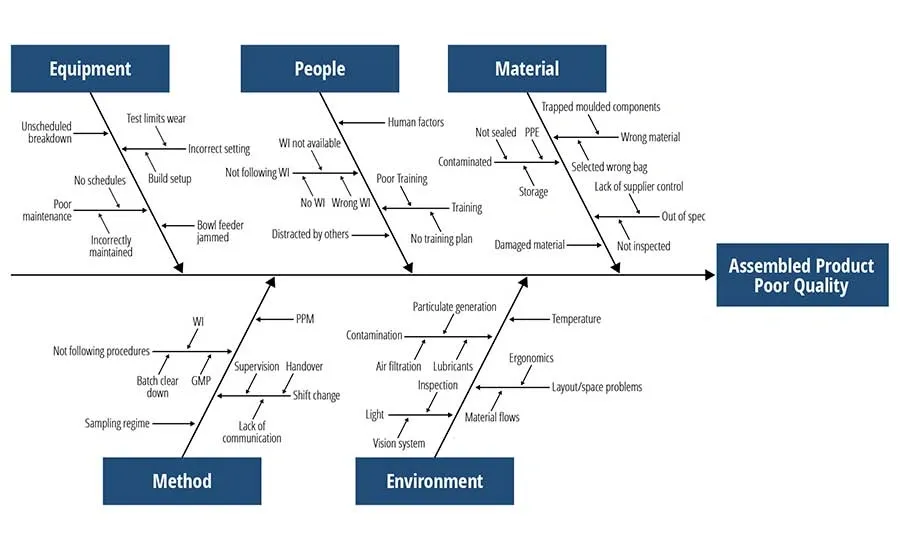
Image Source: Food Safety Magazine
Conducting root cause analysis
Proper investigation after allergen incidents identifies why it happens and prevents recurrence. Root cause analysis (RCA) represents a structured team process that aids in identifying root causes of events resulting in undesired outcomes and develops corrective actions [15]. The purpose centres on finding what happened, why it happened, and determining changes that are needed [15].
Two methods dominate RCA practise. The Fishbone (Ishikawa) diagram identifies all possible causes contributing to problems in a variety of categories. These include people (training), environment (layout), method (instructions), plant (infrastructure), equipment (digital), and material (composition) [3]. The Five Whys approach asks repeated ‘why’ questions until the actual root cause surfaces [4]. This technique typically involves asking five questions but can extend beyond that number. It works well when combined with the Fishbone method [4][3].
Organisations should establish review periods to assess how well mitigation steps improve food allergen management [3]. Undeclared food allergens caused 46% of 2,932 global food safety incidents and recalls between 2008 and 2018 [8].
Implementing corrective and preventive actions (CAPA)
The CAPA process involves two distinct operations. Corrective action processes represent reactive procedures that address current non-conformities [16]. Preventive action processes include deeper analysis of root causes and help eliminate potential for non-conformity recurrence [16].
Documentation provides proof that systems function robustly and makes information sharing possible among teams [16]. Food safety audits and inspections rely heavily on CAPA documentation. Agencies verify and scrutinise every step to ensure regulatory compliance [16].
Learning from incidents to improve systems
Most allergen-related recalls happen because of simple but serious mistakes. Allergens are not listed at all, listed incorrectly, or not highlighted clearly on labels [4]. Cross-contact warnings fail frequently and create situations where products might unintentionally contain allergens through shared equipment or facilities without label warnings [4]. Building strong systems, working closely with suppliers, and keeping teams informed helps businesses avoid recalls that can get pricey [4].
Common mistakes and real-world lessons
Frequent errors businesses make during allergen recalls
Labelling-associated errors account for 71.1% of major food allergen recalls, with 76.8% stemming from inadequate label controls [17]. Adequate label content controls could prevent 63.5% of recalls, and label management controls would address the remaining 36.5% [17]. Weak change control between specification, artwork and print represents the main failure point [18]. Supplier data gaps or substitutions not captured in time compound these issues, especially when you have ingredient formulations that change without notification updates [18]. Poor line clearance and label verification at production start-up create opportunities for wrong packaging application [18]. Misplaced precautionary allergen labelling replaces proper risk assessment too often, and copy divergence between pack and web materials creates inconsistent consumer information [18].
UK recall examples and what went wrong
Food business operators report that recall processes feel unfamiliar and daunting, compounded by tight timeframes [19]. Uncertainty around terminology in FSA guidance and Root Cause Analysis documents requires additional support from local authorities [19]. Multiple separate forms from local authorities and FSA prove time-consuming during crisis situations [19].
Best practises from successful incident management
Businesses benefit from maintaining updated contact details and developing tailored consumer messages. Annual recall process reviews help whatever the incident occurrence [19]. Named contacts within local authorities streamline communication [19].
Building a robust allergen incident response plan
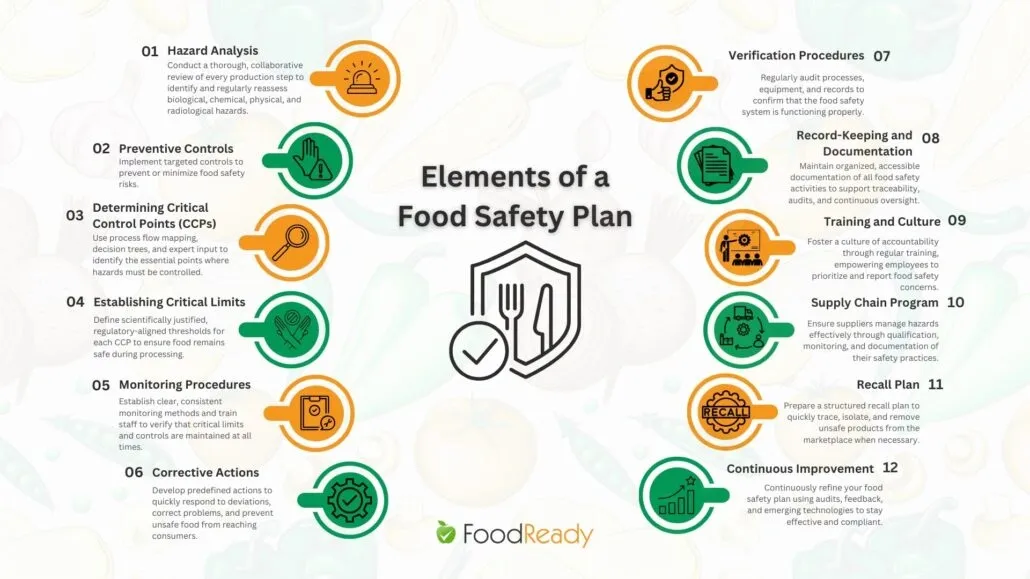
Image Source: FoodReady
Building a reliable allergen incident response plan
Essential components of a plan that works
Food manufacturers must designate clear responsibility for allergen management at senior level [2]. Each shift needs a responsible staff member available to manage requests from customers with allergies [2]. Staff require clarity on avoiding allergen cross-contamination. Kitchen personnel must know how to record allergen changes when recipes are modified and who receives these reports [2]. Dedicated personnel should handle updating written allergen information when recipes or ingredients change [2].
Documentation and audit expectations
Accurate recipe lists provide clear documentation of allergens present in manufactured food [2]. Product specification sheets should record allergen ingredient information. Ingredients labels must include this information with ingredients kept in original or labelled containers. Recipes should incorporate allergen details and think over recipe change effects [20]. Records must remain current [20]. Businesses should maintain accurate traceability and disposal records of recovered unsafe food throughout allergen recall procedures UK execution [9].
Preventative strategies to minimise recall risk
Supplier checks and ingredient tracking ensure that ingredients containing allergens are identified clearly [21]. Verification checks confirm ingredients and packaging match expected allergen profiles [3]. Supplier management systems should include agreements for suppliers to notify of any changes in ingredient or allergen profiles, with periodic reconfirmation [3].
Testing and reviewing your response plan
Traceability systems should be reviewed at least annually. Review sooner if most important changes occur within a business such as supplier changes [9]. Staff should receive suitable allergen and food hypersensitivity training annually to appreciate what it all means when providing incorrect information [2].
Conclusion
Allergen recalls represent more than half of all UK food safety incidents. Most occur due to preventable labelling and control failures. Businesses that invest in reliable allergen management systems reduce their recall risk by a lot. They maintain accurate traceability records and train staff on a regular basis.
Preparation is the key to successful incident management. Food businesses should establish dedicated response teams and document procedures. Test your systems each year rather than wait for incidents to occur. Rapid FSA notification protects both consumers and business reputation. Transparent communication does the same.
Prevention through systematic risk assessment delivers better outcomes than reactive crisis management. Businesses that prioritise supplier verification and label control processes protect vulnerable consumers. They avoid recalls that get pricey and damage brand trust. Financial stability remains intact when strong allergen controls are in place.
Key Takeaways
Effective allergen recall management protects vulnerable consumers whilst safeguarding business reputation and financial stability through systematic preparation and rapid response protocols.
• Immediate FSA notification is mandatory – Businesses must notify the FSA immediately when unsafe food reaches consumers, without waiting for complete information or root cause analysis.
• Labelling errors cause 71% of allergen recalls – Most incidents stem from inadequate label controls, specification changes, and packaging mismatches that proper verification systems could prevent.
• Pre-established response teams save critical time – Designate recall coordinators, quality assurance experts, and communication specialists with clear decision-making authority before incidents occur.
• Traceability systems enable swift product identification – Maintain accurate batch records, production codes, and distribution data to quickly determine recall scope and affected products.
• Prevention costs less than crisis management – Annual staff training, supplier verification checks, and system reviews significantly reduce recall risk compared to reactive incident response.
Strong allergen management requires year-round vigilance rather than crisis response. Businesses that implement robust preventative controls, maintain current documentation, and conduct regular system testing protect both consumer safety and their commercial interests in an increasingly regulated food safety environment.
FAQs
Q1. What immediate steps should I take if my business discovers an allergen labelling error on products already sold to consumers? Stop distribution immediately, notify the FSA without delay even if you don’t have complete information yet, and initiate a formal recall process. Separate any remaining affected products from safe stock, inform all customers in your supply chain, and prepare clear consumer-facing communications explaining the allergen risk and what actions consumers should take with the product.
Q2. What are the different classifications of food recalls and how do they differ? Food recalls fall into three classes based on severity. Class I recalls involve products that could cause serious injury or death, such as undeclared major allergens. Class II recalls cover products that might cause serious but temporary illness. Class III recalls address products unlikely to cause harm but which violate food safety regulations. Allergen-related incidents typically fall into Class I due to the potentially life-threatening nature of allergic reactions.
Q3. Is it legally required to conduct a recall when an allergen issue is discovered? Yes, UK food safety law mandates that when food fails to meet safety requirements and has reached consumers, businesses must effectively inform consumers and recall products if other measures cannot achieve adequate health protection. Failure to comply with allergen labelling requirements under the Food Information Regulations 2014 constitutes a criminal offence, potentially resulting in unlimited fines.
Q4. Who is responsible for assessing allergen cross-contamination risks in food manufacturing? Food business operators bear legal responsibility for conducting allergen risk assessments across all production stages. This includes evaluating where allergen-containing ingredients could unintentionally contact products, identifying cross-contamination opportunities through shared equipment or rework processes, and implementing controls to prevent allergen incidents. Senior management should designate specific personnel with authority to manage allergen controls on each production shift.
Q5. What documentation must be maintained during an allergen recall? Businesses must keep comprehensive records including accurate traceability data with batch codes and production dates, distribution records showing where affected products were sent, customer contact details, root cause analysis findings, corrective actions taken, and disposal records for recovered unsafe food. This documentation proves essential for regulatory compliance, demonstrates due diligence, and enables effective communication with enforcement authorities throughout the recall process.
References
[1] – https://www.food.gov.uk/business-guidance/food-incidents-product-withdrawals-and-recalls
[2] – https://www.food.gov.uk/business-guidance/allergen-checklist-for-food-businesses
[3] – https://www.fdf.org.uk/globalassets/resources/publications/guidance/allergen-recall-prevention-guidance.pdf
[4] – https://www.anaphylaxis.org.uk/business/preventing-allergen-recalls/
[5] – https://www.spartasystems.com/resources/building-an-effective-recall-response-team-roles-and-responsibilities/
[6] – https://bakeryinfo.co.uk/health/fdf-launches-guidance-to-help-food-manufacturers-prevent-allergen-recalls/697517.article
[7] – https://www.fda.gov/media/129670/download
[8] – https://www.globalfood.cam.ac.uk/news/improving-food-allergen-management-food-manufacturing-incentive-based-approach
[9] – https://www.food.gov.uk/sites/default/files/media/document/food-traceability-withdrawals-and-recalls-guidance.pdf
[10] – https://www.aptean.com/en-US/insights/blog/recall-ready-food-industry
[11] – https://www.recallinfolink.com/blog/to-recall-or-not-a-complete-guide-to-building-decision-making-into-your-recall-plan
[12] – https://www.food.gov.uk/sites/default/files/media/document/Chapter 12 Incident Management_0.pdf
[13] – https://www.cognex.com/en/applications/barcode-scanning-and-tracking/allergen-tracking-and-ingredient-traceability
[14] – https://www.food.gov.uk/sites/default/files/media/document/draught-guidance-on-food-traceability-withdrawals-and-recalls.pdf
[15] – https://www.cms.gov/medicare/provider-enrollment-and-certification/qapi/downloads/guidanceforrca.pdf
[16] – https://www.fooddocs.com/post/capa-process
[17] – https://www.food-safety.com/articles/8496-most-major-food-allergen-recalls-caused-by-preventable-labelling-errors-study-finds
[18] – https://www.foodmanufacture.co.uk/Article/2025/08/26/allergen-errors-most-common-cause-of-uk-food-recalls-report-finds/
[19] – https://www.food.gov.uk/research/efficacy-of-withdrawals-and-recalls-case-studies
[20] – https://www.food.gov.uk/business-guidance/allergen-guidance-for-food-businesses
[21] – https://www.anaphylaxis.org.uk/new-fdf-guidance-on-preventing-allergen-recalls-for-the-food-industry/