
 Allergen incident legal liability carries severe consequences in the UK, as showed when an Indian restaurant owner was imprisoned for manslaughter following a customer’s fatal allergic reaction in January 2014. Financial penalties are just as serious: organisations with turnovers of £50 million or more could face fines up to £3 million for food safety offences. Convictions under the Food Safety Act now carry unlimited fines. The maximum sentence for gross negligence manslaughter is life imprisonment, with an offence range of 1 to 18 years. Food businesses must understand what the biggest legal defence open to them is and how strong allergen control systems provide protection against prosecution.
What Constitutes an Allergen Incident Under UK Law
Understanding allergen incident legal liability starts when you recognise what the law defines as an allergen incident and when regulatory breaches occur. The legal framework operates on a simple principle: food that contains undeclared allergens is unsafe food, and placing unsafe food on the market constitutes a criminal offence.
The 14 Major Allergens
The Food Information Regulations 2014 identifies 14 specific allergens that food businesses must declare when present in products as ingredients or processing aids [1]. These allergens represent the most common causes of severe allergic reactions:
- Celery (stalks, leaves, seeds and celeriac root)
- Cereals containing gluten (wheat, rye, barley, oats, spelt, kamut)
- Crustaceans (prawns, crabs, lobsters, crayfish)
- Eggs
- Fish (species with fins)
- Lupin (seeds and flour)
- Milk and dairy derivatives
- Molluscs (mussels, oysters, scallops, squid)
- Mustard (seeds and powder)
- Peanuts
- Sesame seeds
- Soybeans and soya products
- Sulphur dioxide and sulphites (when concentration exceeds 10 parts per million) [1]
- Tree nuts (almonds, hazelnuts, walnuts, Brazil nuts, cashews, pecans, pistachios, macadamia nuts)
Note that these requirements apply to additives, processing aids and any substances present in the final product [1]. The threshold for sulphur dioxide matters especially for preserved fruits, meat products and alcoholic beverages where sulphites extend shelf life.
Types of Allergen Breaches
Allergen breaches occur through several distinct pathways, and each carries potential criminal liability. A business that adds an ingredient containing an allergen without updating labels or informing customers commits a direct violation [1]. Businesses that fail to declare all allergens present in a product breach allergen labelling requirements, whether through oversight or intentional substitution.
The failure to emphasise allergens in ingredient lists where regulations require such emphasis creates another breach category [1]. Businesses must provide full ingredient lists when required, and omitting this information renders food unsafe under the law.
Cross-contamination breaches occur when allergen particles transfer between products during preparation, storage or service without intent. One documented case involved a Quorn meal topped with cheese (containing milk allergen) by mistake when the menu specified the dish would be allergen-free [1]. The meal was dispatched to customers without milk declaration and created immediate legal liability despite no actual harm [1]. That incident demonstrates how human error, rather than incompetence, drives most allergen incidents [1].
Precautionary allergen labelling presents additional complexity. Businesses may use statements such as “may contain” specific allergens, but only after conducting risk assessments that identify genuine cross-contamination risks that cannot be eliminated [2]. Blanket statements such as “may contain allergens” without specifying which allergens could be deemed misleading [2]. Excessive use of precautionary labels limits consumer choice and may encourage risk-taking behaviours [2].
When Food Becomes Unsafe
Food becomes unsafe under the law when it contains undeclared allergens or when allergen labelling fails to meet regulatory standards [1]. The simple rule states businesses cannot place unsafe food onto the market [1]. Incorrect labelling in accordance with regulations, including failure to identify allergens, deems food unsafe [1].
The scale of allergen incidents reveals why enforcement takes this stance. Food allergies affect about two million people in the UK [3]. Anaphylactic reactions increased by 615% in the United Kingdom from 1992 to 2012 [4]. What’s more, 59% of food-related anaphylaxis hospitalisations in the United Kingdom are attributed to catering establishments [4]. Research indicates 53.9% of food allergy reactions at United States restaurants occurred despite staff being notified [4], and similar patterns likely exist in UK establishments.
Cross-contamination during food preparation, manufacturing, handling, transport or storage can introduce allergen traces by accident [2]. When businesses cannot avoid cross-contamination, they must inform customers they cannot provide an allergen-free dish [1]. Local authorities enforce these regulations through environmental health officers, and failure to comply triggers formal action [1].
Criminal Offences for Allergen Failures
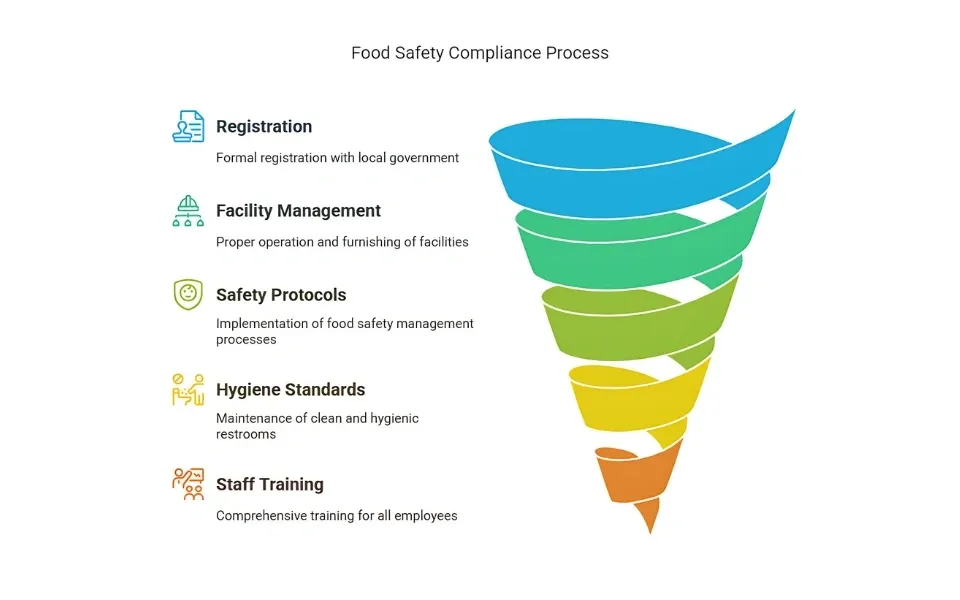
Image Source: Training Express
Multiple criminal offences apply when businesses fail to manage allergens correctly. Prosecution is possible under three main legislative frameworks. These statutes create overlapping responsibilities that magnify allergen incident legal liability across food operations.
Food Safety Act 1990 Provisions
The Food Safety Act 1990 establishes three main criminal offences relevant to allergen failures. Section 7 addresses food that becomes injurious to health. This happens when businesses add substances, use ingredients, remove constituents, or subject food to processes that make it harmful [5]. Authorities get into whether food is injurious to health by looking at probable immediate or long-term effects on consumers. They consider toxic effects from substance combinations and particular health sensitivities of specific consumer categories where food contains an allergen [5].
Section 14 makes it an offence to sell food that is not of the nature, substance, or quality the purchaser just needs [5]. This provision applies whether the purchaser is a customer at a shop or one company buying from another. It extends to situations where no money changes hands [5]. A business owner of Mansha Sweets Limited appeared at Blackburn Magistrates Court and pleaded guilty to two charges under this section: supplying food that was injurious to health and not of the nature the purchaser just needed. Fines and costs totalled £7,229.72 [5].
Section 15 prohibits falsely or misleadingly describing or presenting food through labels or advertisements [5]. The offence occurs when statements are untrue or when pictures present food in a misleading way. It covers material that is technically correct but given such emphasis that purchasers reach wrong conclusions [5].
Health and Safety at Work Act 1974
Section 3 of the Health and Safety at Work Act 1974 requires businesses to ensure that people not hired by them, but who may be affected by their business activities, are not exposed to risks to their health or safety [1]. Businesses must also provide such people with information about their business activities to ensure their health and safety [1]. This obligation extends to managing allergen risks for customers [6].
Businesses face obligations to provide appropriate training for employees under this Act. This ensures customer and staff safety [6]. Failure to comply triggers both criminal sanctions and potential personal injury claims [6].
Food Information Regulations 2014
The Food Information Regulations 2014 create strict liability offences for allergen labelling requirement failures. Failure to comply with Regulation 10(1) and (2) regarding labelling of allergenic ingredients constitutes a criminal offence that may result in criminal prosecution [5]. The same position applies to failures under Regulation 10(1)(b) relating to allergen information provision for non-prepacked foods and prepacked for direct sale (PPDS) foods [5].
Strict liability means no finding of fault is needed to prove liability [5]. Food business operators and management staff risk fines, imprisonment, or personal injury claims for failing to correctly label PPDS [5]. A person convicted under these Regulations faces a potentially unlimited fine. Magistrates determine the level case-by-case [5].
Rafiq Hussain, a shop owner from Accrington, was charged with allergen offences and sentenced at Blackburn Magistrates Court. He paid £1,212 in fines, surcharge, and costs [5]. Courts take allergen breaches seriously. Some cases lead to manslaughter charges when fatal reactions occur [6].
Corporate and Individual Liability for Allergen Incidents
Image Source: Food Standards Agency
Prosecution for allergen incident legal liability extends beyond corporate entities to individual directors, managers and staff members. The company and specific persons within it can face criminal charges at the same time. This creates personal exposure that many food business professionals underestimate.
Who Can Be Prosecuted
Food business operators face direct criminal prosecution when allergen labelling requirements are breached [1]. The term includes registered companies, partnerships, sole traders and any entity placing food on the market. Prosecution targets the legal entity controlling food operations. This could be a limited company operating multiple sites or a single takeaway owner.
Mansha Sweets Limited, a corporate entity, appeared at Blackburn Magistrates Court after a trading standards officer purchased food containing undeclared milk protein [7]. The business pleaded guilty to supplying food injurious to health. This shows how corporate prosecution functions. Mohammed Zaman, owner of Indian Garden restaurant, was found guilty of manslaughter when a customer died from anaphylactic shock. He had substituted almond powder with cheaper groundnut mix containing peanuts [6]. Zaman had received previous warnings but neglected allergen risks [6].
Corporate prosecution doesn’t shield individuals. Rafiq Hussain, a shop owner, faced personal charges and sentencing for Food Safety Act allergens violations despite declaring a milk allergy at ordering [7]. The conviction shows how sole traders bear full personal liability without corporate protection.
Director and Manager Responsibility
Directors and managers carry personal criminal liability for UK food allergen regulations breaches occurring under their oversight. Senior decision-makers face prosecution when allergen failures result from their decisions, negligence or failure to implement proper controls. The owners of Haute Dolci in Ellesmere Port were sentenced to pay £3,635 after a customer collapsed having eaten food containing nuts at the restaurant. Staff had been warned about her allergy [6].
The owner of Royal Spice in North Staffordshire received fines exceeding £5,000 for selling pizza containing almond powder to a customer with a nut allergy [6]. These prosecutions targeted business owners, not just corporate entities. Takeaway owners in Lancashire faced manslaughter sentencing when a customer died after her order contained peanut protein despite flagging her allergy. They appealed the conviction and won [6].
Vicarious Liability in Food Business Operations
Businesses remain liable for employee actions even when staff act contrary to training or established food allergen control UK procedures. Pret A Manger faced charges after a staff member failed to highlight sesame allergen to a student who suffered an allergic reaction [6]. The restaurant ended up acquitted, having claimed staff acted outside allergen procedures despite training [6]. But the prosecution itself shows regulatory willingness to pursue businesses for employee errors.
This case exemplifies the challenge of vicarious liability. Businesses bear responsibility for staff actions whilst needing to prove employees received proper training and supervision at the same time. When serious incidents trigger UK allergen recalls, both corporate entities and responsible individuals face scrutiny. This makes strong allergen recall procedures UK systems significant for limiting personal exposure.
Gross Negligence Manslaughter in Allergen Cases
Food business operators and managers face the most serious criminal charge available under UK law when allergen failures result in death: gross negligence manslaughter. This offence exceeds typical Food Safety Act allergens prosecutions and carries sentences that alter lives.
Legal Definition and Scope
Gross negligent manslaughter consists of four distinct elements that prosecution must establish. A duty of care must exist between the defendant and the deceased. The defendant must breach that duty of care. The breach must cause or substantially contribute to the victim’s death. The breach must be characterised as gross negligence severe enough to constitute a crime [8].
Courts interpret this standard to apply to conduct deemed “reprehensible” [8]. The threshold is markedly different from ordinary negligence or even regulatory breaches. Mohammed Zaman’s conviction in May 2016 marked the first time in Britain that someone was convicted of manslaughter over the sale of food [8][8]. The chief crown prosecutor stated the conviction should send a clear message to the restaurant industry that ignoring responsibilities and regulations while putting lives at risk will result in prosecution [8].
Sentencing Guidelines for Manslaughter
Sentencing for manslaughter by gross negligence reflects the gravity of preventable deaths. Mohammed Zaman received six years imprisonment after substituting almond powder in recipes for cheaper groundnut mix containing peanuts, despite warnings [5]. The prosecution described his approach as “reckless and cavalier” and noted he put profit before safety and cut corners at every turn [5].
Mohammed Abdul Kuddus received two years imprisonment in the Megan Lee case while Harun Rashid was sentenced to three years [9]. Mrs Justice Yip emphasised that Megan was responsible enough to highlight her allergies when placing the order, but sadly the same responsibility was not exercised at the business end [9]. The judge stated she hoped “the message is heard” that food suppliers who fail to take proper care will face substantial custodial sentences if a death results [9].
UK Case Examples: Fatal Allergen Incidents
Paul Wilson, aged 38, died in January 2014 after ordering chicken tikka masala from Indian Garden restaurant and specifying “no nuts” in his order [8]. The restaurant owner Mohammed Zaman had been almost £300,000 in debt and cut costs by using cheaper groundnut powder and employing untrained illegal workers [5]. Wilson died three weeks after a teenage customer at another of Zaman’s restaurants suffered an allergic reaction requiring hospital treatment after being assured her meal would not contain nuts [5].
Megan Lee, aged 15, suffered irreversible brain damage after eating food from Royal Spice in Oswaldtwistle, Lancashire, on 30 December 2016 [9]. Her friend had ordered through Just Eat with a note reading “prawns, nuts” to indicate allergies [10]. The meal, which included onion bhaji, seekh kebab and Peshwari naan, contained peanut protein throughout [9]. The court heard there were no procedures in place for allergen management, no audit of available dishes, no written recipe records, and no systems for cleaning or avoiding cross-contamination [10].
Mia-Shay died aged 12 after drinking a milkshake at Pop-Inn Café in Southwark in August 2023 [5]. CCTV evidence showed the operator had not cleaned the blender before preparing her drink and left substances from a previous milkshake that caused severe allergic reaction [5]. The operator pleaded guilty to six charges and received an £18,000 fine and 100 hours community order [5].
The Due Diligence Defence Explained
The statutory defence available under Section 21 of the Food Safety Act 1990 represents the main protection mechanism for businesses facing prosecution over allergen incident legal liability. This defence reverses typical criminal law principles. Defendants must prove their innocence rather than prosecutors proving guilt.
What Is the Main Legal Defence Open to Food Businesses
Section 21 establishes that defendants charged with food safety offences can be acquitted if they prove, on the balance of probabilities, that they took all reasonable precautions and exercised all due diligence to avoid committing the offence [11]. The statutory defence allows companies to present evidence of systems devised to ensure compliance with UK food allergen regulations and steps taken through training, instruction, supervision and audit to ensure proper implementation [11].
Pret A Manger’s acquittal after being charged under Section 14 demonstrates how this defence operates [11]. The company relied on allergen policies subject to Primary Authority advice and called expert evidence contending their system was sound and compliant [11]. Pret argued the relevant staff member had been trained and acted contrary to company procedures [11].
Reasonable Precautions and All Due Diligence
The word “all” carries substantial legal weight in this context. All reasonable precautions means identifying everything that could be predicted by a person skilled in the trade which might lead to an offence, then implementing adequate controls [7]. All due diligence requires the control system to operate visibly, be checked and where needed, be rectified [7].
Proving due diligence demands more than verbal evidence of precautions taken [12]. Documentary proof that checks, tests, inspections and supervision needed to avoid the offence have been carried out becomes essential [12]. Systems must provide bona fide records of implementation [12]. To name just one example, HACCP-based procedures identifying critical control points with corresponding temperature records demonstrate the acceptable means of evidencing food allergen control UK measures [12].
Burden of Proof Requirements
The burden of proof shifts onto defendants claiming due diligence. Businesses must prove on the balance of probabilities they fulfilled defence requirements [7]. Case law establishes the defence requires setting up a preventative system and ensuring it is confirmed, verified and implemented [13]. The extent and level of checks depends on business size and resources, with expectations differing between large national operations and small establishments [7].
When the Defence Fails
The defence fails when businesses cannot produce documented evidence of their systems. Pret may have relied on the employee’s act or default as part of its due diligence defence, his failure to consult the allergen guide [11]. But even when individual employees err, businesses face conviction unless they demonstrate detailed training, supervision and audit trails proving Food Safety Act allergens compliance systems were implemented properly.
Evidence and Systems Required to Demonstrate Due Diligence
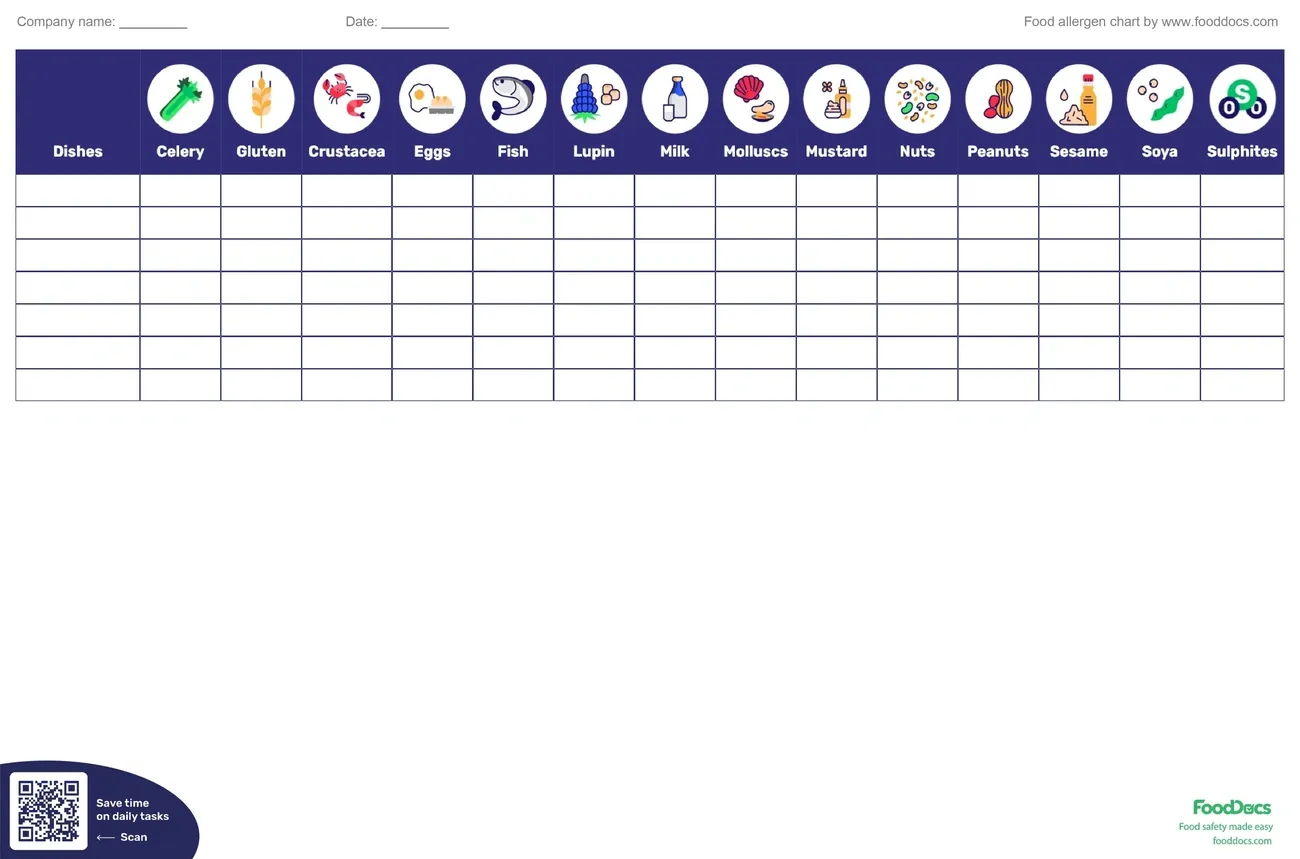
Image Source: FoodDocs
Courts inspect documentary evidence when businesses invoke the due diligence defence. Detailed records are the life-blood of protection against allergen incident legal liability. Food businesses must demonstrate that systems existed and that they functioned consistently and verifiably.
Documented Allergen Control Systems
Recording allergen ingredient information in written format makes businesses know precisely what their food contains [14]. Product specification sheets must record allergen information. Ingredient labels must include ingredients kept in original or labelled containers. Recipes must incorporate explanations of dishes provided [14]. Businesses need to think about the effect and update documentation so when recipes change [14]. Allergen ingredient information must remain current at all times [14].
HACCP or food allergen control UK frameworks should integrate these documented systems. Traceability records spanning cleaning logs to test results back them [15]. Everything requires recording and accessibility to inspect.
Staff Training and Competency Records
Food businesses must ensure staff receive allergen training [14]. Staff should know procedures when asked to provide allergen information. They should be trained to handle allergen information requests accurately and guarantee allergen-free meals reach the correct customer. Understanding allergen cross-contamination risks during food handling and preparation is crucial [16].
Training should cover the 14 recognised allergens and how to identify allergens in ingredients and recipes. Proper procedures for handling and storing allergens prevent cross-contamination. Communicating with customers about allergens effectively matters [17]. Regular refresher courses keep staff current with regulatory changes or internal procedure updates [17].
Supplier Audits and Traceability
Businesses should work closely with suppliers to ensure they provide accurate and current allergen information for all ingredients [17]. Regular review of supplier specifications and verification that allergen information is clearly communicated and documented is critical [17]. Supplier audits verify that food safety management systems exist to prevent contamination and adulteration effectively [18].
Cleaning Validation and Cross-Contamination Prevention
Cleaning procedures must remove food allergens to the extent possible [19]. Validation studies should choose targets present at high levels with high protein content and hard to clean away. These represent worst-case scenarios [20]. ELISA testing provides quantitative results by detecting protein [20]. Industry best practise requires repeating validation exercises three times. Non-detectable results for all post-clean and next off-line samples in consecutive rounds are necessary [20].
Horizon Scanning and Risk Assessment
Food safety horizon scanning makes businesses anticipate, assess and manage potential risks before they become critical [21]. Monitoring emerging food safety risks and intelligence on food authenticity and fraud risks matter. Regular updates provide early warnings of market, regulatory or supply chain threats [21].
Enforcement Actions and Legal Proceedings

Image Source: Food Hygiene Company
Regulatory oversight of allergen incident legal liability operates through multiple enforcement bodies with distinct but overlapping responsibilities. Understanding how authorities monitor compliance and escalate enforcement actions shapes business risk management strategies.
Role of Environmental Health Officers
Authorised food officers at Local Authorities hold responsibility for official controls relating to allergen rules [1]. Environmental Health Officers possess legal power to inspect all food premises without prior notice and to issue enforceable improvement or closure notices [6]. These officers can initiate prosecutions against people working at and responsible for food premises who have broken food safety law [6]. Penalties range from small fines to manslaughter charges and imprisonment. Prosecutions extend to all staff levels, not merely owners or operators [6].
England has dual enforcement responsibility in areas with county councils and district councils [1]. County councils are under a duty to enforce the Food Information Regulations. District councils have the power to enforce elements of these Regulations [1]. Authorised food officers are encouraged to discuss and reach understanding on how to enforce allergen labelling requirement at a local level [1].
Trading Standards and FSA Involvement
Trading Standards officers conduct work ensuring food premises focus on food allergies [10]. Lancashire County Council’s Trading Standards food officers test premises through allergen sampling programmes [10]. Officers pose as customers with specific allergies and purchase food to verify compliance. Businesses found failing to take sufficient measures face further compliance checks [10].
The Food Standards Agency provides oversight and guidance. Enforcement remains with local authorities. This structure creates accountability layers that businesses must traverse when incidents occur.
How an Incident Escalates Legally
Breaches result in Improvement Notices and First Tier Tribunals in case of appeals [22]. But the possibility of criminal sanctions exists as non-compliance may endanger consumers [22]. An incident escalates when allergen sampling reveals undeclared allergens, customer complaints trigger investigations, or serious reactions require hospital treatment.
Prosecutions follow systematic evidence gathering. Trading standards officers document purchase details, laboratory analysis results, and business communication records. These are the foundations of the prosecution case alongside witness statements and medical reports where applicable.
Improvement Notices vs Criminal Prosecution
Improvement Notices provide businesses a chance to rectify failures before criminal proceedings commence. Officers issue notices specifying required changes and timeframes for compliance. Failure to comply with Improvement Notices accelerates matters towards prosecution.
Criminal prosecution becomes inevitable when businesses ignore warnings, repeat offences occur, or incidents cause serious harm. A person convicted under the Food Information Regulations faces potentially unlimited fines. Magistrates determine levels case-by-case [1]. According to regulatory patterns, businesses that cooperate and implement corrective measures may avoid prosecution. Those showing negligence or disregard face the full weight of Food Safety Act allergens enforcement.
Financial, Legal, and Reputational Consequences
Consequences reach way beyond the reach and influence of the original enforcement actions. They create financial burdens that threaten business viability and deprive responsible individuals of their personal liberty. The costs of allergen incident legal liability compound faster once prosecution commences.
Unlimited Fines Under Current Law
A person convicted of an offence under the Food Information Regulations faces potentially unlimited fines. Magistrates determine levels case-by-case [1]. The elimination of maximum fine caps means penalties now scale according to business turnover and offence severity. Actual fines demonstrate this variation clearly. Mansha Sweets Limited paid £7,229.72 [10], whilst Rafiq Hussain’s Eastern Promise Takeaway paid £1,212 [10]. Haute Dolci owners in Ellesmere Port were sentenced to pay £3,635 [23]. Royal Spice in North Staffordshire exceeded £5,000 [23].
Imprisonment and Custodial Sentences
Custodial sentences accompany serious allergen incident legal liability cases. Mohammed Abdul Kuddus received two years imprisonment whilst Harun Rashid was sentenced to three years after Megan Lee’s death [24]. Mohammed Zaman received six years for manslaughter [23]. Courts emphasised that food suppliers who fail to take proper care will face custodial sentences if death results [24].
Allergen Recalls and Legal Exposure
Food recalls cost companies an average of £1.5 to £10 million per incident. This excludes crisis management, legal fees and brand rehabilitation [8]. Instances that lead to consumer loss of life trigger Coroner’s Court investigations to find the cause of death. This process is long and arduous for both bereaved families and businesses under investigation [8]. Suppliers or food buyers may take action against food companies if allergen incident legal liability has resulted in revenue loss or death [8]. Criminal investigations commence when consumers become ill or die due to allergen exposure [8].
Long-Term Business Impact
Reputational damage alone reduces customer trust and causes lost revenue as consumers choose safer, more transparent brands [8]. The risk of making customers ill from allergen incidents results in financial and reputational damage. In extreme cases it could cause business closure [8]. Allergy rates are surging and litigation risks are rising sharply [25]. More people are hospitalised each year because of food allergy or intolerance than because of foodborne disease [26]. Businesses label foods with allergen information because people are allergic to certain foods. Yet when ingredients become cross-contaminated with allergens on business sites, consumers risk eating unsafe ingredients as the allergen was not labelled [8]. The disruption proves too severe for businesses to remain operational in some cases [8].
Risk Mitigation and Crisis Management

Image Source: Food Allergy Training
Mitigating allergen incident legal liability requires systematic prevention measures and rapid crisis response protocols when incidents occur despite precautions.
Preventing Allergen Incidents: Step-by-Step Checklist
Managers must designate overall responsibility to manage allergens with a responsible staff member available each shift to handle allergy requests [5]. Procedures should verify ingredient deliveries match orders, with approval processes to substitute [5]. Kitchen staff need clear instructions on preventing cross-contamination, using allergy matrices when planning recipes and recording allergen changes [5]. Ingredients must be stored in sealed, labelled containers with spillage policies addressing cross-contact [5]. Front-of-house staff require accurate written allergen information and methods to communicate allergen-free orders to kitchens [5]. Online allergen information must be clear and available at ordering points for delivery operations [5].
Crisis Response When an Incident Occurs
When anaphylaxis occurs, adrenaline must be administered to the outer mid-thigh right away [27]. Call emergency services and state anaphylaxis, lay the person flat with raised legs and give additional adrenaline doses after 5 minutes if symptoms persist [28]. Staff must know emergency procedures that include recognising anaphylaxis symptoms and administering auto-injectors [5]. Transport to hospital remains needed even if symptoms resolve, with patients requiring minimum 4-hour observation [28].
Recall Management and Regulator Communication
Analysis reveals 92% of food allergy alerts stem from operational errors internal to businesses, with mislabelling accounting for 54% of total alerts [29]. The FSA manages approximately 300 allergen-related incidents annually [30]. Effective allergen recall procedures UK frameworks break down why it happens using fishbone analysis and ‘5 Whys’ methodology [31].
FAQs: Common Questions About Allergen Liability
Can businesses refuse allergen-free requests? Yes, businesses may decline if they cannot guarantee allergen-free preparation [9]. What if staff lack allergen information? Staff must always answer no to safety questions when information is unavailable [9]. Are precautionary labels mandatory? Only after risk assessments show unavoidable cross-contamination risks [9].
Conclusion
Allergen incident legal liability carries consequences that extend from unlimited fines to custodial sentences. Directors face personal prosecution among corporate entities. The due diligence defence remains the main protection mechanism, yet courts want detailed documentary evidence that proves systematic allergen control implementation. Food businesses cannot rely on verbal assurances or retrospective claims. They must maintain detailed training records, supplier audits, cleaning validation data and HACCP-based systems. Human error triggers most incidents. This makes resilient supervision and verification protocols critical. Business owners who fail to establish verifiable allergen management systems face prosecution that threatens both financial viability and personal liberty.
Key Takeaways
Understanding criminal liability for allergen incidents is crucial for UK food businesses, as the consequences extend far beyond regulatory compliance to include unlimited fines, imprisonment, and personal prosecution of directors.
• Food businesses face unlimited fines and potential imprisonment for allergen failures, with directors personally liable regardless of corporate structure.
• The due diligence defence requires comprehensive documented evidence of allergen control systems, not just verbal assurances or retrospective claims.
• Human error causes 92% of allergen incidents, making robust staff training, supervision protocols, and verification systems absolutely essential.
• Gross negligence manslaughter charges apply when allergen failures cause death, carrying sentences up to life imprisonment as demonstrated in recent UK cases.
• Environmental Health Officers can prosecute without prior warning, making proactive allergen management systems vital for legal protection and business survival.
The stark reality is that allergen incidents can destroy businesses overnight whilst sending responsible individuals to prison. Effective prevention requires treating allergen management as a critical business risk rather than merely a compliance exercise.
FAQs
Q1. What penalties can food businesses face for allergen labelling failures in the UK? Food businesses convicted of allergen offences face potentially unlimited fines determined by magistrates on a case-by-case basis. Actual penalties vary significantly based on business size and offence severity, ranging from approximately £1,200 to over £7,000 for regulatory breaches. In cases resulting in death, individuals can receive custodial sentences ranging from two to six years for manslaughter, with the maximum sentence being life imprisonment. Directors and managers face personal prosecution alongside corporate entities, meaning business owners cannot shield themselves behind company structures.
Q2. What is the due diligence defence and how can businesses prove it? The due diligence defence under Section 21 of the Food Safety Act 1990 allows businesses to avoid conviction if they prove they took all reasonable precautions and exercised all due diligence to prevent the offence. This requires comprehensive documentary evidence including written allergen control procedures, staff training records, supplier audit trails, cleaning validation data, and HACCP-based systems. Verbal assurances or retrospective claims are insufficient—businesses must demonstrate their systems were properly implemented and regularly verified through bona fide records of checks, tests, and inspections.
Q3. Can individual managers and directors be prosecuted for allergen incidents? Yes, directors, managers, and business owners face personal criminal liability for allergen failures occurring under their oversight. Prosecution extends beyond corporate entities to individuals making decisions or responsible for implementing allergen controls. Recent cases demonstrate that sole traders, restaurant owners, and takeaway operators have received personal fines and imprisonment for allergen-related offences. Even in larger organisations, senior decision-makers can be prosecuted when allergen failures result from their negligence or failure to implement proper control systems.
Q4. What documentation must food businesses maintain to demonstrate allergen compliance? Businesses must maintain allergen ingredient information on product specification sheets, ingredient labels, and detailed recipes with regular updates when formulations change. Essential records include staff training logs showing competency in allergen management, supplier specifications and audit reports, cleaning validation studies using methods like ELISA testing, and traceability records spanning the entire operation. All documentation must remain current and accessible for inspection, integrated into HACCP frameworks with evidence of regular verification and corrective actions when issues arise.
Q5. How do Environmental Health Officers enforce allergen regulations? Environmental Health Officers can inspect food premises without prior notice and possess legal authority to issue improvement notices, closure orders, and initiate criminal prosecutions. They conduct allergen sampling programmes where officers pose as customers with specific allergies to test compliance. When breaches are discovered, enforcement escalates from improvement notices requiring corrective action to criminal prosecution if businesses fail to comply, repeat offences occur, or incidents cause serious harm. Penalties apply to all staff levels, not merely owners or operators.
References
[1] – https://www.food.gov.uk/business-guidance/food-allergen-labelling-and-information-requirements-technical-guidance-enforcement-of-the-measures
[2] – https://www.food.gov.uk/business-guidance/precautionary-allergen-labelling
[3] – https://www.anaphylaxis.org.uk/about-anaphylaxis/14-major-food-allergens/
[4] – https://pmc.ncbi.nlm.nih.gov/articles/PMC10090668/
[5] – https://www.food.gov.uk/business-guidance/allergen-checklist-for-food-businesses
[6] – https://www.thesaferfoodgroup.com/courses/allergy-awareness-ey/demo/2/
[7] – https://cpdonline.co.uk/knowledge-base/food-hygiene/due-diligence-food-hygiene/
[8] – https://libereat.com/2022/03/consequence-businesses-not-following-allergen-rules/
[9] – https://www.businesscompanion.info/en/quick-guides/food-and-drink/food-allergens-and-intolerance
[10] – https://news.lancashire.gov.uk/news/food-businesses-prosecuted-for-failing-to-protect-customers-with-allergies
[11] – https://www.clarionsolicitors.com/articles/pret-a-manger-acquittal-underlines-importance-of-due-diligence
[12] – https://www.williamfry.com/knowledge/food-safety-law-and-the-defence-of-due-diligence/
[13] – https://www.food.gov.uk/print/pdf/node/16481
[14] – https://www.food.gov.uk/business-guidance/allergen-guidance-for-food-businesses
[15] – https://assuranceinaction.intertek.com/post/102lssy/managing-allergen-risk-what-good-looks-like-in-food-manufacturing
[16] – https://www.food.gov.uk/business-guidance/allergy-training-for-food-businesses
[17] – https://www.anaphylaxis.org.uk/my-account/media-centre/membership-news/navigating-the-complexities-of-food-allergen-management/
[18] – https://www.merieuxnutrisciences.com/food/food-safety-quality-management/supplier-audits/
[19] – https://www.food.gov.uk/research/review-of-the-literature-and-guidance-on-food-allergen-cleaning-report-summary-and-discussion
[20] – https://www.rssl.com/insights/food-consumer-goods/designing-a-successful-allergen-cleaning-validation-strategy/
[21] – https://www.eurofins.co.uk/food-testing/consultancy/horizon-scanning-emerging-risks/
[22] – https://www.instituteofhospitality.org/peter-ducker-fih-asks-what-could-happen-to-uk-businesses-that-do-not-comply-with-the-new-food-allergen-regulation/
[23] – https://www.reedsmith.com/articles/tomorrows-hospitality-a-z/prosecutions-are-soaring-due-to-allergens-labelling-breaches-in-the-uk/
[24] – https://www.theguardian.com/society/2018/nov/07/takeaway-workers-jailed-over-nut-allergy-death
[25] – https://www.i-law.com/ilaw/doc/view.htm?id=448469
[26] – https://www.food.gov.uk/news-alerts/news/uk-food-businesses-report-improved-practises-in-allergen-management-and-better-safety-for-food-hypersensitive-consumers
[27] – https://www.betterhealth.vic.gov.au/health/conditionsandtreatments/allergic-reactions-emergency-first-aid
[28] – https://www.foodallergy.org/resources/recognising-and-responding-reaction
[29] – https://www.food.gov.uk/research/food-allergy-and-intolerance-research/development-of-a-food-recall-prevention-platform
[30] – https://www.fdf.org.uk/fdf/news-media/press-releases/2024/fdf-allergen-guidance-launch-2024/
[31] – https://www.anaphylaxis.org.uk/business/preventing-allergen-recalls/