 With two million people in the UK living with a diagnosed food allergy, precautionary allergen labelling UK regulations have never been more critical. Even trace amounts of an allergen can trigger life-threatening reactions for some consumers. But confusion persists around when “may contain” warnings are appropriate versus when they limit consumer choice without good reason.
You need clarity on UK regulatory expectations to understand what is precautionary allergen labelling, when should precautionary allergen labelling be used, and what is the purpose of a precautionary allergen statement. This piece gets into FSA best practise and risk assessment principles. It also covers practical strategies that ensure precautionary allergen statements protect consumers without resorting to blanket labelling that devalues genuine warnings.
What is Precautionary Allergen Labelling (PAL)?
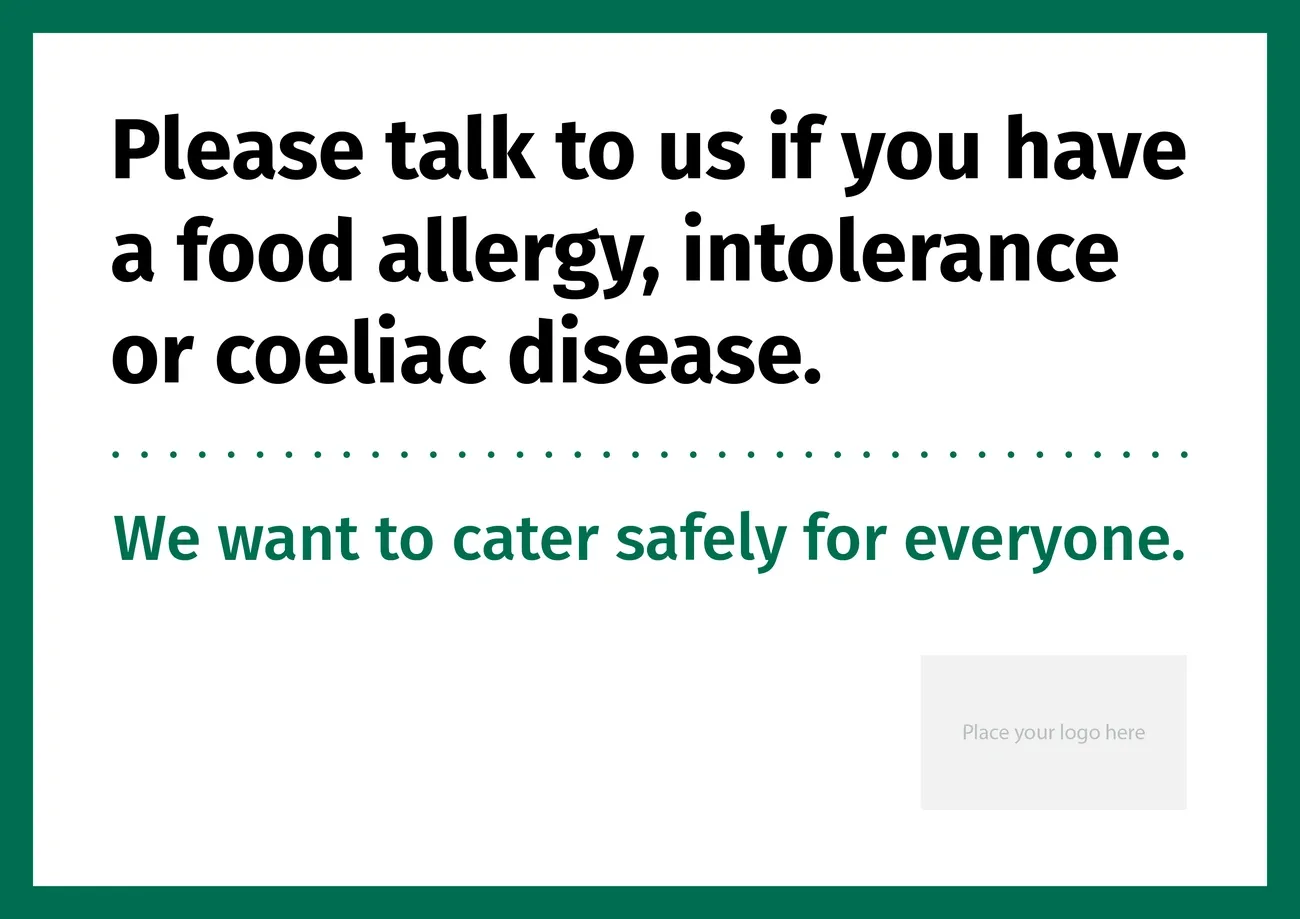
Image Source: Food Standards Agency
Definition and Purpose of PAL
Precautionary allergen labelling provides voluntary information to consumers about the potential unintentional presence of allergens in food products [1]. The Food Standards Agency explains that allergen cross-contamination can happen unintentionally when there is a risk that an allergen can enter the product during the production process accidentally, especially when several food products are made on the same premises [1].
The purpose of a precautionary allergen statement centres on consumer safety rather than regulatory compliance. PAL addresses situations where allergenic proteins may be present despite not being part of the recipe, unlike mandatory allergen declarations for intentional ingredients. This difference matters because even trace amounts can trigger severe reactions in susceptible individuals.
But a precautionary allergen label should only be used when a risk of allergen cross-contact within the supply chain is identified that cannot be removed through risk management actions, following a risk assessment [1]. This qualifier proves essential. PAL serves as a final communication tool after all reasonable control measures have been exhausted, not as a substitute for proper allergen management.
What ‘May Contain’ Means in Practise
The label means that whilst the product is not supposed to contain the allergen, the manufacturer cannot be certain it does not [2]. Cross-contamination may have occurred during preparation, but the actual presence of allergens varies from batch to batch. Foods with ‘may contain’ labels might not contain any allergens at all, but there is also a chance they might [2].
This variability creates practical challenges. A consumer might purchase a product labelled “may contain” and experience no reaction. Yet buying the same product again could result in an allergic response [2]. The risk exists because manufacturing environments, equipment sharing and production scheduling can introduce allergens intermittently rather than consistently.
Food businesses can choose wording such as “may contain x” or “not suitable for consumers with a x allergy” [1]. Research conducted by the Food Standards Agency found that most food companies and the general public prefer “not suitable for those with an allergy to X” as the PAL statement on product packaging [1].
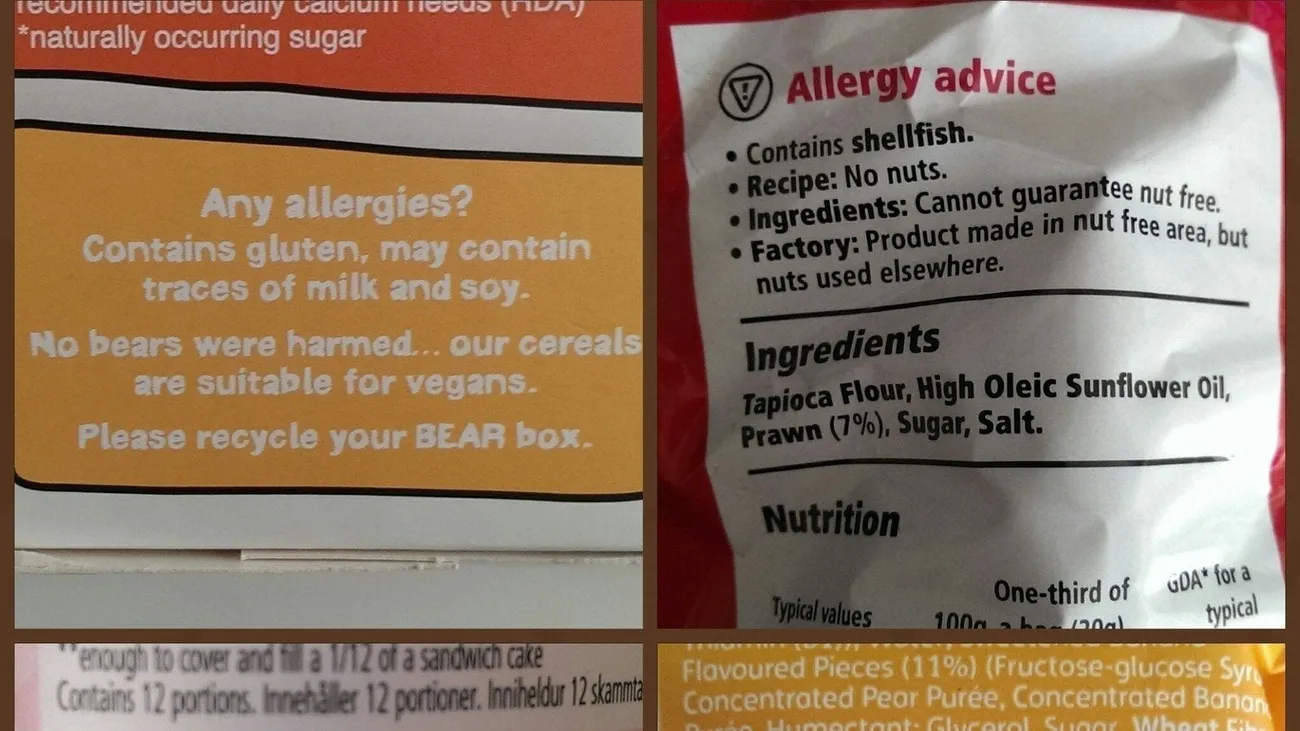
Acceptable precautionary allergen labelling wording should specify which allergen poses the risk. General or blanket statements such as “may contain allergens” could be deemed misleading to the consumer because they are unlikely to be based on an assessment of the risk of cross-contamination for each of the 14 regulated allergens [1]. Avoiding generic statements provides consumers with practical information rather than vague warnings.
The 14 Major Allergens and PAL
UK regulations require information about 14 major allergens when they are used as ingredients in food products [3]. These allergens include celery, cereals containing gluten (such as barley and oats), crustaceans (such as prawns and crabs), eggs, fish, lupin, milk, molluscs, mustard, peanuts, sesame, soybeans, sulphur dioxide and sulphites (if they are at a concentration of more than ten parts per million), and tree nuts (such as almonds, hazelnuts, walnuts and cashews) [3].
Precautionary statements apply to these same 14 allergens when cross-contamination risk exists. The specificity matters because consumers need to know precisely which allergen may be present to make informed decisions about their safety.
Legal Status: Voluntary vs Mandatory Labelling
Precautionary allergen labelling remains voluntary in the UK [1]. No legal requirement compels businesses to provide “may contain” warnings, unlike mandatory allergen declarations for intentional ingredients. This voluntary nature distinguishes PAL from the regulated requirement to highlight allergens used as recipe ingredients.
Despite being voluntary, the use of precautionary allergen labelling when no genuine risk to the consumer has been identified could be considered misleading food information [1]. Voluntary food information must meet requirements set out in food law: not to mislead the consumer and not to be ambiguous or confusing [1]. Therefore, businesses retain responsibility to ensure any PAL they choose to apply reflects genuine, assessed risk rather than precautionary legal protection.
Precautionary allergen labelling can also be used in combination with vegan or vegetarian labelling [1]. But it should not be used in combination with a free-from statement for the same allergen; a food cannot carry both labels, like “free-from milk” and “may contain milk” [1].
UK Regulatory Position on Precautionary Allergen Labelling
FSA Expectations and Best Practise Guidance
The Food Standards Agency published updated best practise guidance clarifying how and what time businesses should apply precautionary allergen labelling [4]. While PAL remains voluntary, the FSA expects these statements to be used only if an unavoidable risk of allergen cross-contamination exists [5]. This position reflects growing concern that increasing use of “may contain” terminology devalues the information consumers receive [5].
The FSA’s technical guidance states that food businesses should specify which of the 14 major allergens the PAL refers to [5]. Specific statements such as “may contain peanuts” or “may contain tree nuts” should replace generic claims like “may contain nuts” [5]. Consumers managing food allergies need this specificity. It allows them to make informed decisions based on their particular allergen sensitivities.
The guidance recommends that PAL should not be applied for the same allergen that products claim to be “free from” [5]. A product that carries a “dairy free” label should not display a “may contain milk” statement at the same time [5]. A free-from allergen claim guarantees the specified allergen is absent and requires strict controls to eliminate any risk of cross-contamination [1].
A new standard addresses PAL use in combination with vegan labelling [5]. The FSA explains that a vegan label communicates different information to a free-from claim and serves different consumer groups [1]. So a PAL statement for molluscs, eggs, fish, milk, or crustaceans can communicate a risk of their unintended presence where a food business’s risk assessment identifies it [1][1].
Voluntary Food Information Requirements
Any voluntary food information must comply with the requirements of Chapter V of the Food Information for Consumers regulation [4]. Voluntary statements must not mislead consumers or be ambiguous or confusing [4]. Although PAL falls under voluntary food information, food business operators should provide consumers with accurate information about the risk of unintended allergen presence to avoid providing food that could be deemed unsafe [4].
A precautionary allergen statement should only be provided with prepacked or non-prepacked foods if an unavoidable risk of allergen cross-contamination has been identified after a risk assessment that cannot be controlled sufficiently through controls such as segregation and cleaning [4]. Its use is not a substitute for good food hygiene and safety practises [4].
What Time PAL Becomes Misleading Under UK Law
The use of precautionary allergen labelling where no genuine risk to the consumer has been identified could be thought misleading food information [6]. This legal principle distinguishes appropriate PAL use from defensive labelling practises. Food businesses applying PAL without conducting proper risk assessments face possible enforcement action from local authorities [1].
Indiscriminate use of PAL without proper assessment processes can limit food choice for consumers with food allergies or hypersensitivities and restrict their diet while affecting their health and quality of life [5]. Generic PAL statements such as “may contain allergens” can mislead consumers and lead to mistrust in the warning. Consumers take risks to increase their food choice, which results in unexpected adverse allergic reactions [5].
Local authorities enforce allergen information regulations [1]. Failure to comply can result in improvement notices, and businesses face 14 days to appeal from the date of issuance [1]. Businesses may face prosecution in some cases [1]. Beyond regulatory penalties, businesses risk financial and reputational damage from allergen information failures [1].
When Should Precautionary Allergen Labelling Be Used
Identifying Genuine Cross-Contamination Risk
Allergen cross-contact occurs at the time an allergenic food is unintentionally incorporated into another food that is not intended to contain that allergenic food [1]. This can happen during processing, manufacturing, handling, transport, or storage of foods. Food businesses must distinguish between theoretical possibilities and actual risks that warrant consumer warnings.
Common cross-contamination hotspots have shared equipment such as mixers, slicers, ovens, and conveyor belts that can retain allergen residues if not cleaned meticulously between product runs [7]. Airborne particles from fine powders like flour, milk powder, or ground nuts can travel considerable distances and settle on surfaces and other products far from their source [7]. Staff and utensils also transfer allergens through hands, gloves, aprons, or shared tools like scoops and measuring jugs [7].
Storage areas present risk at the time allergenic ingredients are not segregated from non-allergenic ones in warehouses or refrigerators [7]. Each point requires systematic evaluation as part of allergen cross-contamination control procedures.
At the Time Risk Assessment Justifies PAL
Using a PAL is advisable at the time an unavoidable and real risk of allergen cross-contact is identified that cannot be removed through risk management actions, such as separation or cleaning [1]. The decision to apply precautionary allergen labelling should be made as the final step in a process of risk analysis within the food supply chain.
Best practise dictates using PAL only after conducting a risk assessment that shows an unavoidable risk of cross-contamination that cannot be reduced by making reasonable changes to working practises [8]. It may be misleading to use a PAL without having identified an unavoidable risk of allergen cross-contamination [8].
Inherited risk from suppliers also justifies PAL application. If a raw material supplier uses ingredients containing allergens and has a PAL statement on their product, it might be carried over to the final product even after processing [1]. Supply chain allergen status requires thorough documentation at the time businesses think over whether food allergen control UK measures can eliminate downstream risk.
Acceptable PAL Wording and Phrases
Specificity proves critical at the time businesses apply precautionary allergen labelling. Businesses should state which of the 14 major allergens might be present [1]. Instead of generic statements like ‘may contain nuts,’ specific wording such as ‘may contain peanuts’ or ‘may contain wheat’ enables consumers with particular allergies to make informed choices [1].
Acceptable phrases have “may contain x” or “not suitable for consumers with a x allergy”. But generic or blanket statements such as “may contain allergens” are unlikely to be based on an assessment of risk for each regulated allergen.
At the Time PAL is Not Appropriate
PAL should not be used as a substitute for good food hygiene and safety practises [9]. Excessive use of precautionary allergen labels can limit consumer choice and devalue the warning for consumers with food allergies or intolerances [9]. This can lead to risk-taking behaviours to increase food choice and result in unexpected adverse allergic reactions [9].
Businesses cannot apply PAL without documented justification based on risk assessment [1]. Auditors may request this documentation to ensure responsible PAL usage [1]. Applying PAL indiscriminately can mislead consumers and put their health at risk [10].
The Risks of Misusing Precautionary Allergen Statements
Image Source: Belfast Telegraph
Overuse: Effect on Consumer Trust and Choice
Research shows that many consumers with food allergies think precautionary warnings are overused. They often ignore or mistrust these warnings, which defeats the purpose of providing better quality allergy advice and improving consumer choice [4]. This erosion of trust creates a dangerous paradox where genuine warnings lose their protective value.
Survey data reveals the scale of consumer disengagement. Over 40% of young food-allergic adults in the USA ignored PAL [11]. A UK survey found that 60% of parents of children with nut allergies avoided products labelled “may contain traces”, but only 40% did so when less direct statements were used [11]. The more ambiguous the warning, the less likely consumers heed the content.
Excessive use of precautionary allergen labels limits consumer choice and devalues the warning for consumers with food allergies or intolerances [1]. This restriction proves especially burdensome. Research shows shoppers avoiding products with PAL spend 39% more time identifying suitable foods and pay on average 11% more than their non-allergic counterparts [11]. Blanket approaches that pass on all “may contain” statements without confidence in their accuracy reduce choice and provide false impressions about allergy risks [4].
Underuse: Consumer Safety and Legal Liability
The majority of deaths from allergic reactions to food are associated with undeclared ingredients rather than cross-contamination. Concerns persist about legal liabilities if a consumer experiences an allergic reaction caused by trace allergen presence [4]. The question of liability becomes especially acute when food businesses decide not to pass on “may contain” information, believing the precautionary labelling unreliable.
The voluntary nature of precautionary allergen labelling might provide a reasonable defence in criminal court if supported by appropriate risk assessment and other due diligence measures [4]. But in civil court, the burden of proof operates on “balance of probability”, making an effective defence more problematic [4]. Failure to assess the robustness of suppliers’ “may contain” statements might leave food business operators liable if statements are not communicated to consumers [4].
Commercial and Reputational Consequences
Food recalls triggered by allergen failures cost companies an average of £1.5 to £10 million per incident [6], excluding additional expenses like crisis management and legal fees. Brand rehabilitation adds to these costs. The reputational damage alone reduces customer trust and leads to revenue lost in the end as consumers choose safer, more transparent brands [6].
Trading Standards surveys reveal widespread non-compliance. More than half of businesses surveyed in Devon and Somerset broke food labelling rules, with 56 out of 100 businesses failing to provide full ingredient and allergen labelling [12]. Milk proved most prevalent in 44% of samples containing undeclared allergens, with cross-contamination of work surfaces likely a factor [12].
Regulatory Scrutiny and Enforcement Action
Authorised food officers at local authorities hold responsibility for official controls relating to allergen rules [12]. Failure to comply with requirements constitutes a criminal offence and may result in prosecution [12]. A person convicted faces a potentially unlimited fine, with the level determined by magistrates on a case-by-case basis [12].
Recent prosecutions show regulatory bodies are willing to pursue enforcement action. The owners of Haute Dolci in Ellesmere Port were sentenced to pay £3,635 after a woman collapsed having eaten food containing nuts despite warning staff about her allergy [13]. The owner of Royal Spice in North Staffordshire faced fines exceeding £5,000 for selling pizza containing almond powder to a customer with nut allergy [13].
Allergen Risk Assessment and PAL Decision-Making
The Four Stages of Risk Analysis
Risk analysis is the foundation of defensible precautionary allergen labelling decisions. The framework has four distinct stages that build upon each other [1]. First, risk assessment determines what the risk actually is. Risk management follows, asking whether the risk can be managed and what actions could reduce it. Risk communication addresses how the risk should be conveyed to consumers. Risk review gets into whether the risk has changed and establishes review frequency [1].
Food manufacturers must integrate allergen considerations into their Hazard Analysis and Critical Control Points assessment [1]. This identifies whether an allergen can be eliminated entirely or informs the processes needed to manage the risk. A separate allergen risk assessment can also be undertaken, using the process flow from HACCP to review allergen risks in isolation [1].
Identifying Sources of Cross-Contamination
The main purpose centres on understanding the likelihood of unintentional allergen cross-contamination throughout the supply chain, from raw materials to finished products [1]. Businesses must think over whether any foods or ingredients entering premises intentionally contain allergens, such as peanuts, milk, eggs or sesame seeds used in some products [1]. Determining whether incoming ingredients might unintentionally contain allergens is critical, through precautionary labels from suppliers [1].
Food allergen cross-contact can occur at every stage of the food chain [5]. Agricultural remnants persist in fields and contaminate produce during crop rotation [5]. Transport vehicles carry residues from previous loads [5]. Personnel, environment, equipment, utensils and spillages of allergenic material all serve as potential vectors within manufacturing [5]. Rework material requires cautious handling to prevent cross-contact when allergen profiles differ [5].
Reviewing Control Measures and Their Effectiveness
The physical nature of particular ingredients being used proves important [1]. Liquid and powder represent different risk types. Milk powder may pose greater risk where airborne contamination is possible, whilst liquid milk causes less concern with sufficient separation through physical barriers, distance, timing or cleaning [1]. Allergens in powder spread more evenly in products than particles like lumps, seeds and nuts, which appear as hotspots and deliver higher allergen doses [1].
Food processing such as heating does not destroy food allergens and may increase their potency, such as roasting peanuts [1]. This limitation makes prevention through food allergen control UK measures paramount rather than relying on processing to eliminate risks.
Understanding the VITAL Framework
The Allergen Bureau’s VITAL allergen labelling Programme provides a standardised allergen risk assessment process for the food industry [14]. Discussions with larger food businesses confirm they carry out risk assessments, in line with FSA guidance, as part of their allergy management system to inform if PAL is required [7]. This usually involves every stage of manufacture, from procurement of raw materials to goods received, to controls in manufacture, packaging and distribution [7].
VITAL employs Reference Doses based on evidence about the likelihood of objective reactions to specific allergens [7]. ED05 represents the dose of allergenic protein at which 5% of the allergic population are predicted to have a reaction with objective symptoms [7]. ED01 is where 1% of the allergic population would react [7]. Risk managers think over the amount of food consumers typically consume on a single eating occasion to determine the action level when assessing whether contamination may exceed a reference dose [7]. To cite an instance, one biscuit’s contamination risk may fall below the reference dose, but consumers typically eat more than one biscuit per serving [7].
Threshold-Based Decision Making Principles
All decisions about whether to use PAL are informed by judgement about risk and knowing how to alleviate it [7]. Thresholds help food businesses understand what levels of unintentional allergens in prepacked products should trigger PAL use and standardise the approach [7]. A food business calculates allergen contamination potentially present in a product and compares this with a reference dose [7]. PAL should be applied if contamination risks exceeding the reference dose [7].
The introduction of thresholds based on reference doses benefits consumers by ensuring PAL describes potential risk accurately and consistently [7]. If cross-contamination occurs for products without PAL, it would be no worse than the threshold level [7]. This does not mean contamination up to that threshold will always be present [7]. Many larger businesses already use thresholds as part of their risk analysis, but further work is required to develop industry-wide thresholds accounting for risk appetite and feasibility [7].
Step-by-Step Guide: Determining if PAL is Required
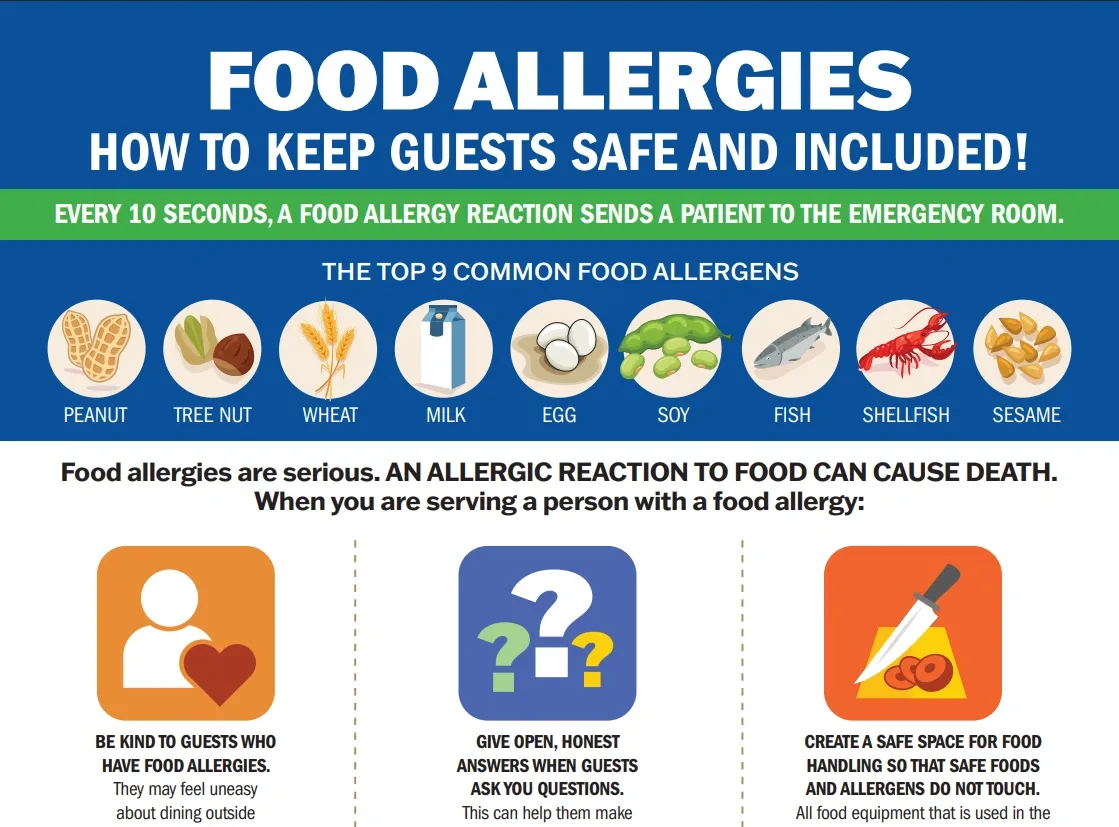
Image Source: The Rotten Apple – Substack
Deciding whether precautionary allergen labelling applies to a product requires systematic evaluation rather than precautionary assumptions. A PAL application is a decision that should be made as the final step in a process of risk analysis of allergen cross-contact within the food supply chain [1].
Step 1: Conduct a Full Allergen Risk Assessment
The risk assessment should think over potential allergen sources at premises as a minimum [1]. Identify whether any foods or ingredients entering premises intentionally contain allergens regulated in the UK, such as peanuts, milk, eggs, or sesame seeds used in some products [1]. Determine if incoming ingredients could unintentionally contain allergens, such as those with precautionary labels from suppliers [1]. Review how cross-contamination could happen during handling, storage, preparation, production processes, packing, or distribution [1].
Step 2: Review Manufacturing Controls and Processes
Food manufacturers must think over allergens at the time they undertake their Hazard Analysis and Critical Control Points assessment [1]. Good Manufacturing Practise requires commitment to ensure products meet food safety and legal requirements and relies on appropriate manufacturing operations, including effective food safety systems and hazard analysis principles [1]. Assess how control measures reduce or eliminate the risk of allergen cross-contamination effectively [1].
Step 3: Assess Supply Chain Allergen Status
Food businesses should establish a method to assess the allergen status of incoming ingredients from suppliers [1]. Check the allergen status of all ingredients with suppliers. Conduct specification reviews on a regular basis [1]. Ask suppliers to notify changes in allergen status of ingredients or materials they supply [1]. Any change in supplier should be accompanied by appropriate checks through audits or forms that ask suppliers to provide required information [1].
Step 4: Determine if Risk Can Be Eliminated or Managed
HACCP assessment identifies whether an allergen can be eliminated or informs processes needed to manage the risk [1]. Precautionary allergen labelling should be used only where a risk of allergen cross-contamination has been identified that cannot be removed through strong allergen control measures [1].
Step 5: Document Your Decision and Justification
Good supplier management informs decisions on appropriate frequency of checks on raw materials and specification checks [1]. Documentation proves essential during audits to demonstrate risk-based decision-making rather than blanket precautionary approaches.
Reducing Reliance on PAL Through Robust Allergen Management
Strong allergen management systems reduce dependence on precautionary allergen labelling by eliminating cross-contamination risks at source. Companies dealing with multiple allergens require stringent sanitation plans, strategic production schedules, and in some cases, isolated production lines [8].
Implementing Effective Cleaning Procedures
An effective cleaning and sanitation programme is essential to allergen management within facilities [15]. Cleaning validation remains critical, with protocols requiring design and validation to prevent cross-contamination and eliminate allergens present [15]. Standard Sanitation Operating Procedures should document equipment identification, Lock Out-Tag Out procedures, required personal protective equipment, and TACT conditions (Time, Action, Chemical, Temperature) to clean and sanitise [15].
Segregation and Dedicated Production Lines
Line segregation allows production of products with multiple allergens on different lines at the same time [8]. Companies can prevent cross-contamination within the same facility by separating lines through operational strategies and physical barriers that protect allergen-free production [8]. Colour-coded cleaning equipment used for allergen areas reduces cross-contamination risk, human error, and audit non-compliance [16]. Ingredient receiving represents a vulnerable point where allergens contact non-allergen ingredients. This necessitates separate docks and storage away from other materials [8].
Scheduling and Product Run Order
Production scheduling separates allergen-containing products from non-allergen products by time [17]. Companies can cluster allergen-containing runs to reduce required changeovers and minimise allergen cross-contamination risk [17]. Companies should add allergenic ingredients as late in production as possible to minimise equipment contact time with allergens [17].
Supplier Management and Ingredient Control
Facilities should request allergen statements from suppliers, suggesting allergens handled and present in supplied materials [15]. Formal supplier audits occur annually or more frequently if issues arise [15]. Suppliers must notify changes to allergen status before implementation [9].
Staff Training and Personal Hygiene Practises
Employee awareness and training is key to allergen control programmes [8]. Food business operators must ensure staff receive training on managing allergens, including procedures to handle allergen information requests and risks of cross-contamination when handling and preparing foods [10]. Hand and boot washing become standard procedures before entering or leaving allergen rooms. This prevents particle transfer into allergen-free areas [8].
Common Mistakes and Real-World Examples of PAL Usage
Image Source: Food Standards Agency
Incorrect: Blanket ‘May Contain Allergens’ Statements
General or blanket statements such as ‘may contain allergens’ could be deemed misleading to consumers. They are unlikely to be based on an assessment of the risk of cross-contamination for each of the 14 regulated allergens [1]. Food businesses report concern about consistency and reliability of supplier declarations regarding trace presence of allergens [4]. Passing on all ‘may contain’ statements without confidence in their accuracy can devalue the warning and reduce choice. This can provide false impressions about allergy risks [4].
Incorrect: Using PAL Alongside Free-From Claims
Precautionary allergen labelling should not be used with a free-from statement for the same allergen. A food cannot carry both labels, for example ‘free-from milk’ and ‘may contain milk’ [1]. The FSA’s response to the Prevention of Future Deaths report in the Celia Marsh case restated its position that a ‘free-from’ allergen claim is an absolute claim. It should only be used following rigorous assessment [18]. For a ‘free-from’ claim not to be misleading, it would need to be an analytical zero. This means the allergen cannot be detected using the best and most appropriate method of detection [18].
Incorrect: PAL as Substitute for Good Hygiene
FSA guidance states precautionary allergen labelling UK must not be used as a substitute for proper allergen management. It should only reflect genuine, assessed cross-contact risk [19]. PAL should not be used or seen as a substitute for implementing effective food safety work based on hazard analysis and implementation of prerequisite programmes. It is not a generic disclaimer by ‘over-declaring’ [20]. Its use is not a substitute for good food hygiene and safety practises [21].
Correct: Specific, Risk-Assessed PAL Applications
Discussions with larger food businesses confirm they carry out risk assessments, in line with FSA guidance, as part of their allergy management system. This informs if PAL is required [22]. This involves every stage of manufacture, from procurement of raw materials to goods received, to controls in manufacture, packaging and distribution [22]. PAL should be applied based on transparent quantitative limits derived using the most up to date, relevant and peer-reviewed scientific data [23].
Documentation Expectations for Auditors and Regulators
Intervention records showed that assessments of business allergen control compliance during food standards interventions were of good quality [22]. But insufficient information was available in some cases to demonstrate that a full picture had been undertaken [22]. Auditors were able to confirm that all food business operators had been informed of sample results. Where appropriate, the Primary Authority had also been notified, with appropriate follow-up action taken in all cases [22]. Non-conformances with Food Information (Amendment) (England) Regulations 2021 must be documented and remediated promptly [19].
Frequently Asked Questions About Precautionary Allergen Labelling
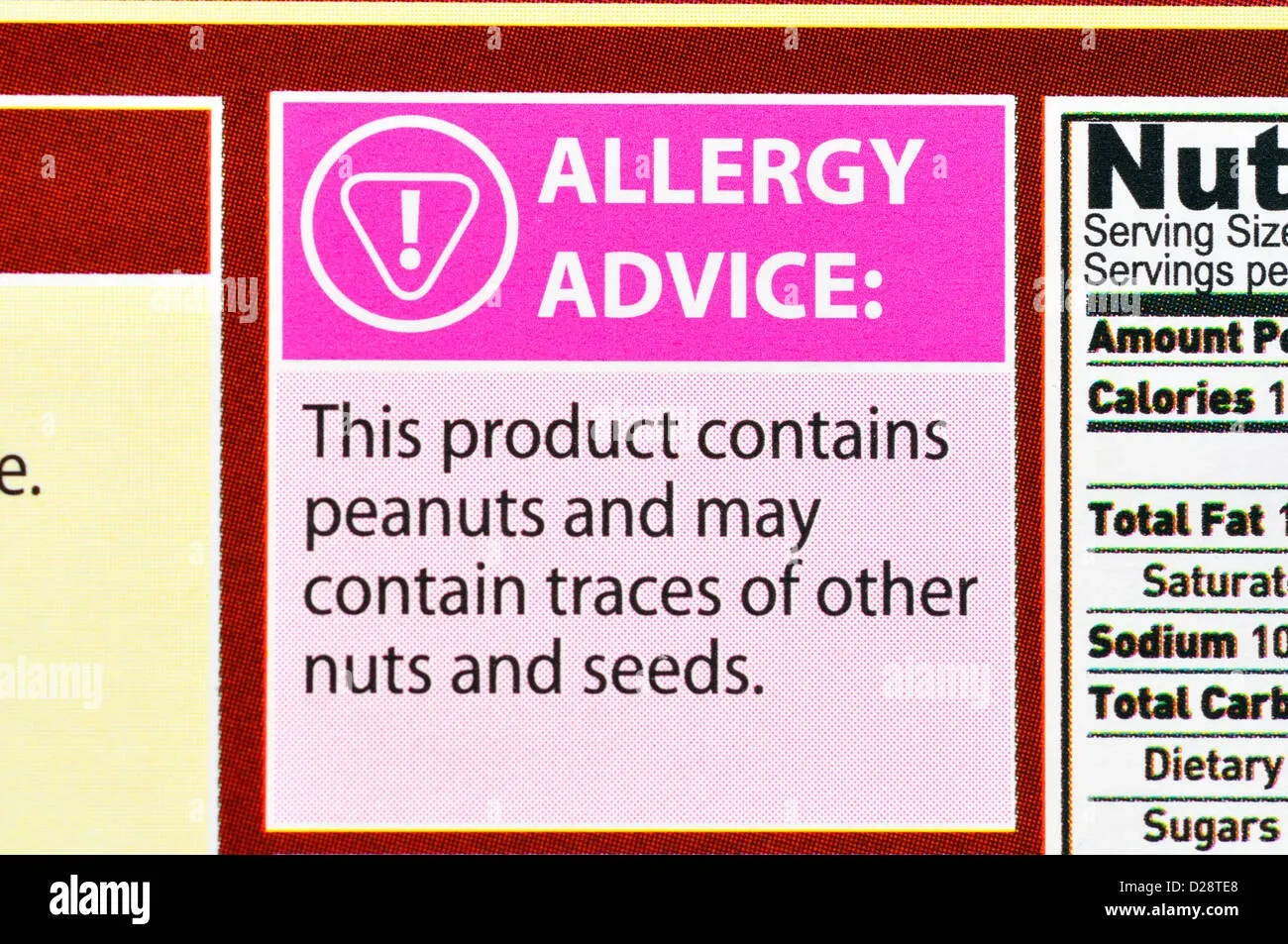
Image Source: Alamy
Can I use PAL on vegan products?
Precautionary allergen labelling can be combined with vegan claims under current UK food labelling regulations [24]. This is because the potential presence of allergens threatens human health, whereas the risk of a vegan product potentially containing non-vegan ingredients does not threaten health [24]. A vegan consumer will not fall ill from allergen presence, but an allergenic consumer might [24]. But vegan does not equal allergen-free, as cross-contamination can happen in shared factories [25].
Do I need PAL for non-prepacked foods?
Precautionary allergen statements do not need inclusion on a label for non-prepacked foods, as information on unintentional allergen presence can be communicated by other means [1]. This could be orally by staff or visually on signs at the premises [1]. Statements such as “May contain egg” or “We use peanuts, nuts, soy and wheat in our kitchen, please speak to us so we can prepare your meal safely” prove acceptable [26].
How often should I review my PAL decisions?
Good supplier management informs decisions on appropriate frequency of checks on raw materials and specification checks [1]. Businesses should review allergen status on a regular basis and ask suppliers to notify changes in allergen status of ingredients or materials they supply [1].
What evidence do regulators expect to see?
Regulators expect documented risk assessments that show genuine cross-contamination risk [1]. Discussions with larger food businesses confirm they carry out risk assessments as part of their allergy management system to determine if PAL is required [27]. This usually involves every stage of manufacture, from procurement of raw materials to goods received, to controls in manufacture and packaging, and distribution [27].
What are the penalties for incorrect labelling?
Failure to comply with allergen labelling requirements constitutes a criminal offence [12]. A person convicted faces a potentially unlimited fine, with the level determined by magistrates on a case-by-case basis [12]. Large organisations with turnover of £50 million or more could face fines up to £3 million for food safety and hygiene offences [6].
Conclusion
Precautionary allergen labelling serves consumers best when businesses apply it carefully and follow a full picture of risk rather than defensive blanket approaches. So food manufacturers must distinguish genuine cross-contamination risks from theoretical possibilities that restrict consumer choice. Reliable allergen management practises reduce dependence on “may contain” statements. These practises include effective cleaning protocols and production scheduling. PAL remains voluntary, but its misuse creates legal vulnerabilities and erodes consumer trust. Food businesses that invest in detailed allergen control systems protect both consumers and their commercial interests. They ended up showing due diligence and expanding product accessibility for the allergic population.
Key Takeaways
Understanding when and how to properly use precautionary allergen labelling protects both consumers and businesses whilst maintaining trust in food safety warnings.
• PAL requires genuine risk assessment – Use “may contain” statements only after documented risk assessment shows unavoidable cross-contamination that cannot be eliminated through proper controls.
• Specificity prevents consumer confusion – Replace generic “may contain allergens” with specific warnings like “may contain peanuts” to enable informed decision-making for allergic consumers.
• Robust allergen management reduces PAL dependence – Implement effective cleaning protocols, production scheduling, and supplier controls to eliminate cross-contamination risks at source rather than relying on warnings.
• Misuse carries serious consequences – Blanket PAL application without justification can result in unlimited fines, whilst overuse erodes consumer trust and unnecessarily restricts food choice.
• Documentation proves compliance – Maintain detailed records of risk assessments and control measures to demonstrate due diligence to regulators and auditors during inspections.
When applied correctly following FSA guidance, precautionary allergen labelling bridges the gap between consumer safety and product accessibility, ensuring those with food allergies can make informed choices whilst preventing unnecessary dietary restrictions.
FAQs
Q1. When is it appropriate to use precautionary allergen labelling such as “may contain”? Precautionary allergen labelling should only be used when a genuine and unavoidable risk of allergen cross-contamination has been identified through proper risk assessment. It’s appropriate when this risk cannot be eliminated through standard control measures such as cleaning procedures, segregation, or production scheduling. PAL should never be used as a substitute for good allergen management practises or applied as a blanket precaution without documented justification.
Q2. Is precautionary allergen labelling legally required in the UK? No, precautionary allergen labelling is voluntary in the UK. There is no specific legal requirement for food businesses to include “may contain” statements on their products. However, whilst voluntary, any PAL used must not be misleading and should only reflect genuine assessed risk. Food businesses remain legally obligated to ensure their products are safe and to provide sufficient information to help consumers with allergies make informed choices.
Q3. What’s the difference between “contains” and “may contain” on food labels? “Contains” indicates that an allergen has been deliberately used as an ingredient in the product and must be declared by law. For example, “Contains milk, eggs” means these ingredients are part of the recipe. “May contain” is a voluntary precautionary statement indicating that whilst an allergen hasn’t been intentionally added, there’s a risk it could be present due to cross-contamination during manufacturing, handling, or storage.
Q4. Can precautionary allergen labelling be used on vegan products? Yes, precautionary allergen labelling can be combined with vegan claims. This is because PAL addresses potential health risks from allergen cross-contamination, whereas vegan labelling relates to ethical and dietary choices rather than safety concerns. A vegan product might carry a “may contain milk” statement if there’s a risk of cross-contamination in a shared facility, as this protects allergic consumers without contradicting the vegan claim.
Q5. How often should businesses review their precautionary allergen labelling decisions? Businesses should review their PAL decisions regularly as part of ongoing allergen management. Reviews should occur whenever there are changes to suppliers, ingredients, production processes, or manufacturing equipment. Good supplier management practises include conducting specification reviews on a regular basis and requiring suppliers to notify any changes to the allergen status of materials they supply, ensuring PAL remains accurate and justified.
References
[1] – https://www.food.gov.uk/business-guidance/precautionary-allergen-labelling
[2] – https://www.allergycliniclondon.co.uk/what-does-may-contain-mean/
[3] – https://www.food.gov.uk/business-guidance/precautionary-allergen-labelling-checklist
[4] – https://www.cieh.org/media/1234/lmproving-the-use-of-may-contain-allergen-statements.pdf
[5] – https://www.campdenbri.co.uk/blogs/allergen-cross-contact-food-chain.php
[6] – https://www.freshlawblog.com/2016/06/09/when-allergens-go-wrong-uk-potential-penalties-for-food-adulteration-and-breach-of-food-information-and-safety-laws/
[7] – https://www.food.gov.uk/board-papers/precautionary-allergen-labelling-and-allergen-thresholds
[8] – https://www.foodbusinessnews.net/articles/14115-how-to-fend-off-allergens-with-isolated-production-lines
[9] – https://farrp.unl.edu/sites/unl.edu.ianr.food-science.farrp/files/media/file/2008 English Components of an Effective Allergen Control Plan.pdf
[10] – https://www.food.gov.uk/business-guidance/allergy-training-for-food-businesses
[11] – https://pmc.ncbi.nlm.nih.gov/articles/PMC4005619/
[12] – https://www.food.gov.uk/business-guidance/food-allergen-labelling-and-information-requirements-technical-guidance-enforcement-of-the-measures
[13] – https://www.reedsmith.com/articles/tomorrows-hospitality-a-z/prosecutions-are-soaring-due-to-allergens-labelling-breaches-in-the-uk/
[14] – https://vital.allergenbureau.net/vital-programme/
[15] – https://www.hygiena.com/documents/66561/allergen-cross-contamination.pdf
[16] – https://www.klipspringer.com/blogs/allergen-management-at-food-factories-5-effective-solutions/
[17] – https://www.fda.gov/media/129670/download
[18] – https://www.hoganlovells.com/en/publications/precautionary-allergen-labelling-free-from-claims-and-the-establishment-of-thresholds
[19] – https://www.popprobe.com/checklist-library/uk-food-safety/allergen-management/b30-uks-natasha-law-allergen-audit-checklist
[20] – https://www.svenskdagligvaruhandel.se/wp-content/uploads/Svensk-Dagligvaruhandel-Guidance-on-requirements-and-recommendations-for-the-use-of-PAL-for-food-products.pdf
[21] – https://www.ncass.org.uk/news/precautionary-allergen-labelling-update/
[22] – https://www.food.gov.uk/our-work/audit-of-allergen-controls-and-relevant-open-audit-actions-2
[23] – https://www.fooddrinkeurope.eu/wp-content/uploads/2021/05/Precautionary-Allergen-Labelling.pdf
[24] – https://ashbury.global/blog/precautionary-allergen-labelling/
[25] – https://www.allergyawareuk.org/post/understanding-vegan-vs-free-from-labels-and-the-importance-of-pal-in-food-choices
[26] – https://www.food.gov.uk/business-guidance/allergen-information-for-non-prepacked-foods-best-practise-voluntary-information
[27] – https://pmc.ncbi.nlm.nih.gov/articles/PMC11459638/