Allergen Cleaning Validation & Verification: Evidence-Based Protocols for UK Food Safety Audits
Introduction
Allergen cleaning validation continues to challenge food manufacturers. Documenting cleaning procedures represents 18.3% of non-conformities across global audit sites. A rise in allergen-related incidents has heightened product recalls and substantial health risks to consumers. Wet cleaning methods demonstrate greater efficacy than dry cleaning for allergenic soil removal. Yet manufacturers often struggle to design strong protocols. This piece provides UK food businesses with evidence-based approaches to developing an allergen cleaning validation protocol and interpreting allergen cleaning validation reports. It also covers meeting FDA allergen cleaning validation expectations and BRC requirements, among other standards like FSSC 22000.
Understanding Validation vs Verification in Allergen Cleaning
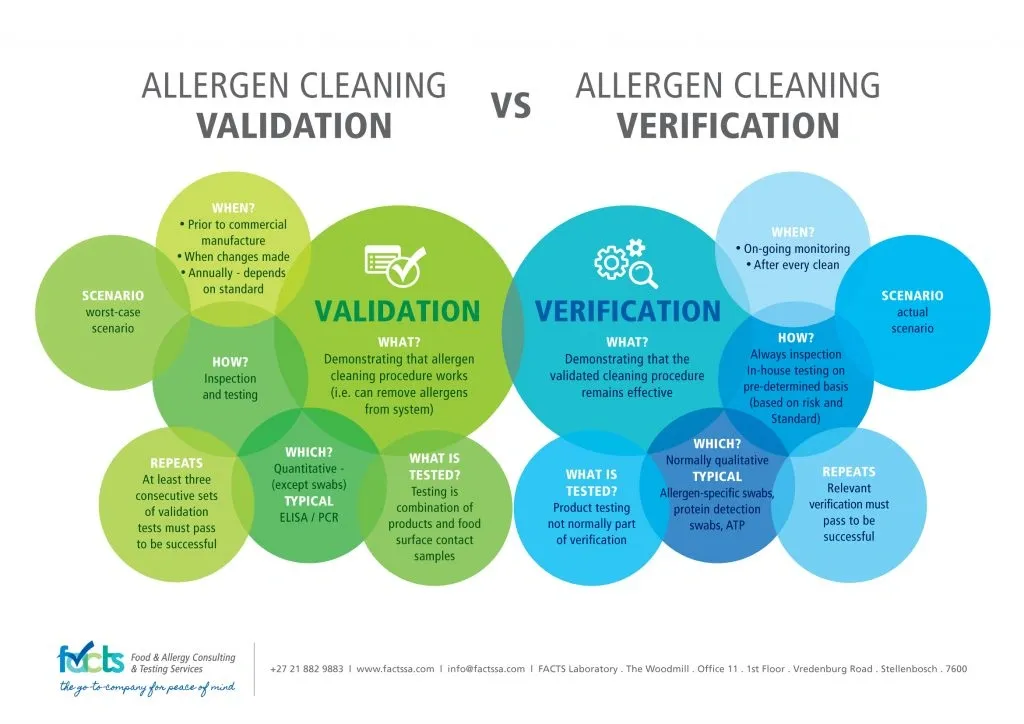
Image Source: Factssa
Understanding Validation vs Verification in Allergen Cleaning
What validation means in allergen control
Validation proves that a cleaning regime can remove allergen soils and do so repeatedly [1]. This process gathers evidence before you implement the cleaning regime and shows that cleaning objectives have been met. The question validation answers is simple: does this cleaning method remove allergens the way it should [1]?
Food manufacturers conduct validation studies before commercial manufacture of a product. They also run these studies whenever changes occur to the manufacturing or cleaning process [1]. These changes include reformulation of products, modifications to process equipment, adjustments to scheduling times or sequences, and revisions to cleaning protocols. Manufacturers should use methods yielding quantitative results to establish whether allergen cross-contact has occurred after cleaning and by how much when they validate allergen cleaning processes [1].
A reliable allergen cleaning validation protocol requires testing the same worst-case scenario, analysing the same type of samples, and using the same testing method across multiple trials [1]. The FDA establishes clear expectations for written validation procedures. It emphasises the need for sampling procedures that include verification frequency [2]. Validation addresses highest-risk points such as shared equipment, changeovers, rework, dust and airborne transfer, scheduling, ingredient staging, and labelling [3].
What verification means in practise
Verification proves that the validated allergen cleaning regime was performed correctly and remains effective [1]. Validation occurs before implementation. Verification operates on an ongoing basis throughout routine production. This continuous process shows that previously validated cleaning protocols have been performed properly and remain effective [1].
Confidence in the allergen-cleaning protocol increases when validation studies are repeated several times. These repetitions are the foundations of verification activities [1]. Testing rinse water or environmental surface swabs using rapid and reliable onsite testing kits provides ideal supplementation for cleaning verification [1]. Verification combines environmental monitoring and visual inspection to confirm control measures operate as designed during routine production [1].
Key differences for audit compliance
The difference between these two processes shapes audit readiness. Validation asks “did we build the right thing?” Verification confirms “are we building it right?” [4]. Validation provides one-time scientific proof that determines if a cleaning process reduces allergen risks when carried out correctly [5]. Verification ensures these validated methods are implemented and function as expected through regular assessments and supervision [5].
A mature programme requires both components [3]. Verification without validation means checking a process never proved effective. Validation without verification proves effectiveness once but provides no assurance the system remained true over time. Both weaknesses emerge during audits and customer requirements reviews [3].
GFSI standard requirements underpin FSSC 22000, BRC, and IFS schemes and address both processes [1]. GFSI requires validation of control measures before implementation, verification of critical control points through monitoring and testing, and revalidation when changes occur. Auditors expect proof that controls can prevent cross-contact under worst-case conditions. Validation provides that proof and defines the ongoing verification plan [3].
Legal requirements under UK and EU regulations
The Food Standards Agency and Food Standards Scotland published guidance in 2021. This guidance emphasises that allergen cleaning validation should use the most appropriate analytical method for the specific allergen, with detection limits suitable for protecting allergic consumers [1]. Regulatory bodies emphasise minimising reliance on precautionary labelling. They advocate strict observance of Good Manufacturing Practises to reduce allergens and avoid cross-contamination [5].
Proper documentation stands central to proving compliance with allergen regulations [5]. Detailed validation documentation ensures cleaning processes remove allergens. It requires extensive records of cleaning validation studies that detail methodologies, testing results, and parameters used to verify effectiveness. These records prove necessary for compliance audits and show steadfast dedication to maintaining regulatory standards.
Building Your Allergen Cleaning Validation Protocol
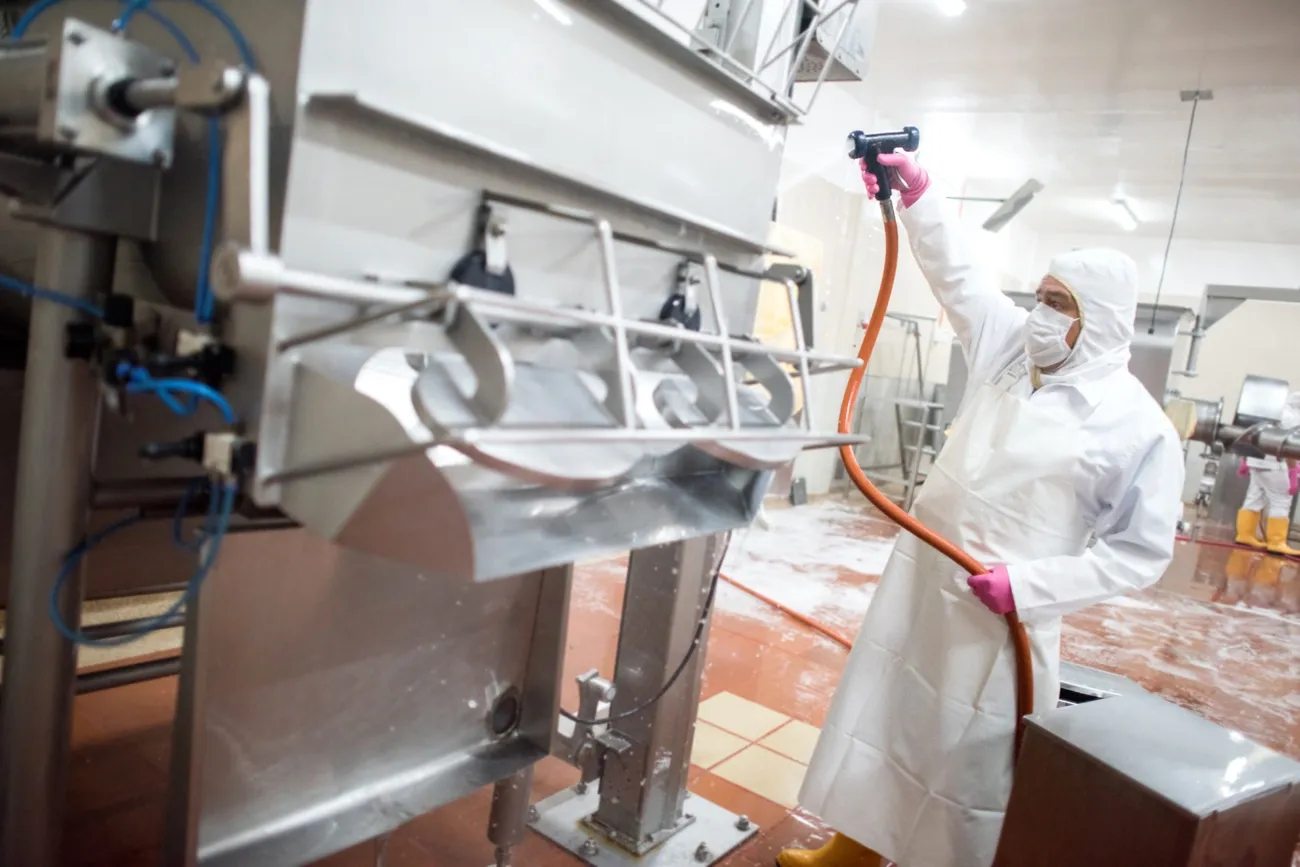
Image Source: RSSL
Building Your Allergen Cleaning Validation Protocol
Step 1: Conduct allergen mapping and risk assessment
Allergen mapping provides visual documentation that identifies locations where allergens are handled and stored. It highlights potential cross-contact points in products. The mapping process starts with identification of allergen sources through detailed examination of raw materials and processing aids. Minor components such as certain spices and preservatives pose serious allergy risks. You need to verify them against supplier specifications to ensure completeness and accuracy.
Creation of facility floor plans outlining production areas, storage spaces, and shared equipment establishes the foundation for strategic allergen segregation. Risk assessment focuses on microbiological risks and is driven by HACCP plans. Yet allergen risks require specific attention as HACCP was designed to focus on microbiological, chemical and physical risks rather than allergen risks [6]. Assessment practises among SME food businesses often prove piecemeal rather than systematic. They typically focus on select allergens rather than potential risks from all allergens present during the food production process [6].
Manufacturers should develop a risk matrix that assesses and ranks allergens based on cross-contact potential and severity of allergic reactions. Key factors include which allergenic foods could unintentionally contact products and the amount of allergenic food needed to provoke a reaction. How common adverse reactions are to particular foods matters. Whether subgroups of the population face increased risk also matters [2]. Physical form of the ingredient determines whether airborne cross-contact poses a possibility. Powdered allergens present higher contamination risks than solid forms.
Step 2: Select worst-case scenario targets
Selection of targets for allergen cleaning validation studies requires choosing products present at high levels, with high protein content, and hardest to clean away from the line. This approach demonstrates that cleaning works in the most challenging situations [1]. Validation based on worst-case situations provides assurance that cleaning works across multiple scenarios where cleaning proves less challenging. Validation of easily removed materials or those present at low levels cannot support this assumption [1].
Worst-case scenarios must address the product manufactured before the validated clean. Select products containing the highest percentage of allergen, subjected to the longest possible production run entailing the most soiling, and representing the hardest raw material to decontaminate by cleaning [7]. The clean itself should assume shortest clean or contact times, lowest cleaning temperatures, and least amount of chemicals used [7]. This stringent testing allows manufacturers to measure cleaning effectiveness under challenging scenarios. Successful removal of problematic allergens indicates efficacy against less challenging allergens.
Step 3: Define acceptance criteria and limits
Reference doses established by FAO/WHO provide scientific basis for acceptance criteria. Previously established reference doses include 2 mg for milk, peanut, egg and sesame, 3 mg for hazelnut, 5 mg for wheat and fish, and 200 mg for crustaceans [2]. More recent determinations set reference doses at 1 mg for celery, walnut, pecan, Brazil nut, Macadamia nut, pine nut, cashew, pistachio, almond, and mustard. They also set 10 mg for soy, lupin and buckwheat [2].
Industry best practise requires repeating the validation exercise three times, testing the positive control once only, and achieving non-detectable results for all post-clean and next off-line samples in three consecutive rounds [1]. Different shifts should be included where possible to demonstrate that cleaning performs consistently whatever the personnel [1].
Step 4: Document your allergen cleaning validation protocol
Documentation forms the central element of demonstrating compliance with allergen regulations. Complete records of cleaning validation studies must detail methodologies, testing results, and parameters used to verify effectiveness. These records prove needed for compliance audits and demonstrate commitment to maintaining regulatory standards. Codex Alimentarius General Principles of Food Hygiene establishes the requirement to establish validated critical limits. Principle 6 requires validation of the HACCP plan and establishment of procedures for verification to confirm the HACCP system works as intended [8].
Step 5: Plan sampling locations and frequencies
Sampling location and frequency should be based on risk assessment [3]. Focus on areas most challenging to clean when deciding where to collect post-clean samples. They represent worst-case scenarios [1]. Equipment swabbing points selected by risk assessment should account for ease of clean and likelihood of soiling remaining post-clean [7].
Sample types include positive controls (the source of allergen contamination), post-clean samples (typically swabs, rinse waters or purge material depending on cleaning method), and next off-line product (the first ingredient or product contacting equipment after cleaning) [1]. Testing next off-line product provides the only direct measure of what consumers will be exposed to. It represents risk to allergic consumers if carry-over is detected [1].
Step 6: Execute validation trials
The validation team should be multi-departmental. It should include production, engineering, technical, hygiene, and hazard specialists, with backing from senior management to ensure continuous connection [9]. That round of validation fails where results come back as detected. The whole exercise requires repetition [1]. Before repeating, reviewing where the result came from and understanding what caused it on that occasion proves critical. Simple fixes could prevent unsuccessful repetition [1].
Allergen Testing Methods: Evidence-Based Comparison
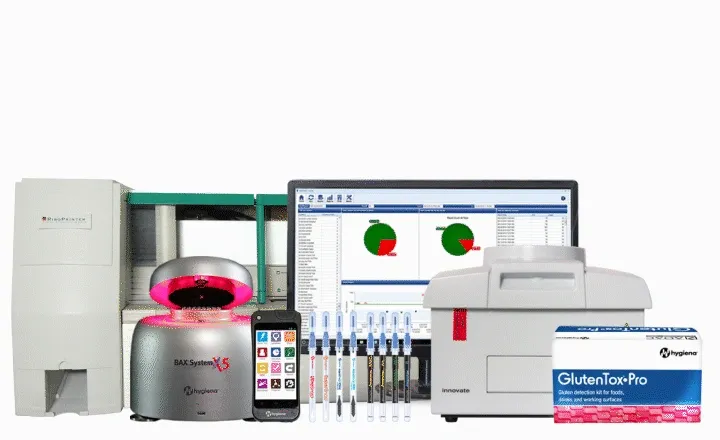
Image Source: Rapid Microbiology
Allergen Testing Methods: Evidence-Based Comparison
ELISA testing for quantitative allergen detection
Enzyme-Linked Immunosorbent Assay remains the preferred method for allergen cleaning validation protocols. Companies should use quantitative ELISA methods specific for the allergen being measured due to increased specificity and sensitivity compared to total protein or ATP swabs [6]. These immunochemical methods detect allergenic proteins bearing antigenic epitopes recognised by specific antibodies and provide quantitative results within a defined range.
ELISA testing delivers high sensitivity and specificity for allergenic proteins and supports analytical decisions through precise measurements. Quantitative ELISA formats remain simple and sensitive enough to ensure products with no detectable allergen residue are safe for food-allergic consumers [6]. Laboratory analysis should begin within 48 hours of sampling, as these kits prove very sensitive and can detect transfer of allergen from one sample to another.
Only a few commercial ELISA kits have undergone extensive AOAC validation procedures, yet these methods have been applied for various allergen residues in a variety of food matrices [6]. The choice of kit requires careful evaluation using positive controls to ensure reliable results for specific applications. Spike recovery testing within 80-130% tolerance of expected levels and verification that testing laboratories maintain ISO 17025 accreditation are important considerations.
Lateral flow devices for rapid screening
Lateral flow immunoassays provide qualitative or semi-quantitative results and deliver rapid allergen screening capabilities. These tests use antibodies designed to detect specific allergenic proteins, with liquid samples applied to single-use devices that produce visible lines within minutes [10]. Results appear quickly and support immediate corrective actions without laboratory equipment.
Rapid lateral flow tests suit on-site allergen screening and sanitation verification between product changeovers. Their portable format requires minimal training and makes them ideal for routine allergen monitoring [10]. In spite of that, sensitivity remains lower than laboratory-based ELISA analysis, and these devices are not intended for finished product validation. Then lateral flow testing pairs with more sensitive methods like ELISA for detailed allergen cleaning validation programmes.
ATP bioluminescence limitations
ATP testing cannot detect bacteria or allergenic proteins [11]. A survey revealed that 36% of sites rely on ATP testing [5], despite ATP not being present in all foods and not serving as a specific indicator for allergens. The FDA guidance for Cleaning and Sanitation For the Control of Allergens advises against total reliance on ATP testing for allergen verification [5].
ATP indicates improper cleaning and presence of contaminants including organic debris, but it lacks reliability as an indicator of allergenic protein presence on surfaces [12]. The A3 system detects ATP, ADP, and AMP from food residues and proves suitable for hygiene verification but unable to identify or assay allergens [13]. ATP testing in conjunction with other methods such as food allergen tests may prove useful for identifying contamination sources, yet should never replace allergen-specific testing [13].
Protein swab testing considerations
Protein-specific tests are qualitative and generate non-specific, non-numerical results [5]. These tests show reduced efficiency when detecting substances with low levels of residual protein contamination. Survey data indicated that 17% of participating sites rely on protein-specific tests [5], though these methods cannot measure allergenic proteins with the precision required for validation studies.
PCR testing and its applicability
PCR testing targets DNA rather than protein, with results not easily quantifiable or translatable into protein levels [1]. PCR proves unsuitable for egg allergen detection and shows reduced sensitivity for certain allergens including milk [14]. No quantitative link exists between PCR copy number and allergen level present, so PCR remains used for information whilst ELISA provides reliable quantitation [4].
PCR offers advantages for specific applications, especially celery and fish detection where ELISA kits struggle with cross-reactivity [15]. The method suits highly processed foods where protein structure may be altered, as DNA remains more stable than proteins through processing.
Selecting the right method for your validation study
Selection requires using the most appropriate analytical method with detection limits suitable for protecting allergic consumers. ELISA tests should be used where possible for allergen cleaning validations, as these detect protein and provide quantitative results [1]. When no suitable ELISA test exists, consulting laboratories to identify alternative targets or determine whether PCR provides necessary information proves essential. Testing laboratories must participate in FAPAS proficiency testing rounds, supply this data on test reports, and maintain accreditation to ISO 17025 [4].
UKAS-Accredited Laboratory Requirements
Why UKAS accreditation matters for audits
Selecting the right testing laboratory is fundamental to demonstrating compliance during food safety audits. Suppliers must use exclusively UKAS-accredited testing facilities, and all testing must be conducted by UKAS-accredited laboratories [4]. The internationally recognised ISO/IEC 17025 standard forms the basis for UKAS accreditation of laboratories that perform food testing services [16].
Accreditation assesses multiple factors relevant to a laboratory’s capacity to produce precise and accurate tests and data. These factors cover technical competence of staff, validity and appropriateness of test methods, suitability and maintenance of test equipment, the testing environment, sampling procedures, handling and transportation of test items, and quality assurance of test data [16]. UKAS accreditation covers allergen analysis alongside nutritional testing, contaminants, microbiology, and food manufacturing environmental monitoring [16].
Major UKAS-accredited facilities maintain multiple site registrations and offer quantitative determination of all major allergens including peanut, soya, egg white protein, gluten, casein, mustard, sesame, crustacea, milk, fish, tree nuts, lupin, and mollusks. They use documented in-house methods [17]. The laboratory’s performance in FAPAS proficiency testing rounds receives consideration during laboratory selection, and this data must appear on test reports [4].
Laboratory method validation expectations
Laboratories must meet spike recovery parameters prescribed by food companies. Testing must be repeated if data fall close to the kit’s limit of detection [4]. UKAS accreditation requirements include the core team performance indicators, and poor quality relating to a testing laboratory gets flagged right away [4]. Any known cross-reactivity of the testing kit used must be reported in results [4].
Analytical quality control covers internal quality control samples, blank extractions, calibration curves, negative controls, and ELISA duplicate measurements consistency checks [4]. Participation in external quality assurance schemes through proficiency tests, environmental monitoring, calibrations, and segregation of areas is mandatory. Sample preparation must be separated from ELISA laboratory spaces [4]. Documented procedures that incorporate risk management are the foundations of accredited operations [4].
Sample submission and chain of custody
Proper sample submission protects sample integrity and analytical quality. All samples require accompaniment by proper documentation using sample submission forms or chain of custody forms [18]. Samples must be labelled clearly and identifiable with information provided on the form. The form should specify sample volume, analysis requested, turnaround time desired, and reporting priorities [18].
Individual sealing and proper separation prevents mixing or cross-contamination between samples [18]. Adequate packaging avoids leakage of liquids or physical damage to contents during transit [18]. Swabs certified allergen-free from kit manufacturers must be ordered in advance. Other swabs or sponges may contain allergen due to recyclable materials or microbiological media [6]. Laboratory analysis should begin within 48 hours of sampling [6].
Interpreting laboratory allergen cleaning validation reports
The laboratory that conducts testing determines whether results indicate a food safety issue [4]. Laboratories apply a lower limit of quantification as the reporting limit. Each method has an upper LOQ that represents the maximum limit [4]. This maximum limit can be increased through dilution testing when required [4]. Understanding these reporting parameters is essential when reviewing allergen test results and making decisions about production release or additional cleaning cycles.
Step-by-Step Validation Methodology
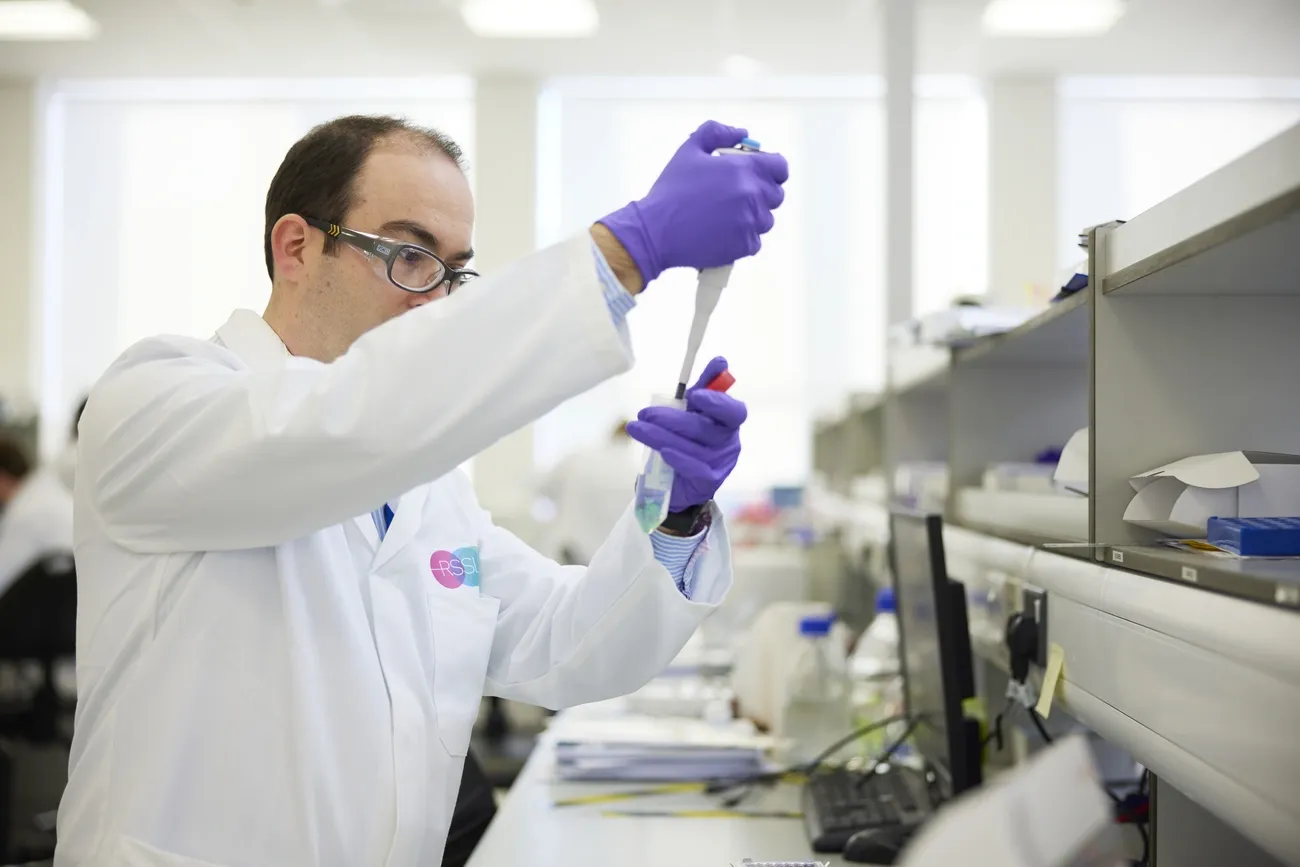
Image Source: RSSL
Pre-validation preparation and equipment assessment
Allergen cleaning validation begins with thorough preparation before trials commence. The team assembles allergen-free certified swabs from kit manufacturers, disposable gloves, phosphate buffer (certified allergen-free), sample labels and shipping containers [6]. All equipment and solutions that contact the allergen product need identification before testing. A review of hygienic design determines which areas are most difficult to clean [2]. This assessment balances the hardest locations to clean against those you can access without specialist equipment or extensive dismantling.
Management plans to run the formula with the highest percentage of allergen to assess sanitation [6]. The allergen’s physical form matters too, as peanut butter may clean differently than peanut granules. Particulate materials present sampling challenges and need numerous samples to offer assurance [6].
Positive control sample collection
Positive control samples prove the source of allergen contamination, whether ingredient, part-made product or finished product depending on the equipment being cleaned [1]. The team records whether visual allergen presents on equipment. This allows comparison to test results later and supports a visually clean standard [6]. All locations with visual product residue need swabbing before sanitation. This verifies the method can detect the allergen and identifies equipment that may harbour more allergen [6]. You need to test this positive control once only to ensure the allergen can be detected at expected levels, not for every validation round [1].
Post-cleaning sampling techniques
After sanitation, separate gloves swab each piece of equipment again. The team marks these ‘after sanitation’ with the equipment’s name and places them in sealed plastic bags [6]. These kits prove very sensitive and can detect transfer from one sample to another. Glove use and separate bags are critical [6]. Post-clean samples comprise swabs, rinse waters or purge material depending on the cleaning method [1]. For Clean-in-Place applications, final rinse water collection most closely represents what the next product will contact [1].
Next-off-line product testing
Testing first ingredients or products that contact equipment after cleaning provides the only direct measure of consumer exposure [1]. Sites often test samples from first, middle and last product passing through the line [7]. This product testing confirms allergen absence in first-off-the-line finished goods, validated by laboratories to rule out test interference [19].
Achieving three consecutive successful runs
Industry best practise demands validation repeated no fewer than three times [2]. Different shifts should be included where possible. This demonstrates that cleaning performs consistently whatever the personnel [1]. All post-clean and next off-line samples must achieve non-detectable results across three consecutive rounds to deem validation successful [1].
Managing failed validation results
Detection in any sample deems that validation round failed and demands complete exercise repetition [1]. Root Cause Analysis helps determine exactly why cleaning failed and which stages need targeting [7]. Sites may carry out lateral flow or A3 tests first. These affordable and quick methods predict the likelihood that cleaning procedures will pass the next validation round [7].
Verification Protocols and Ongoing Monitoring

Image Source: ALS Global
Routine swab testing schedules
Manufacturers move to routine verification without requiring allergen testing on each subsequent occasion after successful validation [20]. Visual inspections, ATP testing, or general protein testing serve verification purposes [20]. Testing frequency depends on risk assessment though. High-risk products require verification tests for every changeover. Medium-risk products move to monthly testing and low-risk products quarterly [21].
ATP measurements can replace allergen lateral flow strips for routine environmental monitoring, provided ATP remains present on surfaces at the time detectable allergen residues are absent [2]. Validation average results plus comfort factors confirm target ATP levels. This requires ATP use among other methods during original validation [2]. Protein swabs provide ongoing verification similarly, since allergen absence implies protein absence. Protein presence does not necessarily indicate allergen though [2].
Changeover verification procedures
Visual inspection operates as the first verification gate after cleaning. It’s mandatory before swab testing begins [22]. Equipment failing visual inspection requires re-cleaning before swab testing proceeds. Conduct ATP testing at defined pre-swab verification points and record RLU values against site-established pass/fail action limits [22]. Points exceeding ATP limits trigger mandatory re-cleaning before allergen swab testing. Collect allergen swab samples at validated critical control points using lateral flow or laboratory ELISA methods [22].
Trend analysis and corrective actions
Quarterly review of combined allergen swab data identifies recurring failure locations and seasonal efficacy variation or emerging trends suggesting equipment deterioration [22]. Trend analysis determines whether corrective actions remediated issues like human error or cleaning problems [8]. Investigation and correction of all failures requires root cause documentation and corrective actions. Re-swab results must be obtained before production release [22].
Visual inspection standards
Get into food contact surfaces under direct lighting for visible residue, soiling, discolouration, or film [22]. Weld beads, corners, fastener recesses, and belt splice areas need particular attention. Visible soil on food contact surfaces triggers automatic re-cleaning.
Re-validating cleaning procedures
SSOP requires revalidation at the time anything changes. This includes ingredients, ingredient supplier, formulation, equipment matrix, processing conditions, SSOP parameters, or allergen test kits [20]. Revalidation occurs periodically every six months for regularly manufactured formulations under stable manufacturing conditions [20]. Validations require routine review annually at least [2].
Real-World Audit Scenarios and Compliance Checklists
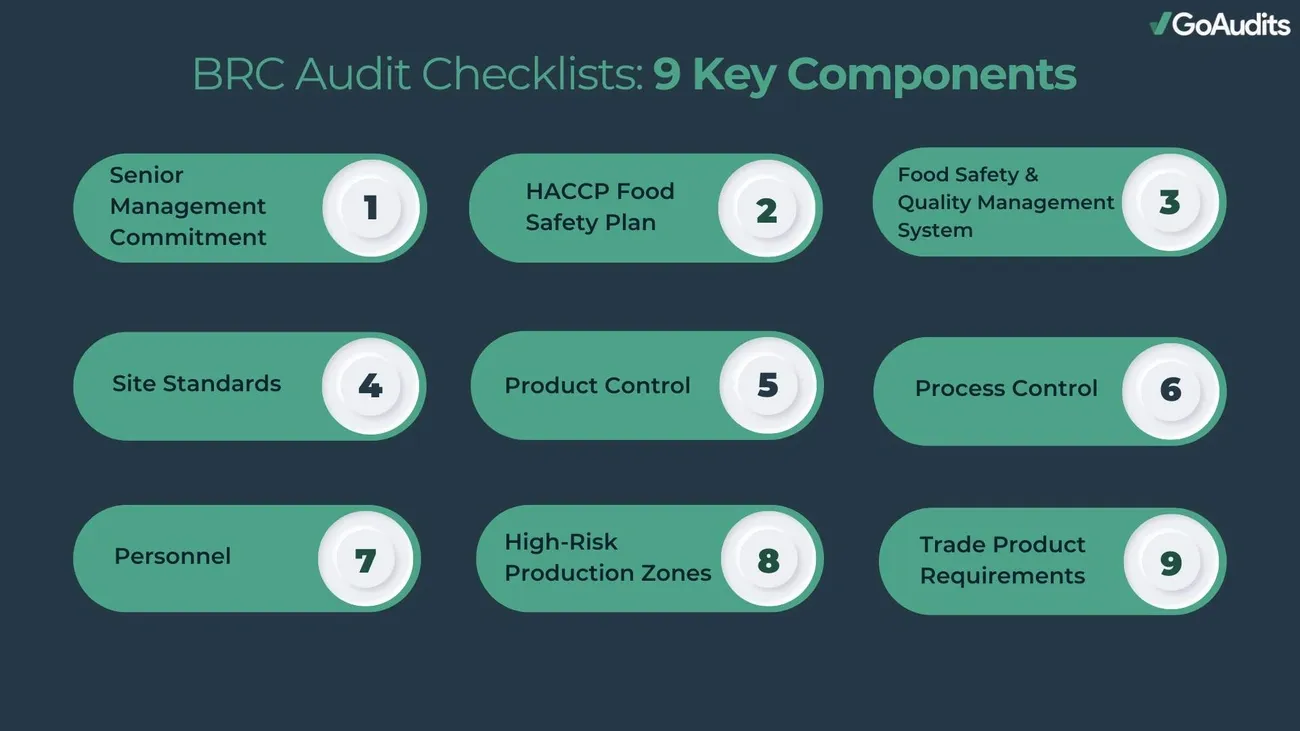
Image Source: GoAudits
Real-World Audit Scenarios and Compliance Checklists
What auditors look for in validation documentation
Auditors inspect whether cleaning methods have been validated to ensure effectiveness. Validation procedures get verified routinely as Clause 5.3.8 of the BRCGS Global Food Safety Standard requires [7]. Documented risk assessment of raw materials must think over allergen content and potential contamination to meet Clause 3.5.1.1 requirements [7]. Auditors confirm that limits of acceptable and unacceptable cleaning performance have been defined for food contact surfaces per Clause 4.11.3. Documented corrective actions when results fall outside acceptable limits must exist among other requirements [7].
Common non-conformances in BRC and FSSC 22000 audits
Hygiene-related issues represent the top BRCGS non-conformance (Clause 4.11.1). Chemical control, equipment design, doors and walls follow [23]. Allergen management non-conformances rank among the most cited findings in BRCGS and IFS audits [24]. Inadequate cleaning validation, insufficient labelling verification or missing allergen risk assessments generate major non-conformances. These can drop a BRCGS grade [24]. Poor allergen management under Clause 5.3 covers cross-contamination risks, incorrect labelling and lack of staff awareness [25].
FDA allergen cleaning validation expectations
The FDA establishes clear expectations for written validation procedures. These procedures must ensure cleaning methods remove allergenic food residue [3]. Validation should occur at least once a year. It’s also needed when introducing new products or allergenic ingredients, implementing new cleaning procedures or equipment, or modifying cleaning frequencies [3]. The agency recommends qualitative ELISA testing of cleaned surfaces combined with quantitative ELISA testing of finished product to confirm allergen cleaning procedures [3]. Allergen cross-contact controls must complement and boost CGMP requirements through preventive control management components that include monitoring and verification [26].
Pre-audit compliance checklist
Sites must establish and document an allergen cleaning and sanitation programme that supports preventive controls and audits [27]. Staff training records for allergens require verification. Standalone training works better than part of general food safety courses [28]. Signage for customers and staff, allergy tables or matrices, and allergen policy documentation need checking with current revision dates [28]. Verification proves vital to demonstrate accurate allergen information across menu specifications, store cupboard ingredients and staff knowledge [28].
Evidence portfolio requirements
Complete validation documentation detailing methodologies, testing results and effectiveness parameters proves necessary for compliance audits [29]. Persistent verification records hold equal importance. Continuous inspection of cleaning processes demonstrates methods remain effective over time [29]. A regular documentation approach helps transparency during inspections and proves adherence to GFSI frameworks and FDA guidelines [29]. This meticulous documentation reinforces allergen management practises and aids continuous improvement [29].
Frequently Asked Questions About Allergen Cleaning Validation
How often should allergen cleaning validation be performed?
You should validate the allergen cleaning programme at least once a year [9]. You’ll need additional validation when changes affect ingredients, processes, environment or team composition [9]. Revalidation requirements extend to modifications in cleaning chemistry, equipment design or wear, and line configurations. You’ll also need it when trend data shows existing validations no longer represent current operations [10]. Many organisations establish periodic review schedules every two to three years for high-risk lines, whatever the obvious changes [10].
What are acceptable detection limits?
Detection sensitivity varies substantially across testing methods. Protein swab tests detect as little as 50 μg of protein [30]. The A3 test showed lower detection limits than conventional ATP testing [30], with detection sensitivity greater than protein swabs except for gelatin applications [30]. Lateral flow immunoassays showed superior sensitivities for 10 of 14 foods tested [30]. The A3 test detection limits proved preferable or comparable for crustacean shellfish and processed grains excluding wheat flour and buckwheat [30].
Can we use ATP testing instead of ELISA?
ATP swabbing works poorly for allergen management with few exceptions. ATP is not protein and protein is not ATP [9]. Visual inspection and ATP swabs alone don’t suffice for allergen changeover validation [10]. You need protein-based or allergen-specific tests through rapid kits or laboratory ELISA during validation for allergens. You’ll often need them in routine verification for higher-risk transitions too [10]. ATP can serve as a hygiene indicator in practise but cannot replace allergen-specific evidence [10].
How many samples are required for validation?
Industry best practise calls for repeating the validation exercise three times and testing the positive control once. You need non-detectable results for all post-clean and next off-line samples in three consecutive rounds [1]. A field study showed that both A3 and milk protein levels decreased substantially as cleaning steps progressed [30]. This supports the effectiveness of sequential testing protocols.
What cleaning chemicals work best for allergen removal?
Chlorinated alkaline cleaners appeared most frequently in validation studies. They removed all hot milk residues even at ambient temperature [31]. These cleaners removed peanut butter at 62.8°C though not at ambient temperature [31]. Chlorinated alkaline plus degreaser produced the highest percentage reductions of peanut butter, liquid egg and milk on stainless steel surfaces [31]. Acid detergent at 62.8°C removed all peanut butter residues but failed at ambient temperature [31].
Do we need separate validation for each allergen?
A risk-based approach works rather than validating every possible allergen changeover on every line [10]. You can identify worst-case combinations that address highest-risk allergens, stickiest soils and most complex lines [10]. Validating these cases really well allows justifiable grouping of other changeovers to validated cases based on documented technical arguments [10]. You’ll need review when products, lines or allergens change [10].
Conclusion
Allergen cleaning validation and verification represent two distinct yet important parts of a complete allergen management programme. Validation provides scientific proof that cleaning procedures remove allergenic residues under worst-case conditions. Verification confirms these validated methods perform as expected during routine production. UK food manufacturers who invest in reliable validation protocols supported by UKAS-accredited laboratory testing and documented evidence build confidence across audit scenarios. These evidence-based approaches protect allergic consumers and demonstrate regulatory compliance to BRC and FSSC 22000 requirements. Manufacturers who implement these protocols will notice improved audit outcomes. They will also see strengthened allergen control measures within their operations.
Key Takeaways
Understanding the distinction between validation and verification is crucial for UK food manufacturers seeking robust allergen control and audit compliance.
• Validation proves cleaning effectiveness before implementation, whilst verification confirms ongoing performance – both are essential for comprehensive allergen management programmes.
• Use quantitative ELISA testing from UKAS-accredited laboratories for validation studies – ATP and protein swabs cannot replace allergen-specific testing for compliance.
• Focus validation on worst-case scenarios with highest allergen levels and hardest-to-clean products – successful removal under challenging conditions ensures effectiveness across all scenarios.
• Achieve three consecutive successful validation rounds with non-detectable results – this industry best practise demonstrates consistent cleaning performance across different personnel and conditions.
• Implement risk-based verification schedules post-validation – high-risk changeovers require testing every time, whilst lower-risk products can move to monthly or quarterly monitoring.
• Maintain comprehensive documentation including methodologies, results, and corrective actions – auditors specifically scrutinise validation records as evidence of regulatory compliance under BRC, FSSC 22000, and FDA requirements.
When executed properly, these evidence-based protocols transform allergen cleaning from a compliance burden into a competitive advantage, protecting allergic consumers whilst strengthening operational confidence and audit readiness.
FAQs
Q1. What is the difference between validation and verification in allergen cleaning? Validation provides scientific proof that a cleaning procedure can effectively remove allergens before it’s implemented, whilst verification confirms that the validated cleaning method continues to work correctly during routine production. Validation answers whether the cleaning process works in theory, whereas verification ensures it works consistently in practise over time.
Q2. Which testing methods should be used for allergen cleaning validation? Quantitative ELISA testing from UKAS-accredited laboratories is the preferred method for allergen cleaning validation, as it provides specific, sensitive detection of allergenic proteins. ATP and protein swab tests cannot replace allergen-specific testing for validation purposes, though they may be useful for routine verification alongside visual inspection.
Q3. How many successful validation runs are required to prove cleaning effectiveness? Industry best practise requires three consecutive successful validation rounds, with all post-cleaning and next-off-line samples achieving non-detectable results in each round. Where possible, different shifts should be included to demonstrate that cleaning performs consistently regardless of personnel.
Q4. What should a cleaning validation protocol include? A comprehensive cleaning validation protocol should specify the types of testing required, acceptance criteria based on scientific reference doses, sample locations focusing on worst-case scenarios, sampling procedures (such as swab or rinse methods), and the analytical test methods to be used by accredited laboratories.
Q5. When should allergen cleaning procedures be revalidated? Revalidation is required when changes occur to ingredients, formulations, equipment, processing conditions, cleaning procedures, or allergen test kits. Under stable manufacturing conditions, revalidation should occur at least annually for regularly manufactured products, with routine reviews conducted at minimum once per year.
References
[1] – https://www.rssl.com/insights/food-consumer-goods/designing-a-successful-allergen-cleaning-validation-strategy/
[2] – https://www.romerlabs.com/en/library/knowledge/detail/10-steps-to-validating-and-verifying-allergen-cleaning-procedures
[3] – https://www.fda.gov/media/129671/download
[4] – https://www.food.gov.uk/research/review-of-allergen-analytical-testing-methodologies-stakeholder-engagement
[5] – https://www.klipspringer.com/blogs/allergen-testing-and-the-a3-system-everything-you-need-to-know/
[6] – https://www.food-safety.com/articles/3812-allergen-validation-analytical-methods-and-scientific-support-for-a-visually-clean-standard
[7] – https://www.klipspringer.com/blogs/allergen-cleaning-validation-a-practical-guide-for-food-factories/
[8] – https://www.food-safety.com/articles/9404-fundamentals-of-conducting-an-allergen-gap-assessment
[9] – https://emportllc.com/surface-testing-for-food-safety-what-is-the-difference-between-allergen-testing-and-atp-testing/
[10] – https://sgsystemsglobal.com/glossary/allergen-changeover-validation-consumer-products/
[11] – https://www.sciencedirect.com/science/article/pii/S0362028X22067102
[12] – https://www.neogen.com/en/usac/neocenter/blog/why-atp-testing-is-not-sufficient-for-allergen-control-programmes/?srsltid=AfmBOorRMAfA8LsML1Sith7UDDnRQmkTbkkWZKmgoDQIb5spuPMei7Ls
[13] – https://pubmed.ncbi.nlm.nih.gov/35503956/
[14] – https://www.food.gov.uk/research/review-of-allergen-analytical-testing-methodologies-allergen-testing-workflows-to-support-incident-management
[15] – https://food.r-biopharm.com/news/5-reasons-for-using-pcr-in-allergen-analysis/
[16] – https://www.ukas.com/accreditation/standards/laboratory-accreditation/food/
[17] – https://www.ukas.com/wp-content/uploads/schedule_uploads/00002/4634Testing-Single.pdf
[18] – https://aemtek.com/sample-submission-sampling/
[19] – https://www.rssl.com/case-studies/food-consumer-goods-case-studies/enhancing-allergen-controls-for-a-large-scale-food-manufacturer/
[20] – https://www.food-safety.com/articles/4434-best-practises-with-allergen-swabbing
[21] – https://www.rochestermidland.com/blog/checklist-9-considerations-for-allergen-control-in-the-food-industry/
[22] – https://oxmaint.com/industries/food-manufacturing/allergen-changeover-cleaning-verification-checklist-food
[23] – https://www.campdenbri.co.uk/blogs/brcgs-fssc-non-conformances.php
[24] – https://oxmaint.com/industries/food-manufacturing/international-food-safety-standards-comparison-sqf-brc-fssc-ifs
[25] – https://www.assurefoodsafety.com/post/7-most-occurring-non-conformities-in-brcgs-audits-and-how-to-address-them-with-root-cause-analysis
[26] – https://www.fda.gov/media/172318/download
[27] – https://www.neogen.com/en/usac/neocenter/resources/food-allergen-validation-and-verification-best-practises/?srsltid=AfmBOoo0zuS-eonB2MShGPwdK1wTabkwDuVDbFZgsX8tbMkf9v9b2X_1
[28] – https://foodallergyaware.co.uk/wp-content/uploads/2021/09/20210909-Fact-sheet-Allergen-Management-Audits-Part-1.pdf
[29] – https://foodindustryhub.com/food-industry-knowledge-centre/know-allergen-cleaning-validation/
[30] – https://www.sciencedirect.com/science/article/pii/S0362028X22103376
[31] – https://www.food.gov.uk/research/review-of-the-literature-and-guidance-on-food-allergen-cleaning-results