Worst-Case Conditions for Allergen Cleaning Validation: Identifying Critical Parameters
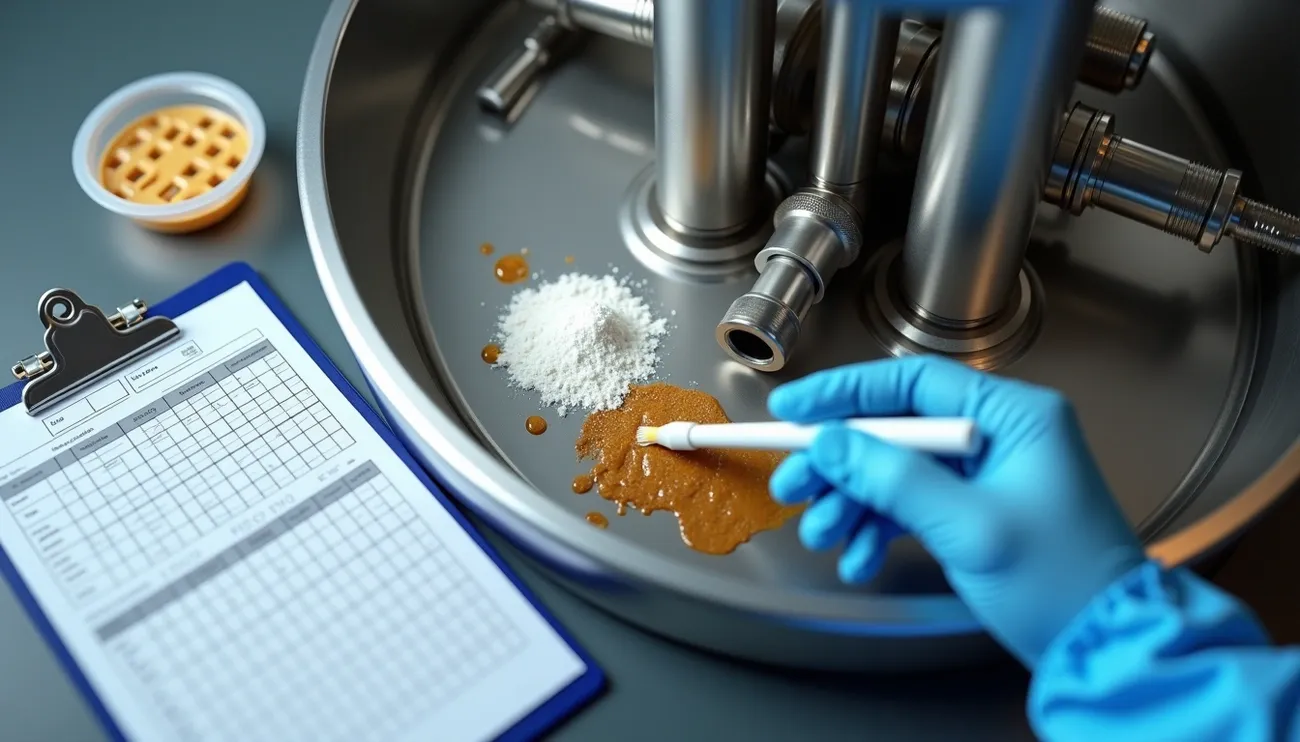 Worst-case cleaning validation addresses a fundamental challenge: you cannot validate cleaning for all products manufactured in a facility. So manufacturers must identify representative worst-case scenarios based on multiple critical parameters like allergen solubility, potency, toxicity, concentration and contact surface area. Selecting the wrong worst case in cleaning validation can compromise an entire validation study design. This leaves organisations vulnerable during food safety audits. We get into the technical and regulatory basis for worst case product cleaning validation in this piece. We explore critical selection parameters and provide a framework to develop a defensible cleaning validation worst case matrix.
What Is Worst-Case Cleaning Validation in Allergen Control
Defining Worst-Case Scenarios for Allergen Removal
Allergen cleaning validation begins with allergen mapping and risk assessment to identify which allergens exist on site, their physical forms, and which equipment handles them during production [1]. Worst-case scenario selection involves identifying the most challenging combination of product characteristics, process conditions, and equipment factors that represent the upper limit of cleaning difficulty. A target allergen qualifies as worst-case when it’s present in sufficient quantity, exhibits high protein content, proves difficult to remove from equipment surfaces, and has a suitable detection method available [1].
The physical form of allergenic material influences risk level. Powders create higher contamination risk than solid forms due to dispersal characteristics and difficulty of containment [1]. Sticky residues, fatty materials, and baked-on soils present greater removal challenges than free-flowing liquids. Worst case selection in cleaning validation must account for allergen type and potency, with priority allergens carrying regulatory significance and customer requirements [2].
Scientific justification is the foundation of defensible worst-case selection. Regulatory authorities expect documented rationale that demonstrates why a selected product or allergen represents the most challenging scenario [3]. Bracketing approaches are permitted and allow one worst-case substance to verify cleaning effectiveness for multiple allergens, provided the selection is justified scientifically [3]. The same cleaning procedure will also eliminate easier-to-clean allergens present in lower quantities if the target allergen can be removed successfully [1].
Why Worst-Case Selection Matters in Food Safety
Validation exists because ‘we have an allergen programme’ provides no evidence of control effectiveness. Auditors and customers expect proof that controls prevent cross-contact under worst-case conditions, and validation provides that proof while defining the ongoing verification plan [2]. Testing under optimal conditions or selecting easily removed allergens creates a false sense of security. Validation focused on non-representative products will pass on paper while still failing on the production floor [2].
Manufacturers can measure cleaning effectiveness under the most challenging scenarios by conducting stringent tests under worst-case conditions [4]. The same protocol will eradicate less challenging allergens if a cleaning protocol removes problematic allergens with high protein content or stubborn residue characteristics [4]. This approach broadens the application of validation results and decreases the need to verify every allergen independently, which strengthens overall risk management [4].
The goal is not to prove zero allergen presence indefinitely. Validation demonstrates that the cleaning process reduces allergen residues to an acceptable level such that cross-contact risk is controlled [2]. Acceptance criteria require justification and documentation, not improvisation. Food allergen control standards emphasise that cleaning procedures must remove all potential allergen cross-contamination from equipment used to process concurrent products with differing allergenic content status where cross-contamination of allergenic materials is not controlled by complete physical segregation [5].
Relationship Between Worst-Case Selection and Validation Study Design
Worst-case selection shapes validation study design parameters directly. The product manufactured before the validated clean must represent the highest percentage of allergen content, the longest possible production run entailing maximum soiling, and the hardest raw material to decontaminate by cleaning [5]. The worst-case clean itself should assume minimum specified parameters, including shortest clean or contact times, lowest cleaning temperatures, and least amount of chemicals used [5].
Validation planning requires consideration of which equipment should be chosen and which target allergens can demonstrate cleaning effectiveness at removing carry-over risk [1]. Sites need not conduct validation on every line for every allergen if multiple lines share the same equipment layout and identical cleaning processes [1]. Watching a clean take place helps identify difficult-to-clean or hard-to-reach areas, including locations where product is likely to accumulate [1].
Testing positive controls proves that a suitable target allergen has been chosen and that the test method is appropriate for the sample collected [1]. Some ELISA tests designed to detect raw egg perform poorly at detecting cooked egg, which requires careful selection of detection methods matched to the allergenic form present [1]. Validation study design must address top failure modes and account for equipment with hard-to-clean areas such as gaskets, dead legs, conveyors, and valves [2]. The study risks producing scientifically indefensible results that collapse under audit scrutiny if validation planning fails to address these critical factors.
Regulatory and Scientific Requirements for Worst-Case Validation
BRCGS and Retailer Standards for Cleaning Validation
BRCGS Global Food Safety Standard Issue 9 sets out explicit requirements for worst-case cleaning validation in allergen control. Clause 5.3.8 mandates that cleaning methods must be validated to make sure they work, with routine verification of procedure performance [1]. This requirement moves beyond aspirational good practise into mandatory compliance territory. Clause 3.5.1.1 requires documented risk assessment of raw materials and accounts for allergen content and potential contamination [1]. Clause 4.11.3 further specifies that limits of acceptable and unacceptable cleaning performance shall be defined for food contact surfaces and processing equipment. Corrective actions must be documented when monitored results fall outside acceptable limits [1].
BRCGS Issue 9 Clause 4.11.3 states that cleaning and disinfection procedures and frequency shall be validated and records maintained where cleaning procedures are part of a defined prerequisite plan to control specific hazards [6]. Given these requirements, validation becomes mandatory when cleaning controls a hazard rather than quality or brand protection concerns [6]. Hygiene including cleaning and disinfection ranks among the top 10 non-conformities in BRCGS audits since Issue 9 implementation in 2023. It accounts for almost 20% of all major and minor non-conformities [1].
Major retailers impose additional scrutiny. Operations must be audited to retailer-approved standards by approved certification bodies each year, with full audit reports uploaded to retailer databases [6]. Sites must produce products purchased by the retailer during audit, or cover products with similar hazard analysis and preventive controls [6]. Audits scoring below expectations or containing critical findings are failures. They trigger immediate re-audit requirements at vendor expense [6]. Certification bodies and suppliers must notify retailers of failed audits within 24 hours [6].
HACCP Alignment and Critical Control Points
Allergen management validation sits within HACCP framework requirements set by retained Regulation (EC) No 852/2004 on food hygiene, which places primary food safety responsibility on food business operators [7]. The legislation underpins the requirement that operators shall implement and maintain permanent procedures based on HACCP principles [7]. Codex Alimentarius General Principles of Food Hygiene sets HACCP principles by international consensus, with Principle 3 requiring validated critical limits [7]. Criteria cover minimum and maximum values for critical parameters such as temperature, time, moisture level, pH, contact time and flow rate [7].
Principle 6 requires validation of the HACCP plan and verification procedures that confirm the system works as intended [7]. This covers critical control points, critical limits and control measures [7]. Allergen management may not be a CCP, but it definitely functions as a control measure requiring validation [7]. Food allergen control through cleaning prevents contamination or re-contamination and makes physical, chemical and biological cleanliness a prerequisite for food safety [8].
A cleaning validation study is a formal HACCP requirement and gets incorporated into GFSI standards including BRCGS and FSSC 22000 [1]. The Food Safety Modernisation Act requires food facilities to implement allergen controls preventing cross-contact. Cleaning validation is required by best practises and GFSI auditing standards as a prerequisite controlling this hazard [7]. All operations must operate under food safety management systems including HACCP or Preventive Controls plans. Responsible persons must hold adequate HACCP or PCQI training from accredited organisations [6].
Audit Expectations for Scientifically Defensible Validation
Auditors expect specific documentation that demonstrates scientific rigour in worst case product cleaning validation. Industry best practise requires repeating the validation exercise three times (testing positive control once) and achieving non-detectable results for all post-clean and next-off-line samples in three consecutive rounds [6]. That validation round fails and the entire exercise requires repetition where any results return as detected [6]. Reviewing where the result originated and understanding causation proves critical before repeating [6].
Documentation must demonstrate decisions made before starting validation and include rationale behind target allergen selection and swab location choices [1]. This documentation is part of site due diligence and becomes vital if incidents occur. It proves both system existence and system effectiveness [1]. Operations must have written programmes that verify sanitation effectiveness for food contact surfaces, based on operational risk assessment and validation, not relying on visual checks alone [6]. Validation serves as currency in audit environments from now on, where documented evidence trumps anecdotal assurances of cleaning effectiveness.
Identifying Worst-Case Conditions: Product-Related Factors
Product characteristics determine cleaning difficulty more than any other variable in worst-case cleaning validation. Allergen load, physical form, and food matrix composition directly influence residue adhesion, removal efficiency, and cross-contact risk. Selecting validation targets without evaluating these product-related factors produces unreliable results that fail to represent true worst-case conditions.
High Protein and Sticky Allergen Residues
Allergen load refers to the total protein content from the allergenic source present in food components [7]. High-protein ingredients like non-fat dry milk, whey concentrate, gluten, sesame paste (tahini), and peanut butter contain substantial protein levels that increase cleaning challenge [7]. These materials warrant priority when establishing worst-case scenarios for validation studies.
Proteins rank amongst the most difficult constituents to remove from food soils and surpass fats, carbohydrates, and minerals in adhesion strength [8]. The overall matrix containing the protein must be evaluated when determining cleaning approach, as food soils contain different constituents in varying quantities [8]. Sticky paste residues such as peanut butter and tahini create challenging cleaning scenarios [7][9]. These materials adhere strongly to equipment surfaces and resist removal through standard cleaning protocols.
Processing conditions increase removal difficulty through protein denaturation and surface adherence, especially when you have heat application [8]. Baked-on residues present extreme worst-case scenarios where protein structures have permanently bonded to contact surfaces. Soil age affects cleanability as well, with older residues proving more difficult to remove than fresh contamination [8].
Fatty and Oily Allergen Materials
Water-based versus lipid-based ingredient chemistry shapes cleaning strategy selection [8]. Fatty and oily allergen materials require different cleaning approaches compared to water-soluble proteins. Alcohol wipes demonstrate effectiveness at removing sticky residues not water-soluble, such as peanut butter [7]. This chemical aspect becomes critical when developing sanitation standard operating procedures for equipment handling high-fat allergenic ingredients.
Highly refined oils from peanut, soybean, and fish contain very low protein levels and exhibit low allergen protein load [7]. Soy lecithin and glucose syrup from wheat present minimal allergenic protein despite originating from priority allergenic sources [7]. These ingredients do not represent worst-case scenarios for allergen cleaning validation purposes.
Particulate and Powdered Allergen Forms
Physical form exerts profound influence on cleaning effectiveness and cross-contact risk [7][8][8]. Allergens exist as particulates, powders (flours), pastes, liquids, or aerosols, and each presents unique removal challenges [7]. Powders create higher contamination risk than solid forms due to dispersal characteristics and containment difficulty [2]. Particulates such as peanut pieces, tree nuts, and sesame seeds distribute non-homogeneously, with individual particles sometimes large enough to provoke reactions in sensitive consumers [7].
Compressed air use for cleaning sites handling powder ingredients requires prohibition, as this practise disperses allergen residues throughout facilities to areas otherwise unexposed to these allergens [7]. Scraping, hoovering, brushing, or wiping should replace air hoses when dry cleaning becomes needed [8]. Research demonstrates that dry cleaning methodologies fail to eliminate soil when surfaces undergo analytical testing, whilst capable of visually removing dry powder [10].
Allergen Type and Potency Aspects
Not all allergens present equal hazard severity or cleaning difficulty. The validation study design must account for allergen-specific characteristics including detection method availability and protein structure stability [2]. Hydrolyzed proteins from soy, wheat, peanut, or milk sources create detection problems because immunoassays detect intact proteins or large peptides rather than hydrolyzed forms [7]. These materials may be present but undetectable and create false confidence in cleaning effectiveness.
Target allergen selection requires evaluation of which allergens prove hardest to remove, which products contain highest allergen levels, and which products undergo processes making allergens hardest to detect [1]. Manufacturers selecting worst-case allergens based solely on volume or frequency miss critical risk factors related to protein chemistry and removal mechanics.
Identifying Worst-Case Conditions: Processing and Equipment Factors
Manufacturing process variables and equipment characteristics impose additional layers of complexity beyond product-related factors in worst-case cleaning validation. Processing conditions alter soil properties, while equipment design determines cleanability and accessibility. You need systematic evaluation of how production parameters and machinery configuration affect allergen removal efficacy to identify these worst-case conditions.
Heat-Treated Products and Baked-On Residues
Heat application during processing makes food soils more difficult to remove, with particular impact on proteins due to denaturation and consequent adherence to surfaces [6]. A simple example illustrates this principle: sugar dissolved in water at ambient temperature disappears within seconds, yet the same sugar poured onto a hot stainless steel surface, melted, and cooled becomes difficult to remove by brief water contact [11]. Simple solubility information is insufficient to assess cleanability, which must account for surface-residue interaction and how cleaning agents break that bond [11].
Food proteins rank as the most difficult constituents to remove from food soils, surpassing fats and carbohydrates [6]. Heat treatment intensifies this challenge through protein structural changes. Therefore, validation procedures should focus on the highest percentage allergen within formulations or allergens most difficult to remove from the food processing environment [12]. Baked-on residues represent extreme scenarios where protein structures have permanently bonded to contact surfaces and demand aggressive cleaning strategies beyond standard protocols.
Dried Soils and Contact Time Effects
Soil age affects removal difficulty, with older soils more challenging to clean than fresh contamination [6]. Build-up of soil and biofilm formation compounds this issue and reduces ease of cleanability [6]. Contact time between production and cleaning cycles therefore constitutes a critical parameter in worst case product cleaning validation. Equipment left uncleaned for extended periods presents worst-case scenarios that require validation attention.
Equipment Design Complexity and Dead Legs
Equipment design either simplifies or complicates cleaning validation processes [13]. Complex machinery with inaccessible surfaces, intricate pipework, or dead spaces poses challenges during cleaning [13]. Dead legs, defined as pockets or branches in piping systems where fluid can stagnate, represent substantial validation risks [7]. Stagnant areas harbour residue accumulation and prevent complete drainage between cleaning phases. They also create potential for carryover between batches [7].
You risk inaccurate sampling plans, residual contamination, and regulatory observations when you fail to account for equipment design during validation study design [13]. Risk-based assessment identifies high-risk areas including dead legs, gaskets and internal surfaces [13]. Equipment may require dismantling or cleaning using techniques such as push-through, which employs inert material, physical objects, or allergen-free foodstuffs to clean production lines [6].
Hard-to-Clean Surfaces and Material Types
Surface material and properties affect cleaning effectiveness [6]. Stainless steel represents the easiest surface to clean, while wood and cloth prove most difficult [6]. Allergens proved difficult to remove from textured plastic surfaces [9]. Validation planning should include all material types present in equipment, as surfaces made from different materials respond differently to identical cleaning protocols [1].
Cleaning Method Limitations and Accessibility
Different equipment in different environments determines what cleaning methodology is applicable and appropriate [6]. Automated CIP cleaning may be possible in piping systems but not in mixers [6]. Equipment in dry environments cannot be cleaned using water, as moisture introduces potential for microbial growth or affects product quality [6]. Push-through cleaning methodologies show variable effectiveness that depends on food matrix, push-through material, and equipment being cleaned [6].
Required volumes of push-through material to achieve allergen removal depend on equipment scale and material composition [6]. Wet cleaning with certain chemicals is more effective at removing food allergens than dry cleaning using brushes and vacuuming, though wet cleaning is not always feasible [14]. You must determine the selection of cleaning methodology on a case-by-case basis because no single methodology cleans in all scenarios [14].
Critical Parameters to Evaluate in Worst-Case Cleaning Validation
Effective worst-case cleaning validation requires systematic evaluation of multiple interacting parameters that together determine cleaning efficacy. The Sinner’s circle framework, developed in 1960, expresses these parameters as chemistry, heat application, mechanical force and contact time. The acronym TACT (temperature, action, concentration, time) represents the same principles. Validation protocols must test cleaning procedures under minimum specified conditions. This ensures robustness across operational variability.
Soil Load and Allergen Concentration
Allergen load represents the total protein content from allergenic sources present in food components. High-protein ingredients such as non-fat dry milk, whey concentrate, gluten, sesame paste and peanut butter contain substantial protein levels. These increase the cleaning challenge. Proteins rank as the most difficult soil constituents you can remove from food contact surfaces. They surpass fats, carbohydrates and minerals in difficulty. You must think about the food matrix containing the protein when determining your cleaning approach. Food soils contain different constituents in varying quantities. Validation should focus on products with highest allergen concentration. This represents true worst-case scenarios.
Contact Time and Drying Effects on Cleanability
Chemical contact times range from less than one minute to several hours. This depends on soil type and cleaning system design. Research shows that 30-second contact time achieves nowhere near the disinfection efficacy compared to one-minute or longer contact times. No statistically significant differences exist between one-minute and longer durations. Soil age affects removal difficulty. Older soils prove more challenging to clean than fresh contamination. Dried soils require extended contact times or boosted mechanical action for effective removal.
Cleaning Chemicals and Optimal Concentrations
Chlorinated alkaline detergents show excellent efficacy for removing protein soils from stainless steel surfaces. Typical use solutions contain 0.1-1.0% sodium or potassium hydroxide, 60-1,000 ppm sodium hypochlorite, sequestrants and surfactants. Alkaline cleaners with hydrogen peroxide similarly achieve excellent protein removal. Enzymes prove highly effective. Acids show poor performance against protein-based allergen residues. Water alone shows poor to fair efficacy, though warm or hot water removes certain food soils better than cold water. Validation under worst-case conditions should test minimum chemical concentrations and temperatures specified in standard operating procedures.
Mechanical Action and Physical Accessibility
Applying mechanical energy through scrubbing, pressure washing, foaming or turbulent flow proves essential for soil removal. Clean-in-place systems achieve consistent results through controlled fluid velocities that create sufficient turbulence. Manual cleaning requires documented mechanical action, though the extent of wiping remains unclear in published studies. Assumptions suggest that surfaces were cleaned until visually clean. Physical accessibility determines whether manual intervention or automated systems can reach contaminated surfaces effectively.
Temperature and Process Condition Impact
Wash temperatures vary from 4°C to 90°C. This depends on soil type and equipment limitations. Temperature influences water efficacy. Warm or hot water shows superior removal of certain allergen soils including cold milk and peanut butter compared to ambient water. Effectiveness depends on specific food soil and surface characteristics.
Time Between Production and Cleaning Cycles
Longest processing times, highest temperatures and maximum idle periods before cleaning cycles represent worst-case scenarios. These require validation attention. Extended contact between allergenic soil and equipment surfaces before cleaning increases removal difficulty. This happens through drying effects and potential biofilm formation.
Sampling and Testing Under Worst-Case Conditions
Sampling strategy design is the foundation of scientifically defensible worst-case cleaning validation programmes. Sample type selection and analytical method choice both need thinking over based on risk assessment and allergen mapping [1]. Testing must target the worst-case scenario allergen identified through preliminary hazard analysis.
Selecting Worst-Case Sampling Points on Equipment
Sample collection points must focus on areas that present the greatest cleaning challenge and highest cross-contact risk [1]. Risk-based assessment identifies high-risk locations that include dead legs, gaskets, crevices and internal surfaces requiring disassembly access. Equipment with hard-to-clean areas such as valves and conveyors warrant attention during validation study design.
Swab sampling targets specific worst-case locations where residues accumulate most [10]. Selecting these difficult-to-clean sites increases the chance of detecting failing results compared to easier-to-clean locations [10]. Swab results from worst-case locations might exceed limits. Rinse sampling dilutes the same residue level across the whole surface area sampled [10].
Surface Sampling vs Rinse Sampling Strategies
Validation programmes need collection of multiple sample types [1]. Environmental samples include surface swabs, purge samples, rinse waters from CIP systems and air monitoring settle plates [1]. Product samples include pre-clean material containing allergen of concern and post-clean product manufactured after cleaning [1].
Swab sampling tests small equipment surface sections for residue presence. Area selection requires justification since swabs cannot cover the entire surface [8]. Rinse sampling quantifies residue remaining in equipment based on final rinse solvent analysis [8]. A combination of swab and rinse methods proves most desirable [8]. Collecting samples from first, middle and last product off the line represents good practise for CIP validation [15].
Replication Requirements and Consistency Testing
Industry best practise requires repeating validation at least three times [15][16]. Testing positive controls once whilst achieving non-detectable results for all post-clean samples in three consecutive rounds demonstrates consistency [17]. Validation across different shifts proves that cleaning performs consistently whatever the operator [16].
Analytical Methods: ELISA and Lateral Flow Devices
ELISA methods provide quantitative results and detect protein in samples, making them more relevant [1]. Methods require validation not only for the assay itself but also for specific sample matrices collected [1]. Spike recovery testing confirms accuracy when laboratories test novel food types [1].
Lateral flow devices offer rapid screening, though sensitivity remains lower than laboratory ELISA [18]. Some ELISA tests detect raw egg poorly when cooked egg is the contaminant [1]. Testing positive controls demonstrates whether chosen tests detect factory-specific contaminants at trace levels [1].
Interpreting Results Under High-Risk Scenarios
Food matrices cause interference with biological assays, leading to false negative or positive results [1]. Surface swab recovery percentages for stainless steel range from 63.88% to 70.68% depending on concentration levels [8]. Detection of allergens on surfaces or in products indicates cleaning failed to achieve desired results. This requires cleaning programme amendments before revalidation [16].
Common Industry Mistakes in Worst-Case Selection
Selecting Non-Representative Products for Validation
Companies that choose easily cleaned allergens to establish quick wins undermine worst-case cleaning validation integrity [17]. FDA Warning Letters demonstrate what happens when companies select products without scientific justification. A manufacturer claimed one filling machine represented all others despite using different equipment across lines. The company lacked evidence the chosen machine constituted true worst-case [3]. Another facility selected a worst-case product while other products contained similar APIs at higher concentrations [3]. Worst-case considerations must be supported by documented scientific rationale [3].
Ignoring Equipment Complexity and Design Flaws
Validation planning succeeds through careful assessment rather than sample quantity [1]. Manufacturers overlook equipment design complexity and fail to account for difficult-to-clean areas that harbour residues. Risk assessment should identify problematic equipment features before validation commences.
Over-Reliance on Visual Cleanliness Assessment
Visual inspection remains the most overlooked assessment form despite its limitations [16]. Manufacturers had no data verifying whether visual standards adequately protected consumers before allergen test method development [19]. Appearance alone creates false confidence in cleaning effectiveness.
Failure to Document Worst-Case Rationale
Auditors expect documented justification that shows why selected scenarios represent worst-case conditions. Validation lacks defensibility during food safety audits without recorded rationale, whatever analytical results are achieved.
Audit Expectations and Documentation Requirements
Evidence Auditors Look for in Cleaning Validation Worst-Case Matrix
Auditors just need proof that controls prevent cross-contact under worst-case conditions, not assertions of programme existence [2]. A practical validation package has risk assessment, validation protocol, execution evidence, review and approval documentation, verification plan, and CAPA triggers [2]. This blueprint makes allergen cleaning validation repeatable and defensible while keeping focus on real risks rather than generic checklists [2].
Risk Assessment Documentation and Justification
Full records of cleaning validation results prove essential, but documenting decisions made before starting validation carries equal weight [1]. This has rationale behind target allergen selection and swab location choices [1]. Such documentation is part of the site’s due diligence and becomes vital if incidents occur. It proves both system existence and system effectiveness [1].
Real-Life Examples of Audit Non-Conformities
A gluten-free audit revealed a common misconception. An auditor issued non-conformance for testing only post-clean swabs [6]. The facility’s procedure sent allergen-specific swabs to third-party laboratories, with results within detection limits that showed no residue [6]. The auditor clarified this constituted verification, not validation. It required proof that allergens were present before cleaning [6]. Then, pre-clean and post-clean swab sets became mandatory to demonstrate actual removal [6].
Strong vs Weak Worst-Case Validation Approaches
Acceptance criteria determine whether validation becomes defensible or weak [2]. Unclear criteria create inconsistent decisions and represent the biggest audit vulnerability [2]. If supervisors accept borderline results inconsistently, the system relies on opinions rather than controls [2].
Conclusion
Scientifically defensible worst-case cleaning validation strengthens allergen control programmes and provides audit-ready evidence of cleaning effectiveness. Systematic evaluation of allergen characteristics and processing conditions is required to select representative scenarios. Sites that document selection rationale and test under genuinely challenging conditions demonstrate due diligence during regulatory scrutiny. Strong validation protocols must be maintained.
Manufacturers investing in full risk assessment and appropriate analytical methods reduce cross-contact incidents and satisfy food allergen control requirements. Validation that is executed well proves cleaning procedures work under worst conditions. This confirms they will definitely perform when conditions improve.
Key Takeaways
Effective allergen cleaning validation requires identifying truly challenging scenarios rather than selecting easily cleaned products for quick wins. Here are the essential insights for developing scientifically defensible validation programmes:
• Target high-protein, sticky allergens in worst-case forms – powders, pastes, and baked-on residues present the greatest cleaning challenges and cross-contact risks
• Document scientific rationale before validation begins – auditors expect written justification for allergen selection, sampling locations, and acceptance criteria decisions
• Test under minimum specified conditions – validate using shortest contact times, lowest temperatures, and least chemical concentrations to ensure robustness
• Focus on equipment design complexity – dead legs, gaskets, and hard-to-reach surfaces harbour residues and require targeted sampling strategies
• Combine multiple sampling methods – use both surface swabs and rinse sampling to capture worst-case contamination scenarios effectively
• Repeat validation three times minimum – achieve consistent non-detectable results across consecutive rounds to demonstrate cleaning reliability
Proper worst-case selection transforms validation from a compliance exercise into genuine risk control, providing confidence that cleaning procedures protect consumers under the most challenging operational conditions.
FAQs
Q1. How do you identify the worst-case product for allergen cleaning validation? Select products with high protein content, sticky or oily residues, and those that are difficult to remove from equipment surfaces. Consider allergens in powder form, baked-on residues, and materials that have undergone heat treatment. The worst-case product should represent the most challenging combination of allergen concentration, physical form, and removal difficulty.
Q2. What regulatory standards require validation of allergen cleaning procedures? BRCGS Global Food Safety Standard Issue 9, FSMA (Food Safety Modernisation Act), SQF Edition 9, and FSSC 22000 Version 6 all mandate validation and verification of allergen controls. ISO 22000:2018 requires validation of control measures for significant hazards, including allergen cross-contact prevention through cleaning.
Q3. How many times should cleaning validation be repeated to demonstrate effectiveness? Industry best practise requires repeating the validation exercise at least three times, achieving non-detectable results for all post-clean samples in three consecutive rounds. This demonstrates consistency and proves that cleaning procedures reliably remove allergen residues under worst-case conditions.
Q4. What sampling methods should be used during allergen cleaning validation? A combination of surface swab sampling and rinse sampling provides the most comprehensive assessment. Swab samples target specific worst-case locations where residues are likely to accumulate, whilst rinse samples quantify residue remaining across larger equipment areas. Both methods together offer more reliable validation results.
Q5. What are common mistakes to avoid when selecting worst-case scenarios? Avoid selecting easily cleaned allergens simply to achieve quick validation success. Don’t overlook equipment design complexity such as dead legs, gaskets, and hard-to-reach areas. Never rely solely on visual cleanliness assessment, and always document the scientific rationale behind worst-case selection decisions before beginning validation.
References
[1] – https://www.rssl.com/media/faad4ehy/rssl-white-paper-cleaning-validation-in-allergen-management.pdf
[2] – https://sgsystemsglobal.com/glossary/allergen-validation/
[3] – https://www.gmp-compliance.org/gmp-news/fda-requirements-for-the-worst-case-product-during-cleaning-validation
[4] – https://foodindustryhub.com/food-industry-knowledge-centre/know-allergen-cleaning-validation/
[5] – https://www.foodmanufacture.co.uk/Article/2020/07/17/Food-safety-the-importance-of-validations-and-worst-case-scenarios/
[6] – https://www.ifsqn.com/forum/index.php/topic/43293-allergen-cleaning-validation/
[7] – https://www.getinge.com/dam/life-science/documents/english/achieving-validated-cleaning-in-pharma-whitepaper-115995-en.pdf
[8] – https://pmc.ncbi.nlm.nih.gov/articles/PMC7758009/
[9] – https://www.sciencedirect.com/science/article/pii/S0362028X22103480
[10] – https://cleaningvalidation.com/memos/comparing-swab-and-rinse-results/
[11] – https://ispe.org/pharmaceutical-engineering/january-february-2021/cleaning-validation-programme-maintenance-process
[12] – https://www.fda.gov/media/129671/download
[13] – https://www.valgenesis.com/blog/equipment-design-in-cleaning-validation-enhancing-your-sampling-plan-and-programme-quality
[14] – https://www.food.gov.uk/research/review-of-the-literature-and-guidance-on-food-allergen-cleaning-overview-and-acknowledgements
[15] – https://www.klipspringer.com/blogs/allergen-cleaning-validation-a-practical-guide-for-food-factories/
[16] – https://www.romerlabs.com/en/library/knowledge/detail/10-steps-to-validating-and-verifying-allergen-cleaning-procedures
[17] – https://www.rssl.com/insights/food-consumer-goods/designing-a-successful-allergen-cleaning-validation-strategy/
[18] – https://www.neogen.com/en/aunz/neocenter/blog/allergen-testing-methods-explained/?srsltid=AfmBOoohZYzcDAzOSByw2MzfuFffDTfk85eXlBhKl1rBvQGAvCQj2Ho_
[19] – https://www.food-safety.com/articles/3812-allergen-validation-analytical-methods-and-scientific-support-for-a-visually-clean-standard