
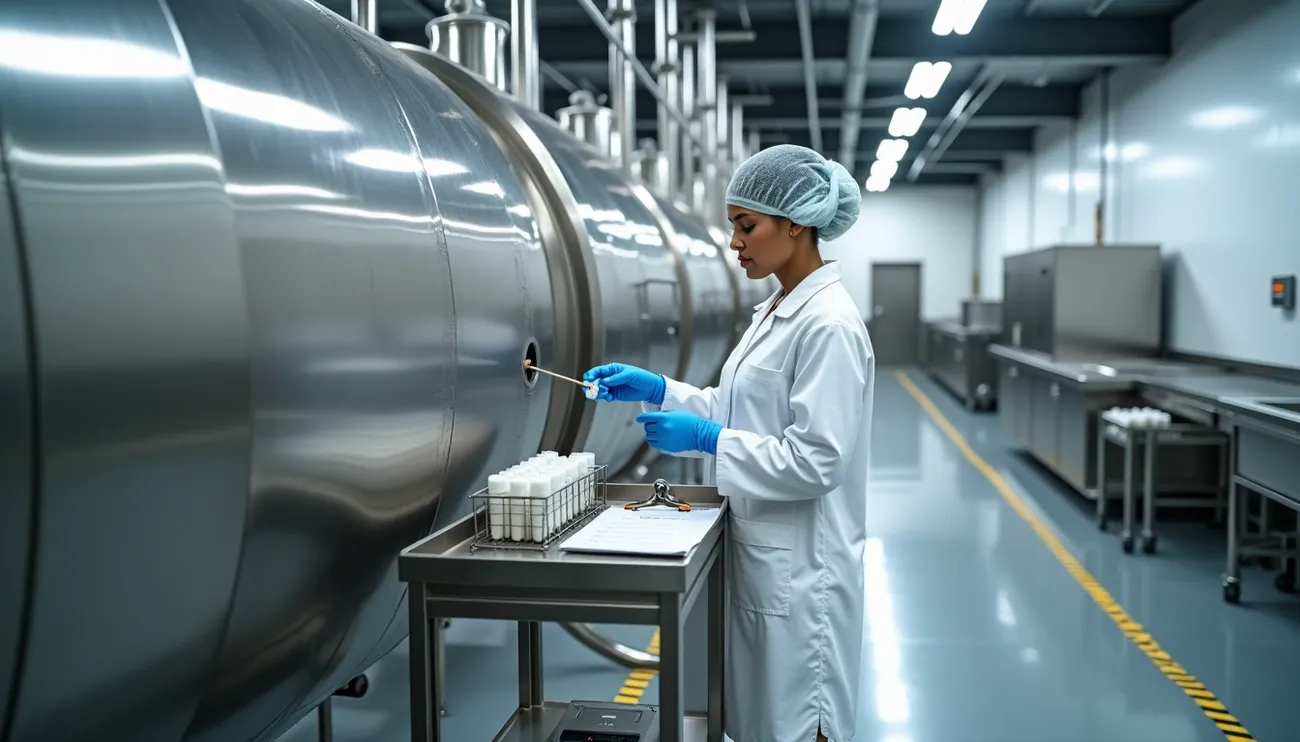
Validation study design allergens demands a rigorous, evidence-based approach. Industry best practise requires repeating the validation exercise no fewer than three times to achieve non-detectable results in consecutive rounds. 77% of manufacturers now include cleaning and sanitation within their allergen control plan. This shows how widely these practises have been adopted in the food processing industry. This piece provides senior technical managers and QA professionals with a complete methodology to design allergen validation studies. The methodology covers worst-case scenario selection and sampling strategy development. It also establishes acceptance criteria and complete documentation frameworks that satisfy BRCGS and retailer audit expectations.
What is Allergen Cleaning Validation Study Design?

Image Source: Normec i2 FAST
Defining validation study design
Allergen cleaning validation study design represents the planning and methodological framework set up before any physical testing occurs. The validation of cleaning procedures centres on getting evidence to prove that the cleaning process works and shows effectiveness again and again [1]. Validation study design covers the documented decisions, rationale and protocols that define which equipment will be tested, which allergen targets will be selected, where samples will be collected and what constitutes acceptable performance.
A cleaning validation study functions as a quantitative assessment of cleaning methods. It makes sure they reduce the risk of unintentional allergen presence in products made later when using shared equipment [1]. The design phase requires careful thinking over the specific production process, as no single standardised solution applies in all manufacturing environments [1]. Planning determines the best samples for each unique operation and allows organisations to optimise both time and cost while generating defensible scientific data.
Purpose and objectives of study design
The fundamental purpose of allergen cleaning validation study design lies in collecting evidence of effectiveness and consistency of the cleaning procedure based on worst-case scenarios [2]. Validation translates intent into evidence and converts a cleaning standard operating procedure into a control that science has shown to work [2]. This transformation proves capability and builds a durable safety margin into operations [2].
Study design objectives extend beyond simple pass/fail testing. The design must prove that all judgments and assumptions made to identify and assess relevant hazards, identify controls, select critical control points and set up effective monitoring procedures are based on scientific fact [3]. The entire system achieves validity when each component of the allergen control system relies on validated science [3].
The design phase sets up what constitutes a successful validation outcome. Defining pass/fail criteria for the overall validation, such as three successful consecutive runs meeting all endpoints, occurs during design rather than during execution [2]. The study design also determines replication requirements over time and space, standardises swab areas and sets up consistent swabbing techniques to reduce variability [2].
How study design is different from validation execution
Validation execution involves the physical act of testing and data collection. Validation study design sets up the blueprint that guides those activities. Design asks whether the proposed cleaning method can remove allergens well, whilst execution generates the actual data proving effectiveness [4]. The design phase occurs before commercial manufacture of products and whenever changes are made to manufacturing or cleaning processes, including reformulation, equipment modifications or alterations to scheduling sequences [4].
The key to successful cleaning validation studies resides in planning [1]. Study design requires assembling a team and assigning leadership to carry out the design work [2]. Personnel with knowledge in product formulation, manufacturing processes, equipment design and cleaning regimes provide valuable insight to identify processes requiring validation [2]. Determining the scope of the study forms part of design work and describes and justifies which equipment, utensils, cleaning regimes and production processes will be validated [2].
Design also addresses method selection before execution begins. Choosing between ELISA and lateral flow devices, setting up test sensitivity requirements and thinking over matrix effects all occur during the design phase [2]. To name just one example, see testing for egg allergen, where some ELISA tests detect raw egg but perform poorly with cooked egg [1]. The design phase identifies which form of the allergen will be present and selects an appropriate detection method so.
The role of study design in producing defensible evidence
Study design produces defensible evidence by grounding the entire validation programme in worst-case thinking, allergen-specific testing, disciplined technique and clear acceptance criteria [2]. Maintaining good records of results and outcomes constitutes a given requirement, but documenting all decisions made before starting the cleaning validation proves just as important [1]. This documentation shows the scientific basis for equipment selection, target allergen choices and acceptance threshold determination.
Robust allergen validation study design reduces systemic risk for technical leaders by lowering the likelihood of recalls, protecting brand equity and providing confidence that scaling production or adding product lines will not introduce latent allergen risk [2]. The design creates a foundation without which verification might be executed flawlessly yet still leave hazardous residues if the underlying procedure proves incapable [2].
Study design also determines how validation outputs connect to broader food allergen control systems. Reference to guidance from respected bodies often works for production methods that are well known, but when proposed critical limits lack published evidence, suitable validation exercises become needed [3]. The design phase sets up whether existing literature verifies the approach or whether in-house validation studies must generate original evidence [3]. This planning makes sure that validation findings integrate smoothly with HACCP plans and standard operating procedures and creates a cohesive allergen management framework built on verifiable scientific principles.
Regulatory and Audit Expectations for Validation Studies
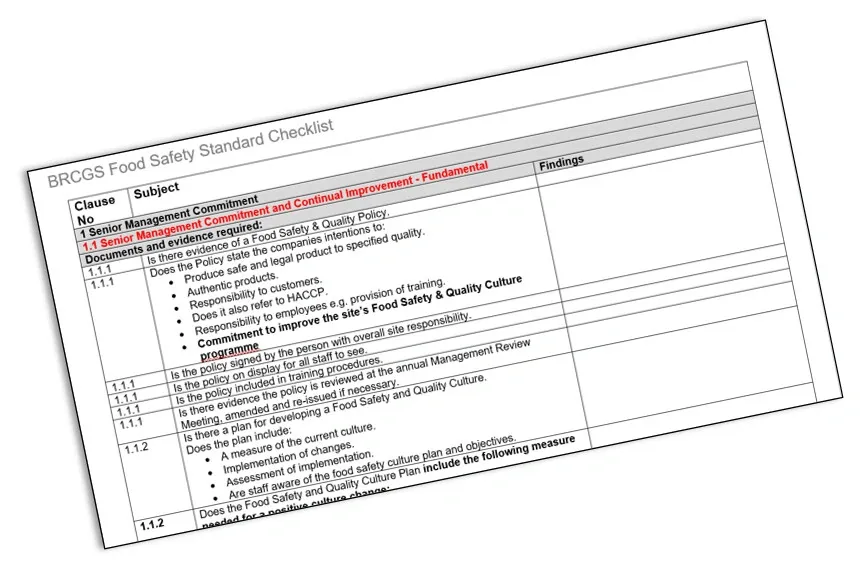
Image Source: ALLSAFE
BRCGS Global Standard requirements
Global food safety standards have established a defined regulatory framework for cleaning validation study design for allergens. Clause 5.3.8 of the BRCGS Global Food Safety Standard mandates that cleaning methods must be validated to ensure effectiveness. The standard requires sites to verify the effectiveness of procedures routinely [2]. This requirement applies where cleaning procedures are part of a defined prerequisite plan to control the risk of specific hazards [5].
BRCGS establishes foundational expectations through multiple clauses. Clause 3.5.1.1 requires food production sites to undertake documented risk assessment of each raw material or group of raw materials. Sites must take into account the potential for allergens, which has allergen content and potential contamination [2]. This risk assessment determines which equipment requires validation and which target allergens must be addressed.
Clause 4.11.3 of BRCGS Global Food Safety Standard Version 9 requires sites to define limits of acceptable and unacceptable cleaning performance for food contact surfaces and processing equipment [2]. The standard further requires sites to define corrective action when monitored results fall outside acceptable limits. These requirements turn validation from a theoretical exercise into an operational control system with defined boundaries and response protocols.
Retailer and customer scheme expectations
Retailers and brand owners impose detailed allergen management specifications that manufacturing sites must satisfy. These go beyond BRCGS baseline requirements. All suppliers for own-label products must achieve at least BRC A grade status for unannounced audits [2]. Minimum standards escalate for suppliers handling high-risk matrices such as raw meat or cured and dried meats. Microbusinesses must maintain BRC A grade for unannounced audits when onboarded [2].
Retailers require suppliers to implement HACCP systems with dedicated sections that address allergen management and products with free-from claims. The systems must also cover vegetarian and vegan products [2]. Some customers maintain very detailed allergen requirements beyond standard BRCGS compliance [6]. Manufacturing sites must review these customer-specific expectations when they develop and review allergen management systems. This ensures validation study designs address all contractual obligations.
HACCP alignment and validation principles
Allergen cleaning validation represents a formal requirement of HACCP systems. GFSI standards such as BRCGS and FSSC 22000 have made it part of their frameworks [7]. HACCP principles require that judgements and assumptions made to identify hazards and select critical control points must be based on scientific fact. The same applies to establishing monitoring procedures [6]. Validation provides the scientific foundation that supports these judgements.
The HACCP framework emphasises prevention over detection. Preventing problems from occurring constitutes the paramount goal that underlies any HACCP system [6]. Therefore, HACCP principles establish that effective systems require little end-product testing. Sufficient validated safeguards are built in early in the process [6]. Facilities should conduct frequent reviews of their HACCP plan and verify correct implementation. They should also review CCP monitoring and corrective action records [6].
The HACCP plan’s validation determines whether the plan is sound from a scientific and technical standpoint. It confirms that all hazards have been identified and that proper implementation will control these hazards [6]. Information needed to verify HACCP plans often has expert advice, scientific studies, and in-plant observations and measurements [6]. A HACCP team or independent expert performs and documents subsequent validations as needed [6].
Common audit findings on study design weaknesses
Hygiene deficiencies rank among the top 10 non-conformities identified in BRCGS Global Standard Food Safety Issue 9 audits since 2023 implementation. Cleaning and disinfection issues account for almost 20% of all major and minor non-conformities [7]. This statistic reflects persistent challenges in demonstrating validated and effective cleaning systems.
Common weaknesses emerge when validation exists without verification or verification occurs without validation [2]. Sites check a process they never proved effective if verification proceeds without validation. Validation without verification means proving effectiveness once then hoping it remains true. Both weaknesses show up quickly in audits and customer requirements [2].
Unclear acceptance criteria create inconsistent decisions and represent a major audit vulnerability [2]. The system lacks control when one supervisor accepts a borderline result while another rejects it. It relies on opinions rather than defined standards. Validation that targets worst-case scenarios must address failure modes that occur in practise. Validation plans that ignore top failure modes pass on paper while failing on the production floor [2].
An allergen control programme can appear robust in documentation yet fail in practise when failure modes remain unaddressed. These modes have incomplete cleaning, hidden harborage points, rework loops, and label reconciliation gaps. Poor lot segregation or scheduling decisions that position allergen and non-allergen products too closely also create problems [2]. Auditors and customers expect proof that controls prevent cross-contact under worst-case conditions [2]. Validation provides that proof and defines the ongoing verification plan required to maintain control.
Worst-Case Scenario Selection Methodology
Identifying the target allergen for validation
Selecting the right target allergen is the life-blood of credible validation study design allergens. The allergen load—the amount of total protein from the allergenic source present in food components—is the main thing to think about when choosing which allergenic source to assess [5]. Manufacturing sites pick the allergenic source with the highest intact protein load in the product formulation to assess cleaning procedure effectiveness [5].
Validation procedures using allergenic techniques should focus on the highest percentage allergen within the formula when multiple allergens exist in a formulation. You might also think over other factors, such as allergens most difficult to remove from the food processing environment [8]. This approach means that if the most challenging allergen can be removed through the validated cleaning procedure, easier-to-clean allergens in lower quantities will also be removed using the same methodology [9].
Sites need to confirm test method availability before finalising allergen selection. A suitable laboratory test method must exist to detect the chosen allergen in samples. Quantitative ELISA methods are preferred as these detect protein and provide results within a measurable range [6]. The laboratory can help determine whether an alternative target could be used when no suitable ELISA test exists for a target allergen. They can also assess whether available test methods will provide the necessary information [6].
Selecting the worst-case product and matrix
The physical form of the allergenic food dictates cleaning difficulty. This influences product selection for validation. Allergens present as particulates, powders, pastes or liquids each create distinct challenges [5]. Particulates such as peanut pieces, tree nuts and sesame seeds present challenges because these forms distribute non-homogenously. Individual particles can sometimes prove large enough to provoke reactions in sensitive consumers [5].
Pastes including tahini and peanut butter rank among the most difficult forms to remove through cleaning, alongside baked-on residues [5]. The form of the finished food product containing the allergenic ingredient is an important thing to think over when developing effective cleaning procedures [5]. Processing that the food product undergoes affects soiling removal. Factors include longest processing time, highest temperature and the period equipment sits idle before cleaning [9].
Equipment and surface considerations
Equipment hygienic design review determines areas most difficult to clean. This helps in establishing the worst-case scenario [9]. Validation procedures should concentrate more heavily on equipment exposed to the highest loads of allergenic foods [5]. Best practise dictates including all materials in the cleaning validation when equipment has various materials. Stainless steel surfaces clean more easily compared to rubber components [9].
Processing conditions that affect cleanability
Processing parameters directly influence allergen residue tenacity. Heated soils behave differently than unheated residues. Duration on surfaces affects removal difficulty [9]. Baked-on residues create stubborn contamination that requires aggressive cleaning protocols [5].
Justifying your worst-case rationale
Documenting the rationale supporting worst-case selection is essential for allergen validation studies. Validation based on worst-case situations gives sites assurance that cleaning will work in multiple scenarios where cleaning proves less challenging [6]. Validation of materials that are easy to remove or present at low levels cannot support assumptions about more difficult cleaning challenges [6]. Auditors and customers expect clear justification showing why selected conditions represent genuine worst-case exposure. This creates validation outcomes that withstand regulatory scrutiny.
Sampling Strategy: Identifying Critical Sampling Locations
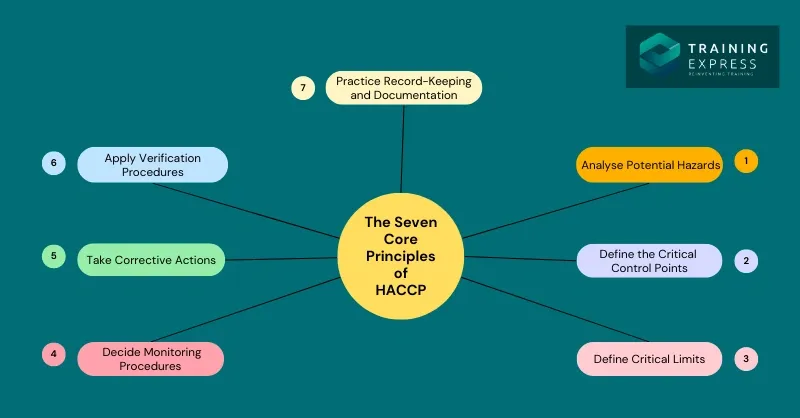
Image Source: Training Express
Food contact surfaces vs non-food contact surfaces
Sampling areas for allergen validation programmes may be broken down into zones based on their proximity to the product [2]. Zone 1 surfaces come into contact with the product, whilst Zones 2, 3 and 4 represent non-contact surfaces of lessening probability that could contribute contaminants through interaction with people, equipment, or air and water circulation [2]. This zoning framework allows monitoring to concentrate on environmental areas where the product and food contact surfaces remain most susceptible to allergen cross-contact and extends outward to areas far removed from the product but with potential to affect quality [2].
Allergen cleaning verification requires testing sites to concentrate in Zone 1 as this is where the product faces greatest risk of allergen cross-contact [2]. Testing these surfaces identifies hot spots that affect product and product contact surfaces [2]. Testing in Zones 2, 3 and 4 can pinpoint allergen cross-contact sites outside of the production area [2]. Direct product contact surfaces, those where product is exposed to the environment before final package closure, are most important [6]. Suggested sampling locations include tables, conveyor belts, buckets, fillers, hoppers, utensils, employee hands and gloves [6].
When testing any food contact surface sites for allergens, all product produced on the line tested should be held until final results are received [6]. Items and surfaces over or in close proximity to food contact surfaces, such as areas within enclosed equipment, brooms, vacuums and compressed air lines, also warrant testing [6].
Difficult-to-clean areas and harborage points
Areas most difficult to clean represent the focal point for validation sampling. More swabs should be taken in the earlier stages of production. Test sites should focus on difficult to clean areas such as angles, welds, porous surfaces such as cloth belts and other harborage areas [2]. Multiple sites should be swabbed with a focus on areas, nooks and crannies that might harbour residues [10].
Sampling procedures should predetermine locations on equipment surfaces and take into account areas that can be considered potential contact or that affect food contact surfaces and are difficult to clean [6]. The sampling plan must include all equipment where allergen build-up could occur, or residual allergenic proteins could be trapped. This includes pneumatic lines (product contact), conveyor belts, fillers, mixers, silos, bulk tanks, packaging equipment, hand utensils, shovels, scrapers, aprons and gloves [6].
Equipment complexity and hygienic design factors
Hygienic design review determines areas most challenging to clean during validation. Equipment and factories of poor hygienic design are difficult to clean, as residues (soil) may be retained in crevices and dead areas [11]. No matter how fit for purpose a cleaning and sanitation programme proves, it cannot work if areas exist where soils are entrapped and not accessible in the timeframe or with the tools available [11].
Representative samples should be taken from dissimilar materials such as Teflon, belting and stainless steel [2]. The main goal focuses on testing each site that represents a unique surface (material, complexity, location), unique cleaning protocol and unique product composition, among those areas representing unique cleaning challenges such as welds, corners and other harborage areas [2].
How many locations to sample
Whilst no right or wrong number of test sites exists, the focus should rest on testing each site representing a unique surface, unique cleaning protocol and unique product composition [2]. The main goal for any environmental monitoring is achieving representative sampling of the area of concern [2]. The appropriate number of samples will be process and facility specific and must be thought over within ground production and budget requirements [2]. If the final number of sampling sites proves substantial, rotating sites at each sampling interval increases coverage [6].
Sampling Strategy: Methods, Timing and Techniques

Image Source: Ingredients Network
Surface swabbing vs rinse water sampling
Two general types of sampling have been found acceptable for allergen validation programmes. Direct surface sampling represents the most desirable approach. It allows evaluation of hardest to clean and available areas while establishing contamination levels per given surface area [9]. Residues that are dried out or insoluble can be sampled through physical removal [9]. Visual inspection often proves the most overlooked form of assessment, yet remains fundamental before analytical testing proceeds [8].
But difficult-to-reach areas may not be available by swabbing, and these areas may be the critical locations to determine residue amounts [9]. Rinse solutions provide an acceptable alternative when swabbing proves impractical [9]. Rinse samples determine carryover of residues over large surface areas and cover all main process items including transfer pipework [9]. For CIP applications, good practise dictates taking samples from the first, middle and last product from the line [8]. A disadvantage of rinse samples centres on residues that may not be soluble or may be occluded in equipment [9].
Product sampling approach
Post-clean samples consist of swabs, rinse waters or purge material, with sample type dependent on the cleaning method performed [5]. Testing the next off-line product provides the only direct measure of what the consumer will be exposed to [5]. This product is the first ingredient or product that contacts equipment after cleaning. If carry-over of allergen is detected in this sample, this represents a risk to an allergic consumer [5].
When to sample: post-clean timing considerations
Visual monitoring should be conducted when equipment is still disassembled after cleaning [12]. Multiple timepoints prove valuable when testing the next product prepared on the line. Testing at 8 timepoints from T=0 to T=60 minutes on three different occasions demonstrated that precautionary allergen labelling is not required [10]. Swabs should be stored at colder temperatures, especially at 4°C or −20°C, as recovery of allergen residues was higher and more stable under these conditions [13]. Current best practise recommends shipment on ice with same-day delivery and keeping samples cold until analysis [13].
Swabbing techniques and recovery efficiency
Two swabs should be used subsequently. Purified water wets the first swab whilst the second swab is used dry [9]. The swab sample is prepared by wiping horizontally on one side, then flipping the swab and wiping vertically on the other side [9]. Positive controls should be established to ensure the target allergen can be detected under food manufacturing conditions. This requires manufacturers to send samples of the product and swabs of surfaces before the validation clean begins [8].
Number of replicates and statistical confidence
Industry best practise recommends repeating the validation exercise three times to achieve non-detectable results for all post-clean and next off-line samples in three consecutive rounds [5]. Sites should carry out validation at varying times to account for different cleaning teams, seasonal variation in raw ingredients and variation in production pressures [8]. Where possible, include different shifts to demonstrate that the clean is performed consistently whatever team executes it [5].
Establishing Scientifically Justified Acceptance Criteria
Image Source: LinkedIn
Establishing Scientifically Justified Acceptance Criteria
Non-detectable vs defined ppm thresholds
Acceptance criteria for allergen validation study design must balance scientific evidence with practical detectability. The overarching principle centres on ensuring the absence of detectable allergens in food products that undergo processing following cleaning [8]. Industry best practise requires achieving surface cleanliness where allergens cannot be detected using lateral flow devices, with ELISA providing additional sensitivity to validate [8].
Cleaning achieves desired results when both product and food contact surfaces test free from allergens [8]. Detection of allergens in product and on food contact surfaces indicates cleaning has not achieved acceptable performance. This requires amendments to the cleaning programme before rerunning validation [8]. Three consecutive rounds achieving non-detectable results across all post-clean and next off-line samples represents the validation standard [5].
Allergen thresholds and detection limits
Scientific literature has no consensus regarding thresholds for major food allergens or gluten, with thresholds fundamentally defined by limits of detection [14]. Reference doses provide a scientific framework based on doses that bring out reactions. ED05 represents the dose of allergenic protein at which 5% of the allergic population are predicted to experience objective symptoms, whilst ED01 corresponds to 1% of the allergic population [15].
Gluten-free products must contain no more than 20 parts per million of gluten under UK law, a level established as safe if you have coeliac disease [16]. But people with wheat allergy may react to products below this threshold or to other wheat proteins not captured by gluten testing [16].
Risk-based acceptance criteria development
When cleaning programmes achieve surface cleanliness via lateral flow devices but not by ELISA, risk assessment determines whether detectable allergen on surfaces poses most important risk to subsequent product batches [8]. Two critical factors inform this assessment. Cross-contamination from food contact surfaces to food involves a transfer coefficient, meaning not all surface allergen transfers to food [8]. Allergen detected on food surfaces would likely result in allergen levels in food product approximately 100 times less in reality [8].
Testing methodologies differ fundamentally as well. Product testing involves macerating samples in large diluent volumes, whilst swabs recover into small quantities. This creates lower detection sensitivity for product samples despite testing equal diluent volumes [8].
Regulatory expectations vs internal standards
The FDA has not established maximum allergen amounts in labelled food products that require declaration, yet recognises published data on population threshold dose responses to various food allergens are increasingly available [17]. Food manufacturers could assess such data through risk assessments or scientifically valid assessments when making decisions on appropriate allergen controls [17].
Thresholds help food businesses understand what unintentional allergen levels in prepacked products should trigger precautionary allergen labelling [15]. Food businesses calculate potential allergen contamination and compare this with reference doses. They apply precautionary labelling if contamination risks exceeding the reference dose [15].
Action limits and interpretation rules
Cleaning and disinfectant residues present in sample matrices may affect analytical detection technique sensitivity. This makes it good practise to determine interference effects before validation execution [8]. Positive and negative controls should be run to establish method performance under actual manufacturing conditions [8].
Results interpretation must account for consumption patterns. Risk managers think over the amount of food consumers typically consume on a single eating occasion to determine action levels [15]. Contamination risk in one biscuit may fall below reference dose, but risk assessment should account for consumers likely eating multiple biscuits per serving [15]. Sites must define corrective actions when monitored results fall outside acceptable limits. This transforms validation from theoretical exercise into operational control system with defined response protocols.
Test Method Selection and Validation
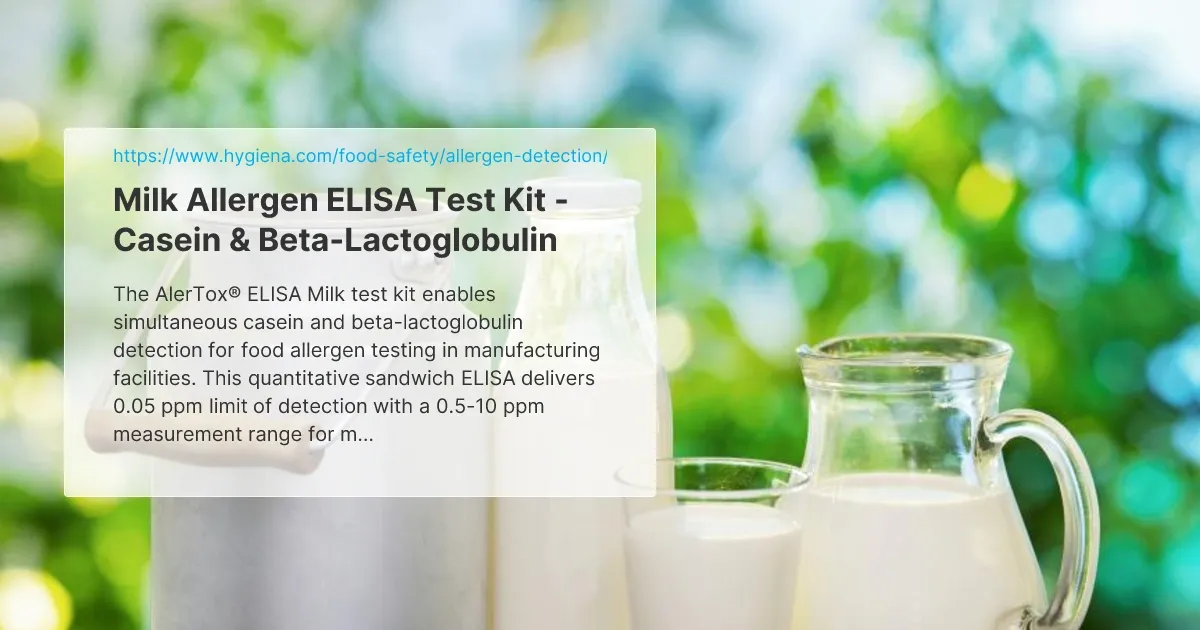
Image Source: Hygiena
Test Method Selection and Validation
ELISA vs lateral flow devices for validation
Selecting the right method for allergen study design requires understanding fundamental differences between available technologies. ELISA testing represents the gold standard for quantitative allergen detection in all food products and processing environments. It provides high sensitivity and specificity for allergenic proteins [6]. Testing should use ELISA methods when possible. They are quantitative and look for the protein in the sample, making them more relevant to clinical applications [18].
Lateral flow devices function as rapid screening tools. They provide qualitative or semi-quantitative results within minutes [6]. Some manufacturers express reluctance to trust data generated by lateral flow devices due to their qualitative nature [10]. Lateral flow tests suit environmental samples like rinse waters and surface swabs, but they require proper confirmation for factory-specific contaminants [18].
Test sensitivity and method detection limits
Laboratory verification of limit of detection and limit of quantification proves needed rather than relying on kit manufacturer specifications alone [10]. Low ppm detection capability remains key. Concerns arise when LOD or LOQ falls below 1-2.5 ppm due to risks of detecting artefacts [10]. Detection limits range from 1-10 ppm of allergenic protein for properly confirmed sandwich ELISA kits [19].
Matrix effects and test interference considerations
Food matrices create interference with biological assays. This risks false negative or false positive results [18]. High-fat matrices such as chocolate contain fat and polyphenols that interfere with lateral flow device testing, making ELISA the preferred choice [10]. Spike recovery testing confirms method performance, with acceptable recovery within 80-130% of the spiked level [10]. Testing laboratories must complete matrix confirmation studies, yielding spike recovery data within this tolerance [10].
Positive and negative control requirements
Testing positive controls proves critical. It demonstrates both appropriate target allergen selection and test method suitability for collected samples [18]. Some ELISA tests detect raw egg but perform poorly with cooked egg when testing for egg allergen [18]. The test will not detect trace levels if it cannot detect the allergen when present in large quantities [18]. Manufacturers should send product samples and surface swabs before confirmation cleaning begins. This establishes positive controls under food manufacturing conditions [2].
Documentation Requirements for Validation Studies
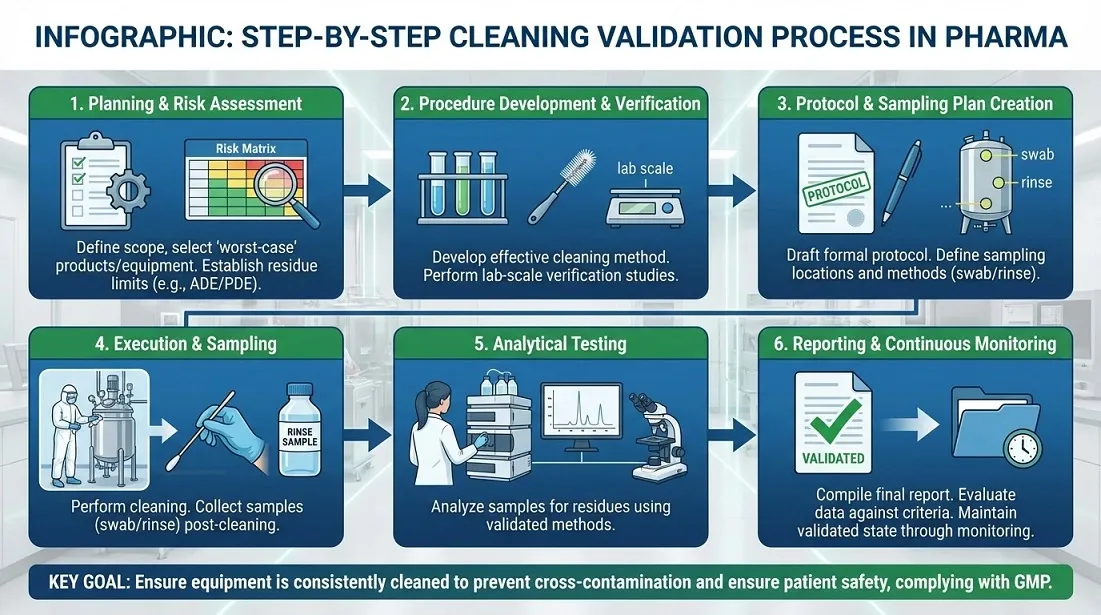
Image Source: Pharmuni
Validation protocol structure and content
Documentation transforms allergen validation study design from theoretical exercise into auditable evidence. Validation tests the actual SOP, not an idealised version. This requires precise documentation of chemistry, concentration, time, temperature, mechanical action, tool selection, disassembly steps and drying protocols [11]. One cleaning programme often exists in practise, so sites should include copies of cleaning instruction cards within the validation pack [8]. Certain parameters such as chemical strengths and solution temperatures are developed in ranges. Validation must occur at worst-case circumstances, at lowest chemical strength or temperature [8].
Documenting worst-case justification
Sites should already have undertaken COSHH assessments for chemicals used in validation. They should think about whether risk assessments are required for equipment dismantling [8].
Raw data recording and traceability
Record the who/what/when/where: cleaning variables including chemistry lot, concentration, contact time, water temperature, tools and disassembly checklist; swab metadata including location ID, surface type, area size, timepoint, analyst, kit lot and expiry; deviations and corrective actions [11]. Capture metadata and keep raw and summarised results easy to retrieve [11].
Result interpretation and statistical analysis
Define what constitutes pass/fail for overall validation, such as three successful consecutive runs meeting all endpoints [11].
Approval and sign-off procedures
Validations should be reviewed at least once a year, or when any parameter changes including product, machinery or cleaning parameter [8].
Linking validation outputs to SOPs and HACCP plans
Schedule periodic review and set triggers for re-validation [11].
Conclusion
Allergen cleaning validation study design goes nowhere near just regulatory compliance. The methodology outlined here gives senior technical managers defensible evidence that cleaning procedures protect consumers and withstand the most rigorous audits. You select worst-case scenarios, establish critical sampling locations, and define scientifically justified acceptance criteria. Detailed documentation turns validation from theoretical exercise into operational control. Facilities that implement these principles build durable safety margins into production systems. This reduces recall risk and protects brand equity. Resilient validation study design creates a foundation that supports the allergen management programme. It proves that shared equipment operations can manufacture allergen-free products safely and consistently.
Key Takeaways
These essential insights will help senior technical managers and QA professionals design robust allergen cleaning validation studies that satisfy regulatory requirements and protect consumers.
• Worst-case scenario selection is critical – Target the highest protein load allergen in the most difficult-to-clean form (pastes, baked-on residues) to ensure validation covers all operational challenges.
• Three consecutive non-detectable results validate effectiveness – Industry best practise requires achieving undetectable allergen levels across all sampling points in three separate validation rounds.
• Focus sampling on Zone 1 food contact surfaces – Prioritise direct product contact areas, difficult-to-clean locations like welds and corners, and equipment harborage points where residues accumulate.
• ELISA provides superior validation data over lateral flow devices – Quantitative ELISA methods offer the sensitivity and specificity needed for defensible validation evidence, particularly for complex food matrices.
• Document everything before testing begins – Record worst-case justifications, sampling rationale, acceptance criteria, and method selection decisions to create audit-ready validation protocols.
Effective allergen cleaning validation transforms theoretical cleaning procedures into scientifically proven controls. When properly designed and executed, validation studies provide the evidence base supporting entire allergen management programmes, ensuring shared equipment can safely produce allergen-free products whilst meeting BRCGS and retailer audit expectations.
FAQs
Q1. What sampling techniques are commonly used in allergen cleaning validation studies? The two primary sampling methods are surface swabbing and rinse water sampling. Swabbing involves direct contact with equipment surfaces and is ideal for accessible areas, allowing evaluation of specific difficult-to-clean locations. Rinse sampling works well for hard-to-reach areas and CIP (clean-in-place) systems, covering large surface areas including transfer pipework. The choice between methods depends on equipment accessibility and the cleaning system in use.
Q2. What acceptance criteria should be established for allergen cleaning validation? Industry best practise requires achieving non-detectable allergen levels in three consecutive validation rounds across all sampling points. Whilst some organisations use defined ppm thresholds, the gold standard is surface cleanliness where allergens cannot be detected using lateral flow devices, with ELISA providing additional sensitivity. Acceptance criteria should be scientifically justified based on detection limits, reference doses, and risk assessment of potential cross-contamination.
Q3. Do food safety standards require validation of allergen cleaning procedures? Yes, major food safety standards including BRCGS, FSSC 22000, SQF, and FSMA all mandate validation of allergen controls. BRCGS Clause 5.3.8 specifically requires cleaning methods to be validated for effectiveness where they form part of prerequisite plans controlling specific hazards. These standards require both initial validation to prove effectiveness and ongoing verification to ensure continued performance.
Q4. Why is ELISA preferred over lateral flow devices for allergen validation testing? ELISA (Enzyme-Linked Immunosorbent Assay) provides quantitative results with high sensitivity and specificity for allergenic proteins, making it the gold standard for validation studies. Unlike lateral flow devices which offer qualitative or semi-quantitative results, ELISA can detect allergens at very low levels (typically 1-10 ppm) and performs reliably across complex food matrices. This quantitative capability provides the defensible scientific evidence required for regulatory compliance.
Q5. What documentation is essential for a compliant allergen cleaning validation study? Comprehensive documentation must include a detailed validation protocol specifying worst-case justifications, sampling locations, acceptance criteria, and test methods. Records should capture all cleaning variables (chemistry, concentration, time, temperature), sampling metadata (location, surface type, analyst details), raw test results, and statistical analysis. The documentation must also link validation outcomes to standard operating procedures and HACCP plans, with defined approval and sign-off procedures to create an auditable evidence trail.
References
[1] – https://www.rssl.com/media/faad4ehy/rssl-white-paper-cleaning-validation-in-allergen-management.pdf
[2] – https://allergikompetens.se/wp-content/uploads/2015/09/NE8206_Allergen_Validation_and_Verification_Handbook_LO_May15.pdf
[3] – https://myhaccp.food.gov.uk/help/guidance/principle-6-verification
[4] – https://www.factssa.com/news/infographic-the-difference-between-allergen-cleaning-validation-and-verification/
[5] – https://www.rssl.com/insights/food-consumer-goods/designing-a-successful-allergen-cleaning-validation-strategy/
[6] – https://www.neogen.com/fr/usac/neocenter/blog/allergen-testing-methods-explained/?srsltid=AfmBOoosHnsLq3YZ-gjbo2TMjKCCDOkW3fQukPhmbXU5Vvoj9xYL-hvl
[7] – https://www.brcgs.com/about-brcgs/news/2024/industry-spotlight-cleaning-and-disinfection/
[8] – https://www.romerlabs.com/en/library/knowledge/detail/10-steps-to-validating-and-verifying-allergen-cleaning-procedures
[9] – https://pmc.ncbi.nlm.nih.gov/articles/PMC7758009/
[10] – https://www.food.gov.uk/research/review-of-allergen-analytical-testing-methodologies-stakeholder-engagement
[11] – https://normex.ca/news/allergen-swabbing-why-validation-is-essential
[12] – https://www.fda.gov/media/129671/download
[13] – https://allergenbureau.net/time-and-temperature-matter-for-allergen-testing-swabs/
[14] – https://www.fda.gov/files/food/published/Approaches-to-EstablishThresholds-for-Major-Food-Allergens-and-for-Gluten-in-Food.pdf
[15] – https://www.food.gov.uk/board-papers/precautionary-allergen-labelling-and-allergen-thresholds
[16] – https://www.anaphylaxis.org.uk/fact-sheet/allergen-thresholds/
[17] – https://www.fda.gov/media/172318/download
[18] – https://www.rssl.com/media/ayohzhst/rssl-white-paper-cleaning-validation-in-allergen-management.pdf
[19] – https://www.labmanager.com/detecting-food-allergens-with-elisa-microplate-methods-sensitivity-validation-and-compliance-35315