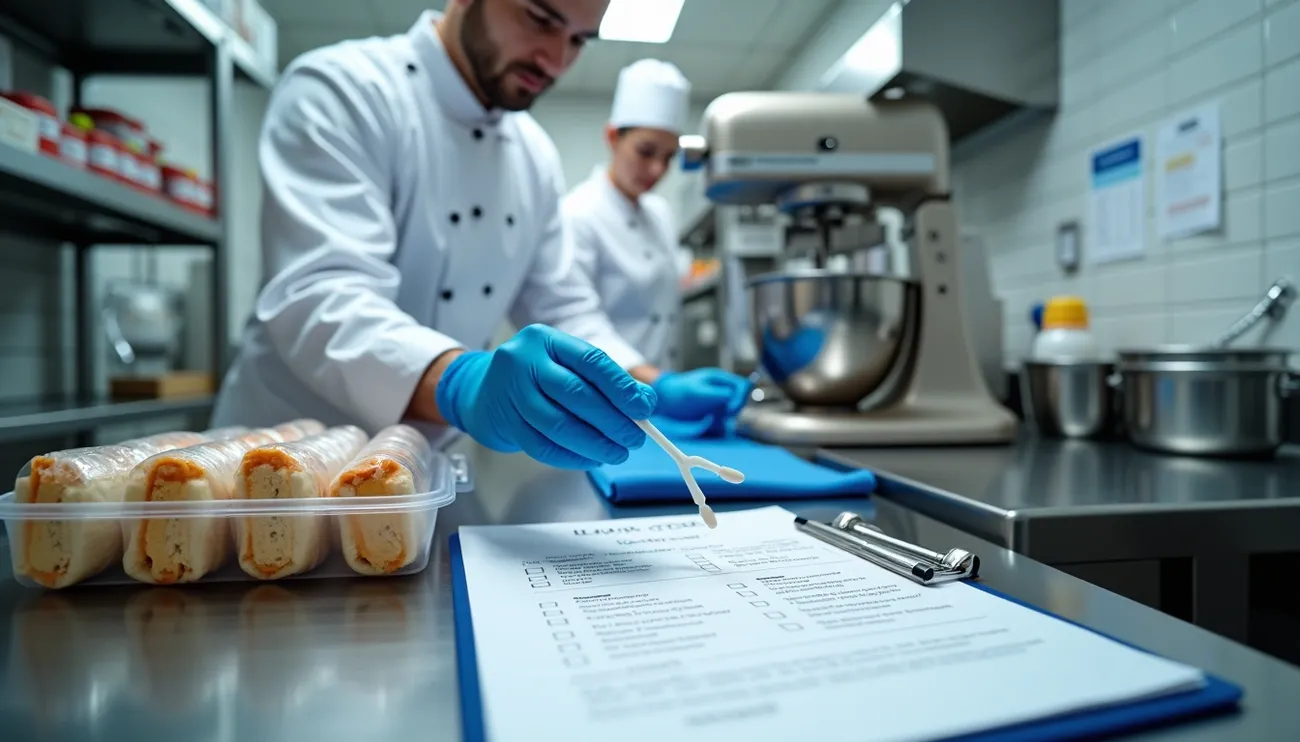
 Meeting Natasha’s Law cleaning requirements is non-negotiable when recent UK product testing revealed 31.2% of items contained unintended allergens, yet most PPDS operators overlook proper cleaning verification. Natasha’s Law UK protects 2 million food allergy sufferers by mandating full ingredient labelling on prepacked for direct sale food, but above all, accurate labels depend on verified allergen removal between production runs. You need to understand what Natasha’s Law is, when it came into effect, and the 14 Natasha’s Law allergens, but compliance hinges on strong cleaning validation and verification protocols that prove surfaces are allergen-free in the end.
What is Natasha’s Law UK
Image Source: Food Standards Agency
The Tragedy Behind the Legislation
Natasha Ednan-Laperouse died on 17 July 2016 after eating an artichoke, olive and tapenade baguette purchased from Pret a Manger at Heathrow Airport Terminal 5 [1]. The 15-year-old suffered a catastrophic allergic reaction to sesame seeds baked into the bread during a British Airways flight. Her father administered two EpiPen injections, but she died later that day [1]. The ingredient was not listed on the packaging because existing food law contained a dangerous loophole.
Before October 2021, food businesses had no legal obligation to display ingredient or allergen information on products made and packaged on the same premises [2]. The 2018 inquest into Natasha’s death revealed that Pret a Manger had received reports of six allergic reaction cases with sesame in the year before she died [1]. Coroner Dr Séan Cummings concluded that Pret’s allergy labelling was inadequate and issued a Regulation 28 Report to Prevent Future Deaths [1]. The coroner’s findings showed that inadequate food labelling laws had played Russian roulette with the lives of allergy sufferers [1].
Natasha’s parents, Tanya and Nadim Ednan-Laperouse, founded the Natasha Allergy Research Foundation after the inquest and campaigned for legislative change [3]. Their efforts resulted in amendments to the Food Information Regulations 2014, with new requirements coming into effect on 1 October 2021 across England, Scotland, Wales and Northern Ireland [3][1].
PPDS Food Requirements Under Natasha’s Law
Prepacked for direct sale (PPDS) foods are products packaged at the same place they are offered or sold to consumers and placed in packaging before being ordered or selected [1]. This category includes sandwiches, salads, cakes and other ready-to-eat items prepared and wrapped on-site before display [2].
Food qualifies as PPDS at the time businesses can answer yes to specific criteria: the food must be in packaging that requires alteration to access the contents, it must be a single item, placed in packaging before sale, sold by the same business that packed it, and offered from the same premises, a related outlet in the same complex, or a mobile unit operated by that business [4]. A cake wrapped in cling film or rolls sealed in a knotted plastic bag meet PPDS criteria [1].
Food displayed loose and packaged by consumers, or items placed into packaging after customer selection (such as food from hot counters), do not fall under PPDS requirements [4]. Distance sales via telephone or internet also carry different allergen information obligations [4][1].
Every PPDS product must display the food’s name and a complete ingredients list with allergenic ingredients emphasised each time they appear [1][1]. Businesses can emphasise allergens through bold type, capital letters, contrasting colours or underlining [1]. Products requiring no ingredients list under general food law must instead carry a ‘contains’ statement listing present allergens as described in Annexe II to integrated Regulation 1169/2011 [4].
The 14 Allergens Covered by Natasha’s Law
UK food allergen regulations mandate declaration of 14 specific allergens at the time they are present as ingredients:
- Celery – stalks, leaves, seeds and celeriac root found in salads, soups and stock cubes [2]
- Cereals containing gluten – wheat, rye, barley and oats in flour-based products, pasta, breadcrumbs and batter [2]
- Crustaceans – crabs, lobsters, prawns and shrimp paste used in Asian dishes [2]
- Eggs – present in cakes, mayonnaise, pasta, quiche and glazed products [2]
- Fish – fish sauces, pizzas and Worcestershire sauce [2]
- Lupin – flour and seeds used in bread, pastries and pasta [2]
- Milk – butter, cheese, cream, yoghurt and milk-glazed foods [2]
- Molluscs – mussels, squid, land snails, whelks and oyster sauce [2]
- Mustard – liquid, powder or seeds in marinades, sauces and curries [2]
- Peanuts – groundnuts in biscuits, cakes, satay sauce and peanut flour [2]
- Sesame – seeds on bread, in houmous, tahini and sesame oil [2]
- Soybeans – bean curd, miso paste, tofu, soya flour and meat alternatives [2]
- Sulphur dioxide and sulphites – at concentrations above ten parts per million in dried fruit, wine and processed meats [2]
- Tree nuts – almonds, hazelnuts, walnuts, cashews, pecans, pistachios, macadamia nuts and Brazil nuts [2]
These allergens affect around 2 to 3 million people living with food allergies in the UK [1][2]. Accurate labelling under Natasha’s Law requirements depends on effective food allergen control UK systems that prevent cross-contact during production. Without verified allergen removal between batches, even well-designed labels become misleading and dangerous.
Why Cleaning Verification is Critical for PPDS Compliance
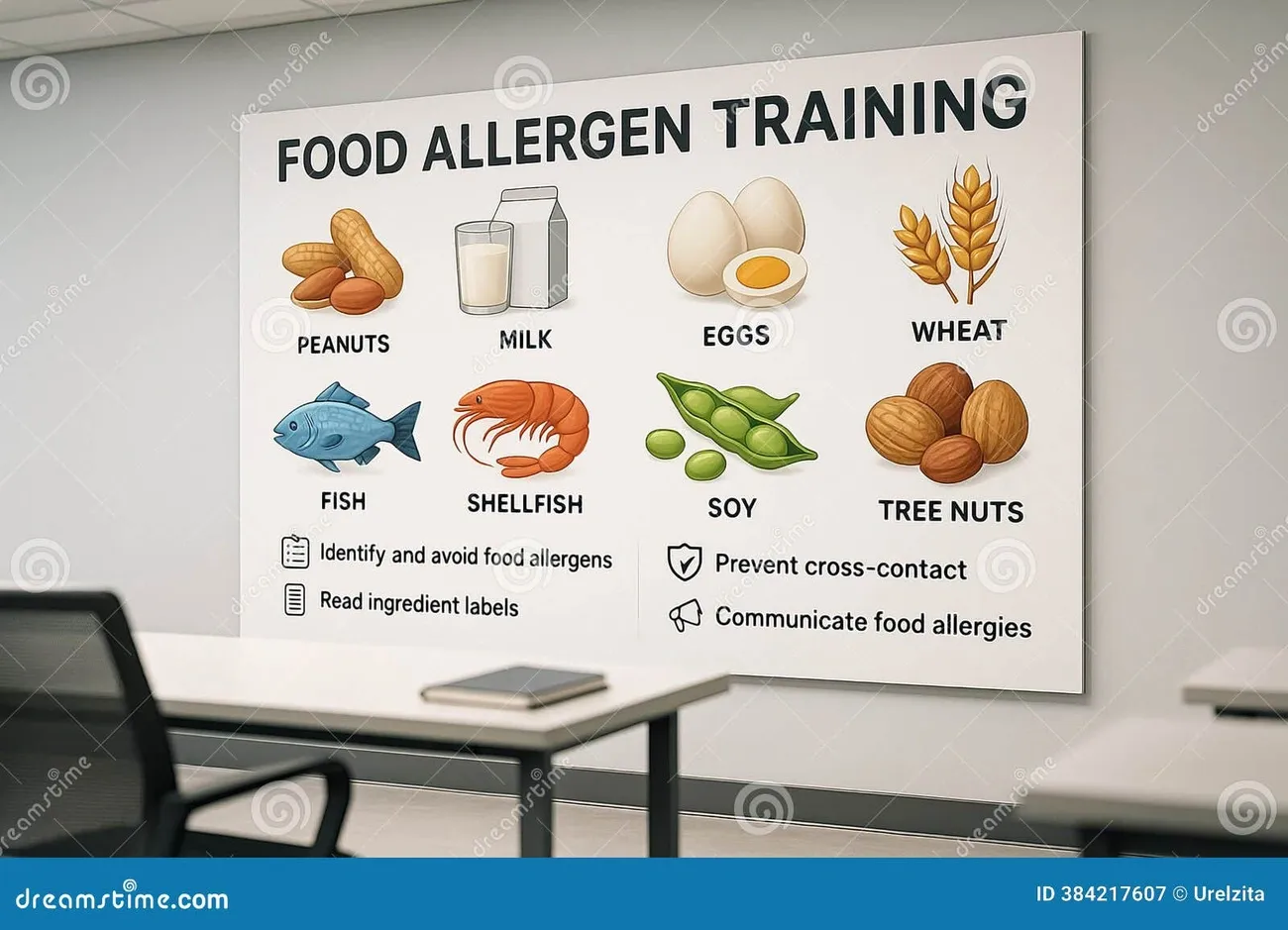
Image Source: Dreamstime.com
The Link Between Cleaning and Allergen Labelling Accuracy
Food businesses carry a legal responsibility to provide food which is safe for consumers and requires accurate information to help customers make safe and informed choices [1]. Labels printed on PPDS packaging become dangerously misleading when cleaning procedures fail to remove residual allergens from shared equipment. A business may declare a product free from peanuts, yet inadequate cleaning between production runs transfers protein residues that trigger severe reactions in allergic individuals.
Cleaning validation studies provide quantitative evidence proving that cleaning processes work and can deliver effective results repeatedly [1]. Food manufacturers confidently avoid relying on precautionary allergen labelling on their products by gathering this evidence [1]. Precautionary statements such as “may contain” should only appear when risk assessment identifies genuine cross-contact risks that cannot be eliminated through segregation and cleaning [1]. Precautionary allergen labelling without real risk constitutes misleading food information and limits consumer choice unnecessarily [1].
The validation process begins with allergen mapping in production sites of all types and identifies where allergens exist and which equipment poses the highest cleaning challenges [1]. Manufacturers should select worst-case scenarios to test and choose allergens present at high levels with substantial protein content that prove difficult to remove [5]. Testing should use quantitative ELISA methods where possible, as these detect allergenic proteins rather than DNA specifically and make results clinically relevant [1]. Removing the target allergen demonstrates that easier-to-clean allergens in lower quantities will also be eliminated using the same procedure [1].
Cross-Contact vs Cross-Contamination
Cross-contact occurs when allergenic proteins transfer from one food to another through shared surfaces, utensils or equipment [5]. Even trace amounts invisible to the naked eye can trigger reactions in allergic individuals [5]. Cooking or reheating food cannot remove or destroy these transferred allergen proteins [5]. 22% of allergic reactions resulted from cross-contact via shared cooking or serving supplies in restaurant settings, with neither staff nor customers aware of the transfer prior to the reaction [5].
Cross-contamination involves unintentional transfer of bacteria, viruses, parasites or chemicals that cause foodborne illness affecting anyone, not solely allergy sufferers [5]. Pathogens such as Salmonella, E. Coli and Listeria can often be neutralised through proper cooking to recommended internal temperatures [5]. This fundamental difference requires distinct management approaches within food allergen control UK systems.
Legal Obligations for Allergen Control
The Food Information Regulations 2014 mandates that food businesses provide accurate allergen information for prepacked and non-prepacked foods [6]. Businesses must take specific steps to avoid cross-contact during food preparation and include cleaning utensils before each usage, washing hands between preparing dishes with different allergen profiles, and storing ingredients in closed and labelled containers [6]. Businesses must inform customers they cannot provide allergen-free dishes when cross-contact cannot be prevented [6].
Local authorities enforce allergen information regulations through improvement notices requiring corrective action within set timeframes [5]. Failure to comply results in financial penalties, prosecution, and potential closure [5]. Fines for mislabelling allergens are unlimited under the Food Safety Act 1990, with large businesses facing substantial penalties [5]. Courts treat allergen breaches seriously, with fatal reactions leading to manslaughter charges in some cases [5].
Precautionary allergen information from ingredient suppliers must pass to consumers [1]. Providing unintended allergen presence information on PPDS packaging will give consumers with allergies understanding of risks and can make safe choices, although not required under food law [1]. This voluntary information does not substitute for good food hygiene and safety practises [1]. Proper allergen cleaning validation remains the main control measure, with precautionary labelling serving only when cleaning proves insufficient to manage identified risks.
Understanding Allergen Cross-Contact in PPDS Environments
Cross-contact pathways in PPDS environments operate through five distinct mechanisms. Each presents unique challenges that standard hygiene protocols often fail to address. Businesses preparing sandwiches, salads, baked goods and other prepacked items on-site need to understand these transfer routes.
Common Sources of Cross-Contact in Food Preparation
Food-to-food contact represents the most direct transfer method. Different foods stored too close together result in physical touching. Spillage or dripping from one product contaminates another [5]. Fish and shellfish placed in the same container create cross-contact incidents [5]. Bread crumbs falling onto salads do the same. Allergenic and non-allergenic foods sharing storage space pose similar risks. Storing allergenic ingredients below rather than above non-allergenic items reduces drip contamination risk [6].
Surface and equipment contact transfers allergens through shared utensils and preparation areas. Knives, chopping boards, worktops, serving spoons, blenders, mixers, grills, woks and fryers all act as transfer vehicles when cleaning proves inadequate between uses [5]. A whisk used for milk-containing sauce and then reused for a dairy-free version without proper cleaning transfers milk proteins [5]. Chopping fish on a board and then using it for vegetables without really cleaning it contaminates the second ingredient [5]. The same wok used for soy sauce stir-fries and allergen-free dishes creates cross-contact when cleaning fails [5].
Hand contact functions as a delivery mechanism. Food handlers touching different ingredients without washing hands transfer allergens from one product to another [5]. Staff wearing gloves and forgetting to change them between tasks spread proteins across preparation areas [5]. The same happens when handling multiple allergen-containing ingredients. Clearing plates that contain allergens and then serving food without hand washing creates direct transfer pathways [5]. Hand sanitising gel does not remove allergens well [5]. Warm or hot soapy water is what proper hand washing requires. Healthcare facilities rely on sanitising gels for infectious disease control, but this proves insufficient for allergen removal [5].
Airborne particles from powders create invisible contamination. Flour, milk powder and spices become airborne during sifting, pouring or whisking operations [5]. These particles settle on surfaces, equipment and food prepared nearby. They contaminate items that should be allergen-free [5]. Air currents within premises can move lightweight ingredients considerable distances from their source [6].
Shared cooking liquids transfer allergens between batches. The same fryer oil used for battered chicken and gluten-free chips introduces gluten into the second product [5]. Boiling egg pasta in water and later using that water for egg-free pasta transfers egg proteins through the shared liquid [5].
High-Risk Areas Requiring Enhanced Cleaning
Certain equipment types present greater cleaning challenges than others. Surfaces that erode and deteriorate over time create areas where allergenic foodstuff residues stick to previously cleanable zones [1]. Equipment must be dismantled to reach hidden spaces where flour dust or seeds become trapped [5]. This proves necessary for allergen removal. Automated clean-in-place systems work for piping but not for mixers and other complex equipment that require manual intervention [1].
Processing aids, raw material handling zones, transport containers and packaging areas all require consideration during risk assessment [6]. Rework and work-in-progress storage demands attention, as these materials may contain undeclared allergens from earlier production runs [7].
When Clean Doesn’t Mean Allergen-Free
Clean from a microbiological standpoint does not equate to allergen-free [1]. Allergens consist of proteins that cannot be killed or deactivated like microorganisms [1]. Physical removal through cleaning represents the only control method that works. Disinfectants and sanitizers alone do not deactivate allergenic proteins [5]. The two-stage cleaning process requires detergent application first to remove allergen residues. Appropriate disinfectant or sanitizer application according to manufacturer instructions follows [5].
Research demonstrates that dish soap failed to remove peanut allergen in controlled studies [5]. Commercial detergent-containing wipes or spray-on detergents applied with vigorous wiping prove necessary for surface cleaning [5]. Running contaminated equipment through normal dishwasher cycles or washing by hand with hot soapy water while scrubbing surfaces removes allergen residues [5]. Sponges, scouring pads or cloths that have not contacted the allergen prevent recontamination [5]. Single-use cloths wherever possible avoid spreading allergens between surfaces [5].
Cleaning effectiveness depends on multiple factors. Food matrix characteristics, surface type, environmental conditions and equipment accessibility all play a role [1]. Cleaning chemical properties, concentration and temperature matter too. Equipment inspection reveals deterioration that compromises cleaning outcomes [1]. Protective clothing laundering and hand washing protocols must integrate into cleaning efficacy studies where relevant [1]. Colour-coded cleaning equipment dedicated to allergen-free preparation areas provides additional control where possible [5].
Cleaning Validation vs Verification: What’s the Difference
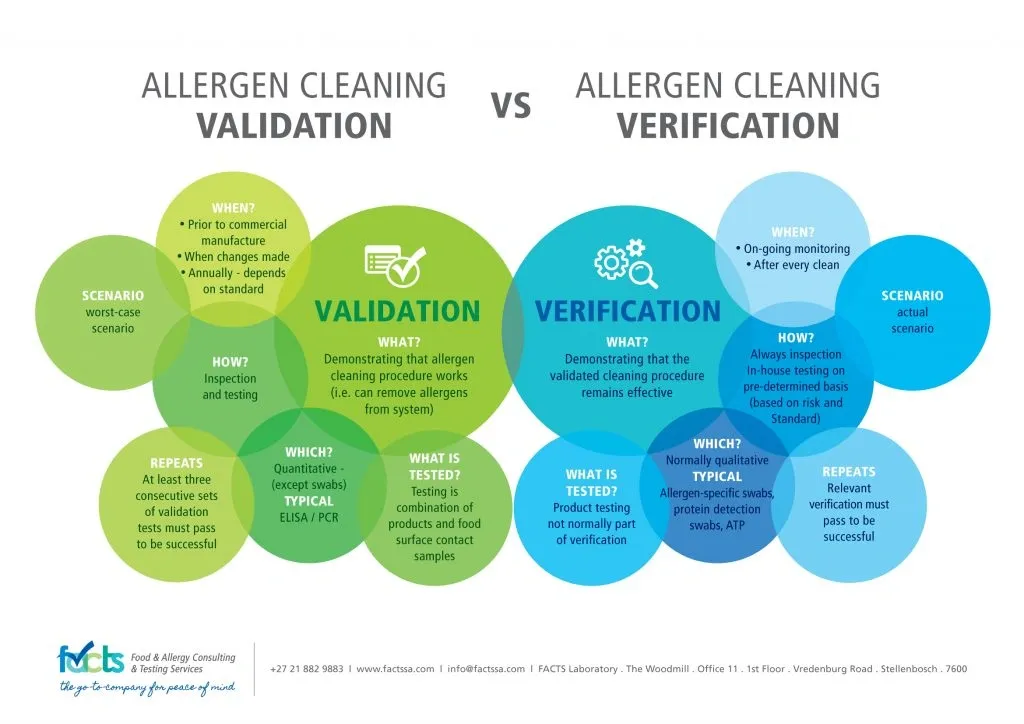
Image Source: Factssa
Distinguishing between validation and verification prevents businesses from mistaking routine checks for evidence-based compliance. The two processes serve different functions within allergen cleaning validation frameworks, but both remain mandatory under GFSI-benchmarked standards including BRCGS.
Defining Validation in Allergen Cleaning
Validation gathers evidence proving that a cleaning regime can remove allergen soils in an effective and repeated manner [5]. The process occurs before implementation of the regime and demonstrates that cleaning objectives have been met [5]. Validation should show that the cleaning procedure reduces the hazard to an acceptable level [8].
The overarching principle demands testing under worst-case scenarios [8]. Food businesses begin by determining the objective, which for allergens means ensuring the absence of detectable allergens in products undergoing processing following the cleaning [8]. Sites must define which products and process lines the validation will cover, and the type of cleaning being validated, whether product changeover cleaning, end-of-production cleaning, open plant or clean-in-place systems [8].
Quantitative assessment methods prove critical during validation studies [9]. Testing should use the most sensitive detection technique available for detecting allergens in food products, which are ELISA-based methods [8]. Quantitative results establish whether allergen cross-contact has occurred after cleaning and by how much [5]. Food-processing surfaces should be cleaned such that allergens cannot be detected using lateral flow devices [8].
Validation studies ask whether this cleaning method will remove allergens in an effective manner [1]. The process requires proving that the regime can achieve cleaning goals by testing the same worst-case scenario, analysing the same type of samples and using the same testing method [5]. If each data set shows that target allergen residue was removed and no cross-contact occurred, businesses can conclude that the regime was valid [5].
Once validation demonstrates acceptable cleaning, it should not require repetition unless changes occur to manufacturing processes, cleaning methods or ingredients used [9]. Where cleaning proves insufficient, analytical results should indicate either where improvements are needed or that cleaning equipment to an acceptable level is not practical [9].
Defining Verification in Daily Operations
Verification proves that validated allergen cleaning regimes were performed in the right way and remain effective, which explains why it occurs on an ongoing basis [5]. Periodic assessments show that procedures stay effective after validation [9]. Verification demonstrates that previously validated cleaning protocols have been performed in the proper manner [1].
Testing rinse water or environmental surface swabs using rapid and reliable onsite testing kits proves ideal for supplementing cleaning verification [5]. Sites may implement verification routines via ATP measurements rather than allergen lateral flow strips, provided ATP is present on surfaces when there is an absence of detectable allergen residues [8]. ATP can be measured daily, whilst allergen lateral flow strips could be used less often, weekly or monthly [8].
Protein swabs serve ongoing verification purposes, as the vast majority of allergens are proteins, meaning an absence of protein implies an absence of allergen [8]. But a presence of protein does not indicate allergen presence [8]. Operators must understand they are measuring general hygiene indicators rather than allergens themselves [8].
Why Both Are Essential for Compliance
HACCP principles require validation and verification as inherent activities [8]. Principle 3 requires establishing validated critical limits, whilst principle 6 mandates establishing procedures for verification to confirm that HACCP systems work as intended [8]. Although allergen management may not constitute a critical control point, it definitely functions as a control measure requiring validation [8].
Cleaning protocols should be re-validated periodically or whenever production changes occur, including introduction of new products, changes in product formulation, changes in raw material and chemical suppliers, installation of new equipment and changes in packaging material [1]. Without proof, businesses can never truly confirm that allergen cleaning regimes are and will remain adequate and effective [5].
Allergen Detection and Verification Methods
Choosing the right testing methods means you need to understand what each technique can and cannot do within Natasha’s Law requirements frameworks. Your choice depends on whether you need quantitative validation data or rapid verification results during daily operations.
Visual Inspection Limitations
Visual allergen detection alone cannot confirm allergen-free status. Locked areas, zones above processing lines and poorly lit sections cannot be inspected [10]. Inspectors who lack experience miss critical contamination points, and insufficient time allocation makes the problem worse [10]. Surfaces that look clean may harbour microbiological or allergen contamination invisible to the human eye [10]. Research shows that visual inspection combined with ELISA allergen testing proved more sensitive than ATP swabs for detecting allergen residues [6].
Protein Swab Testing
Protein swabs detect any protein residue through colour indicator changes, not specific allergens [11]. General protein testing checks surface cleanliness but does not differentiate between nuts, meats, dairy or other protein sources [11]. Any protein triggers a reaction. This makes these tests less sensitive than allergen-specific methods but much cheaper [11]. Results appear within 5 to 30 minutes depending on incubation requirements [11]. Protein swabs detect protein from multiple allergens, including those that lack specific rapid tests [11]. But protein swabs alone should not control allergens since they only function on surfaces and detect protein molecules without differentiation [11].
Rapid ATP Testing
ATP testing measures adenosine triphosphate from all living sources like bacteria, yeast, mould and food residue [11]. The technology cannot distinguish between these sources, nor can it identify specific allergens [11]. Traditional ATP tests and advanced A3 systems that detect ATP, ADP and AMP cannot detect allergenic proteins [7]. But sensitive ATP testing at 0.02 femtomole levels predicts whether dried allergenic food ingredients would be detected at similar levels as ELISA [12]. ATP provides results within 10 seconds [7] and supports verification of cleaning effectiveness when integrated with allergen-specific testing [7]. Surfaces that pass A3 tests will likely pass allergen-specific tests, as minimal organic residue indicates minimal allergenic residue [13].
Laboratory-Based Allergen Testing
ELISA remains the gold standard for allergen detection. It uses antibodies to identify specific allergenic proteins quantitatively [9]. Testing costs around £50-80 per sample [14]. Monoclonal antibodies offer specificity that reduces cross-reactivity, while polyclonal antibodies increase detection likelihood in processed foods but risk false positives [9]. Lateral flow devices provide qualitative present/absent results within 10-15 minutes for surfaces, rinse water and products [13]. PCR amplifies DNA rather than detecting protein and performs well with processed foods where ELISA fails [9]. LC-MS/MS identifies unique peptide sequences with high specificity and shows promise for peanuts and mustard at very low levels, though it requires further validation [9].
Choosing the Right Method for Your Business
Quantitative ELISA methods validate cleaning during initial allergen cleaning validation studies [6]. Qualitative lateral flow strips and allergen-specific swabs provide budget-friendly ongoing monitoring once validation completes [6]. ATP and protein swabs support verification programmes where allergen-specific testing occurs less often. They balance speed against specificity [13].
Step-by-Step Allergen Cleaning Verification Workflow
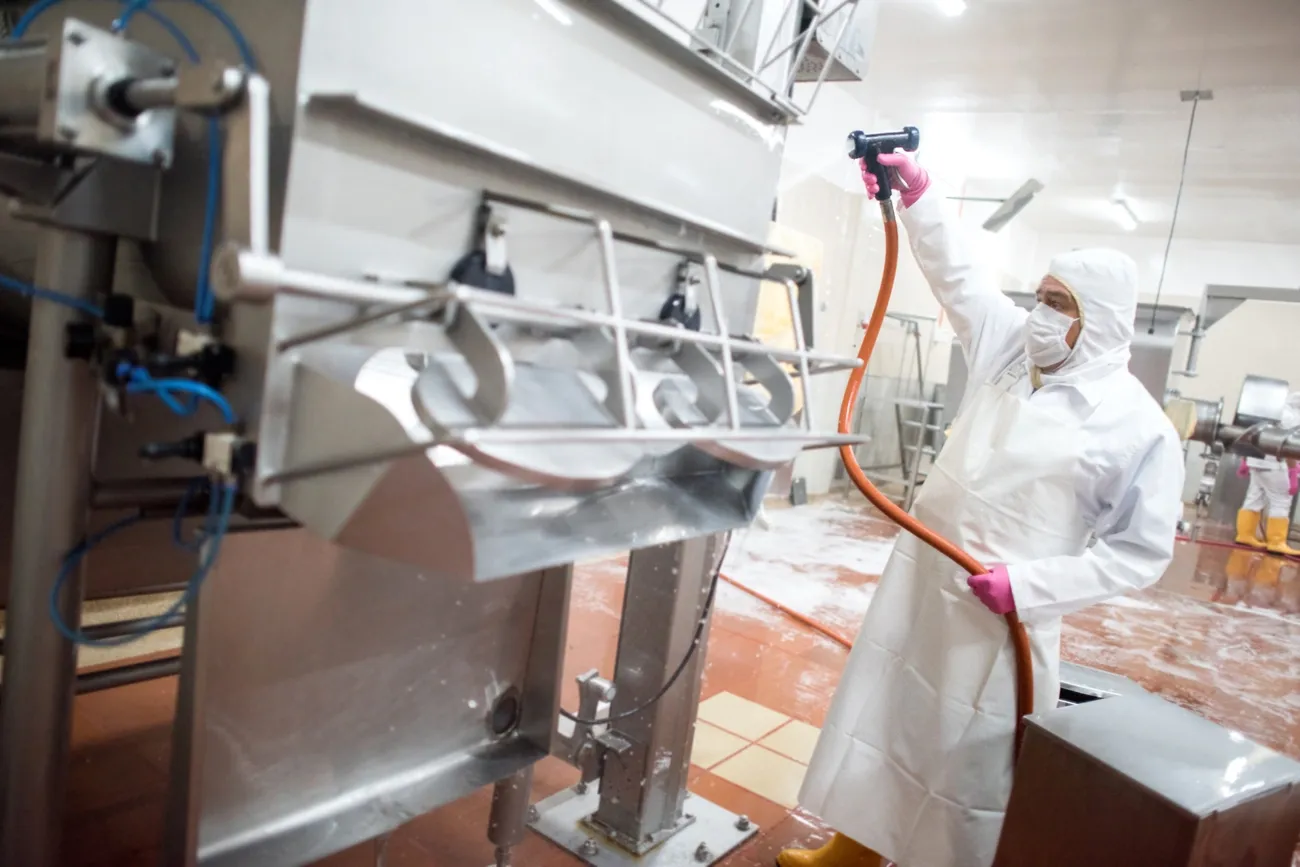
Image Source: RSSL
Systematic workflow protocols revolutionise Natasha’s Law cleaning requirements from theoretical compliance into operational reality. Each stage builds evidence that allergen removal occurs consistently between production runs.
Pre-Cleaning Risk Assessment
Allergen risk assessment in smaller food businesses often proceeds piecemeal rather than through defined systematic processes [1]. Assessments focus on select allergens instead of evaluating potential risks from all allergens present during production [1]. Medium-sized manufacturers assess separate running of product lines, cleaning between production runs, and managing packaging with labels and transport [1]. Businesses should identify the allergen that proves hardest to remove and the product containing highest levels of that allergen. They must determine which processes make detection most difficult and which surface areas are most likely missed during cleaning. Areas that remain longest before cleaning need identification too [13].
Cleaning Procedure Execution
Cleaning instruction cards should detail the procedure. Staff need training on proper execution. Production lines may require shutdown during validation periods [15]. The worst-case scenario approach will give assurance that less difficult scenarios will also succeed if challenging allergens are removed [5].
Verification Testing and Hold Points
Positive control samples from the allergen source require testing once to confirm detection capability at expected levels [5]. Post-clean samples from challenging areas and next off-line products provide direct consumer exposure measurement [5]. Industry best practise repeats validation three times with non-detectable results in consecutive rounds [5]. Products from subsequent runs must be held until results confirm allergen absence [15].
Release or Re-Clean Decision
Detected allergen results mean that validation round failed and require exercise repetition [5]. Held product showing allergen carryover must be destroyed or used in formulations declaring all carryover ingredients [15]. Lines require re-cleaning with modified methods before resuming production [15].
Recording Results for Audit Trail
Documentation should capture all decisions made before starting validation and maintain good records of results with outcomes [16]. Training records are essential, as staff compliance and understanding affect allergen hold and release system effectiveness directly [16].
Documentation and Audit Requirements for Allergen Control
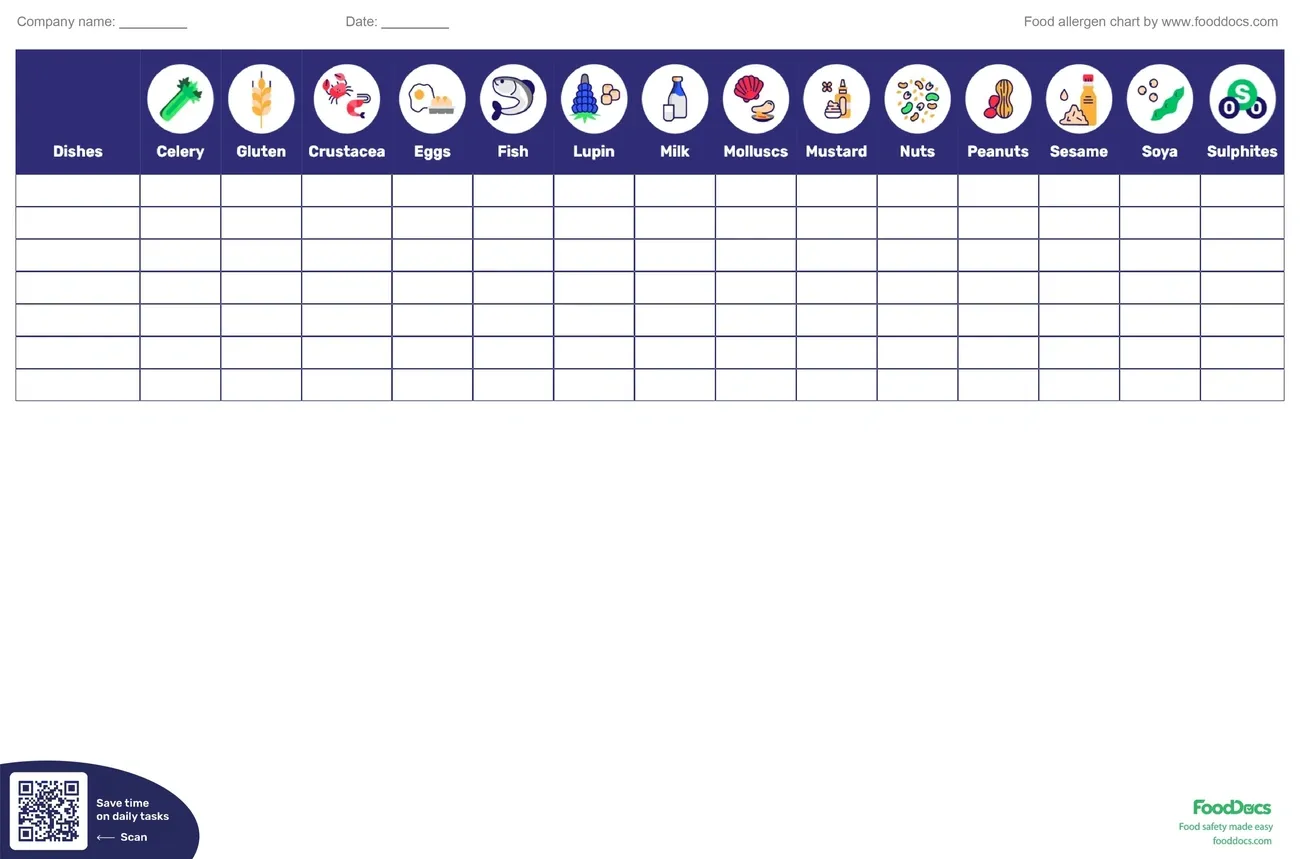
Image Source: FoodDocs
What Records Must Be Kept
Accurate record-keeping proves due diligence when complaints or legal queries arise [17]. Businesses must save timestamped logs for ingredient sourcing, supplier allergen statements, cleaning controls, staff training, declarations, reviews, incidents and corrective actions [18]. Digital systems automatically timestamp entries and create inspection-ready documentation that demonstrates compliance [17]. Change tracking records every modification to allergens, ingredients, menus, user management and product updates [19]. Businesses must link changes to individual users and establish clear accountability [19].
Allergen Matrices and Cleaning Schedules
An allergen matrix lists every menu item among the 14 major allergens it contains. It functions as a legal requirement and is the first document Environmental Health Officers request during inspections [17]. Cleaning schedules outline methodology and frequency. They set out areas, equipment and monitoring responsibilities [20]. Cleaning matrices instruct regimes for allergen-containing foods and account for occurrences outside regular schedules such as new product trials that introduce different allergens [20].
Traceability and Batch Controls
Lot traceability determines ingredient origins within batches and distribution destinations [21]. Version control features provide historical recipe views for each finished lot. This creates complete audit trails to original ingredient lots used at specific dates and times [21].
Preparing for EHO Inspections
Environmental Health Officers review temperature logs, cleaning schedules, pest control reports, staff training certificates and maintenance records [22]. HACCP plans require clarity and implementation for any food handler [22]. EHOs assess allergen management confidence, cross-contact prevention and staff understanding of the 14 major allergens [23].
Real-World Cleaning Failures and Prevention Strategies
Mislabelling Due to Inadequate Cleaning
Undeclared allergens are the leading reason for recalls worldwide, with huge financial losses to the parties involved [24]. KFC faced potential legal action in 2019 after a customer allergic to milk experienced severe reaction due to inadequate cleaning procedures and staff training [25]. A night-shift employee ran out of margarine and replaced it with butter, but the product was labelled milk-free. Half the lot required disposal [26]. Manufacturers transporting finished products across factory floors experienced milk powder contamination when the ingredient fell onto raw product [26].
Shared Equipment Without Proper Verification
Product changeovers present the greatest chance for mislabelling, with over 60% of global food recalls linked to undeclared or mismanaged allergens rather than pathogens [27]. Incomplete line clearance is a common root cause of allergen mislabelling [27]. Shared equipment needs formal clearance procedures that include removal of all previous labels, packaging and lot codes before production resumes [27].
Supplier Change Effect on Cleaning Procedures
Suppliers carry no legal obligation to notify businesses when ingredients change [8]. Any supplier change requires specification checks to ensure allergen status of finished products remains unchanged [28]. Version control systems track ingredient modifications and prevent undeclared allergens entering production through substituted materials [8].
Building a Culture of Allergen Awareness
Inadequate communication of food allergen control UK plans thwarts correct implementation among all parties [26]. Communication channels must work so every department understands their role in keeping products safe for consumers [26]. Continuous training raises awareness about food allergy consequences and proper procedures for cleaning equipment, handwashing and segregation activities [26].
Conclusion
Natasha’s Law protects millions of allergy sufferers through mandatory PPDS labelling, yet accurate labels become meaningless when cleaning verification fails. Cross-contact prevention demands more than visual inspection or standard hygiene protocols. Businesses must implement validation studies that prove cleaning effectiveness and ongoing verification that confirms proper execution. ATP testing, protein swabs and allergen-specific methods each serve distinct purposes within complete control systems.
Documentation provides the audit trail that proves due diligence when incidents occur. Food businesses achieving compliance invest in worst-case scenario validation, staff training and systematic verification workflows. Without evidence-based allergen removal protocols, PPDS operators gamble with consumer safety while exposing themselves to unlimited fines and reputational damage that follows mislabelling incidents.
Key Takeaways
Natasha’s Law compliance depends on verified allergen removal between production runs, not just accurate labelling systems.
• Implement both validation studies proving cleaning effectiveness and ongoing verification confirming proper execution of allergen removal protocols • Use worst-case scenario testing with quantitative ELISA methods during validation, then rapid lateral flow devices for daily verification monitoring • Document all cleaning decisions, test results, and staff training to create inspection-ready audit trails proving due diligence • Understand that visually clean surfaces may harbour invisible allergen residues requiring protein-specific detection methods beyond standard hygiene protocols • Train staff that cross-contact differs from contamination – cooking cannot destroy transferred allergen proteins from shared equipment
Without evidence-based allergen removal verification, PPDS operators risk unlimited fines, prosecution, and reputational damage when mislabelling incidents occur. Proper cleaning validation transforms theoretical compliance into operational reality, protecting both consumers and businesses.
FAQs
Q1. What does Natasha’s Law require food businesses to do? Natasha’s Law mandates that all food businesses in the UK provide full ingredient lists and allergen information on prepacked for direct sale (PPDS) foods. This includes items like sandwiches, salads, and ready-to-eat products that are packaged and sold from the same premises. The law came into effect on 1 October 2021 to protect consumers with food allergies.
Q2. What information must appear on PPDS labels? PPDS labels must display the name of the food and a complete ingredients list with all allergenic ingredients emphasised each time they appear. Allergens can be highlighted using bold type, capital letters, contrasting colours, or underlining. For meat products, a meat content declaration is also required.
Q3. How many allergens are covered under UK food allergen regulations? UK food allergen regulations cover 14 specific allergens that must be declared when present as ingredients. These include celery, cereals containing gluten, crustaceans, eggs, fish, lupin, milk, molluscs, mustard, peanuts, sesame, soybeans, sulphur dioxide and sulphites (above 10 parts per million), and tree nuts.
Q4. Why is cleaning verification important for PPDS compliance? Cleaning verification ensures that allergen residues are properly removed from shared equipment between production runs. Even with accurate labels, inadequate cleaning can transfer allergen proteins to products that should be allergen-free, creating serious health risks for allergy sufferers. Verification proves that cleaning procedures work effectively and consistently.
Q5. What is the difference between allergen cross-contact and cross-contamination? Cross-contact occurs when allergenic proteins transfer from one food to another through shared surfaces or equipment, affecting only individuals with allergies. Cross-contamination involves the transfer of bacteria, viruses, or parasites that can cause foodborne illness in anyone. Importantly, cooking can destroy pathogens but cannot remove or destroy allergenic proteins.
References
[1] – https://www.food.gov.uk/sites/default/files/media/document/Precautionary Allergen Labelling – risk analysis SME FBOs_Clean_May 2022.pdf
[2] – https://www.ncass.org.uk/resources/legal-compliance/the-allergen-hub/what-are-the-14-allergens/
[3] – https://www.anaphylaxis.org.uk/my-account/media-centre/membership-news/understand-natashas-law/
[4] – https://www.businesscompanion.info/en/quick-guides/food-and-drink/labelling-of-prepacked-for-direct-sale-foods
[5] – https://www.rssl.com/insights/food-consumer-goods/designing-a-successful-allergen-cleaning-validation-strategy/
[6] – https://www.food-safety.com/articles/3812-allergen-validation-analytical-methods-and-scientific-support-for-a-visually-clean-standard
[7] – https://www.klipspringer.com/blogs/protein-swabs-vs-a3-testing-everything-you-need-to-know/
[8] – https://www.anaphylaxis.org.uk/my-account/media-centre/membership-news/managing-allergens-in-catering-and-hospitality/
[9] – https://allergenbureau.net/uk-fsas-review-of-main-allergen-detection-methods/
[10] – https://haccpmentor.com/visual-inspection/
[11] – https://emportllc.com/surface-testing-for-food-safety-what-is-the-difference-between-allergen-testing-and-atp-testing/
[12] – https://www.charm.com/wp-content/uploads/2018/06/MRK-318.pdf
[13] – https://www.klipspringer.com/blogs/allergen-cleaning-validation-a-practical-guide-for-food-factories/
[14] – https://www.food.gov.uk/research/review-of-allergen-analytical-testing-methodologies-stakeholder-engagement
[15] – https://www.qualityassurancemag.com/article/aib0811-allergen-cleaning-life-threatening-contaminant-risk/
[16] – https://www.rssl.com/media/faad4ehy/rssl-white-paper-cleaning-validation-in-allergen-management.pdf
[17] – https://foodsafetyguru.co.uk/the-ultimate-guide-to-allergen-management/
[18] – https://foodsafetyguru.co.uk/natashas-law-ppds-allergen-labelling/
[19] – https://marka.co.uk/change-audit/
[20] – https://info.allergenbureau.net/infographic/cleaning/
[21] – https://www.aptean.com/en-EU/insights/blog/track-and-trace-focus-on-allergen-controls
[22] – https://www.foodalert.com/blogs-resources/the-ultimate-guide-to-eho-inspections/
[23] – https://www.thesaferfoodgroup.com/knowledge/what-is-an-eho-in-food-safety-meaning-inspections-and-compliance/
[24] – https://www.qualityassurancemag.com/article/aib1015-managing-allergen-changeover-cleaning/
[25] – https://www.anaphylaxis.org.uk/my-account/media-centre/membership-news/non-compliance-with-allergen-information-laws/
[26] – https://www.qualityassurancemag.com/article/common-errors-in-allergen-management/
[27] – https://www.linkedin.com/posts/certified-group_6-steps-to-ensure-correct-food-product-labelling-activity-7388955205582712832-K-db
[28] – https://www.food.gov.uk/business-guidance/precautionary-allergen-labelling