
 Allergen rapid tests have become essential tools for food manufacturers, yet selecting the right lateral flow device can be challenging due to the variety of options available on the market. These immunochromatographic tests allow on-site detection of allergens within minutes in food matrices of all types, rinse waters and surface swabs. They are qualitative or semi-quantitative tests based on ELISA principles. This piece gets into how lateral flow devices work, their sensitivity and limitations, when allergen-specific testing is required over protein-based methods, and best practises for integration into HACCP programmes.
What Are Allergen-Specific Rapid Tests?

Image Source: Abingdon Health
Definition of Lateral Flow Devices (LFDs)
Lateral flow devices represent a class of immunochromatographic tests designed to detect allergens at point-of-use in food manufacturing environments. These devices go by several names in industry practise: lateral flow assays (LFA), immunochromatographic tests (ICT), paper-based tests, or rapid assays [1]. Despite the varied terminology, all describe the same fundamental testing platform.
The physical construction consists of a test strip built on a plastic backing material coated with adhesive. Multiple paper or glass fibre-based materials are affixed to this backing in a precise, overlapping configuration [1]. The central component is a nitrocellulose membrane, a specialised material engineered to have specific pore size and protein binding characteristics [1]. This membrane mimics the action of thin layer chromatography plates and enables the separation of free from bound molecules that makes lateral flow immunoassays functional [1].
Test strips measure 30-120mm in length and 3-8mm in width after cutting from larger laminated cards or production rolls [1]. Some formats house the strip within a plastic cassette that makes sample addition and result visualisation easier. Other formats use the strip as a standalone dipstick, lowered manually into a separate container holding the sample liquid [1]. Both configurations deliver results within minutes without requiring laboratory infrastructure [2].
Immunoassay Principles: Antibody-Antigen Binding
The operational mechanism relies on the fundamental principle of immunoassays: an antibody can recognise and bind a specific macromolecule in what might be a complex mixture [3]. Antibodies are developed to target allergenic proteins in allergen testing, which serve as the antigens. The antibody binds to a specific area on the antigen called an epitope [3].
The liquid migrates along the nitrocellulose membrane via capillary action when a sample extract is applied to the device [4]. Allergenic proteins encounter antibodies conjugated to colloidal gold particles as the sample moves [2][5]. If the target allergen is present, these proteins bind with the gold-conjugated antibodies and form a complex [5].
This complex continues flowing along the membrane until it reaches a test line coated with additional antibodies specific to the target allergen [5]. The sandwich assay format uses two antibodies: one coupled to the coloured particle and one immobilised on the nitrocellulose [1]. A visible red line forms as complexed gold particles accumulate at the test line [5]. The antigen concentration is proportional to the resulting colour intensity directly [1].
A control line is incorporated into every device to prove proper test function. This line appears whatever the allergen presence, proving that reagents have migrated correctly and the test has performed as designed [5]. Some devices include an additional overload line or hook line positioned to detect conditions of antigen excess [5][4]. The antibody-gold conjugate binds so much protein that it cannot reach the overload line when very high allergen concentrations are present. This signals a positive sample that might otherwise produce a false-negative result at the test line due to the hook effect [5].
Target Specificity: Milk, Peanut, Gluten and Other Allergens
Allergen-specific rapid tests are manufactured to detect individual allergenic proteins with high specificity. Common targets include peanut, which can be detected in clean-in-place rinses at 2-4 ppm and on environmental surfaces at 3-4 µg/100 cm² [5]. Milk and dairy proteins represent another frequent target, as does gluten from wheat, barley, and rye [4].
Commercial test portfolios have expanded to cover 18 to 22 different allergens [4][2]. Beyond the most prevalent targets, manufacturers offer devices for soy, sesame, tree nuts (including almond and hazelnut), egg proteins, crustaceans, and fish [4][4]. The specificity testing conducted on these devices evaluates cross-reactivity against 29 or more common food items [5].
Each test is designed around antibodies raised against the specific allergenic protein of concern. This target-specific approach contrasts sharply with generic protein detection methods and provides certainty about which allergen is present rather than indicating protein residue. So manufacturers validate their devices against different allergen sources, as detection limits may vary depending on whether the contaminant is liquid milk, cheese, or whey powder [2].
How Lateral Flow Devices Work for On-Site Cleaning Verification
Step-Step Process: Sampling to Result Interpretation
Food manufacturers conducting cleaning validation or routine verification execute allergen rapid tests through four discrete operational stages: sampling, sample preparation with protein extraction, testing, and result interpretation [4]. Each stage requires specific technique to produce reliable outcomes.
The sampling phase begins with collection from the target surface or rinse water. Commercial kits supply sterile surface swabs engineered for allergen testing. Standard cotton swabs and micro sponges lack the appropriate material properties [6]. Operators swab defined surface areas using a systematic pattern to ensure representative collection, typically 100 cm². Final rinse water samples provide an alternative sampling matrix for clean-in-place systems [6].
Sample preparation involves inserting the swab into a vial containing extraction buffer, which solubilises allergenic proteins from the swab material [4]. The extraction buffer chemistry varies by manufacturer but typically has surfactants and stabilisers optimised for protein release. Some protocols specify agitation duration or swab compression techniques to maximise protein recovery. Food matrices require mixing with supplied buffer and following manufacturer guidelines [3].
The testing phase requires applying a defined volume of the prepared sample extract to the lateral flow device. Disposable pipettes or scoops included in the kit aid precise sample transfer [4]. The sample flows across four distinct zones within the test strip: the sample pad receives the extract, the conjugate pad releases dried antibody-gold particles, the test zone contains immobilised capture antibodies, and the wicking pad absorbs excess liquid to prevent backflow [4]. Capillary action moves the sample without external force [4].
Result interpretation occurs after the designated incubation period. Visual assessment examines the presence or absence of coloured lines. Two lines indicate allergen detection, whilst one line signals a negative result [3]. The control line must appear in all valid tests to confirm proper reagent flow and antibody function.
Time-to-Result and Operational Simplicity
Assay duration for lateral flow tests typically ranges from 10 to 20 minutes, influenced by mass transport limitations and antibody binding kinetics [4]. Standard commercial devices commonly deliver results within 10 minutes [3][7], balancing sensitivity requirements against operational speed. Similarly, mid-speed nitrocellulose membranes with flow rates of 120 to 150 seconds per 4 cm offer advantages in both sensitivity and speed [4].
Advanced formats demonstrate considerably faster performance. Research platforms have achieved positive signal detection within 5 seconds following sample application [4], though these capabilities remain mostly in development rather than widespread commercial deployment. Ten-minute protocols provide sufficient speed for operational decision-making for routine cleaning verification [3].
The simplicity of allergen rapid tests supports their adoption across manufacturing environments without laboratory infrastructure [5][4]. No specialised equipment, calibration, or highly qualified operators are required [5][4]. Minimal training enables any technician to perform the assay reliably [3]. This accessibility proves invaluable for facilities running short production cycles or frequent product changeovers [3], where rapid feedback determines whether cleaned lines can proceed to the next scheduled product.
The portability of these devices extends their utility beyond fixed laboratory spaces. Operators can test at production lines, storage areas, or wherever cleaning verification is needed directly [5][4].
Qualitative vs Semi-Quantitative Outputs
Allergen rapid tests produce results in two fundamental output formats. Qualitative tests deliver binary yes/no answers regarding allergen presence [4][1]. Visual line appearance indicates detection above the device’s sensitivity threshold, whilst absence of the test line suggests allergen levels below that threshold. This format suits verification scenarios where any detectable allergen presence triggers re-cleaning.
Semi-quantitative outputs provide additional information about contamination severity [5][5][4]. Evaluation cards supplied with certain kits allow operators to estimate approximate allergen concentration by comparing test line intensity against reference standards [5]. This approach supports trend monitoring and assessment of cleaning efficacy over time [3].
Portable readers transform visual outputs into quantitative data. These instruments measure test line intensity using optical detection and convert signals to numerical values [5]. Reader-based evaluation eliminates subjective interpretation variability and generates shareable electronic records [1]. Most cleaning verification applications rely on visual assessment due to cost considerations and adequate performance for pass/fail determinations [1].
The semi-quantitative capability proves especially valuable during validation studies where understanding residue trends informs acceptance criteria development, whilst routine verification typically requires only qualitative confirmation of cleanliness.
Sensitivity and Detection Limits of Rapid Allergen Tests
Typical Detection Limits of LFDs
Detection performance varies a lot across different allergen rapid tests and target proteins. Research platforms using passive flow-through approaches have achieved limits of detection of 0.1 ppm for total hazelnut protein and 0.5 ppm for total peanut protein when spiked into buffer solutions [8]. Detection limits increase to 1 ppm and 5 ppm when these same allergens are introduced into food matrices [8]. Active flow configurations show better performance and reach 0.05 ppm for both hazelnut and peanut in buffer, and 0.5 to 1 ppm in complex food matrices [8].
Commercial devices work within similar ranges, though manufacturers often keep kit names even when detection limits change between product iterations. This practise hides true performance comparisons in literature reviews. More, advertised detection limits often reflect testing against one specific allergen source, such as liquid milk, whilst actual sensitivity may differ a lot when the contaminant takes another form like cheese or whey [9].
Comparative studies that looked at 40 allergenic foods regulated across multiple countries found that lateral flow immunoassays displayed the best sensitivities for 10 of 14 tested foods [2][2]. But commercial availability remains limited for certain allergens and creates gaps where facilities must rely on alternative detection approaches [2].
Comparison with ELISA and Protein Swab Tests
ELISA maintains its position as the most sensitive method for quantitative allergen detection. Standard protein swab tests detect as little as 50 μg of protein [2][2] and provide a baseline for non-specific protein monitoring. A3 testing (ATP+ADP+AMP) showed lower detection limits than conventional ATP tests and proved more sensitive than protein swabs across most allergens, with gelatin being the notable exception [2][2].
The sensitivity hierarchy becomes clear when you look at specific allergens. A3 test detection limits were better or comparable to lateral flow immunoassays for crustacean shellfish and processed grains (excluding wheat flour and buckwheat) [2][2]. A field study in a food processing plant tracked both A3 and milk protein via ELISA as cleaning progressed and showed big decreases in both measurements [2][2].
ELISA’s quantitative precision comes at the cost of longer turnaround times and higher per-test expenses, whilst protein swab testing offers speed but lacks allergen specificity. Then, lateral flow devices occupy the middle ground and balance specificity, sensitivity, and operational simplicity for routine cleaning verification.
Factors Influencing Sensitivity
Thermal processing has deep effects on allergen detectability. Heat treatment alters protein folding, triggers oxidation processes, modifies amino acids, forms protein-bound carbonyls, and causes aggregation [10]. Each transformation affects the epitopes that antibodies recognise in immunoassays and reduces protein extractability, which impacts recovery efficiency [10].
Food matrix composition introduces more complexity. Tomato-based products show this challenge due to low pH environments that can auto-catalyse DNA degradation, though this affects PCR methods rather than immunoassays [11]. The extraction buffer chemistry, antibody binding efficiency, and nature of calibration standards all influence ELISA performance, with these variables being relevant to lateral flow formats [9].
Batch-to-batch variations in antibody reactivity introduce reproducibility challenges. Performance characteristics shift depending on new antibody batches and make direct comparisons between testing occasions hard [2]. Kit manufacturers rarely publish complete validation reports or specify which food matrices went through validation testing, whether products were raw or processed, and under which conditions [10].
Understanding What ‘Non-Detect’ Means in Practise
A negative result on allergen rapid tests does not guarantee absolute allergen absence. Rather, it shows contamination below the device’s detection threshold. This difference carries practical implications for risk assessment and method selection decisions.
The high-dose hook effect presents a paradoxical scenario where very high allergen concentrations produce negative or faint test lines [12]. When excessive allergen saturates available antibodies, free allergen molecules bind to the test line without forming the antibody-antigen-antibody sandwich required for visible signal [12]. Surfaces failing visual inspection yet testing negative for target allergens should trigger suspicion of hook effect conditions [12].
Surface residue detection operates at about 100 times greater sensitivity than product testing when you analyse the same diluent volumes [7]. A detectable allergen on a food contact surface would result in product contamination levels roughly 100 times lower [7]. Understanding these relationships helps you interpret non-detect results within risk frameworks.
Advantages of Allergen-Specific LFDs

Image Source: Hygiena
The practical value of allergen-specific LFDs becomes clear when you look at their role in production environments. Speed, certainty, and operational flexibility determine manufacturing efficiency in these settings. These immunochromatographic devices address specific pain points that alternative testing approaches don’t deal very well with.
Specificity to Individual Allergens
Antibody-based detection delivers unambiguous identification of target allergens and eliminates the ambiguity inherent in generic protein detection methods. A test line appears and operators know which allergen is present rather than just detecting non-specific protein residue. This residue might originate from cleaning agents, microbial biofilms, or non-allergenic food components.
This target specificity proves valuable in facilities that handle allergens of all types on different production lines. A positive result for milk proteins confirms dairy contamination. A negative result for peanut proteins provides definitive evidence that peanut residues are absent from cleaned surfaces. Generic protein tests cannot make these distinctions and require additional confirmatory testing or conservative decision-making that delays production.
Commercial allergen rapid tests employ unified extraction protocols across different allergen targets [13]. One extraction buffer and standardised procedure applies whether testing for soy, gluten, milk, or nuts [13]. This uniformity simplifies workflow planning and reduces training complexity. It also minimises the consumables inventory required for multi-allergen facilities. Staff learn one protocol rather than managing distinct procedures for different allergen types.
Rapid Decision-Making During Production
Time-to-result influences production throughput during product changeovers. Traditional laboratory-based ELISA requires sample transport, laboratory processing, and reporting cycles that can extend several hours or days. Allergen rapid tests deliver results within 5 to 10 minutes [13][14] and enable immediate decisions about line release.
This speed advantage transforms operational planning. Production schedules no longer incorporate extended hold times that wait for laboratory results. Manufacturing can proceed within minutes of cleaning completion once verification confirms allergen absence. For facilities running short production cycles or processing fresh ingredients with limited shelf-life, this responsiveness prevents waste and maintains product quality [1].
Rapid on-site testing makes proactive intervention possible when cleaning failures occur. Immediate identification of residual allergens triggers re-cleaning before subsequent production begins and prevents cross-contact incidents that would otherwise contaminate entire production batches. The cost savings from avoiding product rework or disposal often exceed the investment in testing consumables [14].
On-Site Usability Without Laboratory Support
Allergen rapid tests function without sophisticated laboratory infrastructure, specialised equipment, or qualified technical staff [1][13]. Production personnel perform testing at manufacturing lines, storage areas, or wherever cleaning verification is required. This decentralised testing capability proves valuable for facilities lacking dedicated quality control laboratories or operating across sites with varying technical capabilities.
Training requirements remain minimal. The straightforward protocol enables any operator to conduct testing after brief instruction [13]. Sample collection, extraction, and result interpretation follow intuitive steps that don’t demand extensive analytical chemistry knowledge. Portable formats allow testing in any location without fixed equipment installations.
The economic advantages compound over time. Eliminating laboratory transport, reducing analysis turnaround, and preventing production delays improve operational efficiency [1]. Facilities gain flexibility in allergen control programmes by deploying testing capacity where risk assessment indicates verification is most valuable rather than constraining decisions to laboratory availability.
Limitations and Considerations
Matrix Effects and Interference
Complex food matrices present considerable challenges for allergen rapid tests. Composition variables affect assay performance. High fat content, elevated sugar levels, acidity, and processing methods such as baking or fermentation all influence allergen detectability [7]. The same concentration of milk protein can yield different results in chocolate versus bread [7]. Polyphenol interference from chocolate, wine, or buckwheat requires mitigation strategies using fish gelatin or protein-based binding agents [7].
Matrix components alter antibody binding behaviour through multiple mechanisms. Particulates obstruct nitrocellulose membranes, pH variations influence antibody affinity, and altered viscosity affects flow kinetics [15]. Non-specific protein binding lifts background signal, while endogenous proteins reduce effective analyte binding [15]. Food or environmental samples with heterogeneous composition, variable particulates, fats, and potential inhibitors can interfere with flow, binding, or signal generation [15].
Extraction Efficiency Challenges
Thermal processing affects protein recovery from food matrices. Heat treatment alters protein conformation and affects detectability through modifications including aggregation and Maillard reactions [5]. Poor recoveries occurred in all processed samples, with only 2-10% of expected values obtained using β-lactoglobulin kits [5]. Boiled samples achieved better recoveries at 44-59% using total milk and casein kits. Baked samples dropped to 9-21% and fried samples to 7-18% [5].
Protein modifications reduce solubility and immunoreactivity of antigens detected by immunoassay methods [5]. Residues dried with high heat on stainless steel surfaces proved more difficult to detect than those dried with low heat [5]. Different extraction buffers were required to get optimal extractions from source materials depending on the allergen of interest. Buffer chemistry affects recovery [16]. To name just one example, denaturing buffers resulted in poor dilution linearity for baked biscuit samples. This meant samples could not be quantified [16].
Allergen Testing Cost and Consumables
No certified, standardised reference materials are available for allergen detection [3]. Antigen standards and blank matrices require in-house preparation [3]. This prevents true comparisons between detection methods by different kit manufacturers [3]. Each reported assay is developed using antibodies specific to different allergenic components and tested using different analytes [3].
False Positives and False Negatives
The hook effect produces false negatives at high allergen concentrations beyond the assay’s upper range [7]. Several kits showed test lines that increased then decreased in intensity as protein concentration increased [17][5]. A faint positive test line does not mean low contamination levels [17][5]. False positives were detected when testing blank samples, with 1 in 5 false positives observed in certain conditions [3]. Matrix interference influences peanut detection in chocolate samples differently compared with cookies [5].
Allergen-Specific LFDs vs Protein Swab Testing
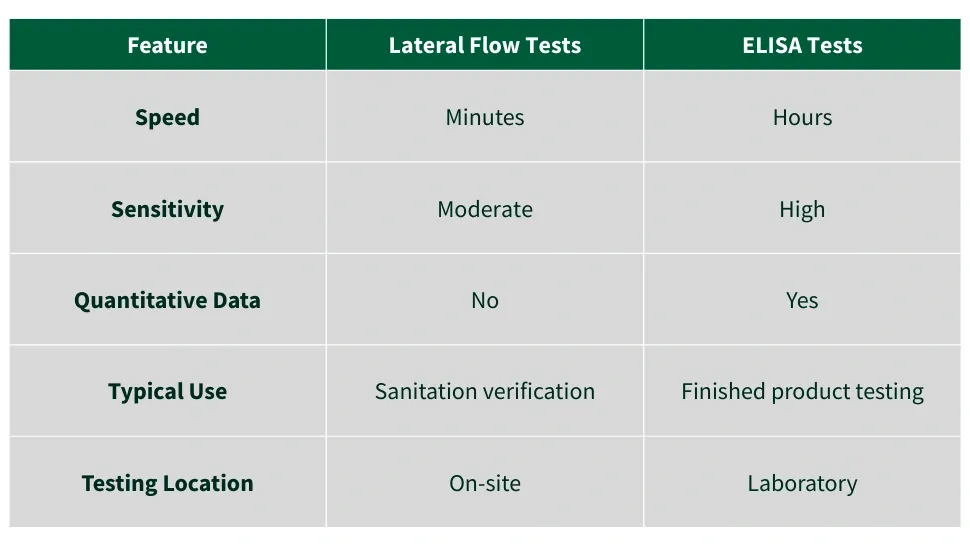
Image Source: Neogen
Specific vs Non-Specific Detection
Protein swab tests detect protein molecules without differentiation. They cannot distinguish between allergenic proteins like peanut and non-allergenic proteins from other sources [4]. This non-specific detection creates ambiguity during cleaning verification. Positive results might indicate allergen residue, cleaning agent components, or microbial biofilms.
Allergen-specific LFDs contain antibodies designed to react to very small amounts of specific allergen proteins [4]. A kit designed to detect peanut will ignore protein from milk, soy, or chicken [4]. This specificity eliminates guesswork and supports confident decision-making during product changeovers.
The A3 system detects organic residue and can support allergen control programmes. Yet it cannot replace allergen testing and should never be relied upon for this function [18]. Testing revealed that the A3 system offered heightened sensitivity for 35 products. Conventional ATP worked better for none. Four products worked equally well between A3 and protein swabs, and protein swabs worked better for one area [18].
Protein Testing That’s Sufficient
Protein detection works well in situations where no rapid test exists for a particular allergen [4]. Facilities can use protein swabs to verify general cleanliness and detect a wide range of allergens that specific kits cannot identify. The method proves budget-friendly for collecting multiple data points during routine monitoring [4].
Protein testing also works well in low-risk environments where allergen presence is unlikely. Verification wants to confirm general hygiene standards rather than preventing specific allergen cross-contact.
Allergen-Specific Testing That’s Required
Specific allergen test kits are essential to prove that cleaning programmes work [4]. High-risk situations just need the superior sensitivity and specificity that allergen-specific rapid tests provide [4]. Programme validation activities require unambiguous confirmation of target allergen absence. Generic protein testing cannot deliver this.
Allergen-specific LFDs detect material in rinsewater and product samples in addition to surfaces [4]. This expands verification capabilities beyond what protein swabs can achieve. Production facilities handling priority allergens or manufacturing products with ‘free-from’ claims must employ allergen-specific testing. This meets regulatory requirements and protects allergic consumers.
When to Use Allergen-Specific LFDs (and When Not To)

Image Source: ProGnosis Biotech
Risk-based decision frameworks determine where allergen rapid tests deliver value versus situations where simpler methods are enough. Understanding these differences prevents both under-testing that exposes consumers to risk and over-testing that wastes resources without proportional safety benefits.
Cleaning Validation Studies
Validation protocols require quantitative confirmation that cleaning procedures remove allergens to acceptable levels. Each study should consist of two or three replicates for each critical allergen type, changeover scenario, and processing line [19]. ELISA should be used wherever possible to validate, as it provides quantitative results detecting allergenic proteins [20]. LFDs run in parallel during validation to establish correlation between methods. This allows their subsequent use for ongoing verification [6].
High-Risk Allergen Changeovers
Verification tests should happen at every changeover for high-risk products [19]. Facilities manufacturing ‘free-from’ products or handling priority allergens require allergen-specific testing to prove label claims and defend against recalls [21]. Rapid results from in-process changeovers enable immediate corrective action when residues are detected [21].
Verification of Critical Control Points
Where cleaning procedures are part of defined prerequisite plans to control specific hazards, cleaning procedures and frequency shall be verified [20]. Allergen control often functions as a control measure within HACCP systems requiring validation and verification [22]. Documented risk assessments guide testing frequency that lines up with hazard analysis.
Investigating Cleaning Failures
Allergen rapid tests provide immediate diagnostic capability to identify contamination sources and assess cleaning efficacy improvements before revalidation when unexpected allergen detections occur [6].
Low-Risk Environments Where LFDs Are Not Needed
Verification frequency can decrease to quarterly for low-risk products [19]. Environments without allergen handling or with effective segregation may not require routine allergen-specific testing.
When Visual Inspection or Protein Testing Is Adequate
Visual inspection remains the simplest assessment form, often the most overlooked [20]. Verification with surrogate systems such as general protein testing can be useful in situations where no test kit exists for a particular allergen [23].
Integration, Best Practises and Common Mistakes

Image Source: High Skills Training
Effective allergen control programmes require methodical integration of multiple verification techniques within documented quality systems. Cross-contact must eliminate or control unintended allergen presence to levels as low as reasonably achievable through good hygiene practises, good manufacturing practises, and HACCP-based procedures [2]. Visual inspection, surrogate protein detection, and allergen rapid tests combine to create defensive layers that strengthen food safety and optimise resource allocation.
Layered Verification Approach: Visual, Protein, Allergen-Specific Testing
Visual inspection forms the foundation of any cleaning assessment. Yet it remains the most overlooked verification method [20]. Operators examine equipment surfaces for visible debris, particulates, or residue at defined inspection points highlighted on cleaning schedules [24]. For larger particulates such as sesame seeds, visual inspection proves valuable where analytical testing struggles to capture non-uniformly distributed contamination [25].
Surrogate methods occupy the intermediate verification tier. Protein swabs detect general protein residues at about 50 μg sensitivity, and ATP testing shows organic matter presence [26]. These methods cannot identify specific allergens, but they cost less than immunoassays and provide rapid feedback on cleanliness. Protein swabs support routine monitoring between periodic allergen confirmations when verified against allergen-specific tests [27].
Allergen rapid tests deliver the highest specificity and confirm or exclude target allergens with antibody-based detection. Facilities conduct allergen-specific testing during validation studies, after critical changeovers, and when they investigate cleaning failures [26]. This tiered approach deploys expensive, specific methods where risk assessment shows highest value and uses faster, cheaper surrogates for routine verification.
Most facilities operate verification programmes featuring representative sampling with combined target allergen testing and surrogate methods [27]. The layered strategy balances depth against operational practicality. It directs analytical resources toward critical control points and maintains general hygiene standards across broader production areas.
Risk-Based Decision Frameworks and HACCP Alignment
Food allergen risk assessment forms part of a stepwise, iterative process that supports informed decisions on labelling, process control, and supply chain communication [2]. The assessment framework uses qualitative information and, where required, combines qualitative with quantitative data [2]. Most information needed resides within a producer’s facility and has supply chain-related details [2].
Food business operators should identify operational steps that pose likelihood of allergen cross-contact, assess consumer risk levels, and find out critical steps [28]. They must implement effective allergen management procedures, monitor and document these procedures, and review them periodically when operations change [28]. Regular internal audits verify that product formulation matches records of allergenic ingredient use, final products match label specifications, cross-contact controls are implemented properly, and personnel are trained appropriately [28].
Allergen management integrates within existing HACCP plans as control measures requiring validation [22]. HACCP Principle 3 establishes validated critical limits, and Principle 6 requires procedures that verify the system works as intended [22]. Control measures must demonstrate capability to control hazards effectively [22]. For production lines, the product with highest allergen loading provides the basis for critical control point validation studies [8].
Allergen risk assessment is required to justify precautionary allergen labelling decisions [2]. Documented allergen risk assessments demonstrate due diligence and strengthen defensibility during audits and consumer complaints [26].
Selecting Appropriate Allergens to Test
Testing should focus on ingredients with highest allergen load in most instances when formulations contain multiple allergens [25]. But testing multiple residues may add value when more than one potent, highly allergenic ingredient is present [25]. The form of allergenic ingredient and difficulty removing soil present additional considerations, as sticky ingredients such as peanut butter prove harder to remove from surfaces [25].
Peanut butter components are sticky and difficult to clean versus milk powder components that normal cleaning procedures can remove [27]. Manufacturers can choose the allergen present in greatest concentration or the one most difficult to clean if fully integrated production has multiple allergens [27].
For production lines, the next product prepared following allergen production is tested at eight timepoints from T=0 to T=60 minutes on three different occasions to prove precautionary allergen labelling is not required [8]. This risk assessment remains in place until something changes, with verification checks performed annually [8].
Production lines identify critical control points through risk-based approaches [8]. Specialist sanitation teams take various swabs at multiple points on production lines and swab different materials present such as rubber and stainless steel [8].
Verifying Test Kits for Specific Environments
Validation demonstrates that cleaning methods remove allergen residues effectively and must occur at least annually, when you introduce new products or allergenic ingredients, when you implement new cleaning procedures or equipment, or when you modify cleaning frequencies [10]. Validation of control measures requires getting evidence that measures or combinations control hazards effectively [22].
Laboratories must provide suitable spike recovery testing data on matrices that food manufacturers provide [8]. For new matrices, spike recovery data must be generated and fall within 80-130% of the spiked level [8]. Manufacturers also send quality control samples that contain the allergen with each test sample to verify detection by testing laboratories [8].
Testing laboratories must maintain ISO 17025 accreditation and participate in FAPAS proficiency testing rounds while supplying performance data on test reports [8]. Testing laboratories must complete matrix validation studies, with spike recovery testing that yields data within 80-130% tolerance of expected levels [8]. Where conversion factors convert test data to total allergen protein detected levels, reports must detail these factors [8].
Spike recovery data must be within 80-130% of the spiked level to prove nothing in the matrix interferes with analysis methods and produces false negative results [9]. Each new matrix should be spiked to show good recovery (60-120%) with known allergen amounts when reoccurring positives happen [9].
Testing soiled surfaces known to contain allergen residues of concern is recommended as positive controls that make sure particular LFDs will detect the allergenic food form being used [25]. The method used for cleaning verification should be included during cleaning validation to make sure chosen methods reflect results obtained during validation adequately [9].
Training Staff on Correct Sampling and Interpretation
Food business operators must make sure staff receive training on managing allergens effectively [29]. Staff should know procedures when asked to provide allergen information, be trained to handle allergen information requests accurately, guarantee allergen-free meals are served correctly, and know allergen cross-contamination risks during food handling and preparation [29].
Allergen management should function as a business element as important as food safety management [30]. Training must enable all staff to understand Natasha’s Law, the 14 allergens and their ingredient list presentation, prepacked-for-direct-sale food definitions, and where to seek assistance for questions from themselves or customers [30]. Everyone in the business bears responsibility for providing correct allergen information [30].
Training and awareness programmes should have general allergen awareness that covers the nature and possible consequences of unintended or undeclared presence from consumer viewpoints [24]. Information on allergen presence or potential presence must be made available to those involved in factory trials and taste testing [24].
Continuous training and education appropriate to each group should be implemented to raise awareness about food allergy and food safety [9]. This has specific training and clear procedures for equipment cleaning, handwashing, attire requirements, product formulation, and segregation activities [9].
Training programmes for personnel collecting samples and performing analyses make sure consistency when established and implemented [10]. Periodic verification of in-house testing using independent laboratories maintains quality standards [10].
Common Industry Mistakes: Overuse, Misinterpretation and Poor Sampling
Sampling presents persistent challenges across food manufacturing facilities. Insufficient sampling, improper sampling techniques, or inadequate selection of sampling sites will not describe or expose critical areas where allergens may be present fully [9]. Generating sampling plans may require input from statisticians and personnel with deep knowledge of plant design and manufacturing processes [9].
Single-point sampling creates risk [11]. Representative samples of at least 5g should be homogenised really well [7]. Composite samples from different batch locations should be submitted to make sure representative sampling when allergen contamination takes particulate form rather than being readily dispersible [31]. Testing samples in duplicate provides key insights into contamination form [31].
Method selection errors compound sampling problems. Some facilities use different test methods for routine verification versus cleaning validation processes and cause mistakes [9]. A manufacturer used a certified method to detect gluten in products, but the method was certified only for wheat and failed to detect barley malt added by mistake. This resulted in entire lot disposal [9].
Complex matrices can cause false negatives in allergen testing [9]. Some matrices prove easier than others depending on heat, fat, pH, hydrolysis, or other factors [9]. Reputable laboratories or test kit providers should review formulations and help develop appropriate testing plans [9].
The hook effect produces misleading results when allergen concentrations exceed assay upper ranges. Missing or weak control lines invalidate tests rather than show negative results [7]. Samples diluted 1:10 restore linearity for almost any realistic sample [7].
Strips complement but never replace robust allergen management programmes that have segregation, sanitation validation, and risk assessments [7]. They detect invisible traces of potential cross-contamination, not ingredients already known as product composition components [7].
Audit Expectations: Method Selection and Documentation
Auditors examine whether local authorities undertake interventions that involve allergen assessments based on intervention programmes according to Food Law Code of Practise [32]. Assessment considers food standards service planning, delivery and review, resources available and risk-based activity prioritisation, officer authorisation and competence, interventions both programmed and reactive, enforcement, sampling policies and programmes, internal monitoring, and other allergen control matters [32].
Intervention records should demonstrate assessments of business allergen control compliance during food standards interventions are of good quality [32]. Insufficient information in some cases fails to demonstrate a full picture by officers [32]. Risk rating should reflect allergen risks accurately [32].
Written recipe specifications with ingredient-level allergen data are required to produce accurate labels and form part of HACCP
Conclusion
Allergen rapid tests occupy a valuable position within layered verification strategies. They balance target specificity against operational speed and cost. In fact, these lateral flow devices cannot replace detailed allergen management programmes built on resilient segregation, confirmed cleaning, and documented risk assessments. But they provide practical information during critical changeovers and validation studies where certainty about specific allergen presence determines production decisions.
All things considered, allergen control programmes that work best combine visual inspection for obvious contamination and protein swabs for routine monitoring. Allergen-specific rapid tests come into play for high-risk scenarios. Proper training, representative sampling, and method validation within your specific matrices will determine whether these devices deliver reliable verification or create false confidence.
Key Takeaways
Allergen-specific rapid tests provide targeted detection capabilities that transform cleaning verification from guesswork into confident decision-making for food manufacturers.
• Allergen rapid tests deliver results in 5-10 minutes, enabling immediate production decisions during changeovers without laboratory delays or extended hold times.
• Target-specific detection eliminates ambiguity – positive results confirm exact allergen presence rather than generic protein residue from cleaning agents or biofilms.
• Detection limits range from 0.5-5 ppm in food matrices, with sensitivity varying significantly based on thermal processing and matrix composition effects.
• Use allergen-specific tests for validation studies and high-risk changeovers, whilst protein swabs suffice for routine monitoring in low-risk environments.
• Layered verification combining visual inspection, protein testing, and allergen-specific tests creates defensive barriers that optimise both safety and resource allocation.
• Proper sampling technique and staff training are critical – insufficient sampling, hook effect misinterpretation, and matrix interference cause common testing failures.
When implemented correctly within risk-based HACCP frameworks, allergen rapid tests bridge the gap between laboratory precision and operational speed, supporting both regulatory compliance and consumer protection in modern food manufacturing.
FAQs
Q1. How quickly do allergen rapid tests provide results compared to laboratory testing? Allergen rapid tests typically deliver results within 5 to 10 minutes, allowing production teams to make immediate decisions about line release after cleaning. This contrasts sharply with traditional laboratory-based ELISA testing, which requires sample transport, processing, and reporting cycles that can extend several hours or even days. The rapid turnaround eliminates extended hold times and enables facilities to proceed with production shortly after cleaning completion, preventing waste and maintaining product quality.
Q2. What is the difference between allergen-specific tests and protein swab tests? Allergen-specific tests use antibodies designed to detect particular allergenic proteins such as peanut, milk, or gluten, providing definitive identification of which allergen is present. Protein swab tests, in contrast, detect protein molecules without differentiation and cannot distinguish between allergenic proteins and non-allergenic proteins from cleaning agents, microbial biofilms, or other sources. Whilst protein swabs are useful for general cleanliness monitoring, allergen-specific tests are essential for high-risk situations, validation studies, and proving that specific allergens have been removed.
Q3. Can allergen rapid tests detect all forms of an allergen equally well? No, detection sensitivity varies considerably depending on the form of the allergen and how it has been processed. Thermal processing, baking, frying, and other heat treatments alter protein structure, affecting both detectability and extraction efficiency. For example, boiled milk samples achieve better recovery rates (44-59%) compared to baked samples (9-21%) or fried samples (7-18%). The same concentration of an allergen can yield vastly different results in chocolate versus bread due to matrix effects from fat content, pH, and other compositional factors.
Q4. What does a negative result on an allergen rapid test actually mean? A negative result indicates that allergen contamination is below the device’s established detection threshold, not that the allergen is completely absent. Detection limits typically range from 0.5 to 5 ppm in food matrices, meaning trace amounts below this level may still be present. Additionally, extremely high allergen concentrations can paradoxically produce negative results due to the “hook effect,” where excessive allergen saturates available antibodies. Therefore, surfaces failing visual inspection yet testing negative should raise suspicion and trigger further investigation.
Q5. When should facilities use allergen-specific rapid tests versus simpler testing methods? Allergen-specific rapid tests are essential during cleaning validation studies, high-risk allergen changeovers, verification of critical control points, and when investigating cleaning failures. They should be used for every changeover when manufacturing ‘free-from’ products or handling priority allergens. However, for low-risk products or environments, quarterly verification with protein swabs may suffice. Visual inspection remains valuable for all situations, particularly for detecting larger particulates like sesame seeds. The most effective approach combines these methods in a layered verification strategy based on documented risk assessments.
References
[1] – https://www.abingdonhealth.com/transforming-food-safety-testing-with-lateral-flow-tests/
[2] – https://cdn.who.int/media/docs/default-source/food-safety/food-allergens/risk-assessment-of-food-allergen-guideline—june-2025-summary-and-conclusions.pdf?sfvrsn=6013d04a_3
[3] – https://pmc.ncbi.nlm.nih.gov/articles/PMC6956089/
[4] – https://emportllc.com/surface-testing-for-food-safety-what-is-the-difference-between-allergen-testing-and-atp-testing/
[5] – https://www.researchgate.net/publication/282482480_Lateral_flow_devices_for_detecting_allergens_in_food
[6] – https://www.klipspringer.com/blogs/allergen-cleaning-validation-a-practical-guide-for-food-factories/
[7] – https://www.romerlabs.com/en/library/webinars/detail/main-challenges-in-allergen-testing-and-how-to-overcome-them
[8] – https://www.food.gov.uk/research/review-of-allergen-analytical-testing-methodologies-stakeholder-engagement
[9] – https://www.qualityassurancemag.com/article/common-errors-in-allergen-management/
[10] – https://www.fda.gov/media/129671/download
[11] – https://www.food.gov.uk/research/review-of-allergen-analytical-testing-methodologies-evidence-gaps-in-allergen-management-and-testing
[12] – https://www.klipspringer.com/help-guides/rapid-allergen-test-kits-understanding-an-unexpected-negative-result/
[13] – https://www.prognosis-biotech.com/news-events/the-science-of-allergen-detection-lateral-flow-and-elisa-explained/
[14] – https://www.neogen.com/en/korea/neocenter/blog/strengthening-food-safety-the-role-of-allergen-testing-in-safe-food-production/?srsltid=AfmBOoqINHD_DU7dr911isrUM6X68Kq3nSUF3ISPzaYW_TqIz_VU5hcS
[15] – https://www.fleetbioprocessing.co.uk/post/matrix-effects-in-lateral-flow-assays
[16] – https://pmc.ncbi.nlm.nih.gov/articles/PMC12563046/
[17] – https://www.sciencedirect.com/science/chapter/edited-volume/abs/pii/B9781782420125500118
[18] – https://www.klipspringer.com/blogs/protein-swabs-vs-a3-testing-everything-you-need-to-know/
[19] – https://www.rochestermidland.com/blog/checklist-9-considerations-for-allergen-control-in-the-food-industry/
[20] – https://www.romerlabs.com/en/library/knowledge/detail/10-steps-to-validating-and-verifying-allergen-cleaning-procedures
[21] – https://www.hygiena.com/food-safety/allergen-detection
[22] – https://www.food.gov.uk/research/review-of-the-literature-and-guidance-on-food-allergen-cleaning-report-summary-and-discussion
[23] – https://www.neogen.com/en/usac/neocenter/blog/atp-protein-and-allergen-testing-in-production-facilities-which-should-you-use/?srsltid=AfmBOopr61C5BqsBEt5rV3Rqy1hDfLAgIKEkmKveOtgue9wwEhPsAB9W
[24] – https://www.fooddrinkeurope.eu/wp-content/uploads/2022/04/FoodDrinkEuropes-Guidance-on-Food-Allergen-Management-for-Food-Manufacturers-2022.pdf
[25] – https://www.food-safety.com/articles/11362-best-practise-considerations-to-enhance-the-effectiveness-of-allergen-cleaning-and-validation
[26] – https://www.neogen.com/en/usac/neocenter/blog/allergen-risk-assessment-when-to-use-test-kits/?srsltid=AfmBOor5WKqSYviwZKGnyt4oTwXAGgqfOr83kKokOcD9uR5uFQT3BBMb
[27] – https://allergikompetens.se/wp-content/uploads/2015/09/NE8206_Allergen_Validation_and_Verification_Handbook_LO_May15.pdf
[28] – https://www.fao.org/fao-who-codexalimentarius/sh-proxy/en/?lnk=1&url=https%253A%252F%252Fworkspace.fao.org%252Fsites%252Fcodex%252FStandards%252FCXC%2B80-2020%252FCXC_080e.pdf
[29] – https://www.food.gov.uk/business-guidance/allergy-training-for-food-businesses
[30] – https://www.nutritics.com/en/blog/how-to-train-your-staff-in-smart-allergen-management/
[31] – https://www.factssa.com/news/sampling-for-allergen-analysis/
[32] – https://www.food.gov.uk/our-work/audit-of-allergen-controls-and-relevant-open-audit-actions-0