
 Allergy rates are increasing throughout the world and affect up to 30–35% of people at some stage in their lives. In the UK, up to 50% of children are diagnosed with an allergic condition. These rising health concerns have made Food Information Regulations allergen requirements the legal framework that food businesses must follow to protect consumers. The allergen food information regulations introduced in 2014 set complete declaration requirements for the 14 major allergens. This piece explains the food information regulations 2014 allergen provisions. It covers labelling requirements for prepacked and non-prepacked foods, business operator responsibilities, enforcement mechanisms and practical compliance steps.
Overview of the Food Information Regulations 2014
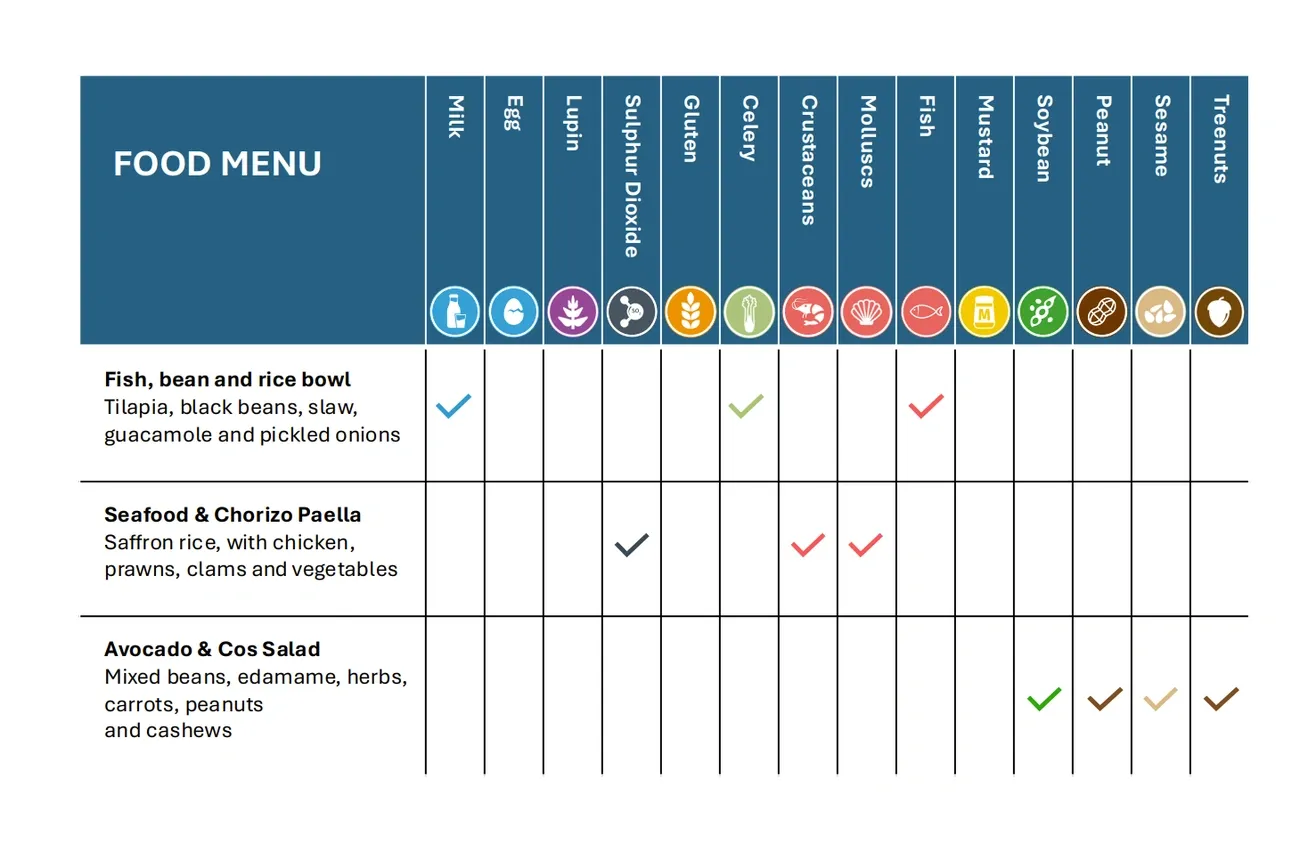
Image Source: Food Standards Agency
What are the Food Information Regulations 2014
The Food Information Regulations 2014 (SI 2014/1855) constitute the domestic legal instrument that sets enforcement measures for EU Regulation 1169/2011 on the provision of food information to consumers [1]. These regulations were created to implement the EU Food Information to Consumers Regulation (EU FIC) into UK law. They provide the necessary enforcement framework and take advantage of derogations and national measures permitted under EU legislation [1].
The regulations place legal responsibility on food business operators. They must ensure that mandatory allergen information relating to 14 specified substances is accurate and available to consumers [2]. This framework applies to any food business operator supplying food to the public or mass caterers. Business-to-business transactions are included where specific information requirements apply [1].
When were the allergen food information regulations introduced
The allergen food information regulations introduced their main provisions on 13 December 2014 [1][3]. This date marked the application of most general food labelling and information requirements. The significant allergen declaration rules were included. Nutrition labelling for most prepacked food became mandatory two years later, on 13 December 2016 [1][3].
EU Regulation 1169/2011 was published on 22 November 2011 and came into force on 13 December 2011. The phased implementation allowed businesses time to adapt their systems and processes [4]. Foods supplied by catering services provided by transport undertakings, such as air or rail travel, are covered at the time the place of departure is an EU Member State [1].
Legal basis and relationship with EU Regulation 1169/2011
EU Regulation 1169/2011 provides the foundation for UK food allergen regulations. It sets general principles, requirements and responsibilities governing food information and labelling throughout the European Union [5]. The regulation brought together separate legislative texts into a single complete framework. It revoked the general labelling Directive 2000/13/EC and the nutrition labelling Directive 90/46/EEC [4].
The FIR 2014 translates this EU regulation into enforceable domestic law. The Weights and Measures (Food) (Amendment) Regulations 2014 separately enforce requirements for showing net quantity [2]. These amendments removed prepacked foods subject to net quantity labelling from the scope of three items of national food legislation to prevent overlap in the legal framework. Their application is now limited to food sold loose or in open containers [2].
The legislative framework around food allergen control in the UK is contained in assimilated Regulation (EU) No. 1169/2011 for England and Wales. Northern Ireland continues to apply Regulation (EU) No. 1169/2011 [2]. EU legislation that was applicable became assimilated law on 1 January 2024 following the UK’s exit from the EU [2].
Scope of FIR 2014 in the UK
The Food Information Regulations 2014 apply across England. Parallel regulations were set for Wales (Food Information (Wales) Regulations 2014), Scotland (Food Information (Scotland) Regulations 2014) and Northern Ireland (Food Information Regulations (Northern Ireland) 2014) [3][2]. This multi-jurisdictional approach will give consistent allergen protection across the United Kingdom.
The regulations cover all food supplied by food businesses. Food offered complimentary or without charge is included [2]. But the occasional handling, preparation, storage or serving of food by private persons at events such as church or school fairs is not covered unless the activity is carried out in the course of business as a food business operator [1].
EU FIC extended allergen rules to all food sold non-prepacked. Loose foods and catering situations were included [1]. The UK adopted a national measure allowing operators to provide allergen information through any means they choose. This includes oral communication, with the exception of foods supplied via distance selling [1]. Natasha’s Law requirements further strengthened these provisions from October 2021. They require full ingredient and allergen labelling on foods prepacked for direct sale [5].
The 14 allergens that must be declared under FIR 2014

Image Source: Human Focus
UK law requires food business operators to declare 14 specific allergens when present as ingredients or processing aids in any food product [2]. These substances represent the most common causes of allergic reactions and food intolerances in the population [6]. The allergens must be emphasised in ingredient lists through bold type, capital letters or underlining to alert consumers to their presence [6].
Cereals containing gluten
Cereals containing gluten include wheat (spelt and Khorasan wheat), rye, barley, oats and their hybridised strains [2]. Spelt and Khorasan are wheat varieties unsuitable if you have coeliac disease or wheat allergy [2]. The specific cereal name must be declared in ingredient lists rather than generic terms. Where spelt, Khorasan or Kamut appears, specific reference to wheat is required, such as ‘spelt (wheat)’ or ‘Khorasan wheat’ [2]. These cereals appear in flour-based products like baking powder, batter, breadcrumbs, cakes, couscous, meat products, pasta and fried foods dusted with flour [2].
Crustaceans and molluscs
Crustaceans and molluscs constitute two separate allergen categories within the 14 specified substances [7]. Crustaceans include all species such as crabs, lobsters, prawns, langoustines and crayfish [2]. Shrimp paste, used in Thai and south-east Asian dishes, requires declaration [2]. Labelling must provide clear reference to crustaceans, formatted as ‘prawns (crustaceans)’ or ‘crayfish (crustaceans)’ [2].
Molluscs include all species like mussels, oysters, squid, whelks, scallops and land snails [2]. Products derived from molluscs, such as oyster sauce or ingredients in fish stews, must be labelled with reference to the allergen clearly, for example ‘mussels (mollusc)’ or ‘octopus (mollusc)’ [2].
Eggs, fish, and milk
Eggs from all bird species require declaration. These include eggs from laying hens, ducks, quails, geese, gulls and guinea fowl [2]. They appear in cakes, meat products, mayonnaise, mousses, pasta, quiche and foods brushed or glazed with egg [2].
Fish includes all species with fins and fish products [2]. This allergen appears in fish sauces, pizzas, relishes, salad dressings, stock cubes and Worcestershire sauce [2]. The generic term ‘fish’ may be used only where no specific fish species is referenced elsewhere on the label [2].
Milk includes milk from all mammals such as cows, sheep, goats and buffalo [2]. All mammalian milk proteins share similar structures. This means that people allergic to cow’s milk react to other mammalian milk [2]. Milk appears in butter, cheese, cream, yoghurt and powdered soups and sauces [2].
Nuts and peanuts
Tree nuts listed in the regulations include almonds, hazelnuts, walnuts, cashews, pecans, Brazil nuts, pistachios and macadamia nuts (Queensland nuts) [2]. The specific nut type must be listed and emphasised in ingredients [2]. Nuts appear in breads, biscuits, desserts, Asian curry powders, ice cream, marzipan and nut oils [2]. Chestnuts, pine nuts and coconut are not classified under this regulation [6].
Peanuts, whilst legumes growing underground, require separate declaration from tree nuts [2]. The term ‘peanuts’ must be used for food allergen control in the UK, not alternative names like groundnuts or monkey nuts [2]. Peanuts appear in biscuits, cakes, curries, satay sauce, groundnut oil and peanut flour [2].
Celery, mustard, and sesame seeds
Celery refers to all plant parts. These include stalks, leaves, seeds, root (celeriac), celery oil, celery salt and celery seed oleoresin [2]. This allergen appears in salads, meat products, soups and stock cubes [2].
Mustard includes the plant and all derived products like leaves, sprouted seeds, mustard flour, table mustard, mustard oils and mustard oleoresins [2]. It appears in breads, curries, marinades, salad dressings and sauces [2].
Sesame refers to seeds, ground powder and sesame oil [2]. Products like tahini require clear labelling as ‘tahini (sesame)’ [2]. Sesame appears in bread toppings, breadsticks, houmous and toasted salad garnishes [2].
Soya, lupin, and sulphur dioxide
Soya or soy indicates soybean origin, though less common terms like tofu or edamame require clarification as ‘tofu (soya)’ [2]. Soya appears in bean curd, miso paste, textured protein, soya flour, desserts and vegetarian products [2].
Lupin refers to lupin seeds and lupin flour [2]. This allergen appears in certain breads, pastries and pasta products [2].
Sulphur dioxide and sulphites require declaration when present above 10mg/kg or 10mg/litre in the finished product [2]. This threshold applies to products as consumed or reconstituted according to the manufacturer’s instructions [2]. These preservatives appear in dried fruit, meat products, soft drinks, vegetables, wine and beer [2].
Allergen declaration requirements for prepacked foods
Prepacked food covers any product placed into packaging before sale, where the item is fully or in part enclosed and cannot be altered without opening or changing the packaging [8]. This category has items ranging from cereal boxes to frozen meals, all requiring complete ingredient statements with allergen emphasis under UK food allergen regulations.
Mandatory allergen emphasis in ingredient lists
Food business operators must emphasise allergenic ingredients each time they appear within the ingredients list on prepacked products [9]. The label must display the food name and ingredients list with the 14 allergens required by law emphasised within it [8]. All instances where an allergen appears need this emphasis, not just the first occurrence.
Article 21 of the regulations specifies that mandatory information about Annexe II ingredients must be emphasised from other ingredients through contrasting font, size, style, or background colour [10]. The food business operator has flexibility in deciding which mode of emphasis to use. Acceptable methods cover bold type, italics, uppercase letters, contrasting colours, or underlining [8][6]. An example compliant ingredients list might read: “Ingredients: Oatmeal, sunflower oil, prawn (crustacean)” [10].
Food businesses may add an allergy advice statement on product labels to explain how allergens are emphasised. Examples are “Allergy advice: for allergens, see ingredients in bold” or “Allergy advice: for allergens, including cereals containing gluten, see ingredients highlighted in blue” [10][8]. But allergen indication is not required where the food name refers to the allergen concerned, such as a product simply named ‘milk’ [6].
The ingredients list must be headed or preceded by a suitable heading that has or includes the word ‘ingredients’ [6]. Ingredients should be listed by weight from most to least, based on ingredient weights at the time of manufacture.
Font size and formatting requirements
All packaging labelling and information must appear in a minimum font with an x-height of 1.2mm where the labelling surface measures 80cm² or more [10][8]. Where the largest surface area of packaging measures less than 80cm², businesses can use a minimum x-height of 0.9mm [6].
These font size requirements apply to mandatory information, which will give readability to consumers and those with visual impairments [10]. Operators should think about people with colour blindness when selecting emphasis methods such as contrasting colours to maintain effective communication [10].
Position and visibility of allergen information
All written mandatory allergen information must be easily visible, legible and not obscured in any way [10]. Information must not be hidden under flaps, across folds or creases, or detracted from by any other written or pictorial matter or intervening material [10][8]. Consumers should not need to open packaging to access this information [6].
Where food packaging or containers have a largest surface area of less than 10cm² (such as single portion sauce sachets), the ingredients list can be omitted provided ingredients information is made available by other means or at consumer request [10]. Businesses must still declare Annexe II ingredients on the packaging using the word ‘Contains…’ followed by the allergen name, such as “Contains: celery, fish” [10]. This provision will give effective food allergen control in the UK even for small-format packaging.
Allergen declaration for non-prepacked foods
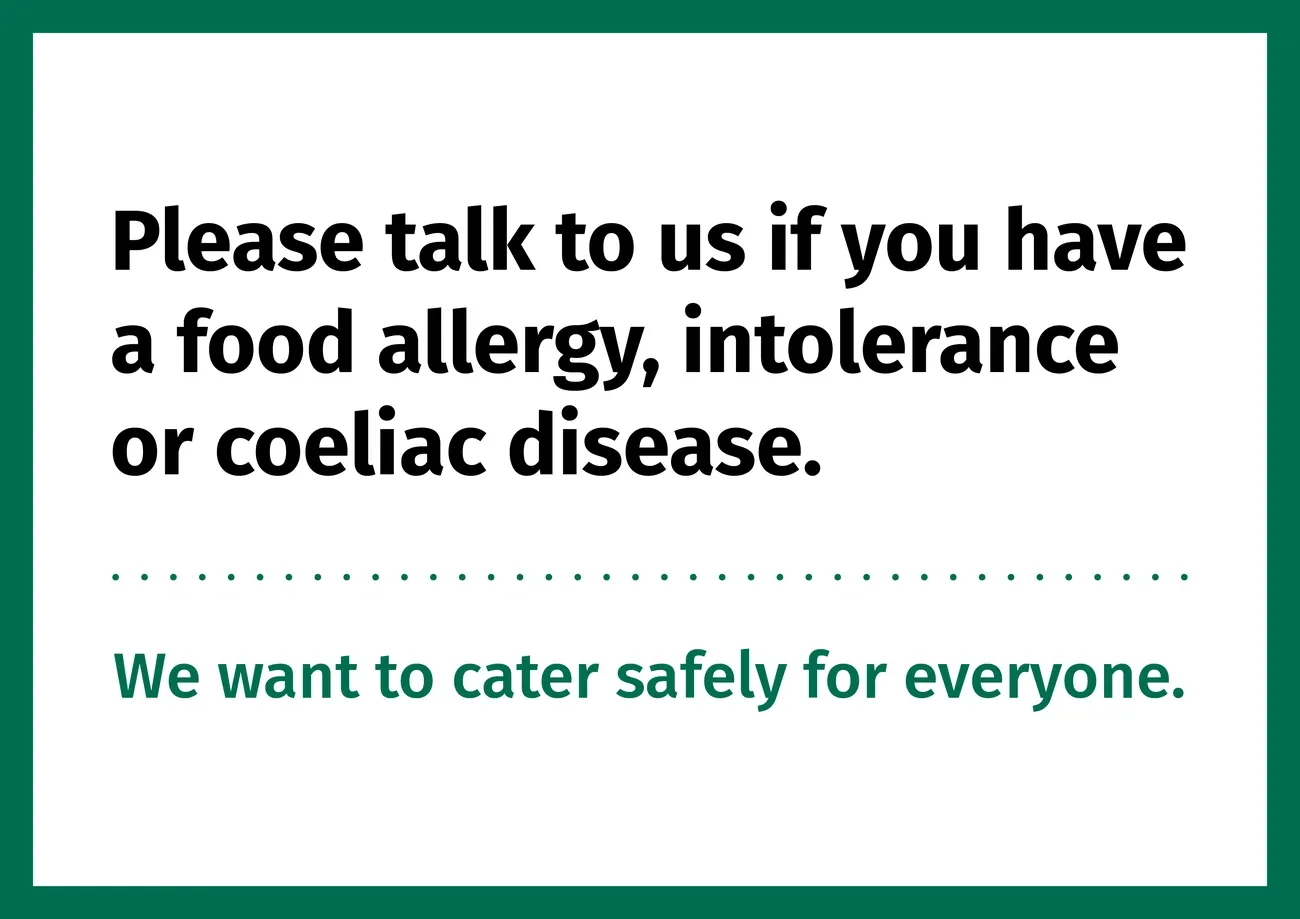
Image Source: Food Standards Agency
Requirements for loose foods and catering
Non-prepacked foods include items sold without packaging or packaged at the consumer’s request [11]. This category has products at delicatessen counters, bakeries, butchers, meals served in restaurants and takeaway offerings [11]. Food businesses selling loose items must supply allergen information for every product containing any of the 14 allergens [11].
The scope extends beyond retail environments and covers institutional catering, food stalls, vans and hospitality establishments [12]. Regulatory requirements state that even food provided free of charge requires allergen information provision. This applies to testers, samples, canapés at events and airline meals [6]. People who provide food at charity events or voluntary cake sales on occasion may also need to follow these legal requirements [13].
Menu labelling and signposting options
Food businesses can provide allergen information through multiple formats tailored to their operational model [14]. Written information may appear on menus, chalkboards, notices, information packs, shelf edge labels or labels attached to products [11][12]. The information must be presented as ‘Contains:’ followed by allergen names, formatted as “Chicken Tikka Masala (Contains: milk, nuts (almond))” [14].
Businesses may use signposting as an alternative to direct customers to where they can get allergen information [11]. Signposting must appear as a written statement on menus, tickets or visible labels [14]. Example statements include “Food Allergies, Intolerances, or Coeliac Disease: Please speak to our staff about the ingredients in your meal, when making your order” [14].
Oral allergen information provision
Businesses choosing verbal communication must display written notices explaining how customers get this information [11]. The FSA allergen guidance recommends written allergen information supported by conversation works best for consumers [11].
Staff must provide complete and accurate information when asked [12]. Best practise requires staff to never answer from memory or guess. They should check documented allergen files every time [12]. If staff cannot get reliable information about food content, they must inform customers they cannot guarantee the food is free from specific ingredients [15].
Documentation for verbal allergen information
Information on food allergens should be recorded through product specification sheets, ingredient labels, recipes or dish explanations [16]. Allergen details can be kept in charts, recipe books or ingredient information sheets to ensure oral information accuracy and give staff a reference point [14]. Businesses must keep copies of ingredient information from prepacked foods such as sauces and desserts [12]. Relying on memory alone is not compliant. Many Environmental Health Officers expect written allergen information even for loose food [12].
Prepacked for direct sale (PPDS) and Natasha’s Law
What is PPDS labelling
Allergen legislation changed, and prepacked for direct sale emerged as a distinct category that requires specific labelling protocols [17][9]. Food qualifies as PPDS when packed on the same premises or site where it is sold and placed in packaging before the customer makes their purchase [17][18]. The packaging must enclose the food fully or in part and prevent alteration without opening or changing it [9][19].
PPDS covers sandwiches and bakery products packaged on site before customers select them, fast food packed before ordering such as burgers under hot lamps, and products prepackaged ready for sale that include pizzas, rotisserie chicken, salads and pasta pots [10]. Butchers’ prepackaged burgers and sausages, samples of cookies packed on site, and foods packaged then sold elsewhere by the same operator at market stalls also qualify [10]. Items provided in schools, care homes and hospitals require PPDS labelling [10].
Food prepared after customers place orders, such as made-to-order sandwiches, is not PPDS [17][20]. Items not in packaging or packaged after ordering qualify as non-prepacked food, where allergen information can be provided orally [21].
How FIR 2014 underpins Natasha’s Law
The legal change follows the death of 15-year-old Natasha Ednan-Laperouse, who consumed a prepacked baguette containing unlabelled sesame to which she was allergic [20]. Allergen information for PPDS products could be provided by any means before 1 October 2021, and this included verbal communication by staff [10]. This inconsistent approach created a dangerous loophole in food safety [22].
Natasha’s Law introduced amendments to the UK food allergen regulations framework through The Food Information (Amendment) (England) Regulations 2022, The Food Information (Wales) (Amendment) (No. 2) Regulations 2020, and The Food Information (Amendment No. 2) Regulations (Northern Ireland) 2020 [23].
PPDS labelling requirements from October 2021
All PPDS food must display the name of the food and a full ingredients list with allergenic ingredients emphasised from 1 October 2021 [17][18][9]. Allergens can be emphasised using bold type, capitals, underlining or colour contrast [17][24]. The ingredients list must be headed with the word ‘ingredients’, with items listed in descending order by weight at manufacture [23].
Labels can be printed or handwritten and appear on the outside of packaging or on attached labels [9]. Information must be clear, legible and indelible, not obscured or hidden inside packaging [9]. The requirement does not apply to goods sold by distance communication, such as telephone and internet orders, though [9][10].
Responsibilities of food business operators under FIR 2014
Recipe documentation and allergen recording
EU FIC establishes an overarching obligation for food business operators to comply with all food labelling requirements and verify that those requirements are met [25]. The FBO under whose name food is marketed bears primary responsibility for food information accuracy [25]. Kitchen staff must know how to record allergens when recipes change and who receives this information [8]. Businesses need accurate recipe lists that provide clear identification of allergens present in served foods [8].
Allergen ingredient information should be recorded on product specification sheets and included on ingredient labels with containers kept in original or labelled packaging. This information must also be incorporated into recipes or dish explanations [6]. Reminders must be set up to update records and report changes when recipe modifications occur [8]. Clear procedures and dedicated personnel must handle written allergen information updates following recipe or ingredient changes [8].
Ingredient consistency and substitution checks
Where regular orders contain ingredient changes or substitutions, procedures must approve, record and report these modifications [8]. Ingredient containers require clear labelling to identify contained allergens [26]. Prepacked food labels must be checked to determine allergen content [26]. If food lacks clear labelling, businesses risk using ingredients harmful to customers with specific allergies [26].
Deliveries must be checked to confirm correct orders and verify labelling information provision [26]. Businesses must also keep copies of ingredient information from prepacked foods like sauces and desserts [6].
Staff training and knowledge requirements
Food business operators must ensure staff receive suitable allergen and food hypersensitivity training on an annual basis to appreciate the potential risks of providing incorrect information, which could be life threatening [8][15]. Staff require training to handle allergen information requests and guarantee allergen-free meals reach the correct customer [15]. They must know allergen cross-contamination risks during food handling and preparation, plus prevention methods [15].
Staff awareness must extend to taking orders with specific allergy requirements through telephone or online channels [8]. All staff should understand procedures when asked to provide allergen information [15][26].
Traceability and labelling information retention
Where non-prepacked food sells through distance channels like telephone or online takeaway orders, allergen information should be available before purchase conclusion and at delivery point [25]. FBOs must not supply food they know or presume to be non-compliant with legal requirements [25]. Every FBO in the food supply chain takes responsibility for ensuring information accuracy [25].
Enforcement and compliance under FIR 2014
Image Source: Food Standards Agency
Role of Trading Standards and Environmental Health Officers
Authorised food officers at Local Authorities hold responsibility for official controls relating to UK food allergen regulations enforcement [27]. County councils and district councils operate under dual enforcement responsibility in England. County councils must enforce the FIRs, whilst district councils possess the power to enforce specific elements [27]. Environmental Health and Trading Standards Officers work with businesses and want to balance economic success against the need to protect customer and staff health [28].
These enforcement bodies employ a graduated approach. They start with informal advice and verbal warnings. The approach can escalate through statutory notices and written warnings. Prosecutions come in the end [29]. An officer can serve a Hygiene Emergency Prohibition Notice to close the business if circumstances require immediate action and an imminent risk of injury to health exists [28].
Common compliance failures and legal risks
Allergen labelling errors secured their position as the top cause of food recalls in 2025. 35% of all Food Standards Agency alerts resulted from allergen-related labelling failures [13]. These compliance failures cluster around five themes: weak change control between specification, artwork and print; supplier data gaps or substitutions not captured promptly; poor line clearance and label verification at production start-up; misplaced precautionary allergen labelling replacing genuine risk assessment; and copy divergence between packaging, web content and point-of-sale materials [13].
Food recalls from such failures can cost companies between £1.5 million and £10 million per incident. This excludes additional expenses like crisis management, legal fees and brand rehabilitation [30]. The disruption proves too severe for businesses to remain operational in extreme cases [30].
Penalties for non-compliance
Failure to comply with Food Information Regulations allergens requirements constitutes a criminal offence. This could result in criminal prosecution against the food business operator [27]. Persons convicted under the FIR face unlimited fines. Magistrates determine the level on a case-by-case basis [27][31]. Prosecution may produce serious consequences. These include financial penalties, criminal records, adverse publicity and detrimental effects upon trading positions. Loss of liberty occurs in severe cases [29].
Real-life enforcement cases and food recalls
Pret A Manger faced charges in December 2017 for selling a sandwich labelled ‘vegan’ that was contaminated with milk protein to a woman who later died from a severe allergic reaction [31]. The restaurant was charged separately in November 2017 under section 14 of the Food Safety Act after a student suffered an allergic reaction to sesame in a sandwich. Staff failed to highlight the allergen, though Pret was acquitted and claimed staff acted outside allergen procedures despite training [31].
The owners of Haute Dolci in Ellesmere Port, Cheshire, paid £3,635 after a woman collapsed in September 2020. She had eaten food containing nuts despite warning staff about her allergy [31]. The owner of Royal Spice in North Staffordshire received fines exceeding £5,000 for selling pizza containing almond powder to a customer with a nut allergy [31].
Trading Standards food officers conducted test purchasing at Mansha Sweet Centre in Nelson on 26 October 2022. They ordered a lamb seekh kebab on chapati whilst declaring a milk allergy. The food contained milk protein at harmful levels. This resulted in £7,229.72 in fines, surcharge and costs following conviction at Blackburn Magistrates Court [11]. Eastern Promise Takeaway in Accrington sold chicken curry containing milk protein to an officer who declared a milk allergy on 6 February 2023. This led to £1,212 in fines, surcharge and costs [11].
These prosecutions demonstrate Lancashire Trading Standards’ allergens sampling programme. Businesses failing to protect allergy sufferers face compliance checks and formal action [11]. The FSA advised local authorities to adopt a proportionate, risk-based approach to breaches. They should deal with minor errors through guidance and support during early implementation months of new requirements [16].
Step-by-step compliance checklist for food businesses
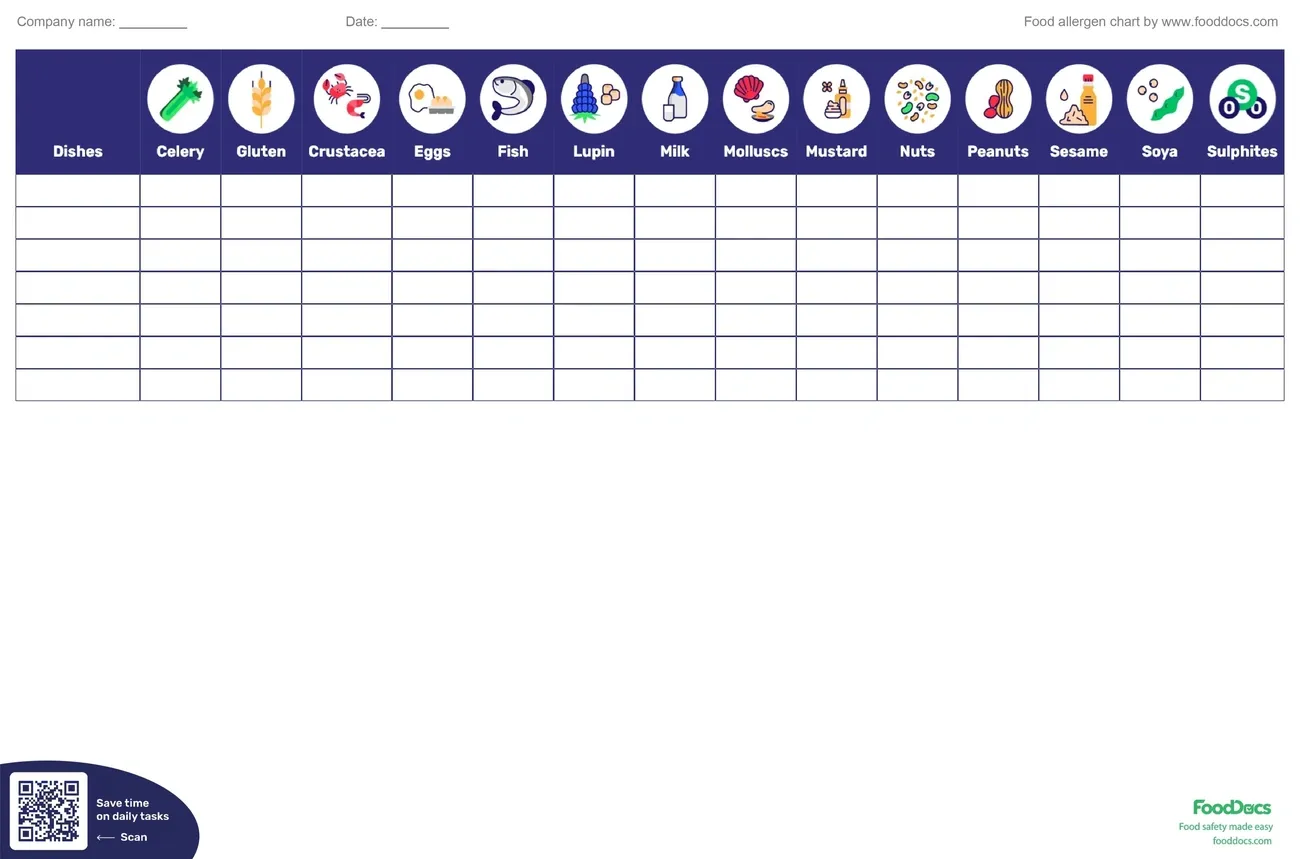
Image Source: FoodDocs
Achieving compliance with Food Information Regulations allergens requirements requires systematic implementation throughout all operational areas.
Identify allergens in your recipes
Businesses need to review and identify which allergens exist in every dish, side dish, accompaniment, condiment, and drink [32]. This process has creating an allergen inventory and risk assessment that determines where each allergen enters the facility [12]. Kitchen staff need accurate recipe lists that provide clear identification of allergens present [8]. Therefore, businesses should create an allergen matrix that shows which finished products contain specific allergens [12].
Document and maintain ingredient information
Product specification sheets and ingredient labels should record allergen information [6]. Businesses must maintain folders with current labels from products and date labels as they add them [32]. Recipe control systems must review allergen effects when formulas change [12]. Supplier allergen declarations provide supporting evidence [33].
Train staff on allergen requirements
Staff need annual allergen and food hypersensitivity training [8]. The Food Standards Agency provides free food allergy online training and issues certificates of continuous professional development upon completion [32].
Implement allergen communication systems
Conversation should support written allergen communication [6]. Till prompts can remind staff to ask about allergens [32]. Businesses should document dietary requests clearly on order slips [32].
Regular audits and updates
Regular reviews of communication strategies should incorporate customer feedback [34]. Internal audits that focus on allergen control verify segregation effectiveness [12].
Frequently asked questions about FIR 2014 allergen requirements
Questions arise regarding practical implementation of Food Information Regulations allergens provisions in different business scenarios.
How should allergen information be provided for distance selling? Food sold online, by phone or through mail order requires allergen information at two stages: before purchase completion and at delivery [14]. You can achieve this through website displays, catalogue listings, verbal communication during phone orders, allergen stickers on delivered food or enclosed menu copies [6].
What responsibilities do customers have regarding allergies? Customers bear responsibility to inform businesses about their allergies or intolerances [14]. But this does not diminish the food business operator’s duty to provide accurate allergen information when requested.
Can allergen information be provided through verbal communication alone? Allergen information may be provided verbally to customers, but the FSA advises this needs backing with written records to ensure accuracy and consistency [14]. Written allergen information supported by conversation works best for consumers [6].
How should buffet allergen information be presented? Allergen information must be provided for each food item instead of for the buffet as a whole [6]. You can achieve this through individual dish labelling or signage directing customers to ask staff for allergen information.
Conclusion
Allergen declaration under FIR 2014 protects consumers and establishes clear legal responsibilities for food businesses in all sales channels. The regulations create a detailed framework covering the 14 specified allergens, from prepacked products requiring emphasised ingredient lists to non-prepacked foods sold through catering and retail.
Businesses that implement systematic allergen control through proper documentation, staff training and clear communication systems minimise legal risks and build customer trust. Non-compliance carries financial and reputational risks, including unlimited fines and recalls that get pricey.
Food business operators should treat allergen management as an ongoing priority rather than a one-time compliance exercise. They must review procedures regularly to maintain accuracy and protect vulnerable consumers.
Key Takeaways
Understanding and implementing UK Food Information Regulations 2014 allergen requirements is essential for protecting consumers and avoiding costly legal consequences.
• Food businesses must declare and emphasise 14 specific allergens in all products, using bold text, capitals, or underlining in ingredient lists
• Prepacked for Direct Sale (PPDS) foods require full ingredient labelling since October 2021 under Natasha’s Law following tragic allergen-related deaths
• Non-prepacked foods can provide allergen information verbally, but written documentation must support staff to ensure accuracy and legal compliance
• Allergen labelling failures cause 35% of UK food recalls, costing businesses £1.5-10 million per incident plus unlimited fines for non-compliance
• Systematic allergen control requires documented recipes, annual staff training, clear communication systems, and regular audits to maintain legal protection
Effective allergen management protects both vulnerable consumers and business operations, making compliance a critical investment rather than regulatory burden.
FAQs
Q1. Which allergens must be declared by law in the UK? UK law requires food businesses to declare 14 specific allergens: cereals containing gluten (wheat, rye, barley, oats), crustaceans, eggs, fish, peanuts, soybeans, milk, tree nuts (almonds, hazelnuts, walnuts, cashews, pecans, Brazil nuts, pistachios, macadamia nuts), celery, mustard, sesame seeds, lupin, molluscs, and sulphur dioxide/sulphites at concentrations above 10mg/kg or 10mg/litre.
Q2. How must allergens be displayed on food labels? Allergens must be emphasised within the ingredients list each time they appear. This can be achieved through bold type, capital letters, underlining, italics, or contrasting colours. The ingredients list must be headed with the word ‘ingredients’, and allergens should be clearly visible, legible, and not obscured by packaging folds or other materials.
Q3. What are the allergen labelling requirements for prepacked for direct sale (PPDS) foods? Since 1 October 2021, under Natasha’s Law, all PPDS foods must display the food name and a full ingredients list with allergenic ingredients emphasised on the packaging. This applies to food packaged on the same premises where it’s sold, such as sandwiches made in-store, bakery items, and pre-prepared salads.
Q4. Can allergen information be provided verbally for non-prepacked foods? Yes, allergen information for non-prepacked foods can be provided verbally, but businesses must display written notices explaining how customers can obtain this information. Staff must have access to accurate written allergen documentation and should never rely on memory alone. Written information supported by conversation is considered best practise.
Q5. What are the penalties for failing to comply with allergen labelling regulations? Non-compliance with allergen regulations is a criminal offence that can result in unlimited fines determined by Magistrates on a case-by-case basis. Businesses may also face prosecution, criminal records, adverse publicity, food recalls costing £1.5-10 million per incident, and in severe cases, business closure or imprisonment.
References
[1] – https://www.food.gov.uk/sites/default/files/media/document/food-information-regulations-2014-summary-guidance-for-food-business-operators-and-enforcement-officers-in-wales-northern-ireland-and-scotland-updated-2020.pdf
[2] – https://www.food.gov.uk/sites/default/files/media/document/top-allergy-types.pdf
[3] – https://en.wikipedia.org/wiki/British_food_information_regulations
[4] – https://www.campdenbri.co.uk/white-papers/fir.php
[5] – https://www.food.gov.uk/news-alerts/news/food-allergen-labelling-changes-become-law
[6] – https://www.food.gov.uk/business-guidance/allergen-guidance-for-food-businesses
[7] – https://www.allergyclinic.co.uk/blog/shellfish-vs-mollusc-understanding-your-seafood-diagnostic-profile
[8] – https://www.food.gov.uk/business-guidance/allergen-checklist-for-food-businesses
[9] – https://www.businesscompanion.info/en/quick-guides/food-and-drink/labelling-of-prepacked-for-direct-sale-foods
[10] – https://www.food.gov.uk/business-guidance/introduction-to-allergen-labelling-changes-ppds
[11] – https://news.lancashire.gov.uk/news/food-businesses-prosecuted-for-failing-to-protect-customers-with-allergies
[12] – https://www.fooddocs.com/post/allergen-management
[13] – https://www.foodmanufacture.co.uk/Article/2025/08/26/allergen-errors-most-common-cause-of-uk-food-recalls-report-finds/
[14] – https://menuguide.pro/food-allergens/
[15] – https://www.food.gov.uk/business-guidance/allergy-training-for-food-businesses
[16] – https://global.lockton.com/gb/en/news-insights/new-uk-food-labelling-regulation-raises-product-recall-risk
[17] – https://www.anaphylaxis.org.uk/business/labelling-and-information-availability/food-allergen-labelling-for-prepacked-for-direct-sale-ppds-foods/
[18] – https://www.food.gov.uk/allergen-labelling-changes-for-prepacked-for-direct-sale-ppds-food
[19] – https://www.openuniversitylawsociety.co.uk/post/natasha-s-law
[20] – https://www.bda.uk.com/resource/allergen-labelling-law-is-changing.html
[21] – https://www.ncass.org.uk/resources/legal-compliance/the-allergen-hub/pre-packed-for-direct-sale/
[22] – https://www.narf.org.uk/what-is-natashas-law
[23] – https://www.food.gov.uk/business-guidance/labelling-guidance-for-prepacked-for-direct-sale-ppds-food-products
[24] – https://www.foodstandards.gov.scot/business-guidance/running-a-food-business/packaging-and-labelling/prepacked-for-direct-sale
[25] – https://www.food.gov.uk/sites/default/files/media/document/fir-guidance2014.pdf
[26] – https://www.food.gov.uk/sites/default/files/media/document/managing-food-allergen-information.pdf
[27] – https://www.food.gov.uk/business-guidance/food-allergen-labelling-and-information-requirements-technical-guidance-enforcement-of-the-measures
[28] – https://cmispublic.walsall.gov.uk/CMIS/Document.ashx?czJKcaeAi5tUFL1DTL2UE4zNRBcoShgo=XEU%2FgqlFjJz8GJdoOUx%2FoauvvOCGvW3mN2N5fQK1n5TBRfCPTjI05w%3D%3D&rUzwRPf%2BZ3zd4E7Ikn8Lyw%3D%3D=pwRE6AGJFLDNlh225F5QMaQWCtPHwdhUfCZ%2FLUQzgA2uL5jNRG4jdQ%3D%3D&mCTIbCubSFfXsDGW9IXnlg%3D%3D=hFflUdN3100%3D&kCx1AnS9%2FpWZQ40DXFvdEw%3D%3D=hFflUdN3100%3D&uJovDxwdjMPoYv%2BAJvYtyA%3D%3D=ctNJFf55vVA%3D&FgPlIEJYlotS%2BYGoBi5olA%3D%3D=NHdURQburHA%3D&d9Qjj0ag1Pd993jsyOJqFvmyB7X0CSQK=ctNJFf55vVA%3D&WGewmoAfeNR9xqBux0r1Q8Za60lavYmz=ctNJFf55vVA%3D&WGewmoAfeNQ16B2MHuCpMRKZMwaG1PaO=ctNJFf55vVA%3D
[29] – https://www.npt.gov.uk/business/your-business-and-the-council/trading-standards/environmental-health-and-trading-standards-enforcement-policy/
[30] – https://libereat.com/2022/03/consequence-businesses-not-following-allergen-rules/
[31] – https://www.reedsmith.com/articles/tomorrows-hospitality-a-z/prosecutions-are-soaring-due-to-allergens-labelling-breaches-in-the-uk/
[32] – https://www.devonsomersettradingstandards.gov.uk/business/food-law-guidance/allergens-in-food/
[33] – https://www.popprobe.com/checklist-library/uk-food-safety/allergen-management/b30-uks-natasha-law-allergen-audit-checklist
[34] – https://www.anaphylaxis.org.uk/business/