
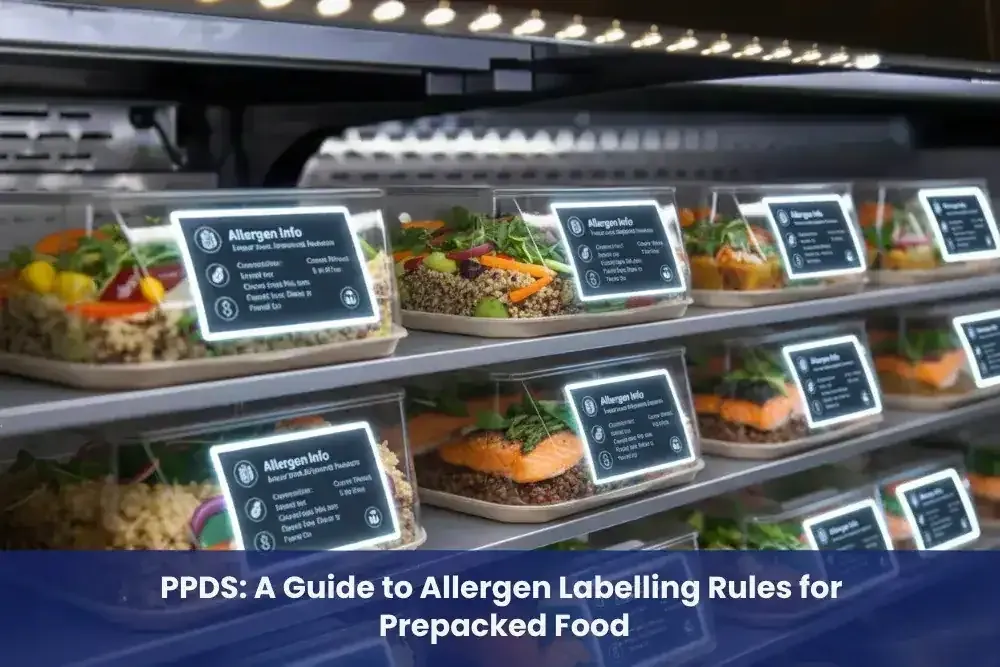
 Research revealed that 31.2% of tested food items in the UK contained allergen contamination . This finding highlighted a major gap in food safety protocols and led to Natasha’s Law requirements. The allergen law came into effect on 1st October 2021 , reshaping how UK food businesses label pre-packaged for direct sale (PPDS) products. The law bears the name of 15-year-old Natasha Ednan-Laperouse, who died after consuming a pre-packaged baguette containing unlabelled sesame . Natasha’s Law UK now mandates full ingredient lists and clear allergen labelling to protect over 2 million food allergy sufferers in England . This piece explains what Natasha’s Law is, details the specific labelling requirements, and provides food businesses with a detailed compliance framework.
What Is Natasha’s Law UK?
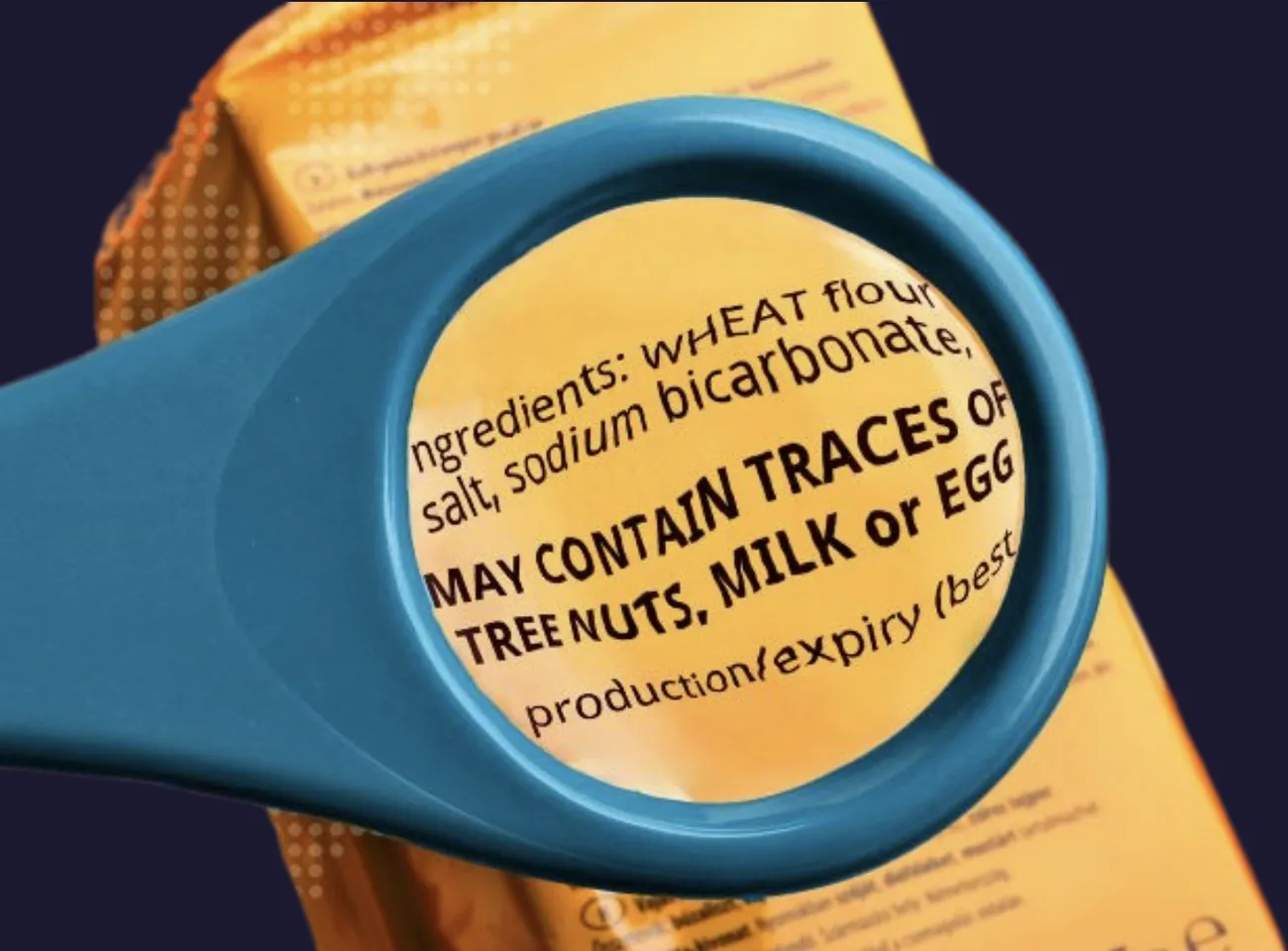
Image Source: The Natasha Allergy Research Foundation
The UK Food Information Amendment, commonly recognised as Natasha’s Law, represents a fundamental transformation in how food businesses approach allergen labelling. This legislation emerged from tragedy and parental determination to prevent similar deaths.
The Tragic Story Behind the Legislation
Natasha Ednan-Laperouse, a 15-year-old from Fulham, west London, died in July 2016 after consuming an artichoke, olive and tapenade baguette purchased from Pret a Manger at Heathrow Airport’s Terminal 5 [1]. The baguette contained sesame seeds baked into the dough, an allergen to which she was allergic [2]. A food labelling loophole meant the ingredient was not listed on the packaging [3].
Natasha ate the baguette at 07:00 BST before boarding a British Airways flight to Nice [1]. She began feeling ill during the flight and suffered a cardiac arrest. Her father administered two EpiPen injections, but she died later that same day at a French hospital [3]. The coroner at her 2018 inquest concluded that Natasha would not have eaten the sandwich if the packaging had displayed the ingredients and allergens [3]. The inquest also revealed that Pret had received six allergic reaction cases with their artisan baguettes in the year before Natasha’s death [1].
Her parents, Tanya and Nadim Ednan-Laperouse, founded the Natasha Allergy Research Foundation and campaigned for legislative changes [1]. Their advocacy highlighted that before the law changed, allergen information for prepacked for direct sale products could be provided by any means, including verbal communication by staff [4]. This system failed to protect consumers.
When Did Natasha’s Law Come Into Effect
The legislation took effect on 1 October 2021 across England, Wales, Scotland and Northern Ireland [4]. The government laid the Statutory Instrument in Parliament in September 2019 [5]. Businesses had a transition period until October 2021 to prepare for the new standards [5].
The Food Standards Agency confirmed that from this date, any food business producing prepacked for direct sale food is required to label it with the name of the food and a full ingredients list [6]. This applies uniformly across all UK nations and ensures consistent allergen labelling standards throughout the country [6].
Main Goals of the Law
The main goal centres on ensuring consumers receive adequate information about allergens present in pre-packaged foods for direct sale [2]. This increased transparency aims to boost food safety if you have allergies and enables you to make informed choices about the foods you consume [2].
The law addresses the needs of two to three million people in the UK living with food allergies [1]. Nadim Ednan-Laperouse emphasised that the legislation is about saving lives and marks a major milestone in supporting people with food allergies [1]. The change brings greater transparency about the foods people buy and eat. Those with food allergies gain confidence when purchasing prepacked food for direct sale such as sandwiches and salads [1].
Emily Miles, Food Standards Agency chief executive, noted that hospital admissions caused by food allergies have seen a threefold increase over the last 20 years [1]. The legislation aims to reduce these admissions and prevent further tragic deaths [3]. The reforms set new standards for food companies and highlight the battle against the growing epidemic of allergies [5].
Understanding PPDS (Prepacked for Direct Sale)
The term prepacked for direct sale defines a specific category of food products subject to allergen labelling requirements under the legislation. Understanding this classification determines whether a food business must apply full ingredient labelling or can provide allergen information through alternative means.
What Qualifies as PPDS Food
PPDS food has any single food item presented to final consumers and mass caterers, consisting of the food item and packaging which may enclose the food completely or partially [6]. The packaging must prevent the contents from being altered without opening or changing it [6].
Four essential criteria determine whether food qualifies as PPDS. The food must be packaged so that it either fully or partially encloses the product [6]. Altering the food requires opening or changing the packaging [7]. The food is packaged before being offered for sale to the customer [8]. The same food business that packed the food also sells it [6].
Where packing and selling occur matters a lot. The same food business offers food for sale on the same premises, on the same site, or on other premises if sold from moveable or temporary premises such as marquees, market stalls, or mobile sales vehicles [6]. A food business can pack products at a central premises and then sell them to consumers from mobile shops or stalls that the same business operates [6].
Food packed by a business and sold in its retail units located within the same building complex as the premises where the food was packed, such as a train station, hospital, university or holiday park, also qualifies as PPDS [7]. The consumer selects or chooses the food whilst on the business premises before ordering [6].
The packaging requirement specifies that contents cannot be altered without opening or changing the packaging [7]. A baguette with a cardboard band that can be slipped on and off without altering the band is not prepacked [7]. This difference becomes critical when assessing labelling obligations.
Examples of PPDS Products
Sandwiches prepared and placed into packaging by the food business before consumers select them qualify as PPDS when sold from the same premises [6]. Potted dips produced on site that accompany meal orders, including chutneys and mint yoghurt sauce, fall under this category when prepacked in containers [6]. A lidded pot of tartar sauce that accompanies fish and chips represents another common example [6].
Bags of prawn crackers that accompany takeaway meals, prepacked before consumer selection and fully or partially enclosed, meet PPDS criteria [6]. Foods prepared and packaged by an operator and then taken to their market stall to sell require proper labelling [8]. A baker who makes empire biscuits or strawberry tarts packed on the same premises in advance of sale must comply [6].
Butchers who make pies, burgers, sausages and ready meals onsite which are then prepacked for sale from the same premises operate under these rules [6]. Mixed bags of confectionery made up, packaged and sold on the same premises or from a mobile unit such as an ice cream van need appropriate labels [6].
Fresh pizzas from the deli counter on a cardboard tray wrapped in plastic, boxed salads, hot foods such as pre-wrapped rotisserie chicken, and pre-weighed packed cheese or meats from a delicatessen counter all constitute PPDS in supermarkets [6]. Fast food packed before ordering, such as a burger under a hot lamp where the food cannot be altered without opening the packaging, also requires labelling [8].
What Does Not Count as PPDS
Food displayed loose and placed into packaging by the consumer does not qualify as PPDS [7]. Food placed into packaging after a consumer chooses it falls outside this category [7]. A freshly prepared sandwich or burger made and wrapped after taking an order is not PPDS food [7].
Products without packaging or packaged so that food alteration is possible without opening or changing the packaging, such as a hot dog served on a cardboard tray, are excluded [7]. Food packed by one business and supplied to another business for sale represents prepacked food with different requirements [7]. A pork pie packed by business A and sold by business B at a farmer’s market already requires full prepacked labelling in this case [7].
Distance selling presents another exclusion. Food purchased over the phone or internet follows separate allergen rules rather than PPDS guidance [9]. Any food packaged after being ordered by the consumer constitutes non-prepacked food and does not require a label with name, ingredients and allergens emphasised [8].
Natasha’s Law Labelling Requirements
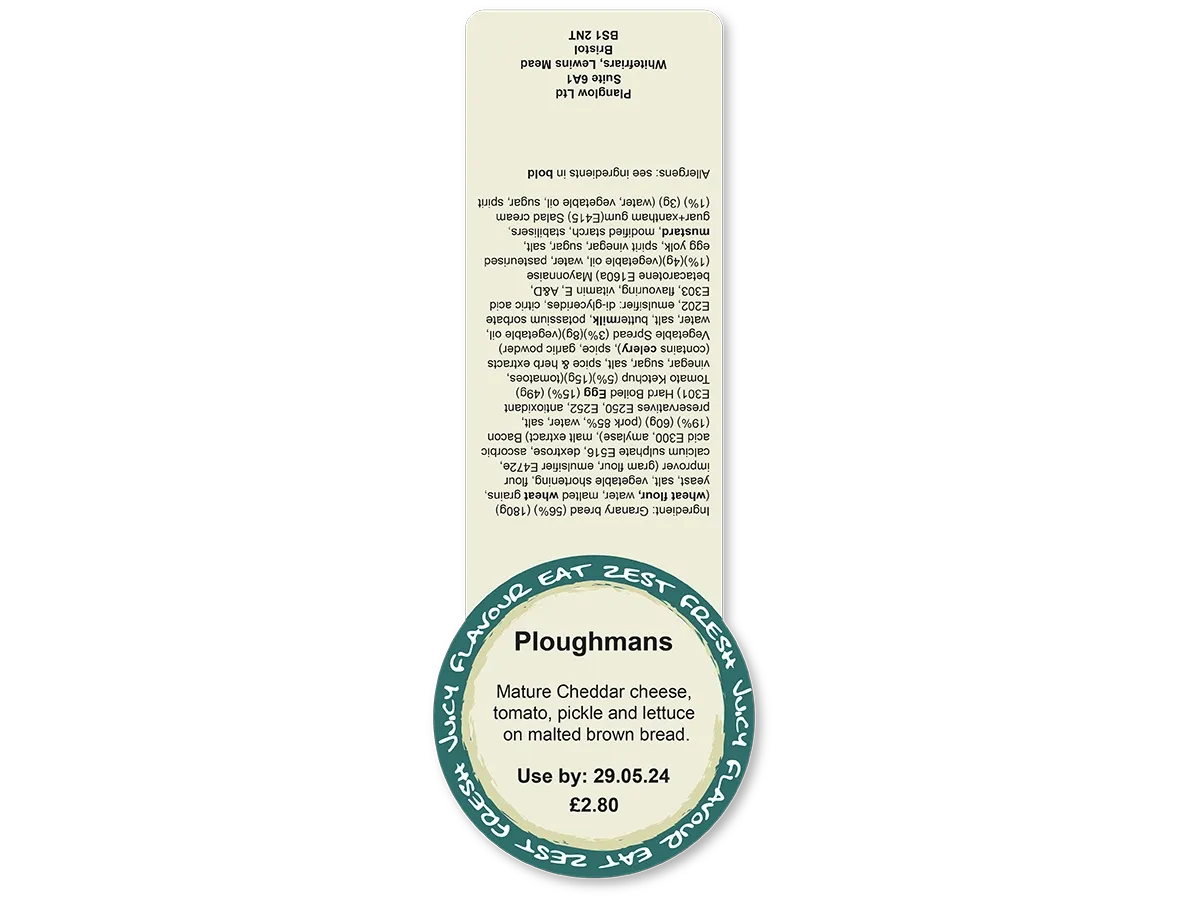
Image Source: Planglow
PPDS products sold under UK allergen regulations require specific labelling elements that go beyond simple product identification. Food businesses producing these items must understand the precise formatting, content and presentation standards that govern compliant labels.
Full Ingredient List Requirement
Any business producing prepacked for direct sale food must label it with a full ingredients list [10]. A food product with two or more ingredients, including any additives, must list all of them [11]. A suitable heading that has or consists of the word ‘ingredients’ must precede the list [7].
The main ingredient comes first, and ingredients must be listed in order of weight [12]. This descending weight order reflects the amounts used to make the food [13]. Compound ingredients, those themselves made up of more than one ingredient, must be broken down into their components within the ingredients list [11]. To cite an instance, if bread appears as an ingredient in a sandwich, the list should state ‘bread’ followed by a breakdown of the bread’s ingredients [8].
Food additives used in products must be listed using the name of their functional class, such as antioxidant or preservative, followed by their specific name or E number [7]. These requirements line up with FSA allergen guidance standards for detailed ingredient disclosure.
How to Emphasise Allergens on Labels
Allergenic ingredients within the food must be emphasised every time they appear in the ingredients list [7]. Allergens must be visibly different from other ingredients through one of four methods by law [14]:
- Bold text
- Italics
- UPPERCASE LETTERS
- Contrasting colour
Only the allergenic part requires emphasis if the allergen’s name appears in the ingredients list. To cite an instance: ‘Ingredients: Peanut Butter (Roasted Peanuts, Rapeseed Oil, Sugar, Palm Oil, Salt)’ [11]. The category of allergen must be specified in brackets right after the ingredient when the allergen does not appear in the ingredient name, with the category emphasised: ‘Ingredients: Beef (35%), Beer (Barley)’ [11].
Cheese, butter, cream and milk represent exceptions. Consumers understand these terms as clear milk references, so they require emphasis without adding the milk category in brackets. Named cheese varieties require the category: ‘Ingredients: Mozzarella (Milk)’ [11]. The same allergen must be emphasised each time if it appears multiple times [11].
Best practise has a statement on packaging explaining how allergenic ingredients have been emphasised, such as ‘For allergens, see ingredients in bold‘ [11]. This statement can appear anywhere on packaging but creates most effect near the ingredients list.
Food Name and Labelling Standards
The label must have the name of the food [10]. This name must not be misleading and should be its legal name, or a recognised customary name in the absence of a legal name [8]. Products should be labelled in a way that describes them sufficiently and helps consumers make informed decisions [8].
The labelling must comply with existing relevant food information and labelling requirements for the country of operation [10]. All allergen information must be legible and easy to find clearly, without hiding information under flaps, folds or other graphics [14].
Label Size and Readability Rules
Mandatory information requires printing using a font with a minimum x-height of 1.2mm [13]. A minimum x-height of 0.9mm applies if the largest surface area of packaging is less than 80cm² [13]. The required information must be printed on the outside of the product or on a label attached to the outside [8].
Labels can be printed or handwritten, provided the information is clear, legible and indelible [8]. It must not be hidden, obscured, detracted from or interrupted by any other written or pictorial matter in any way [8]. Consumers should not need to open packaging to access this information [13]. The label needs to be visible and legible easily where appropriate [8]. Businesses may provide QR codes or website links, but only in addition to the information on the label [8].
The 14 UK Allergens You Must Declare
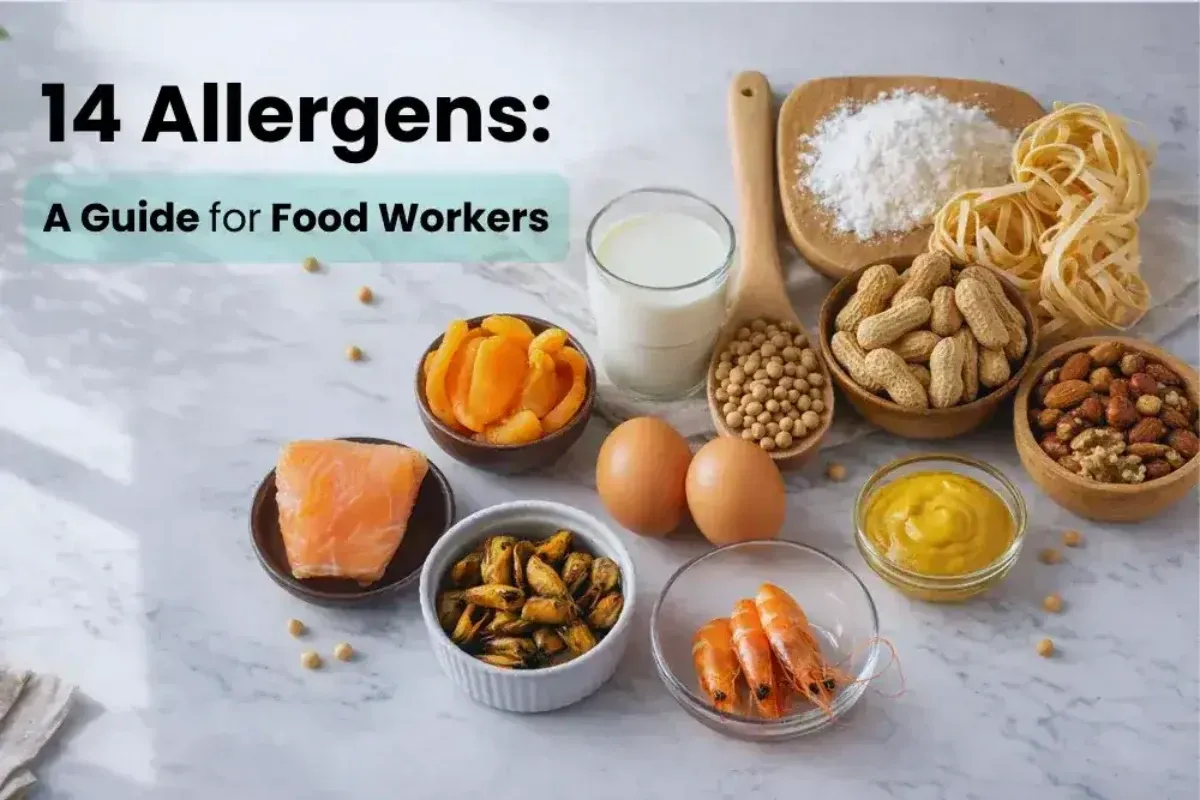
Image Source: Human Focus
UK food law recognises 14 allergens as the most common ingredients capable of causing severe allergic reactions [8]. These allergens represent the mandatory declaration list under allergen regulations. Food businesses must highlight their presence whenever used as ingredients or processing aids.
Complete List of Regulated Allergens
The regulated allergens cover celery, cereals with gluten (wheat, rye, barley and oats), crustaceans (prawns, crabs, lobsters), eggs, fish, lupin, milk, molluscs (mussels, oysters, squid), mustard, peanuts, sesame, soybeans, sulphur dioxide and sulphites, and tree nuts [8]. Sulphur dioxide and sulphites require declaration at concentrations exceeding ten parts per million [8][6].
Tree nuts have eight specified varieties: almonds, hazelnuts, walnuts, brazil nuts, cashews, pecans, pistachios and macadamia nuts [6]. Cereals with gluten must identify the specific cereal, such as spelt (wheat) or barley malt extract [15]. Fish allergy refers to species with fins and covers cod, plaice, haddock, herring, trout, salmon and tuna [8]. Crustaceans cover crab, lobster, crayfish and prawns, while molluscs have mussels, oysters, scallops, snails and octopus [8].
These allergens affect an estimated two million people in the UK with food allergies [8]. Consumers may experience allergies or intolerances to other ingredients, but these 14 allergens require declaration as allergens by food law [8][10].
How to Identify Allergens in Ingredients
Allergenic ingredients must be declared with clear reference to the allergen and ensure uniform understanding [6]. Ingredients that appear under alternative names still require allergen identification. Whey requires labelling as whey (milk), tofu as tofu (soya), and tahini paste as tahini (sesame) [6][15].
Common hidden allergen derivatives have casein, whey, lactoglobulin and lactalbumin for milk; ovalbumin, lysozyme (E1105) and lecithin (E322) for eggs; and earthnut, monkeynuts or beer nuts for peanuts [10]. These derivatives must still display the allergen category in brackets afterwards, such as whey powder (milk) [10].
Precautionary Allergen Labelling
Precautionary allergen labelling indicates unintentional allergen presence through cross-contamination during production [16]. This voluntary labelling should appear after a risk assessment that identifies genuine allergen cross-contact within the supply chain that cannot be eliminated through risk management [16][6].
Acceptable wording has ‘may contain x’ or ‘not suitable for consumers with x allergy’ [16][16]. Generic statements such as ‘may contain allergens’ could be deemed misleading because they lack specific risk assessment for each regulated allergen [16]. Snacks and dry foods like cereals, cereal bars, chocolate, biscuits and nuts face greater cross-contamination risks [8].
Precautionary allergen labelling must not combine with a free-from statement for the same allergen [16][6]. A product cannot carry both ‘free-from milk’ and ‘may contain milk’ labels [16].
Which UK Food Businesses Are Affected
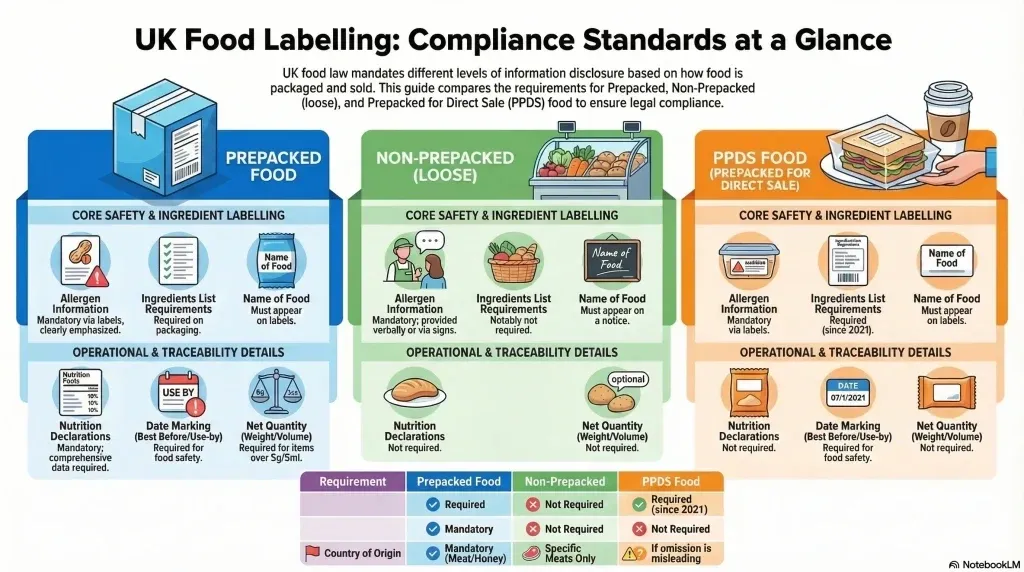
Image Source: PID Labelling
Any food business producing PPDS food falls under the legislation, whatever its size or operational model. The law applies uniformly to retail and catering sectors, from high street outlets to temporary trading operations.
Cafes, Delis and Bakeries
Coffee shops, restaurant chains, independent restaurants, supermarket and department store cafes, and pubs that produce PPDS food must comply with labelling requirements [17]. Bakeries, cake shops and tea shops packaging products on site before consumer selection require full ingredient lists with emphasised allergens [12]. Home bakers selling food from residential premises also fall within scope when they prepack items before sale [12].
The legislation extends to in-store counters where businesses portion and package bought-in food on site [14]. Butchers preparing pies, burgers, sausages and ready meals onsite which are then prepacked for sale from the same premises operate under these standards.
Supermarkets with In-Store Preparation
Supermarkets with in-house preparation areas packaging fresh products for display qualify as PPDS producers. Deli counters prepacking cheese or meats, bakery sections wrapping cakes before display, and hot food counters packaging rotisserie items all require compliant labelling.
Mobile Food Vendors and Market Stalls
Street food vendors, mobile sellers, food stalls, burger vans and stalls at farmers’ markets must follow the law when packaging food before consumer orders [11]. The rules extend to businesses packaging food at a central location and selling from mobile shops or temporary stalls operated by the same business [4]. To name just one example, a baker preparing empire biscuits at one location and selling them prepacked from a market stall must label them correctly.
Businesses Exempt from PPDS Rules
Distance selling through online or telephone orders follows separate allergen information rules rather than PPDS labelling requirements [18]. Packaging with a surface area less than 10cm² receives exemption from full labelling obligations [18].
Food packaged after consumer ordering does not constitute PPDS. Made-to-order sandwiches wrapped following customer requests remain exempt, unlike prepacked items [11]. Business-to-business supply also operates differently. Products packed by one business and supplied to another for resale require standard prepacked labelling, not PPDS rules [19].
Legal Responsibilities Under UK Allergen Law
Image Source: Food Safety Magazine
Food businesses operate within a structured regulatory framework where multiple authorities oversee compliance with allergen legislation. Understanding these legal responsibilities prevents serious health risks and protects businesses from enforcement action.
Food Standards Agency (FSA) Guidance
The Food Standards Agency oversees food safety and food hygiene in England, Wales and Northern Ireland [8]. The agency issues best practise industry guidance on providing allergen information to consumers with food hypersensitivities. The agency encourages written information availability in the out-of-home sector, which includes restaurants, cafes, delis, market stalls and takeaways [13]. This guidance supports food businesses when providing information on the 14 food allergens to customers and helps keep consumers safe [13].
The FSA’s technical guidance provides detailed explanation of labelling requirements for each food type [8]. Food business operators in the retail and catering sector are required to provide allergen information and follow labelling rules as set out in food law [8]. Businesses must also make sure that staff receive training on allergens [8].
Enforcement and Penalties for Non-Compliance
Local authorities enforce allergen information regulations [8]. Authorised food officers at Local Authorities have responsibility to conduct official controls relating to allergen rules [20]. Failure to comply with the requirements set out in allergen labelling is a criminal offence and may result in a criminal prosecution being brought against a food business operator [20].
A person convicted of an offence under the Food Information Regulations will be liable to a potentially unlimited fine [20]. Should businesses fail to act on advice given by the local authority, an improvement notice may be issued [8]. Businesses have 14 days to appeal an improvement notice from the date the notice was issued [8]. Prosecution may also follow in some cases [8].
Record Keeping and Traceability Requirements
Businesses need to make sure that they know what is in the food they provide by recording allergen ingredient information in a written format [8]. Allergen ingredients information should be recorded on product specification sheets and included on ingredients labels with ingredients kept in original or labelled containers. Recipes or explanations of dishes provided should also include this information [8]. This information must be up to date [8].
Step-by-Step Compliance Checklist for Food Businesses
Compliance with Natasha’s Law requirements just needs systematic implementation in all operational areas. Food businesses need structured processes covering product identification, labelling infrastructure, personnel training, contamination prevention and ongoing recipe management.
Audit Your PPDS Products
Use the FSA’s classification flowchart to identify which products qualify as PPDS [7]. This audit establishes whether items are packed before customer selection and sold from the same premises where packing occurred. Businesses should create a complete product register of all PPDS items [21]. Misclassification represents a common non-compliance issue, especially when you have confusion between PPDS and loose food or standard prepacked categories [21].
Update Labelling Systems and Printing
Around 64% of food businesses use labels printed in-house, whilst 25% employ third-party printing services [22]. Many operators have invested in labelling software and hardware for accuracy and reduced administrative burden [22]. Tablets connected to bluetooth printers enable on-site label generation. Staff select products and quantities, and the system produces compliant labels automatically [22]. Handwritten labels remain acceptable provided information stays clear, legible and indelible [7].
Train Staff on Allergen Awareness
Staff need sufficient training to conduct allergen conversations and locate necessary information accurately [7]. Training should occur annually and cover the potential life-threatening risks of incorrect information [7]. Kitchen personnel need clear understanding of how to record allergen changes when recipes alter and who receives these reports [7]. Front-of-house staff must communicate cross-contamination risks to customers with allergies or intolerances effectively [7].
Implement Cross-Contamination Controls
Store ingredients in sealed, labelled containers [7]. Transfer ingredients from original packaging only when alternative allergen identification systems exist [7]. Clean utensils before each use, especially after preparing allergen-containing meals [8]. Wash hands really well between preparing dishes with and without specific allergens [8]. Store allergenic ingredients separately from other ingredients in closed containers [8].
Review and Update Recipes Regularly
Kitchen staff need clear procedures and dedicated personnel for updating written allergen information following recipe or ingredient changes [7]. Recipe changes without corresponding label updates cause primary allergen mislabelling incidents [21]. Close to 91% of compliant businesses update ingredient lists on packaging when suppliers change or cannot provide ingredients [22].
Common Compliance Mistakes and How to Avoid Them
Research shows that whilst 76% of food businesses report full compliance with Natasha’s Law requirements, major issues persist in execution [23]. Businesses can strengthen their allergen control systems by knowing how to avoid common pitfalls.
Incomplete Ingredient Lists
About 29% of PPDS products are missing ingredients or allergen information altogether [23]. Businesses must list all ingredients and break down compound ingredients into components. Historical packaging artwork or assumed ingredient equivalence causes non-compliance [24]. Sandwiches that contain bread must state ‘bread’ followed by the bread’s ingredient breakdown.
Poor Allergen Emphasis on Labels
The most common issue reported involves allergen information that is not easy to read. This affects 53% of products [23]. Font size represents the biggest culprit. Text that is too small causes 78% of readability issues [23]. Labels that appear blurred or smudged account for 41% of readability problems [23]. Allergen emphasis cannot be reduced or obscured to save space. Font size, contrast and placement remain subject to legibility requirements [24].
Cross-Contamination Risks That Businesses Ignore
Precautionary allergen labelling requires application only after a full risk assessment. This assessment must identify genuine cross-contamination risks that cannot be eliminated [16]. But 72% of businesses use precautionary allergen labelling on PPDS foods [23], and 28% simply pass on supplier PAL statements without independent assessment [23]. Generic statements such as ‘may contain allergens’ could be deemed misleading [16].
Recipe Changes Without Label Updates
Ingredient substitutions, new suppliers and recipe adjustments introduce allergens unexpectedly [24]. Packaging updates must occur automatically when formulation changes happen. Allergy-related product withdrawals often result from incorrect labelling [6]. New recipe stickers on changed products highlight alterations to customers [6].
Frequently Asked Questions About Natasha’s Law
Image Source: Caring For Care
Food businesses ask specific questions about implementation and regulatory scope. These clarifications address practical compliance scenarios.
What Happens If I Don’t Comply with Natasha’s Law?
Trading Standards or Environmental Health Officers may provide advice, serve improvement notices, or prosecute businesses that fail to label PPDS foods as required [25]. A person convicted of an offence under the Food Information Regulations faces unlimited fines, with magistrates determining amounts case-by-case [20]. Criminal prosecution represents a real possibility, especially when incorrect labelling guides to allergic incidents [10]. Serious breaches can result in imprisonment for individuals responsible [10]. Businesses have 14 days to appeal improvement notices from the issue date [25].
Do I Need to Label ‘May Contain’ Statements?
Precautionary allergen labelling remains voluntary but the FSA recommends it for PPDS packaging [26]. Businesses must pass on precautionary allergen information from ingredient suppliers to consumers [26][9]. Such labelling should appear only after a full picture of risk identifies genuine cross-contamination risks that cannot be eliminated [16]. Precautionary statements without real risk could be misleading food information [26][16].
How Do I Handle Cross-Contamination in PPDS?
Risk assessment should identify potential allergen sources, assess cross-contamination likelihood, and implement segregation and cleaning protocols [16]. Precautionary labelling should not substitute for good manufacturing practises [16]. A meaningful risk assessment prevents excessive precautionary labelling that limits consumer choice without reason [16].
What If My Business Operates Across Multiple UK Nations?
England and Wales apply Retained EU Regulation 1169/2011 [26]. Northern Ireland follows EU food law, including Regulation 1169/2011, as listed in the Northern Ireland Protocol [26]. EU food law continues to apply in Northern Ireland, whilst Retained EU law does not [26].
Conclusion
Natasha’s Law represents a critical step forward in protecting the two million people living with food allergies in the UK. The legislation closes a dangerous labelling loophole that cost Natasha Ednan-Laperouse her life and puts clear allergen information into the hands of consumers.
Compliance just needs systematic implementation in product audits, labelling systems and staff training. Businesses producing PPDS food must prioritise accurate ingredient lists with emphasised allergens. Non-compliance carries unlimited fines and criminal prosecution.
Food businesses should review recipes on a regular basis and update labels when ingredients change. They must maintain reliable allergen management systems. These measures protect consumers and business reputations while honouring the legacy of Natasha.
Key Takeaways
Understanding Natasha’s Law is essential for UK food businesses to protect consumers with allergies and avoid serious legal consequences.
• PPDS foods require full ingredient lists with emphasised allergens – Any food packed before customer selection and sold from the same premises needs complete labelling with allergens highlighted in bold, italics, capitals, or contrasting colours.
• Non-compliance carries unlimited fines and criminal prosecution – Local authorities can issue improvement notices, impose potentially unlimited penalties, and pursue criminal charges for businesses failing to meet labelling requirements.
• Staff training and cross-contamination controls are mandatory – Businesses must train personnel annually on allergen awareness and implement robust cleaning protocols to prevent accidental allergen exposure through contaminated equipment or surfaces.
• Recipe changes require immediate label updates – Any ingredient substitutions, supplier changes, or formulation adjustments must trigger corresponding packaging updates to prevent dangerous allergen mislabelling incidents.
• Risk assessment determines precautionary labelling needs – “May contain” statements should only appear after thorough evaluation of genuine cross-contamination risks that cannot be eliminated through proper manufacturing practises.
The legislation affects all food businesses producing PPDS items, from high street cafes to mobile vendors, ensuring consistent allergen protection across the UK’s food supply chain.
FAQs
Q1. What is Natasha’s Law and why was it introduced? Natasha’s Law is UK legislation requiring full ingredient lists and clear allergen labelling on prepacked for direct sale (PPDS) food. It was introduced following the tragic death of 15-year-old Natasha Ednan-Laperouse in 2016, who suffered a fatal allergic reaction after eating a baguette containing unlabelled sesame seeds. The law came into effect on 1st October 2021 to protect the over 2 million people in the UK living with food allergies.
Q2. Which types of food businesses must comply with Natasha’s Law? Any food business producing PPDS food must comply, including cafes, bakeries, delis, supermarkets with in-store preparation, mobile food vendors, and market stalls. The law applies when food is packaged before customer selection and sold from the same premises where it was packed. This includes businesses operating from permanent locations, temporary stalls, or mobile units like food vans.
Q3. What are the specific labelling requirements under Natasha’s Law? PPDS food must display the product name and a complete ingredients list with all 14 regulated allergens emphasised using bold text, italics, capital letters, or contrasting colours. The font must have a minimum x-height of 1.2mm (or 0.9mm for packaging under 80cm²). Labels can be printed or handwritten but must be clear, legible, and placed on the outside of the packaging where easily visible.
Q4. What penalties do businesses face for non-compliance? Non-compliance is a criminal offence that can result in unlimited fines determined by magistrates on a case-by-case basis. Local authorities can issue improvement notices, which businesses have 14 days to appeal. In serious cases, businesses may face criminal prosecution and responsible individuals could face imprisonment, particularly if incorrect labelling leads to allergic incidents.
Q5. How should businesses handle cross-contamination and ‘may contain’ labelling? Businesses must conduct thorough risk assessments to identify genuine cross-contamination risks that cannot be eliminated through proper manufacturing practises. Precautionary ‘may contain’ statements are voluntary but recommended only when real risks exist. Businesses should implement robust segregation and cleaning protocols, store allergenic ingredients separately in sealed containers, and clean utensils thoroughly between preparing different dishes.
References
[1] – https://www.bbc.co.uk/news/uk-58756597
[2] – https://www.anaphylaxis.org.uk/my-account/media-centre/membership-news/understand-natashas-law/
[3] – https://news.sky.com/story/natashas-law-parents-of-teenager-who-died-after-allergic-reaction-from-pret-a-manger-baguette-welcome-new-food-packaging-law-12422713
[4] – https://www.food.gov.uk/business-guidance/introduction-to-allergen-labelling-changes-ppds
[5] – https://www.gov.uk/government/news/natashas-legacy-becomes-law
[6] – https://www.food.gov.uk/business-guidance/allergen-labelling-for-food-manufacturers
[7] – https://www.food.gov.uk/business-guidance/allergen-checklist-for-food-businesses
[8] – https://www.food.gov.uk/business-guidance/allergen-guidance-for-food-businesses
[9] – https://www.ncass.org.uk/resources/legal-compliance/the-allergen-hub/pre-packed-for-direct-sale/
[10] – https://www.candcsolicitors.co.uk/claiming-compensation/accident-claims-solicitors/allergy-claims/nut-allergy-claims/natashas-law/
[11] – https://www.food.gov.uk/business-guidance/prepacked-for-direct-sale-ppds-allergen-labelling-changes-for-mobile-sellers-and-street-food-vendors
[12] – https://www.food.gov.uk/business-guidance/prepacked-for-direct-sale-ppds-allergen-labelling-changes-for-bakers
[13] – https://www.food.gov.uk/news-alerts/news/updated-industry-guidance-issued-for-food-allergen-information-in-the-out-of-home-sector
[14] – https://www.inhousesafety.co.uk/natashas-law-guidance-and-checklist/
[15] – https://www.anaphylaxis.org.uk/business/labelling-and-information-availability/food-allergen-labelling-for-prepacked-food/
[16] – https://www.food.gov.uk/business-guidance/precautionary-allergen-labelling
[17] – https://www.food.gov.uk/business-guidance/prepacked-for-direct-sale-ppds-allergen-labelling-changes-for-restaurants-cafes-and-pubs
[18] – https://www.getbuddy.co.uk/natashas-law-new-food-labelling-requirements/
[19] – https://www.bda.uk.com/resource/allergen-labelling-law-is-changing.html
[20] – https://www.food.gov.uk/business-guidance/food-allergen-labelling-and-information-requirements-technical-guidance-enforcement-of-the-measures
[21] – https://www.popprobe.com/checklist-library/uk-food-safety/allergen-management/b30-uks-natasha-law-allergen-audit-checklist
[22] – https://www.food.gov.uk/research/experience-of-ppds-labelling-requirements-ppds-evaluation
[23] – https://www.food.gov.uk/research/executive-summary-ppds-evaluation
[24] – https://www.foodlabels.co.uk/general/allergen-labelling-on-food-labels-uk-compliance-essentials/
[25] – https://saferfoodscores.co.uk/natashas-law-food-labelling-guidance/
[26] – https://www.food.gov.uk/business-guidance/labelling-guidance-for-prepacked-for-direct-sale-ppds-food-products