
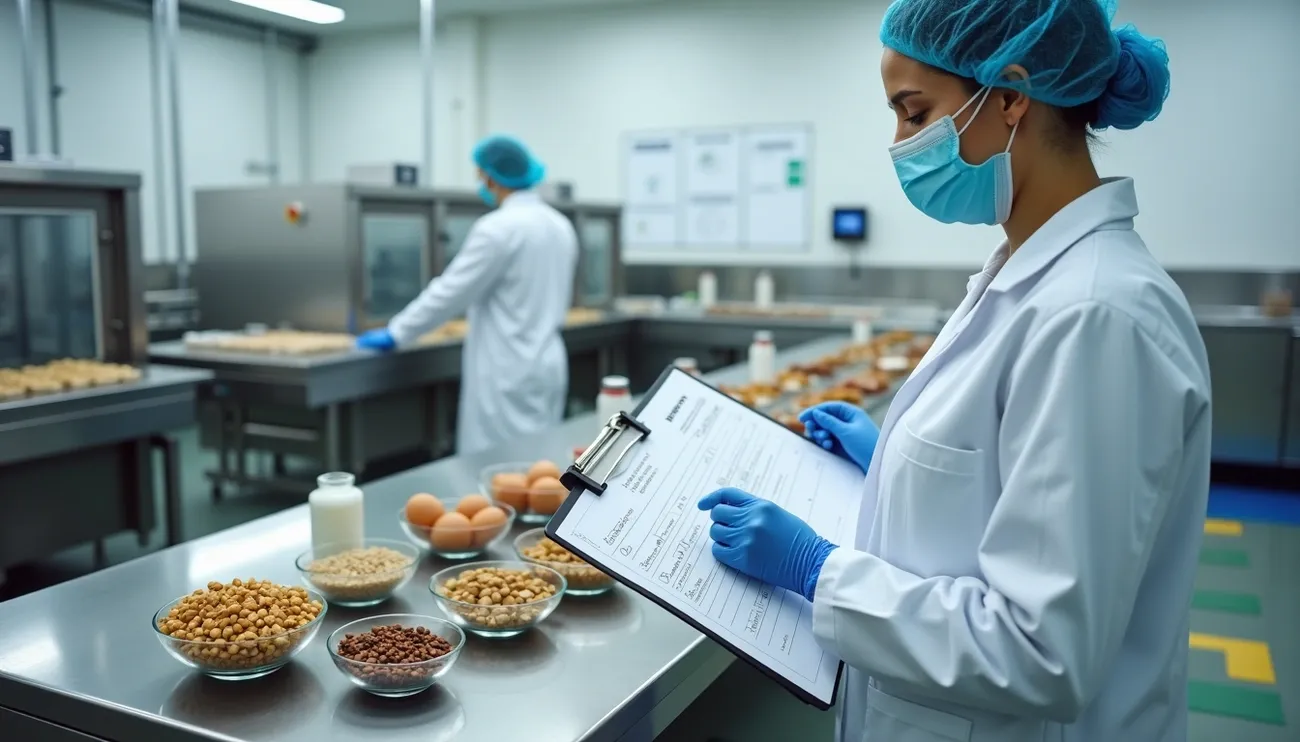
 Incorrect allergen management is the most common cause of product recall and makes BRCGS allergen requirements a critical focus for UK food manufacturers seeking certification. UK food businesses are legally required to ensure safe and accurately labelled products, whilst nine of the top 10 BRCGS non-conformances relate to operational compliance issues. BRCGS allergen protocols, including BRCGS gluten free logo requirements and BRCGS code standards, must be understood to succeed in audits. This piece breaks down clause 5.3 requirements and compares SALSA and ISO 22000 approaches while providing practical audit preparation strategies to help manufacturers achieve and maintain certification.
Understanding BRCGS Allergen Requirements and UK Legal Framework
Image Source: brcgs
What the BRCGS Standard Requires for Allergens
BRCGS treats allergen management as a fundamental requirement under Clause 5.3. A fundamental non-conformance results in an automatic critical finding. This means a failed audit whatever the performance in other sections [1]. BRCGS allergen management sits at the highest level of operational priority for certified manufacturers.
Clause 5.3 requires a documented allergen policy, a site-specific allergen risk assessment, controls for segregation and cross-contact prevention, confirmed cleaning procedures, and allergen-specific labelling controls [1]. The BRCGS Effective Allergen Management guidance document provides detailed implementation guidance. Auditors call it the authoritative reference for BRCGS allergen programme development [1]. Auditors conduct allergen-specific verification during unannounced audits and look at the risk assessment, cleaning validation records, production scheduling controls, and evidence that label reviews happen following formulation or supplier changes [1]. Any single missing element can generate a major finding.
Allergen management affects all aspects of the standard. A failure to meet that requirement could lead to an allergen issue in the production cycle, even if allergens are not mentioned in the wording of a requirement [2]. This extends beyond food safety to include storage and distribution, packaging materials, gluten-free certification, and consumer products [2]. The allergen management plan serves as a documented system to identify, control, educate, and communicate the risk and presence of allergens on site from raw materials through to finished products [3].
Companies must understand the full legislative definitions of the allergens they are handling, as this may vary from country to country or region to region [3]. Tree nuts in some regions include products that are not botanically defined as tree nuts, such as coconuts, pine nuts, or almonds [3]. National legislation in place in the country of sale and in the country of production must be used to identify those substances that must be managed as allergens [3].
UK Allergen Legislation Overview
The UK follows retained EU Regulation No. 1169/2011, the Food Information to Consumers (FIC) regulation. This mandates allergen declaration for 14 major allergens. These allergens are celery, cereals containing gluten (including wheat, rye, barley, and oats), crustaceans, eggs, fish, lupin, milk, molluscs, mustard, peanuts, sesame seeds, soybeans, sulphur dioxide and sulphites (if at a concentration of more than ten parts per million), and tree nuts [4].
Prepacked food must have an ingredients list with allergenic ingredients emphasised using a different font, style, or background colour [4]. The Food Standards Agency oversees food safety and food hygiene in England, Wales, and Northern Ireland. Local authorities enforce allergen information regulations in their respective areas [5]. Natasha’s Law came into force on 1 October 2021 and now requires businesses to label all food that is prepacked for direct sale (PPDS) with a full list of ingredients and the 14 allergens emphasised in bold [4].
The legislation applies to foods packaged on the same site at which they are sold before being ordered. This includes prepacked sandwiches and wraps, and supermarket products from deli counters that have been wrapped ready to serve [4]. Manufacturers producing prepacked food must declare allergenic ingredients with a clear reference to the allergen to ensure clear and uniform understanding [1]. Examples include tofu (soya), tahini paste (sesame), and whey (milk) [1].
Precautionary allergen labelling should only be used after a full risk assessment and only if the risk of allergen cross-contamination is real and cannot be removed [1]. Free-from claims require strict controls of ingredients, how they are handled, and how they are prepared. The final product must be completely free of the particular allergen [1]. The exception is gluten-free labelled products, which can contain a maximum 20mg/kg of gluten [1].
How SALSA and ISO 22000 Compare to BRCGS
BRCGS goes beyond typical food safety management system requirements. It demands tightly controlled site infrastructure, strict environmental hygiene programmes, in-depth allergen and foreign-body controls, confirmed cleaning effectiveness, structured supplier assurance, and transparency across the whole supply chain [6]. BRCGS places a stronger emphasis on operational performance on the factory floor and sets clear rules for hygiene, facility layout, equipment design, housekeeping, foreign-body control, and production practises [6].
BRCGS adopts a practical, site-level risk model. It specifies clear, mandatory controls for high-risk processes, including glass policy, allergen segregation, supplier approval, and traceability tests [6]. This minimises variability between facilities and will give predictable product safety outcomes [6]. The standard is retail-approved, organised, and clear. Major retailers such as Walmart, Costco, and UK supermarkets often require BRCGS certification [7].
ISO 22000:2018 addresses allergen controls through the Operational Prerequisite Programme (OPRP) and Critical Control Point (CCP) framework [1]. Allergen cross-contact hazards are the most important hazards that require control measures. Allergen controls may be managed as OPRPs, CCPs, or both, depending on the risk assessment [1]. ISO 22000 integrates allergen control into the broader food safety management system rather than treating it as a standalone programme [1]. The standard requires validation of control measures for the most important hazards and verification that the FSMS is achieving its intended outcomes [1].
SALSA certification provides an entry-level alternative for smaller UK producers. It focuses on safe food production without the same level of infrastructure investment required by BRCGS. BRCGS remains the measure for complex supply chains, exporters, and manufacturers supplying major retailers where allergen evidence and operational consistency are paramount.
Breaking Down BRCGS Clause 5.3: Allergen Management
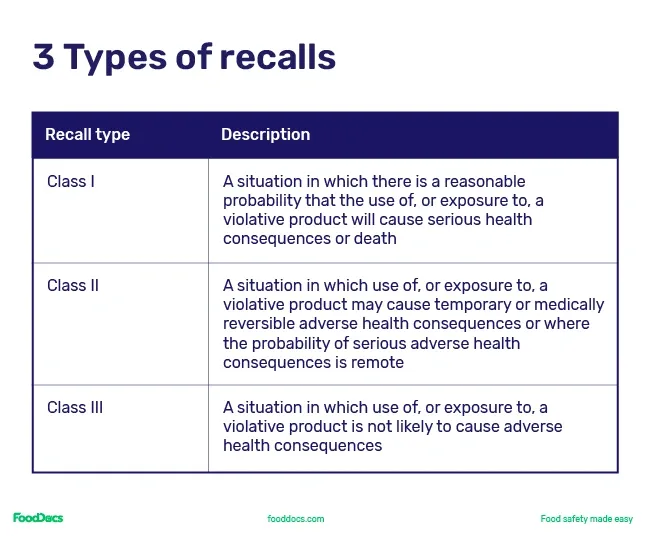
Image Source: FoodDocs
Raw Material Control and Supplier Questionnaires
Supplier controls must require allergen declarations from every supplier for every raw material, not just ingredients already known to contain allergens [6]. Formulations change. A supplier can introduce an allergenic processing aid without notifying customers unless the agreement requires disclosure [6]. Supplier questionnaires should ask whether each ingredient contains any of the Big 9 (or Big 14 for EU-market products) as a declared ingredient, a processing aid, or a shared-equipment risk [6].
The questionnaire must address allergens present in the raw material itself and whether the material is processed in a facility that handles allergens. Specific details of allergens handled in that facility must be included [7]. Cross-contamination prevention measures at the supplier’s facility and during transportation must be documented [7]. Suppliers should provide verification documentation that confirms the absence of allergen co-mingling where required [7].
A risk assessment of all raw materials, including additives and processing aids, must determine the presence of allergens contained in the material and the likelihood of contamination by allergens prior to delivery [4]. This requires the review of raw material specifications and, where required, the receipt of additional information from suppliers through questionnaires [4].
Allergen Risk Assessment Requirements
The allergen hazard analysis must be documented and reviewed by a qualified individual. Updates are required whenever the ingredient portfolio or production processes change [6]. Sites shall carry out an assessment to determine the presence and likelihood of allergenic materials and contamination by allergens [7]. The assessment shall include raw materials as virgin and recycled formats, intermediate and finished products, processing chemicals, inks, solvents, and traded products [7].
Risk assessment must assess the risks of allergens in work in progress materials, rework, and finished products. This determines the presence of allergens contained in the product and the likelihood of contamination during processing and handling [4]. The assessment must look at the risk of cross-contamination through each equipment step in the process and from the use of shared equipment [4].
The physical state of allergenic material affects risk levels [4]. Powders are more likely to be airborne. Sticky or fatty ingredients adhere to surfaces if cleaning is not effective, and materials made up of particulates such as nibbed nuts can get lodged in equipment [4]. The allergen management system needs to be reviewed based on risk. This includes when there is a change in raw materials or suppliers, a change to the manufacturing process, an introduction of new machinery or equipment, or a change to cleaning practises and procedures [8].
Cross-Contact Prevention Procedures
Physical separation of allergenic and non-allergenic ingredients is fundamental control [6]. Allergen-containing materials should be stored in designated areas or on dedicated shelving. They must be labelled with their allergen content and separated from non-allergenic materials by physical barriers or sufficient distance to prevent cross-contact [6].
Allergens handled in the form of fine powders require special attention. The movement of airborne dust should be minimised by using physical barriers to separate areas, dedicated areas, closed containers, and extraction [4]. Products must be segregated from non-allergenic ingredients and products through dedicated storage areas, dedicated areas within a store area, and dedicated equipment, tools, and utensils where possible [4].
Products that must be processed in the areas or on the same processing lines require production runs scheduled based on allergen risk [4]. All non-allergenic products should be produced before allergenic products. Allergens should be introduced to the schedule in such a way that minimises the risk of cross-contamination [4].
Cleaning Confirmation and Verification
Cleaning confirmation refers to the process of assuring that a defined cleaning procedure can remove allergenic foods from a specific food processing line or from equipment [3]. Confirmation studies ask whether this cleaning method will remove allergens [3]. Confirmation is carried out before commercial manufacture of a product and when changes are made to the manufacturing or cleaning process [3].
Cleaning verification refers to the ongoing process of showing that previously confirmed cleaning protocols have been performed and remain effective [3]. Confirmation methods for allergen cleaning include ELISA test kits, lateral flow immunoassay strips, and ATP bioluminescence swabbing [6]. ELISA is the most sensitive and is preferred for formal confirmation studies, whilst lateral flow strips are faster and useful for routine verification [6].
Choose a target for the allergen cleaning confirmation study that is present at high levels, with high protein content, and hard to clean away from the line [2]. The confirmation sampling plan should identify the highest-risk swab locations for each allergen. These are the areas hardest to clean including threads, crevices, bearings, belt joints, and product-contact surfaces that cannot be disassembled [6]. Industry best practise is to repeat the confirmation exercise three times and achieve non-detectable results for all post-clean and next off-line samples in three consecutive rounds [2].
Allergen Training and Competency Evidence
Every person who works in the facility needs allergen awareness training, not just production workers [6]. Sanitation staff, maintenance technicians, supervisors, QA personnel, and anyone who handles ingredients or product-contact surfaces needs to understand what allergens are present and why cross-contact is dangerous. They must know their specific responsibilities for preventing it [6]. Training programmes must be set up for personnel who collect samples and perform analyses [9].
Building Your Allergen Management System from Scratch
Identifying Allergens on Site
Building a strong allergen management system begins with a complete inventory of every allergenic material on site. Manufacturers must create a master list of all ingredients, additives, premixes and processing aids that contain any of the 14 major allergens [10]. This extends beyond obvious ingredients to include items such as spice blends from suppliers who may handle mustard or sesame in the same plant [10].
Allergen mapping provides a visual representation of where each allergen enters and flows through the facility [10]. This diagram overlays the site layout with allergen storage locations, production areas and process steps to highlight points where cross-contact could occur [11]. The core team should complete the mapping exercise and include technical, quality, production, procurement and maintenance staff [11].
The physical form of allergenic material affects risk assessment outcomes by a lot. Powdered allergens such as wheat flour, milk powder and soy isolate carry greater risk of becoming airborne and spreading to other facility areas than particulate allergens like sesame or tree nuts, which spread through people movement and cleaning practises [11]. Manufacturers should document which finished products contain which allergens by creating an allergen matrix [10]. This matrix serves as a quick reference guide showing allergen presence across the product portfolio [12].
Documenting Your Allergen Policy
The documented allergen policy must set clear procedures for handling allergenic materials to avoid cross-contamination throughout the whole manufacturing operation [7]. This policy is the foundation for all allergen controls and communicates management’s commitment to allergen safety.
Policy documentation should define responsibilities for allergen management in all departments, specify approval processes for new ingredients and product formulations, and outline protocols to investigate allergen-related incidents [7]. Manufacturers need a detailed, multi-step process for artwork creation and management that requires formal approvals against standards [7].
An accurate, controlled specifications database with version history must serve as the single source of data for artworks, recipes and technical documentation [7]. Specifications should transfer ingredient lists accurately to ensure allergens are emphasised correctly in the ingredient list, such as casein (milk), and presented in the correct language [7].
Creating Risk-Based Allergen Zones
Physical segregation of allergenic and non-allergenic ingredients prevents the majority of cross-contact incidents. Allergen-containing ingredients should be stored in designated areas or on dedicated shelving with clear labelling [10]. Storage arrangements must prevent spillage or dust from reaching non-allergens, which means storing allergens on lower shelves so nothing drops onto other items [10].
Sealed containers with colour-coded stickers provide additional visual cues during internal transport [10]. Dedicated containers or really cleaned shared tubs should be used when moving ingredients to production lines [10]. Separate utensils for allergens versus non-allergens reduce transfer risk during ingredient weigh-up [11].
Scheduling Production to Minimise Cross-Contact
Production sequencing reduces both contamination risk and cleaning requirements by a lot [13]. Manufacturers should run non-allergen batches first and follow with allergen-containing batches [13]. This approach requires a full allergen clean down only at the end of the sequence rather than between every product changeover.
Some facilities dedicate specific days to allergen runs and produce only allergen-free products during most of the week while reserving one day for allergenic products followed by deep cleaning [10]. The production plan must be communicated to all relevant personnel with visual aids where necessary [7]. Colour-coded containers, tags or separate utensils improve ingredient identification and traceability during weighing operations where possible [7].
Packaging Controls and BRCGS Gluten Free Logo Requirements
Label Creation and Approval Process
Packaging errors account for much of allergen-related product recalls. Label controls are a critical element of BRCGS allergen requirements. Manufacturers must establish documented procedures for label creation that include formal approvals against established specifications. The approval process begins with an accurate, version-controlled specifications database. This database serves as the single source of data for artworks, recipes and technical documentation.
BRCGS must formally approve all uses of BRCGS-managed trademarks on finished product packaging before use [4]. Receipt of a Trademark Approval Form signed by BRCGS is the only official proof of permission [4]. Manufacturers can submit labels for compliance review before certification. This allows time for artwork corrections to be done, though formal approval cannot be granted until certification is achieved [4]. Only batches manufactured after certification is granted may bear a trademark [4].
Master labels must be verified for accuracy and reviewed for legal compliance. Manufacturers should establish a programme to assess the new lot for accuracy and compliance using the master as a reference whenever a new lot of labels is received from the printer. Labels often appear very similar in design and create potential for mix-ups during production.
Start-Up and Changeover Verification
Production staff must ensure the correct label goes on each food product through systematic verification procedures. Scanning systems can verify labels against product codes. Some manufacturers programme automatic line stoppages if labels and codes do not match. Production staff should collect labels at set intervals throughout a production run and append them to production records. This demonstrates that proper labels were used throughout the run.
Packaging materials themselves can contain allergens. Latex is used in rubber bands, meat netting, stickers found on some fruit and vegetables, and adhesive used for cold sealing of confectionary [14]. Some types of paperboard and plastic packaging may contain soy-derived glues or resins, wheat-derived starches, or casein-derived coatings [14].
BRCGS Code Compliance for Gluten-Free Claims
The gluten-free products market is predicted to be worth GBP 6.59 billion by 2025 [15]. Consumer confidence in gluten-free certification substantially affects purchasing decisions. 91% of consumers declare their buying decisions are affected by third-party verification and 76% prefer products certified by a recognised coeliac association [15].
Statements must refer to BRCGS Free-From certifications as facility certification programmes, not product certification programmes [16]. Products must not be referred to as ‘certified gluten-free’ [16]. BRCGS, Beyond Celiac and the Canadian Celiac Association endorse the Gluten-Free Certification Programme but do not directly endorse any products [16].
Managing Allergen Declarations
Allergenic ingredients must be emphasised in some way every time they appear in the ingredients list. This is done in bold, contrasting colours, or by underlining them. Allergenic ingredients must be declared with a clear reference to the allergen, such as tofu (soya), tahini paste (sesame), or whey (milk). For alcoholic drinks with no ingredients list, allergens must be indicated by the word ‘contains’ followed by the allergen name.
Common Allergen Non-Conformities and How to Avoid Them
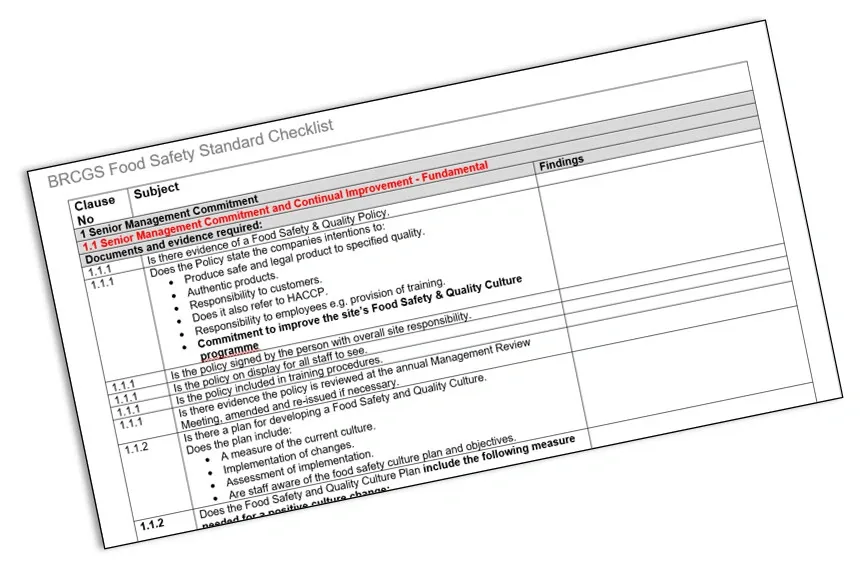
Image Source: ALLSAFE
BRCGS allergen data from food safety audits reveals that procedures to prevent cross-contamination account for 35% of non-conformities in clause 5.3, whilst packaging controls represent 46% of issues in clause 6.2 [8]. Root cause analysis identifies three main failure modes: unintentional allergen presence due to cross-contact, mis-packing where wrong packaging is used, and wrongly labelled packaging from specification errors or ineffective change management [17]. These patterns allow manufacturers to focus corrective resources on the areas auditors scrutinise most.
Inadequate Cleaning Validation
Allergen cleaning regimes generate 20% of section 5.3 non-conformities [8]. Dry cleaning has limited efficacy for allergen removal even when surfaces appear visually clean. This emphasises that appropriate validation is required to understand the capability of cleaning methodologies [18]. Water alone proves insufficient for allergen removal. Studies demonstrate that cleaning work surfaces, tools, hands and gloves with detergent or soap is the work to be done to prevent cross-contact [18]. Validation should not be confused with verification or monitoring and must demonstrate consistency through at least three consecutive successful runs [19].
Insufficient Segregation Evidence
Cross-contamination assessment failures represent 14% of allergen management non-conformities [8]. Auditors examine whether allergenic ingredients are stored in sealed and labelled containers and whether spillage policies address ingredient-to-ingredient contamination. Staff must understand segregation requirements [20][21]. Waste containing allergens must be removed without becoming a contamination source in other factory areas [9].
Missing Training Records
Staff need training on procedures for providing allergen information, accurate handling of allergen information requests, preventing cross-contamination risks and recording recipe changes [2]. Training should be provided annually to appreciate what it all means for providing incorrect information [21]. Communication channels must function so every department understands their role in manufacturing safe products [3].
Labelling and Mis-Packing Errors
Between 2016 and 2021, missing allergen information was responsible for 57.6% of all food recalls [22]. Mismatch of product to packaging occurs when products are placed in wrong packaging or incorrect labels are applied. This often happens due to lack of proper training, labelling complexity, insufficient quality checks or inadequate line clearance procedures [7]. As with this issue, outdated packaging should be destroyed to prevent accidental use [3].
Poor Change Management
The allergen management system needs review when raw materials or suppliers change, manufacturing processes are altered, new machinery is introduced or cleaning practises are modified [17][14]. Ineffective updates during recipe development remain the biggest problem for undetected allergen issues [23].
Preparing for Your BRCGS Allergen Audit
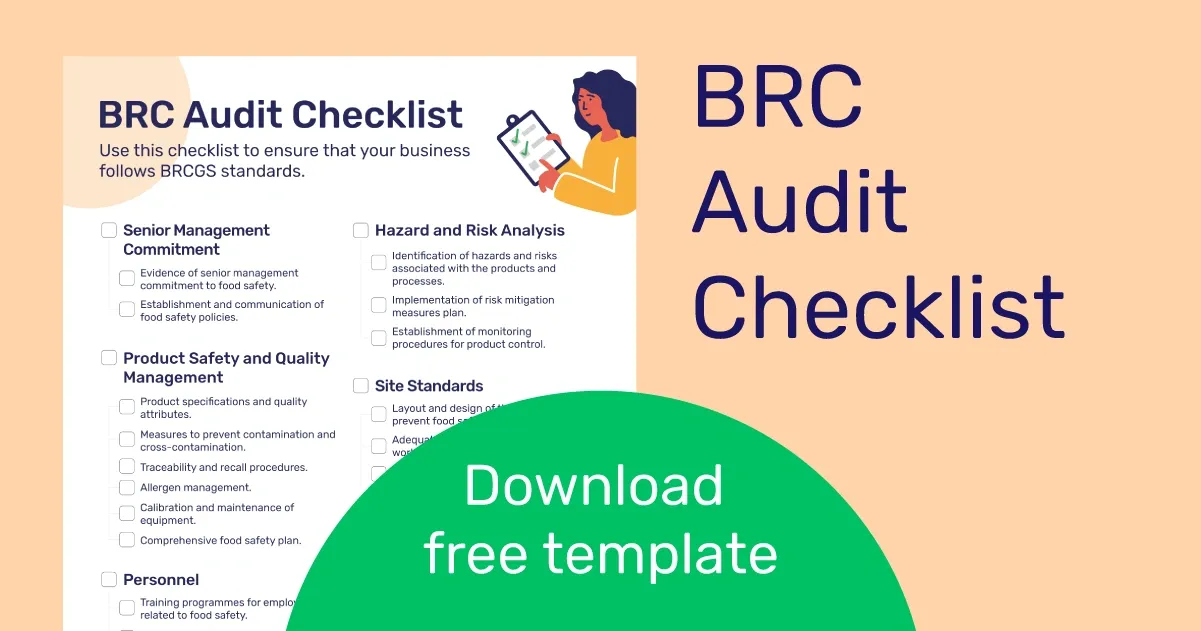
Image Source: FoodDocs
Pre-Audit Gap Analysis Checklist
After allergen controls are in place, manufacturers should conduct a complete gap analysis that compares current systems against BRCGS requirements. The BRCGS Auditor Checklist and Site Self-Assessment tool provides a structured framework to review operations against each clause of the standard. This allows manufacturers to identify conformity gaps before certification audits [24]. Gap analysis should cover risk assessment for raw materials and final products, supplier management processes, cleaning and sanitation programmes, labelling and packing requirements, personnel training records, rework processes, allergen traceability, storage conditions, and vehicle controls [25].
Conducting Internal Mock Audits
Internal audits represent a success factor for audit readiness. Competent auditors who remain independent from the activity being audited must perform these audits [26]. Mock audits should replicate the external audit approach and include assessment of hygiene practises, critical control points, culture indicators, start-ups, product changeovers, HACCP flows, and changes between shifts [27]. Scheduled programmes should spread throughout the year. The frequency gets set based on risks and previous performance [26].
What Auditors Will Verify During Inspection
Certification audits span two to three days [28]. Auditors conduct documentation reviews, site inspections, employee interviews, and product testing [29]. The audit shall include at least one product changeover and, wherever possible, one line start-up [28]. Auditors evaluate allergen procedures through operational sampling and verification of documented controls [25].
Unannounced Audit Considerations
Sites opting into the unannounced programme must notify certification bodies within three months of their last audit. This leaves a nine-month potential window [6]. Audits occur during months four to twelve, and sites can nominate a maximum of 15 days when unavailable [6]. Auditors must begin the production floor portion within 30 minutes of arrival [6]. Sites that use unannounced audits were 9% more likely to achieve grade A certification [6].
Corrective Actions and Root Cause Analysis for Allergen Issues
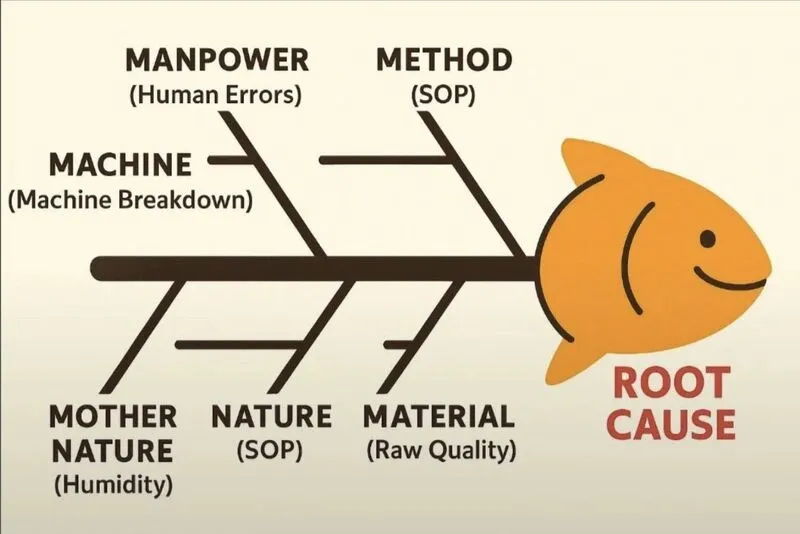
Image Source: LinkedIn
Investigating Allergen Non-Conformances
Allergen incidents just need systematic investigation to identify mechanisms rather than surface-level symptoms. Root cause analysis determines why an incident occurred by asking successive questions until fundamental failures are identified [17]. The main causes of allergen recalls fall into three categories: unintentional allergen presence due to cross-contact during production or accidental recipe addition, mis-packing from insufficient changeover controls or inadequate staff training, and wrongly labelled packaging that results from specification errors or ineffective change management [17].
The 5 Whys method provides a structured approach. Investigators ask “why” over and over until they reach the root cause [30]. Each answer prompts another “why” question. This takes five iterations, though complex issues may need more [31]. The technique traces superficial problems back to systemic failures in procedures, training or oversight.
Implementing Preventive Measures That Work
Corrective actions that work address root causes rather than symptoms. Preventive measures should redesign processes to eliminate failure modes. Examples include permanent ingredient labels that cannot be removed during cleaning and mandatory supervision sign-offs for new operators [31]. Training redesigns must include competency assessments. Equipment modifications should prevent ingredient confusion.
Documenting Root Cause and CAPA
Documentation evidences due diligence through balanced investigations with clear action plans tracked to completion [30]. Records must detail the incident, investigation findings, identified root causes and corrective actions with assigned responsibilities. Implementation timeframes and verification of effectiveness for continuous improvement should also be included.
BRCGS Allergen Compliance Checklist and Best Practises
Image Source: Safety Culture
Operational excellence requires structured verification activities across daily, monthly, and annual timeframes. Allergen checklists assess control measures during food production and ensure products remain safe from allergens that pose health risks to allergic consumers [32].
Daily Operational Checks
Production teams should complete allergen control verification daily or per production run. Each completion requires around 20-30 minutes [33]. Checks cover ingredient control, cross-contact prevention, cleaning validation and labelling verification [33]. Staff must verify that ingredients are stored in sealed and labelled containers. They confirm spillage policies address ingredient-to-ingredient contamination and ensure kitchen surfaces remain free from visible food debris [21].
Monthly Review Requirements
Monthly internal audits focusing on allergen control verify that allergens are segregated and cleaning effectiveness meets validation standards [10]. Sites should conduct allergen drills and simulate contamination incidents to test traceability and recall procedures [10].
Annual System Validation
Annual validation confirms the allergen management plan remains effective. Staff require allergen training annually to appreciate the life-threatening consequences of providing incorrect information [21]. The plan requires review when raw materials, suppliers, manufacturing processes, machinery or cleaning practises change [14].
Digital Tools for Allergen Management
Allergen management software stores allergen information at ingredient level. Systems update recipes and menus when ingredients change [34]. They generate allergen labels, QR codes and nutritional reports integrated across ingredients, recipes and menus [34].
Conclusion
Allergen management under BRCGS just needs rigorous controls, verified cleaning procedures and detailed documentation at each stage. Manufacturers who establish resilient systems from the start and conduct full gap analyses will find audit success substantially more achievable if they maintain consistent verification programmes. The investment in allergen infrastructure, staff training and systematic documentation protects consumer safety and brand reputation. Sites that blend allergen controls into daily operations rather than treating them as audit-only requirements demonstrate the operational maturity that BRCGS certification requires. Start with a complete allergen inventory and validate cleaning protocols using ELISA testing. Make sure each team member understands their role in preventing cross-contact.
Key Takeaways
BRCGS allergen management is critical for UK food manufacturers, as incorrect allergen control is the leading cause of product recalls and can result in automatic audit failure.
• BRCGS Clause 5.3 treats allergen management as fundamental – any non-conformance results in critical findings and failed certification regardless of other performance areas.
• Effective allergen control requires validated cleaning procedures using ELISA testing, comprehensive supplier questionnaires, and documented risk assessments for all raw materials.
• Production scheduling from non-allergen to allergen products, physical segregation of ingredients, and dedicated storage areas prevent most cross-contact incidents.
• Common audit failures include inadequate cleaning validation (20% of non-conformities), insufficient segregation evidence (14%), and missing staff training records.
• Annual allergen training for all personnel, monthly internal audits, and daily operational checks ensure sustained compliance and operational excellence.
Successful BRCGS allergen compliance protects consumer safety whilst maintaining certification status essential for major retailer approval and export markets.
FAQs
Q1. What happens if a manufacturer fails BRCGS allergen requirements during an audit? A fundamental non-conformance in allergen management under BRCGS Clause 5.3 results in an automatic critical finding, which means a failed audit regardless of how well the manufacturer performs in other sections. This places allergen management at the highest level of operational priority for certified manufacturers.
Q2. Which allergens must UK food manufacturers declare on product labels? UK manufacturers must declare 14 major allergens: celery, cereals containing gluten (wheat, rye, barley, oats), crustaceans, eggs, fish, lupin, milk, molluscs, mustard, peanuts, sesame seeds, soybeans, sulphur dioxide and sulphites (above 10ppm), and tree nuts. These must be emphasised in the ingredients list using bold, contrasting colours, or underlining.
Q3. How often should allergen cleaning procedures be validated? Cleaning validation should be conducted before commercial manufacture begins and whenever changes are made to the manufacturing or cleaning process. Industry best practise requires repeating the validation exercise three times and achieving non-detectable results for all post-clean samples in three consecutive rounds using methods such as ELISA testing.
Q4. What are the most common allergen-related non-conformities found during BRCGS audits? The most frequent issues include inadequate cleaning validation (20% of non-conformities), packaging control failures (46% of clause 6.2 issues), insufficient cross-contamination prevention (35% of clause 5.3 issues), and insufficient segregation evidence (14%). Missing allergen information accounts for 57.6% of all food recalls.
Q5. How should production be scheduled to minimise allergen cross-contact? Production should be sequenced to run non-allergen batches first, followed by allergen-containing batches. This approach requires a full allergen clean down only at the end of the sequence rather than between every product changeover. Some facilities dedicate specific days to allergen runs, producing allergen-free products most of the week and reserving one day for allergenic products followed by deep cleaning.
References
[1] – https://www.food.gov.uk/business-guidance/allergen-labelling-for-food-manufacturers
[2] – https://www.food.gov.uk/business-guidance/allergy-training-for-food-businesses
[3] – https://www.qualityassurancemag.com/article/common-errors-in-allergen-management/
[4] – https://www.brcgs.com/media/0wyk5kas/gluten-free-i4-faq.pdf
[5] – https://www.anaphylaxis.org.uk/business/guidance-on-food-regulation/
[6] – https://www.brcgs.com/media/2169455/white-paper-study-of-brc-unannounced-audits.pdf
[7] – https://www.fdf.org.uk/globalassets/resources/publications/guidance/allergen-recall-prevention-guidance.pdf
[8] – https://www.brcgs.com/media/2170689/insights_issue-2_0422.pdf
[9] – https://techni-k.co.uk/contamination-control/allergen-management/
[10] – https://www.fooddocs.com/post/allergen-management
[11] – https://www.bsigroup.com/LocalFiles/en-GB/food-and-drink/documents/allergens-facility-mapping-guide.pdf
[12] – https://www.tewv.nhs.uk/wp-content/uploads/2021/10/Food-Allergen-Procedure.pdf
[13] – https://www.columbusglobal.com/insights/articles/how-to-manage-allergens-in-food-production/
[14] – https://www.brcgs.com/media/2166654/p617-position-statement-for-allergen-management-control-v2-08012021.pdf
[15] – https://www.brcgs.com/our-standards/gluten-free-certification/
[16] – https://www.brcgs.com/media/2082421/brcgs-free-from-trademark-brand-guidelines-v2.pdf
[17] – https://www.brcgs.com/media/2170588/allergen-mgt-22-sample.pdf
[18] – https://www.food.gov.uk/research/review-of-the-literature-and-guidance-on-food-allergen-cleaning-report-summary-and-discussion
[19] – https://www.rssl.com/media/ayohzhst/rssl-white-paper-cleaning-validation-in-allergen-management.pdf
[20] – https://www.food.gov.uk/business-guidance/allergen-guidance-for-food-businesses
[21] – https://www.food.gov.uk/business-guidance/allergen-checklist-for-food-businesses
[22] – https://www.kallik.com/resources/blog/seven-common-labelling-errors-how-to-avoid-them
[23] – https://brccompliance.org/5-things-you-can-do-to-master-allergen-control/
[24] – https://www.brcgs.com/media/2170980/f904a-auditor-checklist-site-self-assessment-tool-english-v1.docx
[25] – https://www.eurofins.de/food-analysis/food-news/food-testing-news/allergen-management-in-compliance-with-regulations-certification/
[26] – https://www.brcgs.com/media/138879/cp423-brcgs-auditor-checklist-pch-higher-v2-08082019.docx
[27] – https://www.hayfields-ltd.com/brcgs/gap-analysis-unannounced-audit-ready/
[28] – https://www.brcgs.com/media/2164733/brcgs-foodissue8faqsjuly2020.pdf
[29] – https://goaudits.com/blog/brc-food-standard-audits/
[30] – https://www.mycompasshse.co.uk/media/t4yhejcc/5-whys-root-cause-analysis-guidance.pdf
[31] – https://www.food.gov.uk/sites/default/files/media/document/root-cause-analysis-best-practise-example-final.pdf
[32] – https://safetyculture.com/checklists/allergen
[33] – https://www.popprobe.com/checklist-library/food-hospitality/food-safety/food-allergen-control-programme
[34] – https://get.apicbase.com/allergen-management-software/