BRCGS cleaning validation has become non-negotiable as incorrect allergen management remains the most common cause of product recalls[27]. Allergen cleaning validation confirms that a site’s cleaning procedures remove allergens or reduce them to acceptable levels[26]. Clause 5.3.8 of the BRCGS Global Food Safety Standard explicitly requires cleaning methods to be validated to work and verified routinely[26]. Food manufacturers preparing for audit must demonstrate quantitative evidence through methods such as ELISA testing and documented verification systems[26]. This piece explores what auditors expect to see during BRCGS allergen cleaning validation assessments.
What BRCGS Auditors Look for in Allergen Cleaning Validation
“When there is a mixture of different allergens in use, the acceptable method for confirming the thoroughness of cleaning is to test for the highest risk allergens, the highest concentration allergens, or the ones that are most difficult to remove.” — SQF, Food Safety Standard
What BRCGS Auditors Look for in Allergen Cleaning Validation
Auditors assess three distinct layers of evidence to evaluate allergen cleaning programmes. Visual inspection alone fails to establish the presence of residual allergens or micro-organisms. Analytical validation and verification techniques are essential to demonstrate control[28].
Documented validation evidence
BRCGS auditors require documented proof that cleaning procedures control identified hazards. Sites must provide documented validation evidence at the time a prerequisite programme manages a specific hazard such as allergen cross-contamination through cleaning regimes[2]. This difference matters because not every prerequisite requires formal validation documentation, but allergen cleaning does.
The validation process demands rigorous planning and complete execution. Validation studies assess cleaning methods under controlled conditions where known original contamination levels on equipment are subjected to the cleaning regime used during routine operations[28]. Sites must document all decisions made before starting the work to be validated. This includes rationale for target allergen selection and swab location choices[18]. This documentation forms part of due diligence and proves the system works if an incident occurs.
Positive control testing serves as a critical validation component. Testing positive controls demonstrates that the chosen target allergen represents the worst-case scenario and confirms the test method suits the collected samples[18]. Auditors expect validation data collected from several production runs to ensure results are representative and complete[2]. Single-run validation studies fail to satisfy BRCGS requirements.
Effectiveness of cleaning procedures
Validation must demonstrate that cleaning procedures remove allergens effectively and consistently. Auditors review evidence from worst-case production and cleaning trials where all equipment, processes and allergens have been thought over[2]. The focus extends to targeted test locations. These include food contact surfaces, difficult-to-clean areas and deadlegs where residues accumulate.
Swabs of surfaces, rinse water and product samples taken before and after cleaning establish the presence or level of target allergens[28]. Quantitative testing methods are the foundations of validation evidence. Validation tests should use accredited methods that are quantifiable wherever possible[2]. ELISA testing fulfils this requirement, though rapid tests, ATP and lateral flow devices work for verification activities rather than original validation.
Targeted samples represent worst-case scenarios identified through allergen mapping. To cite an instance, the first product manufactured in the next production run provides direct evidence of cleaning effectiveness[2]. Rinse water from cleaning systems and swabs from critical control points offer more validation data points. The validation should prove cleaning optimisation through effective protocols rather than just confirming existing procedures work[28].
Routine verification processes
Sites must demonstrate ongoing verification systems after completing validation studies. Verification checks that cleaning and disinfection remain effective through similar testing or rapid tests for specific hazards or indicators[28]. This difference between validation and verification shapes auditor expectations by a lot.
Rapid tests provide practical verification tools for routine monitoring. Tests are available for most main allergens to verify cleaning efficacy[28]. Rapid indicators of food residue presence on surfaces serve as part of cleaning verification programmes. These include protein tests and ATP measurements[28]. These methods deliver quick results that support daily operational decisions.
Visual assessment post-cleaning remains a simple verification step to ensure no visible food debris remains on equipment or surfaces[28]. But visual techniques must be accompanied by analytical verification methods given their limitations in detecting residual allergen amounts. Verification frequency and record-keeping demonstrate programme consistency. Auditors scrutinise both the methods used and the documentation managed to keep for routine checks.
Sites establishing prerequisite programmes for hazard control must verify their adequacy. Given allergen cross-contamination risks managed through cleaning equipment, evidence that the cleaning regime removes allergens effectively and consistently becomes mandatory[2]. The verification process confirms validated procedures continue performing as intended throughout daily operations.
Understanding BRCGS Clause 5.3.8 Requirements
Clause 5.3.8 sits at the heart of BRCGS allergen management requirements. It mandates that cleaning methods must be confirmed to make sure they work and get routinely verified[26]. Sites that handle allergens cannot rely on assumptions about cleaning efficacy. The clause creates a two-tier system. Original validation proves the cleaning process works. Ongoing verification then confirms continued effectiveness.
Validation vs verification: what’s the difference
People often confuse these terms, but validation and verification are very different activities. Validation is about getting evidence to prove that the cleaning process works and can be shown to work repeatedly[18]. This process provides the scientific evidence that procedures actually remove hazards to acceptable levels rather than just confirming someone performed a procedure[29].
A cleaning validation study is a quantitative assessment of cleaning methods. It makes sure they minimise the risk of unintentional allergen presence in the next produced product that could occur from using shared equipment[18]. The study happens under controlled conditions. Known contamination levels on equipment undergo the cleaning regime used during routine hygiene operations. Testing must use accredited methods that are quantifiable wherever possible. Rapid tests, ATP and lateral flow devices serve verification activities but don’t work for validation purposes.
Cleaning verifications are periodic assessments. They show that the procedure remains effective after the validation[18]. Verification monitors daily parameters: did the water reach the specified temperature, was the detergent concentration correct, did the ATP swab pass? This is about compliance with the routine[29]. The verification process uses similar testing to validation or rapid tests for specific hazards or indicators.
Validation must be specific to a defined set of parameters known as the TACT circle: Time (contact time of chemicals), Action (physical scrubbing, turbulence, flow rate), Concentration (chemical strength), and Temperature (water or chemical heat)[29]. Validation proves a process works at 60°C. The production team cannot drop it to 50°C later without revalidation[29].
Frequency requirements for validation studies
The validation of the cleaning process should be planned, rigorous and thorough. It often represents a large piece of work[18]. BRCGS requires that validation data be collected from several production runs. This makes sure it is representative and complete[2]. Single-run studies fail to satisfy audit requirements because they cannot demonstrate consistency across varying production conditions.
The validation study examines worst-case production and cleaning trials. All equipment, processes and allergens need consideration. Sites must identify worst-case samples for laboratory testing using suitably sensitive test methods. Possible samples include the first product manufactured in the next production run, rinse water from cleaning systems, and swabs from targeted locations[2].
Validation has been completed and shown that the cleaning procedure is acceptable. The validation should not need repeating unless specific triggers occur[18]. This positions validation as a foundational activity rather than a routine task, very different from ongoing verification frequency.
When revalidation is necessary
Revalidation becomes mandatory when changes affect the validated cleaning system. The cleaning procedures must be revalidated where there is a change to the procedure, the materials used or the equipment being cleaned[4]. This requirement extends to minor modifications that could affect cleaning effectiveness.
Change management triggers revalidation in several scenarios. A site changes chemical suppliers or the viscosity of products changes. The previous validation becomes void[29]. Cleaning validation is not a one-and-done paperwork exercise but requires updating whenever process parameters shift. Changes to the manufacturing process, the method of cleaning or the ingredients used require repeating the validation[18].
Cleaning is shown not to be sufficient in some cases. The analytical results should indicate either where improvements need to be made and the validation should be repeated, or that it is not practical to clean the equipment to an acceptable level[18]. This feedback loop makes sure validation drives genuine process improvement rather than just documenting existing practises.
Sites must assess new equipment for ease of cleaning prior to purchase as part of the validation approach[2]. This proactive assessment prevents situations where equipment proves impossible to clean adequately. This forces either revalidation with enhanced procedures or equipment replacement.
Preparing Your Site: Pre-Audit Allergen Mapping
Successful BRCGS cleaning validation starts with complete allergen mapping. Sites must identify what allergens exist on site and trace their movement through the production process[6]. Cases where only one or two allergens are present make mapping their travel routes, handling methods and equipment usage during production relatively straightforward. But the physical form of each allergen substantially affects risk assessment outcomes.
Creating allergen flow diagrams
Process flow diagrams serve as documentation that auditors review during BRCGS assessments. A colour-coded map of the factory proves incredibly helpful to identify areas that could be sources of cross-contamination[26]. These visual tools allow personnel to quickly identify potential contamination points and understand allergen movement patterns throughout the facility.
Flow diagrams must cover each product, product category or process and set out everything in food process operations[30]. Sites should develop both a process flow diagram and a plant schematic so people can easily identify areas that could be sources of cross-contamination[31]. The diagrams should link cleaning procedures with the master list of raw materials and ensure that where the same equipment is used for both allergen-containing products and other products, appropriate cleaning occurs[31].
Building an allergen profile for each ingredient requires tracking raw materials back through every step of the supply chain and monitoring contamination risks at every stage[26]. Sites should maintain awareness of control measures carried out by suppliers, as incoming ingredient risks form part of the overall allergen management system. An available list detailing which allergen-containing products are produced on equipment that also produces non-allergen containing products becomes significant for audit readiness[31].
Identifying high-risk equipment and surfaces
Physical form considerations shape risk assessment decisions. A powder is likely to be a higher risk than a solid that is potentially easier to contain[6]. To name just one example, milk powder may represent a greater risk in situations where air-borne contamination of products is possible, but liquid milk may be of less concern if there is sufficient separation between products[32]. Allergens in a powder are more likely to be evenly spread in a product than particles such as lumps, seeds and nuts which may appear as hot-spots[32].
Watching a clean take place helps identify difficult areas to clean or reach, including where product is likely to get held up[6]. This practical observation reveals equipment deadlegs, crevices and surfaces that standard cleaning procedures might miss. Sites should assess areas that are most likely to be missed during a clean and surfaces that will be left for the longest period before cleaning[26].
Equipment material composition affects cleaning effectiveness. A piece of equipment made from stainless steel is going to be easier to clean compared to something made of rubber[6]. If equipment is made from a variety of different materials, all should be included in the cleaning validation to demonstrate effectiveness across different surface types.
Where multiple lines exist with similar equipment layout and similar cleaning processes, sites do not need to conduct cleaning validation on every line for every allergen[6]. A target allergen can be selected to show the cleaning is effective for other allergens, provided the chosen allergen is present in sufficient quantity, has a high protein level, is hard to clean off the equipment and has a suitable detection method[6].
Documenting worst-case scenarios
Identifying worst-case scenarios before carrying out validation helps decide which allergen to test for and which samples to collect[26]. The overarching principle states that validation should be carried out under worst-case scenarios[24]. Sites must answer specific questions to determine these scenarios:
- Which allergen is the hardest to remove (the most stubborn residue)?
- Which product has the highest levels of the relevant allergen?
- Which product has undergone processes that will make the allergen hardest to detect?
- Which surface areas are most likely to be missed during a clean?
- Which surface areas are going to be left for the longest period before cleaning?[26]
Testing for worst-case scenarios proves effectiveness when removing the most challenging allergen under the hardest conditions and simultaneously proves effectiveness for less-challenging scenarios[26]. This approach increases efficiency by allowing food manufacturers to carry out fewer validation processes whilst maintaining strong evidence[24]. If one allergen represents the worst-case scenario in terms of highest allergen presence and most difficult soil to clean, validating the programme for that single allergen theoretically confers validation to cleaning programmes for all allergens used[24].
Risk Assessment Documentation Auditors Will Review
Risk assessment documentation is the life-blood of BRCGS audit compliance. Risk management starts with risk assessment, which requires thinking over the likelihood that allergens are present at a minimum[33]. Sites must demonstrate systematic assessment of allergen cross-contamination potential across the supply chain, from raw materials to finished products. The assessment should think over potential allergen sources at premises and routes through which cross-contamination could happen during handling, storage, preparation, production processes, packing or distribution[32].
Allergen risk matrix requirements
The site shall carry out an assessment to establish the presence and likelihood of allergenic materials and contamination by allergens[9]. This assessment must include raw materials in virgin and recycled formats, intermediate and finished products, processing chemicals, inks, solvents, and traded products. The documented HARA (Hazard Analysis and Risk Assessment) is the foundation of this requirement.
Sites build an allergen risk matrix that assesses and ranks different allergens present. A risk matrix plots probability against severity to prioritise controls[34]. High-probability, high-severity combinations require the most resilient controls. Shared equipment used for both peanut-containing and peanut-free products is one example. The risk assessment exercise explains which equipment is shared and which allergens are involved[6].
Auditors review whether sites have thought over the likelihood that cross-contamination will happen and in what amount[32]. The assessment must assess how control measures reduce or eliminate allergen cross-contamination risk effectively. Where allergens have been identified as part of hazard analysis, the routes for contamination from incoming goods to storage and despatch shall be identified[9].
Assessing contamination risks by product form
The physical nature of particular ingredients being used matters substantially. The risk assessment must assess the physical state of allergenic material, as certain materials create higher contamination risk[4]. Powders are more likely to be airborne. Sticky or fatty ingredients adhere to surfaces if cleaning is not effective, and materials made up of particulates such as nibbed nuts can get lodged in equipment easily[4].
Milk powder may represent a greater risk in situations where air-borne contamination of products is possible, but liquid milk may be of less concern if there is sufficient separation between products[32]. Allergens in a powder are more likely to be spread evenly in a product than particles such as lumps, seeds and nuts which may appear as hot-spots[32].
The physical form affects how allergens may be spread evenly in food and influences cleaning difficulty[32]. A liquid and a powder represent different types of risk. Each requires distinct control approaches and cleaning validation strategies.
Justifying your target allergen selection
When planning cleaning validation, think over which equipment should be chosen and which target allergens can demonstrate that cleaning removes carry-over risk effectively[6]. Sites select a target allergen that is present in sufficient quantity, has a high protein level, is hard to clean off equipment and has a suitable detection method[6].
If multiple lines exist with like equipment layout and similar cleaning processes, sites need not conduct validation on every line for every allergen. If the target allergen can be shown to be removed successfully, then easier to clean allergens in lower quantities will also be removed using the same cleaning procedure[6]. This justification must be documented with clear rationale connecting target allergen properties to worst-case contamination scenarios identified in the risk assessment.
Validation Testing Protocols and Sampling Plans
The choice of analytical methods and sampling strategies determines whether validation evidence will satisfy BRCGS auditors. A cleaning validation study constitutes a quantitative assessment of cleaning methods. It ensures they sufficiently minimise unintentional allergen presence in subsequent products from shared equipment[6]. The testing methodology, sample types and collection procedures must line up with equipment design, cleaning processes and allergen characteristics identified during risk assessment.
Quantitative testing methods (ELISA)
ELISA (enzyme-linked immunosorbent assay) methods provide the quantitative foundation for allergen cleaning validation. Testing should use ELISA methods as they are quantitative and look for the protein in the sample. This makes them more relevant from a clinical standpoint[6]. ELISA tests target allergenic proteins that cause reactions in sensitive individuals. Surrogate methods such as ATP or general protein swabs do not.
The chosen method requires validation for both the test itself and the sample collected[6]. Food matrices create complex interferences with biological assays. This can cause false negative or positive results that lead to costly recalls or investigations. Commercial ELISA kits exist in quantitative formats. Most food manufacturing facilities lack the laboratory equipment or trained personnel to perform these tests in-house[1]. Specialised laboratories offer quantitative ELISA testing on a fee-for-service basis and provide results within 48 hours of sample receipt[12].
Quantitative ELISA measures allergen levels within defined ranges. This establishes standards for effective cleaning[6]. Quantitative data reveals how close sites were to achieving acceptable results when tests fail. This guides corrective actions more effectively than pass/fail qualitative methods.
Surface swab collection points
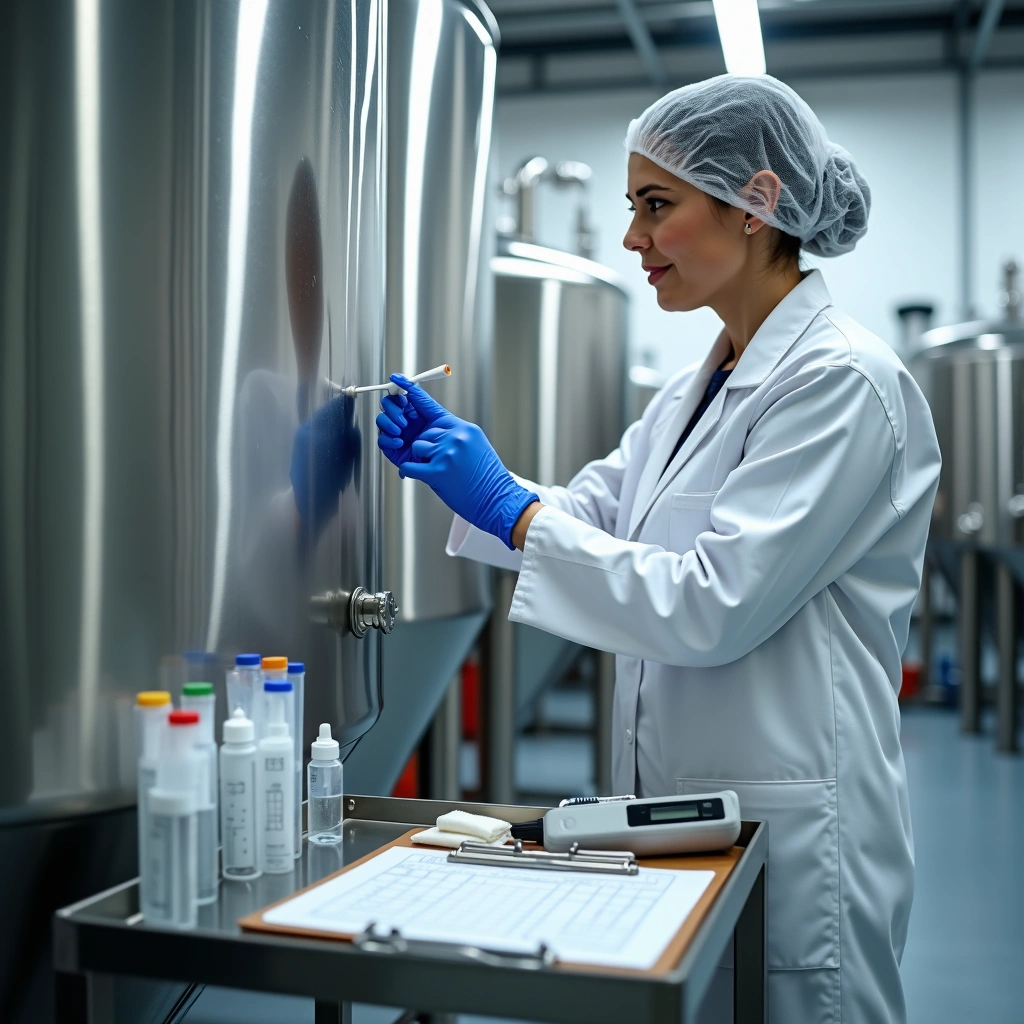
Surface swabs target areas where allergen residues accumulate or prove difficult to remove. Sampling plans must represent the condition of what is being sampled and the outcome of cleaning procedures for all equipment pieces[8]. Sites should focus sampling on areas most challenging to clean. These represent worst-case scenarios[13].
Swab collection requires materials and techniques that are specific. Allergen-free certified swabs from kit manufacturers must be used. Other swabs or sponges may contain allergens from recyclable materials or microbiological media[12]. Pre-warmed extraction solution (60°C) moistens swabs before rubbing 10 times left to right and 10 times top to bottom across a defined 100cm² area[14].
Storage and transport conditions affect allergen recovery rates. Recovery of allergen residues remains higher and more stable when swabs are stored at colder temperatures, at 4°C or -20°C in particular[15]. Current best practise recommends shipment on ice with same-day delivery and keeping samples cold until analysis[15].
Rinse water and product sampling requirements
Multiple sample types build complete validation evidence. Samples split into product samples (pre-clean product containing the allergen and post-clean product made after cleaning) and environmental samples (surface swabs, purge samples, rinse waters from CIP systems, and air monitoring system/settle plate testing)[6]. Cleaning validation requires a combination of these sample types. This varies by factory type and processing line configuration.
Final rinse water from clean-in-place systems offers practical sampling points where residues distribute uniformly[8]. Rinse waters containing residual cleaning chemistry should be avoided. Cleaning chemicals interfere with allergen testing[3]. Next off-line product provides the only direct measure of consumer exposure. This is the first ingredient or product contacting equipment after cleaning[13].
Positive control testing evidence
Positive control testing proves vital for validation success. Testing positive controls shows that a good target allergen has been chosen and that the test method suits the sample collected[6]. Pre-clean product containing the allergen of concern demonstrates whether the chosen test detects the factory’s contaminant effectively.
The test must detect allergens when present in large quantities. Only then can it detect trace levels reliably[6]. To cite an instance, some ELISA tests designed for raw egg perform poorly at detecting cooked egg. This makes test selection significant for validating production scenarios that are specific[6]. Validation lacks proof that the analytical method can detect the allergen forms present in the facility without positive control evidence.
Verification Evidence: Ongoing Monitoring Systems
Sites evolve to routine monitoring once verification proves cleaning procedures work. This confirms adherence to verified protocols[5]. Verification occurs after each production run and cleaning event. The design reflects whether the cleaning process was completed successfully relative to standards[5]. Sampling and methods used during verification may prove too cumbersome for routine use. Most facilities operate verification programmes featuring representative sampling with a combination of target allergen testing and surrogate methods[5].
Qualitative rapid tests for routine checks
Lateral flow devices provide practical tools for routine allergen verification. These immunologically based analytical tests function like ELISA but deliver qualitative results that indicate present or absent rather than specific quantities[10]. They suit surfaces and rinses and offer rapid, portable and easy-to-use options for daily monitoring[10]. But lateral flow devices have technical limitations. They should only be used for raw materials or finished products where verified for the specific matrix and allergen[10].
Factory-based rapid lateral flow devices prove useful as verification tools due to their speed and simplicity[16]. Sites should generate side-by-side data during verification. This compares lateral flow results with quantitative ELISA tests to determine the relationship between methods[5]. This relationship establishes confidence that qualitative verification reflects allergen removal accurately.
ATP and organic residue monitoring
ATP bioluminescence has become accessible to more people for cleaning verification due to accuracy, ease of use, time-to-results and counted results[17]. ATP tests detect adenosine triphosphate from all sources. These include animal, vegetable, micro-organisms and food protein residues and serve as general sanitation indicators[10]. Protein swabs indicate general hygiene through simple colour indicators but remain non-specific to allergens[10].
These surrogate methods may not relate to allergen-specific tests and will not indicate allergen presence definitively[5]. Then if surrogate methods are used, generating side-by-side data over time determines whether ATP or protein results predict allergen test outcomes reliably[5].
Cleaning verification frequency and records
Verification frequency remains facility-specific and is designed to detect product-relevant allergens based on internal risk assessment[17]. The appropriate number of samples must be thought about within ground production and budget requirements. This potentially evolves over time as facilities become more consistent[5]. Increased sampling of that area may be warranted if data indicate particular sites becoming difficult to clean effectively and consistently[5].
Documentation Requirements for Audit Compliance
Detailed documentation transforms BRCGS cleaning validation from a technical exercise into auditable evidence. Good records of validation results and outcomes represent baseline expectations. Sites must also document all decisions made before starting validation work[18]. This has rationale for target allergen selection and swab location choices. You create a defensible trail that demonstrates reasonable practicability[18].
Validation study reports auditors expect
Validation study reports must detail the objective, method, target allergens, sampling plan, testing using suitable methods, and desired outcome[7]. Reports should capture all TACT parameters (Time, Action, Chemistry, Temperature) assessed during the validation process[8]. The documentation proves that procedures remove allergens under controlled conditions and establishes acceptable performance limits.
Standard operating procedures for cleaning
SSOPs must have all instructions needed to ensure equipment and utensils are cleaned properly. They should also have monitoring and verification instructions[8]. Written procedures should specify what gets cleaned, cleaning frequency, chemical contact times, action methods, chemistry composition and temperature parameters[19]. Sites require version numbers, approval dates, owners, revision history and clear status indicators on controlled documents[20].
Training records and competency evidence
Training records must capture trainee name, date, duration, course title with reference and version number, trainer name, and curriculum summary[21]. Compliance from staff who undertake cleaning procedures proves essential in facilities with non-dedicated equipment. Competency evidence becomes mandatory[18]. Records apply to permanent, temporary, seasonal and contractor personnel equally[21].
Corrective action and root cause analysis documentation
Root cause analysis follows a systematic five-step approach: define the issue, break down root cause, develop preventive action plan, implement actions, then verify and monitor effectiveness[22]. BRCGS requires RCA for non-conformities identified at previous audits and significant complaint increases[23]. Sites have 28 days following audit to complete corrective action, root cause analysis and preventive action plans for identified non-conformities[23].
Common Audit Non-Conformities and How to Avoid Them
“A well-executed root cause analysis should drive effective corrective actions that prevent recurrence, rather than simply closing the finding.” — Sam Kent, Expert in Food Safety and Compliance
Sanitation records rank as the most asked about document set during BRCGS audits[11]. Sites face non-conformities when validation evidence proves incomplete, whatever the actual facility cleanliness. Understanding common failures helps manufacturers prepare reliable documentation that withstands scrutiny.
Insufficient validation evidence
Terms like monitoring, verification and validation used interchangeably create visibility problems in advanced-level audits[11]. Auditors demand validation study records rather than accepting general statements about testing programmes. Sites must show quantitative assessment through structured testing over multiple sanitation cycles under varied conditions that include different operators and product soils[11].
Missing worst-case scenario testing
Certain cleaning parameters get overlooked. The number of cleaning operatives and the cleaning window needed are examples[24]. Validation should happen in worst-case circumstances at the lowest chemical strength or temperature in acceptable ranges[24]. Auditors question whether validation proves effectiveness under challenging conditions without worst-case documentation.
Inadequate cleaning verification records
Incomplete or unavailable pre-operational verification results trigger non-conformance[11]. Allergen documentation that does not match the current production schedule represents a frequent citation as well[25]. Verification frequency and record consistency need attention beyond initial validation completion.
Poor association between validation and verification methods
Sites must show association between validation methods and routine verification tools[26]. ATP measurements may serve for verification only if ATP presence associates with allergen absence on surfaces[24]. The verification programme lacks scientific justification without documented association studies.
Conclusion
BRCGS cleaning validation requires methodical preparation, quantitative evidence and systematic verification programmes. Sites that document worst-case scenarios, verify cleaning procedures through ELISA testing and maintain strong verification records position themselves for audit success. Manufacturers who invest time in complete allergen mapping and risk assessment before validation begins will find the whole process becomes much more manageable.
Auditors expect documentation that demonstrates scientific rigour and practical implementation. Original validation studies demand considerable resources, but routine verification systems built on validated foundations prevent non-conformities that can get pricey. Food manufacturers who treat allergen cleaning validation as an ongoing management system rather than a one-time exercise will find compliance becomes second nature and protects both consumers and brand reputation.
Key Takeaways
BRCGS allergen cleaning validation is a critical compliance requirement that protects consumers and prevents costly product recalls. Here’s what food manufacturers must understand:
• Validation proves, verification monitors: Validation uses quantitative ELISA testing to prove cleaning procedures work under worst-case conditions, whilst verification employs rapid tests like ATP to confirm daily adherence to validated protocols.
• Documentation is non-negotiable: Auditors expect comprehensive records including validation study reports, risk assessments, allergen flow diagrams, SOPs, training records, and corrective action documentation—not just test results.
• Worst-case scenarios drive validation: Testing must target the most difficult-to-remove allergen, highest concentration products, hardest-to-clean equipment surfaces, and challenging conditions to demonstrate effectiveness across all scenarios.
• Physical form determines risk: Powdered allergens present higher airborne contamination risks than liquids or solids, requiring different control strategies and influencing target allergen selection for validation studies.
• Revalidation triggers are specific: Changes to cleaning procedures, chemicals, equipment, product formulations, or manufacturing processes invalidate previous validation and require new studies before resuming production.
• Multiple sample types build evidence: Effective validation combines surface swabs from critical control points, rinse water from CIP systems, next-off-line product samples, and positive controls to comprehensively demonstrate allergen removal.
The distinction between validation and verification represents the most common source of audit non-conformities. Sites that establish quantitative validation evidence first, then implement correlated verification systems for routine monitoring, create defensible allergen management programmes that satisfy BRCGS requirements whilst protecting consumers from cross-contamination risks.
FAQs
Q1. What is the difference between allergen cleaning validation and verification? Validation involves proving that your cleaning process works effectively by using quantitative testing methods like ELISA to demonstrate that allergen residues are removed to acceptable levels. Verification, on the other hand, is the routine monitoring that confirms the validated cleaning method continues to work consistently over time, typically using rapid tests such as ATP swabs or visual inspections after each cleaning cycle.
Q2. What documentation do BRCGS auditors expect to see for allergen cleaning validation? Auditors require comprehensive documentation including validation study reports with quantitative test results, allergen risk assessments, process flow diagrams showing allergen movement through the facility, standard operating procedures for cleaning, training records demonstrating staff competency, and corrective action documentation. All decisions made during validation planning, such as target allergen selection and sampling locations, must also be documented with clear rationale.
Q3. When does cleaning validation need to be repeated? Revalidation becomes necessary whenever changes occur that could affect cleaning effectiveness. This includes modifications to cleaning procedures, changes in cleaning chemicals or suppliers, alterations to equipment being cleaned, changes in product formulations or viscosity, and modifications to manufacturing processes. Any change to the validated parameters requires repeating the validation study before resuming production.
Q4. What testing methods are acceptable for allergen cleaning validation? Quantitative ELISA (enzyme-linked immunosorbent assay) testing is the preferred method for initial validation as it specifically detects allergenic proteins and provides measurable results. For routine verification, qualitative rapid tests such as lateral flow devices, ATP bioluminescence, and protein swabs can be used, provided correlation studies demonstrate these methods reliably predict allergen removal based on the quantitative validation data.
Q5. How do you determine worst-case scenarios for allergen cleaning validation? Worst-case scenarios are identified by considering which allergen is hardest to remove from equipment, which products contain the highest allergen concentrations, which processing methods make allergens most difficult to detect, which equipment surfaces are most challenging to clean, and which areas remain uncleaned for the longest periods. Testing under these challenging conditions proves that cleaning procedures work effectively across all production scenarios.
References
[1] – https://www.food-safety.com/articles/4434-best-practices-with-allergen-swabbing
[2] – https://www.ifsqn.com/forum/index.php/topic/45276-brcgs-version-9-audit/
[3] – https://www.food-safety.com/articles/11362-best-practice-considerations-to-enhance-the-effectiveness-of-allergen-cleaning-and-validation
[4] – https://techni-k.co.uk/contamination-control/allergen-management/
[5] – https://allergikompetens.se/wp-content/uploads/2015/09/NE8206_Allergen_Validation_and_Verification_Handbook_LO_May15.pdf
[6] – https://www.rssl.com/media/ayohzhst/rssl-white-paper-cleaning-validation-in-allergen-management.pdf
[7] – https://www.factssa.com/news/stepping-through-allergen-cleaning/
[8] – https://www.fda.gov/media/129671/download
[9] – https://www.brcgs.com/media/2166654/p617-position-statement-for-allergen-management-control-v2-08012021.pdf
[10] – https://allergenbureau.net/food-allergens/food-allergen-analysis/
[11] – https://www.alleratech.com/blog/cleaning-and-sanitation-in-food-industry
[12] – https://www.food-safety.com/articles/3812-allergen-validation-analytical-methods-and-scientific-support-for-a-visually-clean-standard
[13] – https://www.rssl.com/insights/food-consumer-goods/designing-a-successful-allergen-cleaning-validation-strategy/
[14] – https://agsci.psu.edu/global/ifsi/ukraine-food-safety-short-course-materials/fssc-lab-experiments-and-other-activities/allergen-testing-of-food-contact-surfaces-lab.pdf/@@download/file/Allergen Testing of Food Contact Surfaces Lab.pdf
[15] – https://allergenbureau.net/time-and-temperature-matter-for-allergen-testing-swabs/
[16] – https://www.rssl.com/insights/food-consumer-goods/food-allergen-detection-choosing-the-right-testing-method/
[17] – https://trafalgarscientific.co.uk/content/Hygiena/KIT3096_BROC.pdf?srsltid=AfmBOoprYnAhS7Qw61tl55Qq3H5tzuPc8CPUYGAdbc6L5YJTnZCyIcNZ
[18] – https://www.rssl.com/media/faad4ehy/rssl-white-paper-cleaning-validation-in-allergen-management.pdf
[19] – https://www.solenis.com/en/resources/blog/best-practice-standard-sanitation-operating-procedures-for-allergen-control-in-food-processing/
[20] – https://ioni.ai/post/brcgs-certification-for-food-manufacturers-requirements-timeline-and-how-to-prepare
[21] – https://techni-k.co.uk/training-competency/management-of-training/
[22] – https://www.brcgs.com/about-brcgs/news/2024/industry-spotlight-root-cause-analysis/
[23] – https://www.klipspringer.com/blogs/root-cause-analysis-3-methods-to-use-at-your-food-factory/
[24] – https://www.romerlabs.com/en/library/knowledge/detail/10-steps-to-validating-and-verifying-allergen-cleaning-procedures
[25] – https://documentcompliance.com/brcgs-audit-checklist-for-food-manufacturing/
[26] – https://www.klipspringer.com/blogs/allergen-cleaning-validation-a-practical-guide-for-food-factories/
[27] – https://www.brcgs.com/media/2170588/allergen-mgt-22-sample.pdf
[28] – https://www.brcgs.com/about-brcgs/news/2024/industry-spotlight-cleaning-and-disinfection/
[29] – https://fevquality.co.uk/cleaning-validation-guide-food-industry/
[30] – https://www.nifcc.co.uk/site/wp-content/uploads/2023/07/BRCGS-START-Issue-2-1.pdf
[31] – https://brccompliance.org/5-things-you-can-do-to-master-allergen-control/
[32] – https://www.food.gov.uk/print/pdf/node/7076
[33] – https://www.fooddrinkeurope.eu/wp-content/uploads/2022/04/FoodDrinkEuropes-Guidance-on-Food-Allergen-Management-for-Food-Manufacturers-2022.pdf
[34] – https://www.alleratech.com/blog/allergen-control-program