
Food allergies affect an estimated 10% of the U.S. population, including up to 8% of infants and young children. Yet undeclared allergens remain among the leading causes of food recalls. Environmental allergen monitoring serves as a continuous control system rather than a one-off activity. Food manufacturers must implement resilient swabbing programmes to verify sanitation effectiveness and prevent cross-contamination. This piece gets into practical strategies for environmental allergen testing. It covers risk-based swabbing programmes, sampling frequency and critical control points. Result interpretation and trending analysis support compliance and protect consumers.
What is Environmental Allergen Monitoring

Image Source: Food Standards Scotland
Definition and Scope
Environmental allergen monitoring represents a systematic approach to verify that cleaning procedures remove allergenic residues from production environments. This testing focuses on cleanliness verification at manufacturing and processing sites through frequent confirmation that established protocols eliminate cross-contaminants [1]. The scope extends beyond simple hygiene checks to include specific detection of allergenic proteins that pose health risks to sensitive consumers.
Over 160 different food types can trigger allergic reactions in susceptible individuals [1]. But regulatory frameworks concentrate on priority allergens, with facilities commonly testing for milk, egg, peanut, soybeans, wheat, tree nuts, fish, crustacean shellfish, and sesame [1]. Food manufacturers handling these raw materials face heightened scrutiny, especially when allergen-related recalls continue rising [1]. Environmental allergen testing serves as a continuous control system that is part of broader food allergen control programmes rather than functioning as an isolated activity.
Allergenic components consist of select, species-specific proteins embedded within complex food matrices [1]. These proteins often adhere to surfaces and resist removal through standard cleaning protocols [1]. Improper label declaration of allergenic ingredients remains the leading cause of product recalls and contributes to unnecessary consumer exposure [1][2]. Given these risks, manufacturers need documented allergen controls to satisfy both the Food Safety Modernisation Act (FSMA) and Global Food Safety Initiative (GFSI) standards [1].
A properly designed environmental allergen monitoring programme maps the processing environment to identify sampling sites based on facility design and production processes [2]. Direct product contact surfaces receive priority attention, as these locations present the highest risk for allergen cross-contamination before final package closure [2]. Testing technologies have progressed, yet integration of these discrete processes into cohesive operating procedures remains underdeveloped [1].
Difference Between Validation, Verification, and Monitoring
Food manufacturers conflate three distinct activities that serve separate purposes within allergen management systems. Validation represents the process of gathering evidence to prove that a cleaning regime can remove allergen residues and repeatedly [2][2]. This quantitative assessment occurs prior to implementing the regime and demonstrates that cleaning objectives meet safety thresholds. Validation requires testing the same worst-case scenario, analysing the same sample types, and using the same testing method to establish consistency [2].
The validation of cleaning procedures should be planned, rigorous and thorough, often constituting substantial work to be done [2]. Validation need not repeat once completed and demonstrating acceptable performance, unless changes occur to manufacturing processes, cleaning methods, or ingredient formulations [2]. Analytical results indicate where improvements are needed when cleaning proves insufficient, or whether equipment cannot achieve acceptable cleanliness levels [2].
Verification activities differ from validation by confirming that validated procedures were performed and remain effective on an ongoing basis [2][2]. These periodic assessments occur after the original validation and use tools such as qualitative Rapid Lateral Flow Devices suited to environmental samples like rinse waters and surface swabs [2][2]. Protein swab testing provides rapid verification of cleaning effectiveness between production runs.
Monitoring constitutes the routine checks conducted every time cleaning occurs and involves visual inspections and signoffs [2][2]. These activities differ from verification through their frequency and scope. They focus on immediate confirmation rather than periodic assessment. Neither validation nor verification should proceed without completing thorough visual inspections, complemented by analytical analyses of finished products, work-in-progress, rinse water, flush material, or environmental surface swabs [2].
How Monitoring Supports Continuous Allergen Control
Environmental allergen monitoring integrates with broader allergen management frameworks to demonstrate compliance and operational control. HACCP risk analysis confirms that exposure to undeclared food allergens for sensitive populations needs risk management procedures with controls, validation, verification and monitoring mechanisms [1]. Food business operators bear obligations under retained Regulation (EC) No. 852/2004 to implement procedures based on HACCP principles [1].
Businesses can demonstrate they are taking steps to eliminate or reduce the likelihood of allergens being unintentionally present through regular monitoring [1]. This documentation increases accuracy of allergenic ingredient declarations and provides opportunities to demonstrate adequate skills and knowledge in allergen management [1]. It reduces consumer risk from unintended allergen presence [1].
Cross-contact occurs when allergenic foodstuffs are handled on surfaces or equipment not cleaned before processing products without those ingredients [1]. Spillage in handling, storage and transport environments that is not cleaned creates contamination pathways [1]. Monitoring activities detect these failures before products reach consumers and support strategic sampling at critical control points throughout production chains.
The integration of environmental monitoring results into secure data systems enables trending analysis over time [1]. Automated uploads from testing devices to cloud-based platforms allow single dashboard reporting that couples environmental monitoring with allergen results for optimal cleaning validation [1]. This integrated approach positions monitoring as a proactive management tool rather than a reactive response once hazards have been detected [1]. Regular internal audits of production systems verify that allergen cross-contact controls are implemented and personnel remain trained [1].
Designing an Effective Swabbing Programme

Image Source: Neogen
Successful allergen control depends on systematic planning before any swabs are collected. The hazard assessment is the foundation of programme design and establishes which allergenic sources warrant attention and where contamination risks concentrate [2]. Priority allergenic foods identified by regulatory authorities require immediate consideration, along with ingredients or processing aids derived from those sources [2]. Allergen load, defined as the total protein amount from the allergenic source present in food components, represents the second critical consideration [2]. Facilities select the allergenic source with the highest intact protein load in product formulations for assessment [2].
Risk-Based Approach to Allergen Monitoring
The physical form of allergenic materials influences risk assessment outcomes substantially. Allergens appear as particulates, powders, flours, pastes, liquids, or aerosols. Each presents distinct contamination pathways [2]. Powders carry higher dispersion risk compared to solid forms that remain easier to contain [3]. Hazard assessments must identify equipment exposed to the highest allergen loads. Cleaning and validation procedures should focus on such apparatus [2].
Target allergen selection for programme validation requires careful consideration of multiple factors. Validation studies should feature allergens present at high levels, possessing high protein content and demonstrating resistance to removal from production lines [2]. This worst-case approach proves the cleaning regime functions in the most challenging situations [2]. A target allergen validated under these conditions provides assurance that easier-to-clean allergens in lower quantities will be removed using similar procedures [3].
Equipment material composition influences cleaning effectiveness. Stainless steel surfaces clean more readily than rubber components [3]. When equipment incorporates various materials, cleaning validation protocols should include all material types to demonstrate effectiveness [3]. Manufacturing lines with similar equipment layouts and the same cleaning processes need not undergo separate validation for every allergen on every line, provided the target allergen selection follows worst-case principles [3].
Zoning Concepts for Allergen Control
Hygienic zoning divides food processing operations into distinct areas based on contamination risk levels [2]. Allergen-related zoning must integrate into overall hygienic frameworks to prevent cross-contamination between allergen and non-allergen products [2]. Four zones establish the industry standard framework.
Zone 1 includes all food contact surfaces and utensils that touch or are exposed to products during normal operations [1]. These surfaces represent the highest contamination risk and receive priority in sampling strategies for environmental allergen monitoring programmes. Zone 2 has surfaces not in direct product contact but positioned adjacent to food contact surfaces in processing areas [1]. These areas can still become contamination sources, although not designed for food contact [1].
Zone 3 has non-food contact surfaces that do not contact product or container surfaces under normal operating procedures [1]. Adjacent to Zone 2, these areas include floors, drains and storage locations [1]. Zone 4 covers remote areas beyond processing zones that do not contribute to direct product contamination [1].
Transition areas function as buffer zones separating zones of differing risk levels [2]. These controlled environments enforce hygiene barriers and ensure personnel, equipment, or materials moving between zones do not compromise segregation or introduce hazards [2]. Components may include airlock arrangements preventing contaminated air entry, personal hygiene stations, sanitation systems and inspection points [2].
Allergens cannot be removed or neutralised through thermal processing or filtration, unlike microbial or physical hazards [2]. Prevention and segregation are the only effective controls [2]. Products contaminated with allergens require segregation and re-labelling for allergen declaration or destruction [2].
Product Changeovers and Allergen Profiles
Production line transitions from allergen-containing products to allergen-free or different-allergen products mandate validated changeover cleaning [3]. Facilities producing multiple allergen-containing products on shared lines with different allergen profiles require changeover cleaning at every product transition [3]. Each allergen pair demands its own validated protocol [3]. Peanut-to-dairy changeovers require different chemical treatment than milk-to-shellfish transitions because allergen residue composition varies [3].
Complete equipment disassembly proves essential. Mixer bowls, pump heads, valves and tubing must be removed as allergen residues hide in tight spaces and inaccessible zones [3]. Every component must be accessible for cleaning and subsequent verification testing [3]. Pump impellers, valve cavities, mixer blade mounting pockets and tubing interiors represent the highest-risk components due to tight tolerances and product stagnation zones where allergen particles accumulate [3].
Effective cleaning procedures vary according to equipment design, allergen form, protein load and finished food product characteristics [2]. Different formulations may require separate validation even when produced on the same line if the food product matrix or allergen types, forms, or protein loads vary among formulations made on shared equipment [2].
Swabbing Locations and Critical Control Points

Image Source: Food Safety Magazine
Selecting appropriate sampling locations determines programme effectiveness. Facilities must sample throughout production processes to capture realistic contamination patterns [2]. Direct product contact surfaces receive highest priority because products remain exposed to the environment before final package closure [2]. Tables, conveyor belts, buckets, fillers, hoppers and utensils are primary sampling sites [2]. Employee hands and gloves need inclusion since personnel frequently transfer residues between surfaces [2].
Food Contact Surfaces
Products manufactured on tested lines should be held until final results arrive when testing direct food contact surfaces for allergens [2]. This precaution prevents potentially contaminated products from reaching distribution channels whilst laboratory confirmation proceeds. Sampling programmes organised through facility mapping identify multiple sites based on specific design and process configurations [2]. Detailed sampling logs containing written instructions for difficult-to-access areas within processing equipment support consistent collection techniques [2].
Critical control points on production lines undergo identification through HACCP standards. These dictate the number and location of swabs for environmental allergen monitoring programmes [1]. Manufacturing lines processing the product with highest allergen loading are the foundations for validation of these control points [1]. Specialist sanitation teams collect swabs at various points following production, including samples from different materials such as rubber and stainless steel [1].
Non-Food Contact Surfaces
Items and surfaces positioned directly above or in close proximity to direct food contact surfaces need testing [2]. Areas within enclosed equipment can harbour residues that subsequently contaminate production runs, although not contacting product directly. Equipment capable of carrying dust presents particular concern. Vacuum cleaners, brooms and compressed air are potential allergen sources in processing environments [2].
Framework components, guards and control panels adjacent to food zones merit attention despite lacking direct product exposure [2]. These surfaces accumulate residues through airborne deposition or splash during production. Drains and floors in high-risk zones provide insight into contamination spread potential [2]. Equipment designed for both allergen-free and allergen-containing products demands heightened scrutiny across all surface types [2].
Hard-to-Clean Areas and Equipment
Crevices, joints and similar locations prove harder to clean of allergenic residue compared to flat, available surfaces [4]. Dead legs, gasket lips, threads, seals and scraper edges are niches where proteins accumulate [2]. Belt undersides, fillers and combination ovens present additional challenges due to design limitations that impede thorough cleaning [2]. Clean-in-place shadowed areas remain problematic because spray patterns fail to reach all equipment zones.
Sentinel sites representing the most difficult-to-clean locations need trending over time [2]. Facilities establish these reference points during validation activities by observing cleaning procedures to identify where product accumulates or resists removal [3]. Maintenance tools and in-process containers serve as cross-contact sources that need clean-out-of-place approaches [3]. Identifiable, colour-coded containers for individual allergens are best practise for managing this contamination pathway [3].
Personnel and Transfer Points
Employees involved in manufacturing present another contamination vector through clothing, hair, hands and footwear [3][5]. Dedicated personnel assigned to high-allergen production areas can wear colour-coded uniforms or aprons to prevent cross-contamination [3]. Maintenance staff moving between multiple areas need uniform changes when transitioning from high to low allergenic potential zones [3].
Foot traffic patterns between manufacturing areas and break rooms need attention if floor residues exist [3]. Trash container movement needs controlled traffic patterns, with covered containers during removal from manufacturing areas [3]. Disposable liners or dedicated, colour-coded trash containers are best practises in situations with high cross-contact potential [3]. Samples from these transfer points feed data into risk assessments supporting continuous allergen control.
Frequency of Testing
Testing frequency directly affects how well allergen control systems work, yet neither government regulators nor GFSI certification bodies prescribe specific testing intervals [2]. Facilities must determine appropriate frequencies through HACCP risk assessments that account for allergen changeovers, production volumes, and product risk profiles [2].
Risk-Based Frequency Determination
Quantitative risk assessments drive the decision on testing frequency. These assessments weigh unintentional allergen presence against consumer safety thresholds [6]. Facilities producing allergen-containing formulations often need more frequent revalidation, perhaps every six months. Operations with stable manufacturing conditions and infrequent allergen use can extend intervals as confidence in cleaning procedures increases [2].
Operational changes must trigger revalidation schedules. Cleaning procedures need renewed validation when you introduce new products, alter formulations, modify equipment matrices, adjust processing conditions, change sanitation parameters, or switch allergen test kits [2]. Ingredient supplier changes also require revalidation, as raw material characteristics influence cleaning difficulty and how long residue persists [2]. Annual verification activities support risk assessments that remain current until operational parameters shift [2].
Cost plays a role in frequency decisions. Testing expenses range from £50 to £80 per sample, resulting in £1,200 to £1,920 per critical control point when you need to assess multiple surfaces [2]. So testing occurs when risk assessment mandates it, supplemented by annual verifications that confirm ongoing control [2].
High-Risk vs Low-Risk Production Environments
Production environments with elevated allergen contamination potential need intensive sampling protocols. Verification tests should occur at every changeover for high-risk products to confirm residue removal [2]. Medium-risk products permit reduced frequency, potentially monthly, while low-risk products may need only quarterly verification [2].
Lines producing products with the highest allergen loading serve as validation standards [2]. Specialist teams collect swabs from various equipment points and materials following production of these challenging formulations [2]. The next product manufactured undergoes testing at eight timepoints from the start of production through 60 minutes on three separate occasions. This demonstrates that precautionary allergen labelling remains unnecessary [2].
Changeover and Post-Cleaning Sampling
Product changeovers represent critical sampling opportunities within environmental allergen monitoring programmes. Post-cleaning verification proves that allergen residues have been removed from production surfaces. Pre-operational verification confirms safe conditions for subsequent production runs [2]. Some facilities employ ‘safe mode’ testing plans and run identical allergen products before and after sanitation so inadequate cleaning results do not compromise consumer safety [2].
Formulations containing the highest allergen percentages undergo testing to assess sanitation adequacy [2]. The physical form of allergens influences sampling challenges, as peanut butter cleans differently than peanut granules [2]. Particulate materials present unique difficulties where many samples need testing to ensure particles are detected if present [2].
Trending vs Routine Verification
Facilities establish schedules for ongoing verification using rapid protein detection procedures once initial validation studies succeed [2]. Routine surveillance programmes select prescribed numbers of products per category through random selection techniques. Intentional skewing is permitted when emerging issues or intelligence justify targeted investigation [2].
Trending data over time reveals contamination patterns that routine verification alone cannot identify. Facilities integrate environmental testing results with broader risk assessments and use horizon scanning activities to monitor supply chain incidents and vulnerabilities [2]. This intelligence feeds into testing strategies that evolve alongside operational realities and positions monitoring as a continuous control system supporting allergen cross-contamination prevention.
Testing Methods for Environmental Allergen Testing
Image Source: Neogen
Analytical technologies for environmental allergen monitoring divide into three categories, each serving verification needs in production environments of all types. You must base your selection on required sensitivity, turnaround speed, and whether qualitative screening or quantitative measurement suits operational requirements.
Protein Swabs for General Cleaning Verification
Protein residue testing provides rapid verification because proteins prove harder to remove from surfaces than glucose or other residues [7]. These devices employ colorimetric chemistry where reagents turn purple when protein contact occurs and deliver instant visual confirmation without instrumentation requirements [7]. The colour intensity and speed of change indicate contamination levels. Faster, stronger purple coloration signals higher surface residue [7].
Semi-quantitative protein swabs detect as little as 3µg of allergen on surfaces and in solution [7]. Validation extends to multiple allergenic proteins that include egg, milk, gluten, soy, peanut, almond and buckwheat [7]. This wide-ranging approach works for routine cleaning effectiveness checks between product changeovers where rapid assessment guides instant corrective actions. Protein presence does not necessarily confirm allergen presence, though protein absence implies allergen absence given that most allergens consist of proteins [7].
Allergen-Specific Rapid Tests
Lateral flow devices use antibodies designed to detect specific allergenic proteins. Liquid samples applied to single-use devices produce visible lines within minutes [3]. These immunochromatography systems need no laboratory equipment and support on-site allergen screening and sanitation verification [3]. Results arrive rapidly to enable instant corrective actions. Simple formats require minimal training [3].
Factory-based rapid tests suit rinse waters and environmental swabs, as extraction procedures stay basic and complex food matrices easily cause interferences [3]. Validation proves essential because advertised detection limits vary depending on contaminant source [3]. To name just one example, milk test detection limits based on liquid milk may differ when contaminants consist of cheese or whey [3]. High allergen concentrations can produce false negatives through overload effects where analyte-antibody imbalance impedes sandwich complex formation [8].
Laboratory Confirmation When Required
ELISA testing represents the laboratory-based standard using antibodies and enzyme reactions to identify and measure allergenic proteins [3]. These methods deliver high sensitivity, specificity, and quantitative results that support informed decisions [3]. Quantitative measurement within defined ranges lines up with regulatory and customer requirements [3].
Laboratory selection requires thinking over BS EN ISO/IEC 17025 accreditation, ideally for specific test methods among general laboratory accreditation [3]. Facilities should verify whether laboratories perform spike recovery testing and cross-reactivity checks [3]. ELISA tests incur higher costs per test and longer turnaround times versus lateral flow alternatives [3], yet provide validation data when integrating results into broader allergen control programmes and audit readiness frameworks.
Result Interpretation and Trending Analysis
Test results from environmental allergen monitoring programmes just need careful interpretation because biological assays prove prone to both false positive and false negative outcomes [5]. Incorrect interpretation risks unnecessary recalls or, conversely, releasing contaminated products that endanger allergic consumers.
Understanding Positive vs Negative Findings
Positive allergen test results indicate sensitisation to allergenic proteins rather than confirmed clinical allergy. A positive finding demonstrates that immune system recognition occurred, yet 50-90% of declared allergies are not actual allergies [9]. Test size does not predict reaction severity. Someone with smaller test responses could experience serious reactions whilst another with large responses might have mild symptoms [10]. Negative results suggest low likelihood of IgE-mediated contamination, though false negatives occur especially when testing during early contamination stages or when allergen extract quality proves poor [10].
Cross-reactivity causes tests to mistakenly detect biologically similar proteins as target allergens [5]. This phenomenon occurs with proteins sharing similar shapes or DNA sequences. Facilities must conduct spike recovery checks that add known allergen quantities to samples and compare results obtained against added amounts [5].
Detection Limits and Sensitivity
Commercial allergen testing kits regularly undergo development, yet changes in limit of detection (LOD) and limit of quantitation (LOQ) are not apparent immediately when comparing kits [11]. Kit manufacturers retain names even when making improvements or alterations. This creates challenges for confident arrangement between literature and test kit data. Current commercial methods detect celery down to 0.4 mg/kg, though some research methods claim detection of 0.001% celery from 100 ng/mL DNA template [11].
Importance of Data Trending Over Time
Secure data systems that integrate environmental testing results make trending analysis possible. This reveals contamination patterns routine verification alone cannot identify. Automated uploads from testing devices to cloud-based platforms allow single dashboard reporting. This couples environmental monitoring with broader allergen control programme data.
Identifying Recurring Contamination Patterns
High rates of cross-reactivity emerge with specific allergens, especially nuts (100%), eggs (90.7%), and fruits (89.2%) [4]. Females account for 65.6% of cross-reactivity cases compared to males at 34.4% [4]. Furthermore, 90.9% of individuals allergic to nuts experienced cross-reactivity with more than two other allergens [4]. These patterns inform targeted sampling strategies at critical control points.
When Results Require Escalation
Results just need escalation if positive findings occur on direct food contact surfaces, when trending shows deteriorating performance, or when specific allergen results contradict cleaning validation expectations. Facilities should hold products manufactured on tested lines until final confirmation arrives. This prevents potentially contaminated items from reaching distribution whilst laboratory analysis proceeds.
Corrective Actions and Root Cause Analysis
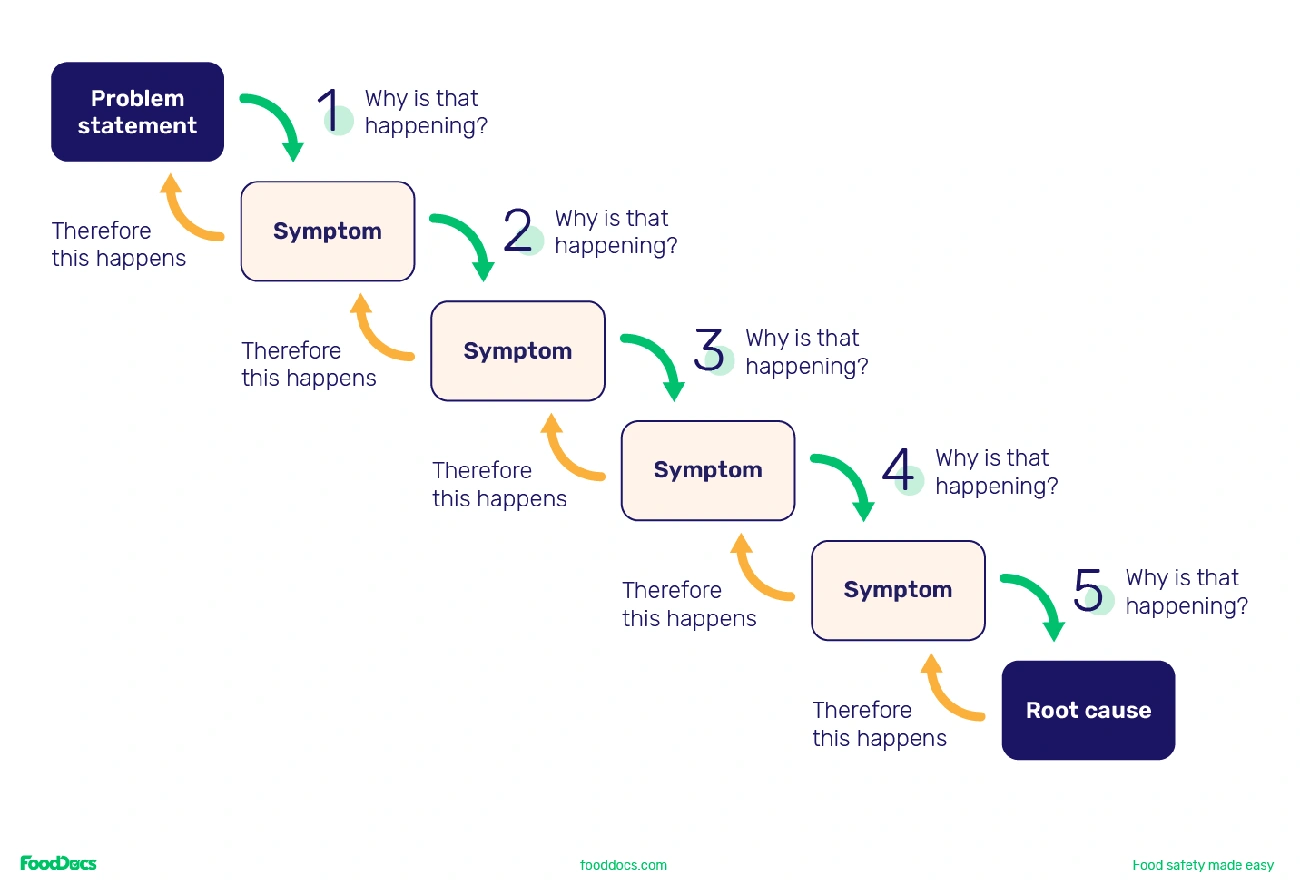
Image Source: FoodDocs
Immediate Response to Positive Results
Cross-contact occurs from inadequate cleaning of equipment and food contact surfaces [1]. Facilities must take immediate action to prevent affected products from distribution when positive allergen findings occur [12]. This has quarantining products manufactured on tested lines until final confirmation arrives and prevents potentially contaminated items from reaching consumers [13]. Corrective actions become necessary rather than simple corrections once labels have been applied [14].
Facilities should reclean and sanitise right away. First-run product must be held or destroyed [13]. Facilities should distinguish between corrective actions for improper implementation of cleaning procedures, such as occasional residue findings, and those required when procedures prove ineffective, evidenced by repeated residue findings [14].
Root Cause Investigation
Root cause analysis constitutes a systematic process to identify why contamination incidents happen [15]. BRCGS Global Food Safety Standard requires defining acceptable and unacceptable cleaning performance limits, among corrective actions when monitored results fall outside acceptable parameters [16]. Tools such as PEMPEM diagrams and Five Whys help trace superficial issues to true root causes [6].
Preventive Measures and Long-Term Solutions
Verified cleaning procedures require reanalysis when repeated positive findings indicate ineffectiveness [14]. Preventive measures have personnel retraining and process optimisation. Findings should be integrated into broader environmental allergen monitoring programmes [15] [17].
Integration with Allergen Control Programmes and Audit Readiness
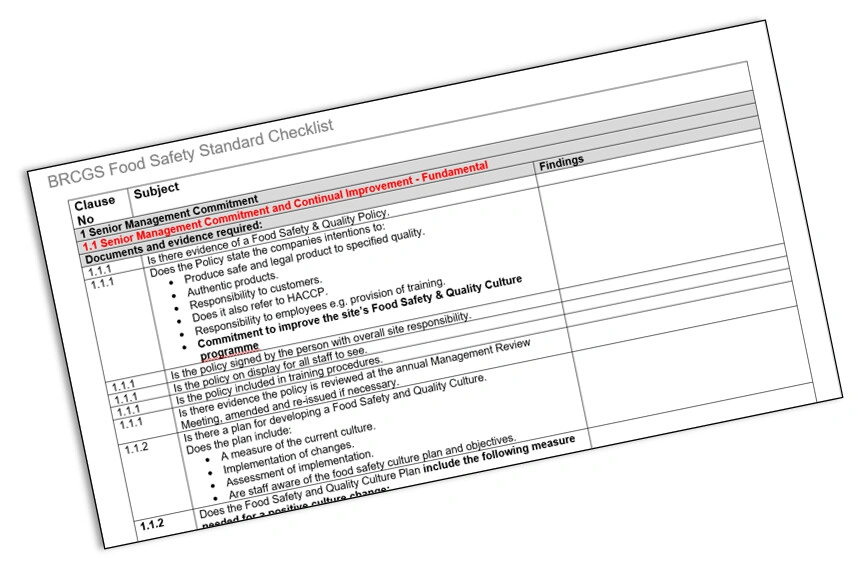
Image Source: ALLSAFE
Documentation requirements form the backbone of audit-ready allergen management systems. BRCGS Global Food Safety Standard mandates that sites maintain clear organisational structures supporting product safety management effectively [18]. Senior management must define documented objectives with measurable targets to maintain and improve safety, authenticity, legality and quality [18]. Management review meetings occur at minimum annually to assess performance against Standard requirements [18].
Supporting Validation and Verification Activities
Environmental allergen monitoring data supports validation activities that prove cleaning procedures work. It also verifies those procedures remain effective over time. Facilities must show through documented evidence that allergen controls operate within food safety management systems [19]. Allergen management integrates into HACCP frameworks as control measures that require validation [19]. Codex Alimentarius principles require establishing validated critical limits for control measures [19].
Feeding Data into Risk Assessments
Documented risk assessments of raw materials identify potential risks to product safety, authenticity, legality and quality. This has primary packaging [18]. Facilities undertake these assessments for each raw material or group. Allergen management plans serve as documented systems that identify, control, educate and communicate allergen risks from raw materials through finished products [20]. The plan has risk assessment of allergen cross-contact and implementation of controls that minimise or eliminate contamination risk [20].
Risk assessments require review based on changes in raw materials, suppliers, manufacturing processes, machinery introduction or cleaning practises [20]. Legislation and good practise change routinely as new research publishes. Sites need mechanisms that remain current to meet requirements consistently [20]. Some customers impose detailed allergen requirements that manufacturing sites must incorporate. Brand owners and large retailers especially do this at the time they develop and review allergen management systems [20].
BRCGS and Retailer Audit Expectations
Suppliers face documented approval procedures that ensure risk management to raw material quality and safety works effectively. They must also operate traceability processes that work [18]. Companies must trace all raw material product lots from suppliers through processing stages to despatch and vice versa. This has primary packaging [18]. Documented traceability procedures maintain continuity throughout site processes [18].
Complaint data undergoes analysis for trends that matter most. Serious complaints or increases that matter trigger root cause analysis and implement ongoing improvements [18]. Out-of-specification product requires management that prevents unauthorised release and works effectively [18]. Environmental allergen monitoring programmes feed directly into these compliance frameworks through systematic data collection. This supports audit evidence requirements.
Common Industry Mistakes to Avoid
Communication of allergen management plans to involved parties proves inadequate and thwarts correct implementation and execution [2]. Research into SME food businesses revealed that allergen risk assessment practise proved limited. Assessments were conducted piecemeal rather than as defined systematic processes [7]. Assessments focused on select allergens at the time they were undertaken rather than potential risks from all allergens present during production [7].
Allergen testing by SMEs as part of risk analysis remained minimal [7]. Two examples existed of allergens being tested to verify free-from claims. But no examples emerged of allergen cross-contact being tested to support precautionary allergen labelling use, either as cleaning validation or product test [7]. Businesses proved prone to biases at the time they managed risk. This has familiarity bias that focuses on allergens like nuts that come to mind first, over-confidence bias that believes processes adequate because customers never experienced adverse reactions before, status quo bias that focuses on HACCP plan adequacy, and messenger effects with unquestioned belief in chefs [7].
Staff knowledge gaps represent a critical mistake. Staff failed to retrieve allergen information from official sources such as allergen matrices or booklets at 34% of audits [21]. Staff failed to mention cross contamination risk in 68% of cases [21]. Auditors reported that 62% didn’t feel confident in staff member allergen knowledge and information provided entirely [21]. Training focused on wider food hygiene practise, with allergens receiving lesser focus [7]. Content often related to ingredient labelling requirements rather than cross-contact risks at the time allergens featured in training [7].
Sampling proves insufficient and represents a frequent error. Sampling techniques that prove inadequate or inappropriate selection of sampling sites fails to describe or expose areas where allergens may be present fully [2]. Sampling plans may require input from statisticians and personnel with deep knowledge of plant design and manufacturing processes [2]. Test methods that prove incorrect for situations cause problems. A manufacturer used a certified method that detects gluten in products, but the method certified only for wheat failed to detect barley malt added by mistake. This caused entire lot discard [2].
Packaging mismatches constitute a common cause of allergen recalls and represent missed opportunities for many facilities [2]. Systems that verify food production runs and primary and secondary packaging remain consistent help reduce this risk [2]. Outdated packaging should be destroyed to ensure against accidental use [2].
Best Practise Recommendations
Allergen control programmes that work combine process and proof. They require thorough processes to minimise allergen risk and identify points where validation proves possible [2]. Facilities should ensure every function or operation adheres to required actions that minimise undesired allergen presence [2]. Allergen requirements need clear communication with supplier practises verified [2].
Certificates of Analysis from all suppliers help prevent contamination [2]. But even conscientious suppliers can miss hot spots. Facilities should supplement CoAs with rapid testing unless confident they understand every single place ingredients have been entirely [2]. Working closely with suppliers ensures correct allergen management has been implemented. This requires suppliers give notification of changes in materials, procedures or ingredient handling [2].
Product developers and purchasing staff require awareness of allergen contamination risk. They must understand, analyse and communicate risks of new ingredients or product changes not thought about during risk assessment [2]. Cleaning procedures should be validated to show effectiveness. Verification tools should be selected and tested to enable regular monitoring of cleaning procedure efficacy [2]. Validation may require large facility effort and personnel commitment. But it generates supporting data that shows cleaning steps appropriate for operations [2].
Food safety teams should guide manufacturing personnel to manage production properly [2]. Running allergen-free products first and implementing longer production runs for allergenic products reduces changeover numbers, to cite an instance [2]. Communication channels must work so every department function and individual understands their role in ensuring manufactured products remain safe for consumers. This role matters [2]. Employees should understand the effect that errors in any manufacturing process step will have on allergic consumers. This matters more [2].
Continuous training and education appropriate to each group should be implemented to raise awareness about food allergy and food safety [2]. This has training and clear procedures for cleaning equipment, handwashing, attire requirements, product formulation and segregation activities [2]. A robust allergen environmental monitoring programme should be designed and accompanied by sampling plans and procedures that trained personnel perform correctly [2].
Frequently Asked Questions
How often should allergen management systems be reviewed? Systems require review at minimum annually. Additional reviews are triggered by raw material changes, supplier changes, manufacturing process alterations, new machinery introduction or cleaning practise modifications [20].
What documentation do auditors expect to see? Auditors seek documented allergen management plans, risk assessments, validation studies, verification records, training logs, supplier approval documentation, traceability procedures, complaint analysis and corrective action records [18].
Must facilities test for all 14 major allergens? Testing targets should be determined through risk assessment that thinks about which allergens are present, handled or could cross-contaminate products [2]. Facilities focus on allergens relevant to their operations rather than blanket testing all allergens.
Can precautionary allergen labelling replace proper allergen management? No. Precautionary labelling such as ‘may contain’ statements should only apply at the time genuine, unavoidable cross-contact risk exists that cannot be managed out of processes [22]. Such statements as catch-all to avoid proper risk assessment prove inappropriate [22].
How should facilities manage supplier allergen information? Facilities must establish rigorous processes that check every delivery, verify ingredient labels even for standard items, implement processes that alert kitchens at the time suppliers swap products for different brands, and confirm supplier allergen information remains current and accurate [22].
What role does staff training play in audit readiness? Allergen management that works hinges on training programmes that ensure all staff members understand protocols and procedures to handle food safely for allergic customers [3]. Regular reviews of communication strategies based on customer feedback and legislative changes prove vital [3]. Coupled with routine verification testing protocols, detailed training shows commitment to allergen safety during audits.
Conclusion
Effective environmental allergen monitoring just needs more than periodic testing. It requires systematic integration of swabbing programmes and risk-based sampling strategies into daily operations. Facilities that establish confirmed protocols for critical control points and combine rapid testing with laboratory confirmation show real commitment to consumer safety. Cleaning validation paired with verification activities positions allergen control as a continuous system rather than isolated checks. UK food manufacturers who implement evidence-based protocols and maintain audit-ready documentation will find their investment in cross-contamination prevention delivers regulatory compliance and consumer protection both.
Key Takeaways
Environmental allergen monitoring serves as a continuous control system that verifies cleaning effectiveness and prevents cross-contamination through systematic swabbing programmes, risk-based sampling, and trending analysis.
• Design swabbing programmes using risk-based approaches that prioritise high-allergen loads, difficult-to-clean surfaces, and worst-case scenarios for validation • Focus sampling on Zone 1 food contact surfaces, hard-to-clean areas like crevices and gaskets, and personnel transfer points where contamination spreads • Determine testing frequency through HACCP risk assessments, with high-risk changeovers requiring verification at every transition • Use protein swabs for rapid cleaning verification, allergen-specific tests for targeted screening, and laboratory ELISA for quantitative confirmation • Integrate monitoring data into trending analysis to identify contamination patterns and support audit-ready documentation for BRCGS compliance
When properly implemented, environmental allergen monitoring transforms from reactive testing into proactive risk management, enabling manufacturers to demonstrate continuous control whilst protecting allergic consumers from unintended exposure.
FAQs
Q1. How frequently should environmental allergen monitoring be conducted in food manufacturing facilities? Testing frequency should be determined through HACCP risk assessments rather than fixed schedules. High-risk production environments with frequent allergen changeovers require verification at every product transition, whilst medium-risk operations may test monthly and low-risk facilities quarterly. Facilities must also revalidate when introducing new products, changing formulations, modifying equipment, or altering cleaning procedures.
Q2. What are the most critical locations to swab for allergen contamination? Priority sampling locations include Zone 1 food contact surfaces such as conveyor belts, fillers, and utensils that directly touch products. Hard-to-clean areas like crevices, gaskets, seals, and equipment joints require particular attention as allergen residues accumulate in these spaces. Personnel transfer points, including employee hands and gloves, also warrant testing since staff frequently transfer residues between surfaces.
Q3. What testing methods are available for environmental allergen monitoring? Three main testing approaches exist: protein swabs provide rapid visual verification of general cleaning effectiveness, detecting as little as 3µg of allergen; allergen-specific lateral flow devices use antibodies to identify particular proteins within minutes on-site; and laboratory ELISA testing delivers quantitative measurements with high sensitivity for validation purposes. Selection depends on required sensitivity, turnaround speed, and whether qualitative screening or quantitative data is needed.
Q4. How should positive allergen test results be interpreted and acted upon? Positive results require immediate quarantine of products manufactured on tested lines until confirmation arrives. Facilities must distinguish between occasional findings indicating improper cleaning implementation versus repeated positives suggesting ineffective procedures. Cross-reactivity can cause false positives, particularly with nuts, eggs, and fruits, so spike recovery checks help verify accuracy. Trending data over time reveals contamination patterns that single tests cannot identify.
Q5. What documentation do auditors expect for allergen control programmes? Auditors require documented allergen management plans, risk assessments for raw materials, validation studies proving cleaning procedures work, verification records confirming ongoing effectiveness, training logs, supplier approval documentation, traceability procedures, complaint analysis, and corrective action records. BRCGS standards mandate annual management reviews evaluating performance against requirements, with additional reviews triggered by operational changes.
References
[1] – https://ifst.onlinelibrary.wiley.com/doi/10.1002/fsat.3502_14.x
[2] – https://www.qualityassurancemag.com/article/common-errors-in-allergen-management/
[3] – https://www.anaphylaxis.org.uk/business/
[4] – https://pmc.ncbi.nlm.nih.gov/articles/PMC12103305/
[5] – https://www.rssl.com/insights/food-consumer-goods/food-allergen-detection-choosing-the-right-testing-method/
[6] – https://www.campdenbri.co.uk/blogs/how-to-get-root-cause-analysis-right.php
[7] – https://www.food.gov.uk/sites/default/files/media/document/Precautionary Allergen Labelling – risk analysis SME FBOs_Clean_May 2022.pdf
[8] – https://food.r-biopharm.com/highlights/rapid-allergen-testing/
[9] – https://pmc.ncbi.nlm.nih.gov/articles/PMC11503118/
[10] – https://www.londonallergy.com/knowledge/testing/understanding-test-results
[11] – https://www.food.gov.uk/research/review-of-allergen-analytical-testing-methodologies-allergen-detection-methods-unbiased-literature-search
[12] – https://www.fda.gov/media/172318/download
[13] – https://certified-laboratories.com/blog/food-allergen-testing-avoiding-allergen-cross-contact/
[14] – https://www.hoganlovells.com/en/publications/fda-releases-draught-guidance-on-food-allergen-programmes-under-the-preventive-controls-rule
[15] – https://www.percipio-training.co.uk/latest-news/the-importance-of-root-cause-analysis-in-the-food-industry/
[16] – https://www.klipspringer.com/blogs/allergen-cleaning-validation-a-practical-guide-for-food-factories/
[17] – https://www.registrarcorp.com/blog/food-beverage/food-safety/pcqi-allergen-controls/
[18] – https://www.brcgs.com/media/2170980/f904a-auditor-checklist-site-self-assessment-tool-english-v1.docx
[19] – https://www.food.gov.uk/print/pdf/node/17361
[20] – https://www.brcgs.com/media/2170588/allergen-mgt-22-sample.pdf
[21] – https://www.servelegal.co.uk/news/serve-legal-insights-allergy-compliance-audits
[22] – https://www.foodalert.com/blogs-resources/allergen-information-and-management-the-ultimate-guide/