

ELISA allergen testing stands as the gold standard to quantify allergens in food products of all types and processing environments. The method’s high sensitivity and specificity make it preferred for trace-level quantification. It delivers quantitative results that support analytical allergen management decisions. This piece gets into what ELISA is and how it works in laboratory settings. We’ll cover the different types of ELISA test methods available and the detection capabilities that position it as a key tool to verify allergens. So it explores when ELISA testing should be used and its limitations. You’ll also learn how to integrate it into complete allergen control programmes among rapid on-site methods.
What is ELISA Testing for Allergen Detection

Image Source: Alamy
Enzyme-linked immunosorbent assay represents a heterogeneous immunoassay technique that exploits the catalytic properties of enzymes to detect and calculate allergenic proteins in food matrices [1]. ELISA allergen testing operates through the binding specificity between antibodies and target allergen proteins, producing measurable signals that relate to allergen concentration in extracted samples. This immunological approach has made ELISA one of the most validated and routinely used methods in allergy-related quality control throughout food manufacturing operations [2].
Definition of ELISA (Enzyme-Linked Immunosorbent Assay)
The fundamental architecture of ELISA attaches one reaction component to a solid phase surface, such as the wells of a 96-well microplate, magnetic particle, or plastic bead [1]. This attachment makes efficient separation of bound and free-labelled reactants possible, a characteristic that distinguishes ELISA from homogeneous immunoassays. ELISA functions as a laboratory-based detection method that uses antibodies and enzyme reactions to identify and measure allergenic proteins with precision in allergen testing applications [3][1].
The technique has evolved considerably since its implementation 45 years ago. Recent biochemistry advances have made ultrasensitive ELISA variations possible that can measure allergen quantities at picogram and femtomolar concentrations through enzymatic amplification [2][1]. Food allergen testing done with ELISA on 96-well microplates delivers the sensitivity, specificity, and throughput that food safety programmes require at costs that support high-frequency testing of ingredient receipts, in-process checks, and finished product release [4].
Immunological principles behind allergen detection
ELISA allergen detection relies on antibody-antigen interaction, where antibodies bind to allergenic proteins present in food extracts [1]. The process begins with sample preparation that has protein extraction procedures. These extracts are added to microplate wells coated with antibodies specific to the allergen of interest. The allergenic protein binds to these capture antibodies when present [1].
A secondary detection antibody, conjugated with an enzyme such as horseradish peroxidase or alkaline phosphatase, is then added and binds to the allergen-antibody complex [1]. The enzyme catalyses a reaction that produces a measurable signal upon substrate addition, usually a colour change. Horseradish peroxidase uses hydrogen peroxide as substrate and produces a blue colour change, whereas alkaline phosphatase uses p-nitrophenyl phosphate as substrate and yields a yellow nitrophenol product after incubation at room temperature for about 15 to 30 minutes [1].
The intensity of this chromogenic signal, measured at 450 nm using a spectrophotometer, relates to the amount of allergen present in the extract [4][1]. Quantification requires production of a standard curve using allergens of known concentration, from which sample concentrations are interpolated. The quality of reference material and linearity of the standard curve are critical determinants of result accuracy [4].
Monoclonal antibodies offer specificity by targeting single epitopes and reduce cross-reactivity risks, whilst polyclonal antibodies increase detection likelihood in processed foods but carry higher risk of false positives [1]. Antibody selection affects assay performance, especially when testing thermally processed foods where certain allergenic proteins denature whilst others remain stable [1].
Position within allergen testing hierarchy
ELISA stands as the most popular method for allergen detection, mainly because of simplicity and wide availability of commercial kits [1]. The technique demonstrates appropriate sensitivity and specificity for allergen proteins, especially in raw ingredients. Acceptable cost and required instrumentation make it attractive for laboratories [1]. Detection limits in the range of 1–10 parts per million of allergenic protein in final food matrices are typical for well-validated sandwich ELISA kits [4].
This positions ELISA above rapid lateral flow methods in terms of quantitative capability and sensitivity, whilst the low level of expertise required by laboratory staff to conduct the method and assess results maintains its practical accessibility [1]. Sandwich ELISA kits validated by AOAC International or through the AOAC Performance Tested Methods programme represent the preferred choice for regulatory compliance testing in food manufacturing and provide documented performance data that has detection limit, precision, recovery, and matrix applicability [4].
ELISA sits within a broader testing hierarchy that has protein-based methods and confirmatory techniques such as liquid chromatography mass spectrometry. But its balance of sensitivity, economical solutions, and widespread availability maintains its status as the main quantitative tool for allergen cleaning validation and verification activities within complete allergen control programmes.
How Does ELISA Work in Laboratory Settings
Laboratory-based ELISA allergen testing follows a structured workflow that transforms food samples into quantifiable allergen concentration data through multiple precise biochemical steps. This workflow provides technical managers and QA professionals with insight into method capabilities, potential interference points, and the rationale behind protocol requirements that laboratories must follow.
Sample preparation and protein extraction
Sample preparation represents the foundation of accurate ELISA allergen testing. A representative sample of 100g to 1kg should be taken and homogenised into powder or slurry prior to analysis when you interrogate suspect samples believed to have brought out allergic responses. Validated laboratory precautions must be followed to avoid cross-contamination [5]. At least two sub-samples of at least 1g mass each must be extracted among suitable positive and negative reference materials, ideally a certified reference material. These should be analysed with a blank ELISA well containing only kit dilution buffer [5].
Protein extraction procedures vary based on sample matrix. Food samples undergo extraction using buffer solutions at raised temperatures to release allergenic proteins from the food matrix [6]. The protocol for tissue specimens involves weighing the specimen after cutting and adding phosphate-buffered saline at pH 7.4. Quick-freezing in liquid nitrogen allows storage, then homogenisation occurs whilst temperature is maintained at 2-8°C [7]. Samples undergo centrifugation at 2000-3000 rpm for about 20 minutes following homogenisation with either manual or mechanical homogenisers. The supernatant is then collected carefully [7][8].
Cell culture supernatants require centrifugation at 1,500 rpm for 10 minutes at 4°C. Immediate aliquoting and storage at -80°C minimises freeze-thaw cycles [8]. Serum preparation involves collecting whole blood in anticoagulant-free tubes and incubating undisturbed at room temperature for 20 minutes. Centrifugation at 3,000 rpm for 10 minutes at 4°C follows [8]. Specimens tested on the same collection day should be stored at 4°C. Those tested later require immediate aliquoting and freezing at -20°C, preferably -70°C [7].
Antibody-antigen binding process
ELISA procedures are performed in polystyrene plates, 96-well plates that are coated to bind proteins strongly [9]. The microplate wells’ binding capacity exceeds the amount of protein coated in each well. This necessitates blocking of remaining surface area to prevent non-specific antibody adsorption during subsequent steps [9]. Blocking buffer consists of irrelevant protein or compound mixtures that passively adsorb to all remaining binding surfaces [9].
Sandwich ELISA formats commonly used for allergen detection have capture antibodies specific to the target allergen pre-coated onto microplate well walls [6]. Food extracts are added to wells, and if the allergen is present, it binds to the capture antibody [6]. A second enzyme-conjugated detection antibody is then added and binds to a different epitope on the allergen. This forms an antibody-allergen-antibody complex [6]. This dual recognition substantially reduces background noise and improves assay accuracy [10].
The success of antibody-antigen reactions depends on highly specific binding of chosen antibodies to the antigen of interest. Antibodies require high affinity and avidity for target antigens [11]. Plates undergo washing using buffer solutions such as phosphate-buffered saline with non-ionic detergent between each step to remove unbound material [9]. High background results from insufficient washing, whilst excessive washing decreases sensitivity through elution of antibody or antigen from wells [9].
Enzyme signal amplification
Enzymes such as horseradish peroxidase or alkaline phosphatase are either directly or indirectly coupled to antibodies to provide detection methods and signal amplification [11]. This enzymatic amplification distinguishes ELISA from other immunoassays, as the technique amplifies signals whilst using samples in solution [11].
Signal amplification systems can improve sensitivity beyond traditional substrate approaches. Advanced amplification kits replace conventional alkaline phosphatase substrates with combination substrate and amplifier systems. Bound alkaline phosphatase converts a substrate used in a second enzyme reaction system initiated by amplifier reagent addition [12]. This amplification step allows greater colour production at lower analyte concentrations and results in increased assay sensitivity [12].
Detection and quantification steps
Detection occurs through enzyme-substrate reactions that produce measurable signals. The enzyme converts chromogenic substrate to a coloured product when added. Absorbance signals measured at 450 nm on microplate readers correlate with allergen concentration in extracts [6]. Common enzymes include horseradish peroxidase and alkaline phosphatase, chosen for knowing how to produce detectable signals upon substrate conversion [10].
Tetramethylbenzidine serves as a typical substrate for horseradish peroxidase reactions and produces colour changes that can be visualised and quantified [13]. Alkaline phosphatase uses p-nitrophenyl phosphate, yielding yellow nitrophenol product after incubation [9]. Absorbance of each well is read with plate readers after adding stop solution to terminate colour development [7].
Result interpretation and reporting
Quantitative results require generation of standard curves from serial dilutions of known concentrations added to plate wells [9]. Standard curves are generated by plotting concentration on logarithmic x-axes and absorbance on linear y-axes after measuring results [9]. Sample concentrations are interpolated from these curves. This makes reference material quality and standard curve linearity critical determinants of result accuracy [6].
The equation for linear regression lines (y = mx + b) allows calculation of antigen or antibody concentrations, where absorbance equals m(concentration) + b, solved as: Concentration = (Absorbance – b) / m [7]. ELISA delivers qualitative results showing presence or absence, semi-quantitative results comparing signal intensities to estimate relative antigen levels, or quantitative results determining precise analyte concentrations [9]. Proper validation and verification protocols require inclusion of negative and positive controls in every ELISA plate to check for false positives from non-specific binding and confirm test functionality [7].
Types of ELISA Test Methods
Food allergen testing uses multiple ELISA formats, each with distinct immunological configurations suited to specific analytical challenges. The choice between these formats depends on the allergenic protein structure, food matrix characteristics, and whether the testing goal centres on screening or precise quantification. Format differences help laboratories and technical managers specify appropriate methods for validation studies, contamination investigations, and regulatory compliance activities.
Sandwich ELISA for allergen testing
Sandwich ELISA is the most common format for food allergen quantification and uses matched antibody pairs for capture and detection [7]. This configuration delivers superior specificity compared to direct or indirect ELISA because two distinct allergen-binding antibodies recognise different antigenic epitopes. This prevents competition and enhances accuracy [14]. A capture antibody specific to the target allergen is pre-coated onto microplate well walls, followed by sample addition. The allergen binds to the capture antibody if present. A second enzyme-conjugated detection antibody then binds to a different epitope on the allergen and forms an antibody-allergen-antibody complex [7].
This dual recognition mechanism achieves high sensitivity. Detection capabilities range from 1 to 10 parts per million of allergenic protein in final food matrices for well-validated sandwich ELISA kits [7]. A validated sandwich ELISA for clam allergen achieved a lower limit of quantification of 2.5 ppm clam protein in food samples. This enables detection of low amounts that may trigger reactions in allergic people [14]. The sandwich format demonstrates high specificity, with cross-reactivity noted only for closely related species. The clam ELISA showed cross-reactivity with other molluscan shellfish such as mussel and scallop, to cite an instance. Most tested plant and animal-derived foods had less than 0.02% reactivity [14].
Antibody selection within sandwich formats has a direct effect on performance. Some assays use monoclonal antibodies for antigen capture and polyclonal antibodies for detection. Others employ matched monoclonal pairs. Monoclonal antibodies offer consistent lot-to-lot performance and guaranteed long-term supply. Polyclonal antibodies can increase detection likelihood and improve sensitivity [5]. Standardised testing protocols, such as the 30-minute procedures offered across commercial kit series, give consistency and ease of use [15].
Competitive ELISA applications
Competitive ELISA operates on an inverse principle. Allergen in the sample competes with a fixed quantity of labelled allergen for limited antibody binding sites [7]. Higher allergen concentrations in samples produce lower absorbance signals and require careful calibration and result interpretation [6]. This format proves useful for detecting small molecules and allergens with limited epitopes where two antibodies cannot bind at the same time [14].
The technique finds application when allergenic proteins have few accessible epitopes for dual-antibody capture, as occurs with some small or processed proteins [7]. Competitive ELISA can measure antigen concentrations over broad ranges, unlike sandwich formats. It accommodates varying sample concentrations and dilution factors [6]. The inverse relationship between signal intensity and target antigen concentration is the hallmark of competitive enzyme-linked immunosorbent assay and distinguishes it from sandwich configurations [6].
Selecting the appropriate ELISA format
Format selection depends on allergen target characteristics, food matrix composition, and whether the assay purpose centres on screening or quantification [7]. Sandwich ELISA kits validated by AOAC International or through the AOAC Performance Tested Methods programme are the preferred choice for regulatory compliance testing in food manufacturing [7]. Validated kits provide documented performance data including detection limit, precision, recovery, and matrix applicability. These parameters must be shown before results support allergen labelling decisions or respond to regulatory inquiries [7].
Working with UKAS-accredited laboratories gives access to validated methods. Commercial kit comparisons, such as studies evaluating RIDASCREEN Gliadin, Veratox for Gliadin R5, Wheat Protein ELISA, and AgraQuant Gluten G12 assay, demonstrate performance variations across manufacturers [16]. These validation studies focus on determining allergen levels around critical thresholds, such as the 20 ppm target level for gluten-free status determination [16].
Detection Capabilities and Performance Characteristics
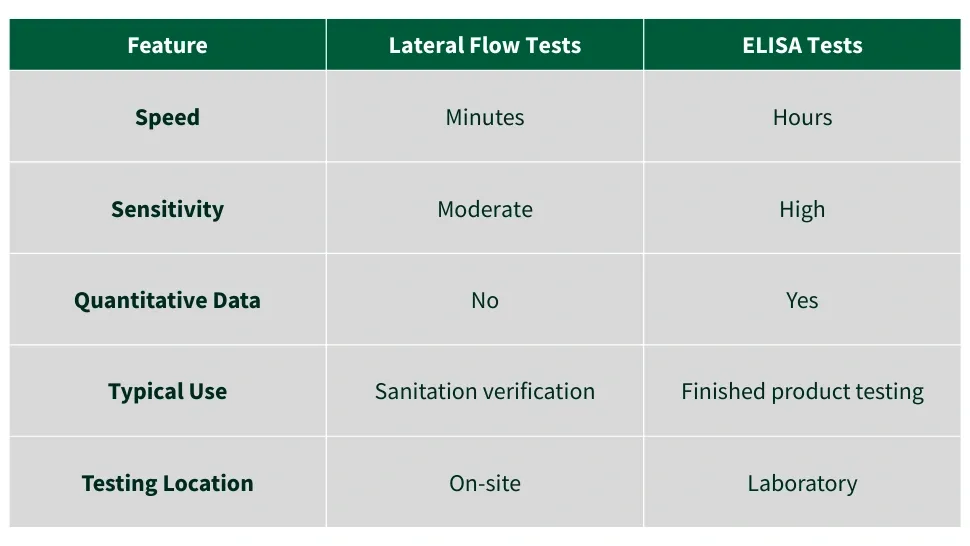
Image Source: Neogen
Performance metrics determine the practical utility of ELISA allergen testing within food manufacturing environments, where detection capabilities must balance sensitivity requirements against matrix-specific challenges. The typical detection range for ELISA sits between 0.1 to 1 fmole or 0.01 ng to 0.1 ng, with sensitivity dependent upon antibody-antigen interaction characteristics [17]. This positions ELISA as one of the most sensitive immunoassays available for trace allergen quantification.
Sensitivity and specificity of ELISA
Sensitivity in ELISA allergen testing refers to the smallest amount of analyte that an assay can distinguish from blank samples. ELISA methods demonstrate high sensitivity and specificity, detecting allergenic proteins down to action levels prescribed by FAO/WHO for priority allergens [14]. The assay detects only the intended allergen when specificity is confirmed by minimising cross-reactivity with other substances. Walnut ELISA displayed cross-reactivity only with pecan nut among 88 food ingredients tested [5]. Sesame ELISA showed no cross-reaction with major food ingredients such as egg, milk, and wheat [16].
Total protein ELISAs using polyclonal antibodies raised against allergenic commodity extracts have served as the standard method for decades. They hold limitations including ambiguity over analytical targets and lack of harmonisation between manufacturers [4]. Allergen-specific immunoassays measuring proteins offer improved specificity and reporting clarity [4].
Limits of detection (LOD) and quantification (LOQ)
LOD represents the lowest concentration distinguished from blanks, whilst LOQ defines the lowest concentration quantified with acceptable precision. Specific values vary by allergen and kit manufacturer. A developed sandwich ELISA achieved LOD of 0.013 µg/g and LOQ of 0.025 µg/g for sesame [16]. Commercial kits demonstrate varying capabilities. Peanut ELISA shows LOD below 0.5 mg/kg with LOQ of 1-30 mg/kg, whilst walnut kits detect below 1.0 mg/kg with LOQ of 2-50 mg/kg [16].
Quantitative versus qualitative outputs
ELISA delivers quantitative results through standard curve interpolation and enables precise concentration measurements that support evidence-based allergen management decisions. Results can be reported in mg of allergenic protein per kg of food, providing meaningful data for suppliers and producers [14]. Semi-quantitative outputs compare relative antigen levels, whilst qualitative results provide binary presence-absence determinations [17].
Matrix effects and recovery challenges
Food matrices present challenges to allergen extraction and detection. The AOAC guideline states acceptable recovery ranges from 50% to 150%, with ideal levels between 80% to 120% [18]. Dark chocolate represents one of the most difficult matrices due to high fat and polyphenol content that interferes with extraction procedures [7]. Buffer J with fish gelatine and PVP resulted in 2-26 fold increases in detectable allergen for multiple nuts in chocolate compared to standard buffers [4]. Acceptable recoveries of 50-150% were obtained for most allergens from chocolate dessert, though Gly m 5 showed low recovery of 22% [4].
Processed food detection capabilities
Thermal processing affects protein extractability and detectability. The US FDA xMAP Food Allergen Detection Assay achieved maximum recovery of only 20% from chocolate and 60% from baked muffins [4]. Working with UKAS-accredited laboratories will give proper method validation across processed matrices, especially when you have to select kits suited to hydrolysed products [14].
ELISA Compared to Rapid On-Site Testing Methods
Both ELISA and rapid lateral flow methods detect allergenic proteins through antibody-antigen interactions. They serve different purposes within allergen control strategies. Technical managers can build layered testing programmes that balance verification rigour against operational speed when they understand these differences.
ELISA versus lateral flow devices
Lateral flow devices function via capillary migration on test strips containing antibodies conjugated to coloured particles, colloidal gold in most cases [6]. Liquid samples applied to single-use devices produce visible lines within minutes. This makes them suitable for on-site allergen screening and sanitation verification without laboratory equipment [6][19]. Factory-based tests prove useful as verification tools because of their speed and ease of use. They are designed for rinse waters and environmental swabs [20]. Extraction procedures are basic, and complex matrices like food can cause interferences [20].
ELISA allergen testing delivers quantitative measurements through laboratory-based protocols. Comparative validation data demonstrates ELISA achieves 4-5 times greater sensitivity than lateral flow immunoassays [15]. ELISA detected 0.1 µg of protein on contact surfaces for crustacean detection, whilst lateral flow required 1.0 µg [15].
Laboratory accuracy versus rapid test speed
Lateral flow tests deliver rapid results that support immediate corrective actions. They require minimal training and prove cost-effective for frequent testing [6][21]. Results remain qualitative or semi-quantitative, with sensitivity lower than laboratory-based ELISA analysis [6][21]. Some companies do not trust data generated by lateral flow devices because they provide qualitative-only outputs [22]. Matrices such as chocolate present another challenge. Fat and polyphenols interfere with lateral flow testing and make ELISA the preferred choice [22].
ELISA provides high sensitivity and specificity for allergenic proteins. It generates quantitative results that support analytical insights and meet regulatory requirements [6][21].
When laboratory verification is required
Validation and verification activities require ELISA when quantitative answers are necessary, especially when you have finished product testing [23]. Testing laboratories must provide spike recovery data within 80-130% of spiked levels for new matrices [22]. Manufacturers who require documented validation data for regulatory compliance find ELISA from UKAS-accredited laboratories becomes the necessary choice.
When ELISA Testing Should Be Used

Image Source: Campden BRI
At the Time ELISA Testing Should Be Used
Specific applications within allergen control programmes just need the quantitative precision that ELISA allergen testing provides, especially when you have verification data, regulatory compliance, or trace-level detection that drive testing requirements.
Cleaning verification studies
To cite an instance, allergen cleaning verification studies require quantitative methods to set standards for effective sanitation [24]. ELISA tests prove critical because they detect protein rather than DNA and line up with the allergenic hazard that causes reactions [25]. Spike recovery testing and cross-reactivity checks conducted by laboratories verify method performance before deployment [25].
Low-level allergen verification
ELISA detects allergens at concentrations as low as 0.1 to 1 ppm in complex matrices that include spices, ice cream, chocolate and meat products [5]. This sensitivity makes verification of low-level contamination possible that rapid methods cannot calculate reliably [14].
Contamination incident investigations
At the time suspect samples require investigation after allergen incidents, ELISA serves as the main analysis method [18]. Multiple kits targeting different allergenic proteins should be deployed, with LC-MS confirmatory testing if original ELISA provides negative results [18].
Meeting regulatory and customer requirements
Verified methods documented in standard operating procedures support FDA FSMA hazard analysis and preventive controls requirements under 21 CFR Part 117 [4]. ELISA regulatory compliance allows meticulous ingredient analysis and ensures products meet safety standards [26].
Finished product verification
ELISA remains the gold standard for finished product testing because precise measurements document ‘dairy-free’, ‘gluten-free’, and ‘sesame-free’ claims with traceable ppm results [5]. Quantitative outputs support label claim verification and provide digital records for auditors and regulators [5].
Limitations and Challenges of ELISA Testing

Image Source: LabLynx
Limitations and Challenges of ELISA Testing
The method presents operational constraints that food manufacturers must weigh against testing objectives, despite its recognised value for allergen verification.
Time and cost considerations
ELISA instrumentation costs around £16,000, whilst individual test kits run about £250 to analyse roughly 14 samples in duplicate alongside quality controls and standards [16]. UKAS-accredited testing from commercial laboratories charges between £55 and £141 per sample, and standard turnaround needs five working days [16]. Rapid lateral flow methods that deliver results within minutes stand in contrast to these longer turnaround times [27].
Laboratory dependency requirements
The technique needs laboratory equipment and trained personnel capable of executing precise protocols [27]. ELISA is less expensive than PCR methods, but both techniques just need infrastructure beyond typical factory capabilities [16].
Cross-reactivity issues
Polyclonal antibodies show higher cross-reactivity than monoclonal alternatives, as they recognise multiple epitopes [28]. Peanut tests cross-react with pulses, whilst mustard ELISA kits detect rapeseed and other Brassica species [20][29]. Walnut PCR tests cross-react with pecan [20].
Sample handling and stability
Extraction buffer selection is significant for optimised allergen detection [30]. Buffer composition affects antibody binding, and residual denaturing buffers can disrupt antigen structure [30].
Matrix interference challenges
Complex matrices generate variable interference patterns. High-fat products like chocolate and thermally processed foods reduce protein extractability [20][31]. Polyphenol-rich foods and extreme pH levels present analytical challenges that need specialised extraction protocols [31]. Working with UKAS-accredited laboratories ensures proper method validation across difficult matrices.
Integration into Allergen Control Programmes
Effective allergen management relies on integrating ELISA within broader food safety systems rather than deploying it as a standalone testing method [17][32]. This integration requires understanding how laboratory verification supports operational controls, where validation data becomes needed, and how accredited testing delivers audit-ready documentation.
Supporting validation and verification activities
Lateral flow tests support daily monitoring and sanitation verification, whilst ELISA allergen testing provides the validation data needed to confirm control measures remain effective [17][32]. Method validation demonstrates that food allergen ELISA performs reliably for its intended purpose in specific matrices and supports hazard analysis and preventive controls requirements under FDA FSMA 21 CFR Part 117 [4]. Validated methods must be documented in standard operating procedures that lock extraction protocols, kit versions, instrument settings and acceptance criteria [4]. A strong allergen risk assessment framework identifies where quantitative verification through ELISA becomes needed versus where rapid screening proves sufficient.
Complementing rapid on-site methods
Many food manufacturers deploy both approaches as part of layered allergen control strategies [32]. Rapid lateral flow methods enable immediate corrective actions, whilst ELISA confirms those controls perform at required sensitivity thresholds.
Building a layered testing strategy
PCR technology serves as a powerful complement to ELISA in several scenarios, especially for confirming allergen presence in thermally processed products where protein targets may be altered [14].
Working with UKAS-accredited laboratories
Testing should be conducted by ISO 17025-accredited laboratories using validated methods, with samples analysed in duplicate [18]. UKAS-accredited testing provides documented performance meeting UK regulatory standards [7][33][34].
Method validation and accreditation requirements
Sandwich ELISA kits validated by AOAC International provide documented performance data including detection limit, precision, recovery and matrix applicability for regulatory compliance [4]. Allergen testing data, including raw absorbance values and calculated concentrations, should be retained as part of facility food safety records in accordance with FSMA requirements [4].
Best Practise Recommendations and Common Mistakes

Image Source: ProGnosis Biotech
ELISA allergen testing works best when you avoid common pitfalls that compromise data integrity and regulatory defensibility.
Selecting appropriate ELISA kits for your application
Kit selection must account for target protein differences. Kits detecting casein demonstrate better performance in thermally processed products when testing for milk allergens compared to those targeting whey proteins [35]. But a fundamental lack of equivalence exists between manufacturers. Proficiency test consensus values vary widely even within single-manufacturer kit ranges [35]. Transparency regarding LOD and LOQ determination remains limited. This makes experimental kit comparison needed despite cost implications [35].
Working with accredited laboratories
Testing must be conducted by ISO 17025-accredited laboratories using methods that have been confirmed. Samples should be analysed in duplicate [18]. Laboratory performance in recent proficiency testing rounds must show z-scores ≤±2 for quantitative methods [18].
Interpreting quantitative results in context
Acceptable analytical precision in allergen proficiency testing requires σp set at 25% relative to assigned values [36]. Switching kit suppliers mid-programme without revalidation represents a common error because antibody specificity is different between suppliers [4].
Avoiding over-reliance without risk justification
Testing regimes using multiple ELISA kits targeting different proteins avoid false negatives, especially for incident investigations [18]. Developing a detailed allergen risk assessment determines where quantitative ELISA verification proves needed.
Implementing proper sampling strategies
Representative samples of 100g-1kg should be homogenised. Extract at least two sub-samples of minimum 1g with certified reference materials [18]. Third aliquots require spiking to confirm recovery performance [18].
Documenting testing rationale for audits
Methods that have been confirmed require documentation in standard operating procedures locking extraction protocols, kit versions and acceptance criteria [4]. Allergen testing data including raw absorbance values must be retained as food safety records [4].
Conclusion
ELISA allergen testing delivers the quantitative precision and sensitivity that regulatory compliance and cleaning validation just need. Rapid lateral flow methods provide valuable screening capabilities, but ELISA remains the definitive choice for documented validation data and trace-level detection. Allergen management that works requires integration of both approaches within layered testing strategies rather than relying on either method alone. UKAS-accredited laboratories will give access to validated methods that generate audit-ready results. Technical managers should deploy ELISA for verification activities while reserving rapid methods for daily monitoring and immediate corrective actions at the time they build reliable allergen control programmes.
Key Takeaways
ELISA testing represents the gold standard for quantitative allergen detection, offering superior sensitivity and precision compared to rapid testing methods for regulatory compliance and validation activities.
• ELISA detects allergens at 1-10 ppm concentrations, providing quantitative results essential for cleaning validation and regulatory compliance documentation.
• Sandwich ELISA format delivers highest specificity through dual antibody recognition, making it preferred for food allergen testing applications.
• Laboratory-based ELISA requires 5-day turnaround but offers 4-5 times greater sensitivity than rapid lateral flow devices for trace detection.
• UKAS-accredited testing ensures validated methods with documented performance data meeting UK regulatory standards for audit defensibility.
• Effective allergen control integrates ELISA for verification activities with rapid methods for daily monitoring, creating layered testing strategies.
ELISA proves indispensable when quantitative answers matter most – from establishing cleaning benchmarks to investigating contamination incidents. However, success depends on proper kit selection, working with accredited laboratories, and understanding when laboratory precision justifies the additional time and cost over rapid screening methods.
FAQs
Q1. What makes ELISA testing more accurate than rapid allergen tests? ELISA testing achieves approximately 4-5 times greater sensitivity than rapid lateral flow devices, detecting allergens at concentrations as low as 1-10 parts per million. The sandwich ELISA format uses two different antibodies that bind to separate parts of the allergen protein, creating a dual recognition system that significantly reduces background noise and enhances accuracy. This laboratory-based method also provides quantitative measurements through standard curve interpolation, enabling precise concentration determinations that support regulatory compliance and data-driven allergen management decisions.
Q2. How long does it take to get ELISA allergen test results? ELISA allergen testing typically requires a 5-working-day turnaround when conducted by UKAS-accredited commercial laboratories. The laboratory process involves multiple precise steps including sample preparation, protein extraction, antibody-antigen binding, enzyme signal amplification, and quantification. Whilst this timeframe is considerably longer than rapid lateral flow tests that deliver results within minutes, the extended processing time enables the high sensitivity and quantitative precision necessary for validation studies, regulatory compliance, and contamination investigations.
Q3. When should food manufacturers use ELISA instead of rapid tests? ELISA testing should be used when quantitative verification is essential, particularly for cleaning validation studies, finished product testing, contamination incident investigations, and meeting regulatory requirements. It’s the preferred choice when documented validation data is needed, when testing complex matrices like chocolate where rapid tests may fail, when verifying low-level allergen contamination below 1 ppm, and when supporting label claims such as ‘dairy-free’ or ‘gluten-free’ with traceable measurements. Rapid tests remain suitable for daily monitoring and immediate sanitation verification.
Q4. What are the main limitations of ELISA allergen testing? ELISA testing presents several operational constraints including higher costs (£55-£141 per sample for accredited laboratory testing), longer turnaround times compared to rapid methods, and dependency on laboratory infrastructure and trained personnel. The method can experience cross-reactivity issues, particularly with polyclonal antibodies, and faces challenges with complex food matrices such as high-fat products, thermally processed foods, and polyphenol-rich items that reduce protein extractability. Sample handling and extraction buffer selection also critically affect result accuracy.
Q5. How should ELISA testing be integrated into allergen control programmes? ELISA should be integrated as part of a layered testing strategy rather than deployed as a standalone method. It works most effectively when combined with rapid lateral flow tests—using rapid methods for daily monitoring and immediate corrective actions, whilst reserving ELISA for validation activities, verification of control measures, and regulatory compliance documentation. Testing should be conducted by ISO 17025-accredited laboratories using validated methods, with results documented in standard operating procedures and retained as food safety records to support audit requirements and regulatory compliance.
References
[1] – https://www.food.gov.uk/research/review-of-allergen-analytical-testing-methodologies-evidence-gaps-in-allergen-management-and-testing
[2] – https://pubmed.ncbi.nlm.nih.gov/28315213/
[3] – https://www.neogen.com/en/usac/neocenter/blog/allergen-testing-methods-explained/?srsltid=AfmBOorKRFQDIsN7Yt2K4SGCGo0dCe52qblXEIqhHqou19-pzUXi4j8I
[4] – https://www.labmanager.com/detecting-food-allergens-with-elisa-microplate-methods-sensitivity-validation-and-compliance-35315
[5] – https://www.hygiena.com/food-safety/allergen-detection
[6] – https://www.neogen.com/fr/usac/neocenter/blog/allergen-testing-methods-explained/?srsltid=AfmBOoozIlphswD_Q8_3suiAv_lVjUOigrv6U2M2C5s0QwUTjyIn5uY_
[7] – https://www.rssl.com/food-consumer-goods/food-allergen-analysis/
[8] – https://www.creative-biolabs.com/elisa-sample-preparation-guide.html
[9] – https://www.thermofisher.com/uk/en/home/life-science/protein-biology/protein-biology-learning-centre/protein-biology-resource-library/pierce-protein-methods/overview-elisa.html
[10] – https://synapse.patsnap.com/article/elisa-principle-explained-antibody-antigen-binding-in-diagnostics
[11] – https://www.cellsignal.com/applications/elisa/elisa-overview?srsltid=AfmBOopRCPVnQiRiGl2ugHD1II2FedlJnqlah6OXJgAwlGopSzXCIgcE
[12] – https://www.enzo.com/product/ampd-elisa-signal-amplification-kit/
[13] – https://www.nature.com/articles/srep42562
[14] – https://fsns.com/the-growing-importance-of-allergen-testing-how-certified-group-ensures-food-safety-with-elisa/
[15] – https://zaguan.unizar.es/record/168457/files/texto_completo.pdf
[16] – https://www.food.gov.uk/research/review-of-allergen-analytical-testing-methodologies-estimation-of-costs
[17] – https://www.neogen.com/en/aunz/neocenter/blog/allergen-testing-methods-explained/?srsltid=AfmBOop8A5yufTQ9Hig9n70HC4PdcX_Hl-D4GGvVdJaCjYkQiwfT335t
[18] – https://www.food.gov.uk/research/review-of-allergen-analytical-testing-methodologies-allergen-testing-workflows-to-support-incident-management
[19] – https://www.neogen.com/en/usac/neocenter/blog/allergen-testing-methods-explained/?srsltid=AfmBOoousSZ3H1cHe8KqiqaUXdyZojvpKFyZeR7Fs2ZPtNLZFUDOmTEn
[20] – https://www.rssl.com/insights/food-consumer-goods/food-allergen-detection-choosing-the-right-testing-method/
[21] – https://www.neogen.com/en/usac/neocenter/blog/allergen-testing-methods-explained/?srsltid=AfmBOoqlkTCwapanKKsezLYyYgaZaZrBMsfsC4bbSXAPE_6YVUqBDMGe
[22] – https://www.food.gov.uk/research/review-of-allergen-analytical-testing-methodologies-stakeholder-engagement
[23] – https://blog.invitek.com/articles/foodsafetyintegrity/food-allergen-testing-should-you-use-elisa-pcr-or-lfa-methods
[24] – https://www.klipspringer.com/blogs/allergen-cleaning-validation-a-practical-guide-for-food-factories/
[25] – https://www.rssl.com/insights/food-consumer-goods/designing-a-successful-allergen-cleaning-validation-strategy/
[26] – https://www.hygiena.com/learning-centre/technology-guide/elisa-in-food-safety-testing-a-complete-overview
[27] – https://www.neogen.com/en/usac/neocenter/blog/allergen-testing-methods-explained/?srsltid=AfmBOorL0IYrSxCdGdFZQKC0qT-gUFEioNGigv3qR5z6bwMDX6Z6iYre
[28] – https://pmc.ncbi.nlm.nih.gov/articles/PMC8394222/
[29] – https://www.foodmanufacture.co.uk/Article/2023/10/24/cross-reactivity-in-food-allergen-tests/
[30] – https://pmc.ncbi.nlm.nih.gov/articles/PMC12563046/
[31] – https://allergenbureau.net/food-allergens/food-allergen-analysis/
[32] – https://www.neogen.com/en/usac/neocenter/blog/allergen-testing-methods-explained/?srsltid=AfmBOorZelNs3vuOFhLKN3QJOijHbf8MqxuTx5GSpA0CLfgRpQb4LoQy
[33] – https://www.als-testing.co.uk/news/als-ukas-accredited-allergen-testing
[34] – https://www.eurofins.co.uk/food-testing/news-and-events/news/milk-allergen-elisa-testing-news/
[35] – https://www.food.gov.uk/research/review-of-allergen-analytical-testing-methodologies-overall-conclusions-and-future-direction
[36] – https://www.food.gov.uk/research/review-of-allergen-analytical-testing-methodologies-assessment-of-the-variability-of-analysis-and-potential-to-inter-convert