UK manufacturers face a tough challenge with food allergen control. About 2 million people in the UK live with a diagnosed food allergy. The UK has some of the world’s highest allergy rates, where more than 20% of the population deals with some type of allergic disorder. These numbers create major responsibilities for food businesses, as food-induced anaphylaxis cases and fatalities show how important detailed allergen management is in the food and drink industry.
The law requires UK food manufacturers to meet strict regulatory standards and build strong allergen management systems. Every food business must provide accurate allergen information. The UK lists 14 major allergens that must be declared in food product ingredients. Natasha’s Law has made it mandatory to include complete ingredients lists with clear allergen highlights for all pre-packaged food sold directly. Companies that don’t follow these rules face heavy fines and reputation damage.
This piece covers everything in food allergen control that UK manufacturers need to know. The core team training, emergency procedures, and prevention strategies work together with proper allergen risk assessment and legal compliance. These principles help ensure consumer safety and regulatory compliance, whether you run a small facility or manage a large plant.
Understanding Food Allergens in Manufacturing
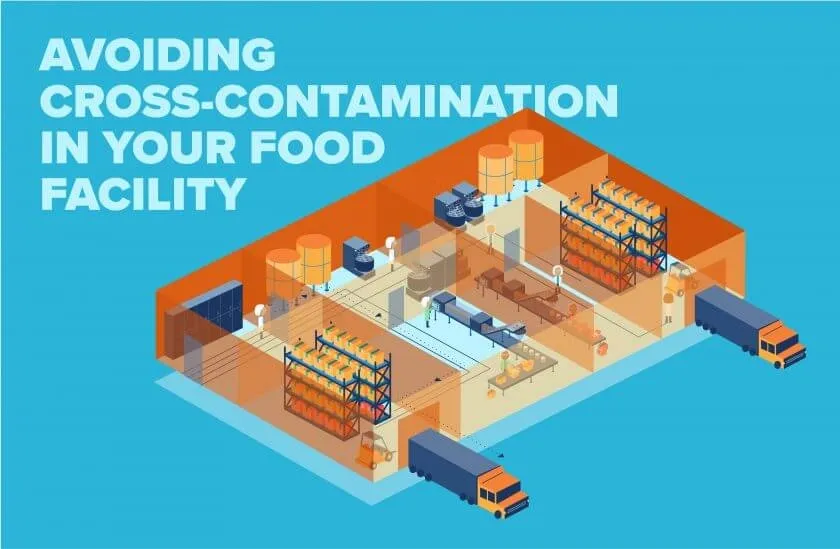
Image Source: CRB
Understanding Food Allergens in Manufacturing
You need a deep grasp of allergens to control them properly in food production. This includes knowing what they are, how they affect people who consume them, and where they might show up in manufacturing. These basics are the foundations of safe production practises.
What is a food allergen?
Food allergens are substances, mostly proteins, that cause unusual immune system responses in people who are sensitive to them. These proteins don’t break down during digestion and make the immune system release chemicals like histamine. The resulting allergic reactions can range from mild discomfort to life-threatening conditions. Research shows food allergies affect about 6% of UK adults, not counting those with food intolerances [1]. The numbers also show 1 in 100 people have coeliac disease, an autoimmune condition that gluten triggers [1].
Allergic reactions can vary substantially in severity. A tiny amount of an allergen—just a drop of milk or a bit of peanut—can cause reactions in sensitive people [1]. The symptoms might be mild like itching and rashes, or severe such as vomiting and breathing problems. These can lead to anaphylaxis, which could be fatal [1]. Food businesses must follow strict allergen management protocols to keep vulnerable consumers safe.
The 14 major allergens in the UK
UK law requires food producers to declare 14 major allergens when they use them as ingredients. These allergens made the list because they cause the most common and serious food allergies or intolerances:
- Celery – found in sticks, leaves, seeds, and root (celeriac)
- Cereals containing gluten – including wheat, rye, barley, and oats
- Crustaceans – such as prawns, crabs, lobsters, and crayfish
- Eggs – often used as binders or emulsifiers in many products
- Fish – including species like cod, haddock, salmon, and tuna
- Lupin – seeds used in some flour products, related to peanuts
- Milk – used in butter, cheese, cream, yoghurt and many other products
- Molluscs – including mussels, oysters, squid, and snails
- Mustard – seeds and powder used in many sauces and condiments
- Peanuts – a legume with proteins that can cause severe reactions
- Sesame – seeds used in many food products including tahini and hummus
- Soybeans – found in many processed foods and meat substitutes
- Sulphur dioxide/sulphites – preservatives found in many foods and drinks
- Tree nuts – including almonds, hazelnuts, walnuts, cashews, and others [2]
Manufacturers must identify these allergens in their products. They need to clearly tell consumers about their presence through labels on pre-packed foods or other communication methods for non-pre-packed items.
Hidden sources of allergens in production
The biggest problem in food allergen control comes from managing hidden or unexpected allergen sources that could contaminate “allergen-free” products. These can enter production through several paths:
Cross-contamination happens when allergen traces move between products unintentionally. Common ways include:
- Using shared production equipment or utensils without proper cleaning between products
- Flour and other powdered ingredients creating airborne particles
- Reusing cooking oils that still contain allergen proteins
- Storing raw ingredients too close to each other [2]
Intentional addition of allergenic ingredients might not be obvious to consumers. Manufacturers often use egg as a binding agent, celery to enhance flavour, and milk proteins to improve texture [3].
Supplier substitutions can bring unexpected allergens when ingredients change without updated allergen information. Companies must stay in close contact with suppliers and carefully check ingredient specifications to control allergens effectively [3].
Manufacturers need complete allergen management systems to tackle these challenges. This means doing risk assessments, following strict cleaning rules, and maintaining clear communication throughout the supply chain. Good storage practises, keeping allergenic ingredients separate, and proven cleaning methods help create an effective allergen control programme [2].
Legal Frameworks for Allergen Control in the UK
The UK has a complete regulatory system that controls food allergens. Food manufacturers must follow this strong framework to keep consumers safe. The legal system has many layers of legislation that work together to protect people with food allergies.
Food Safety Act 1990
The Food Safety Act 1990 forms the foundation of all food laws in England, Wales and Scotland. This Act requires food businesses to follow three main rules about allergen management:
- Food must not contain anything harmful to consumers, including undeclared allergens
- Food served or sold must meet expected nature, substance and quality standards
- Food’s labelling, advertising and presentation must not be false or misleading
The Food Safety Act 1990 has grown stronger over time with tougher penalties. Today, businesses face unlimited fines if they mislabel allergens or fail to give accurate information.
EU FIC and retained UK law
After Brexit, the UK kept certain EU laws. The EU Food Information to Consumers Regulation (EU No. 1169/2011), known as EU FIC, became UK law on January 1, 2024. UK enforces this through local legislation:
- The Food Information Regulations 2014 (for England)
- The Food Information (Wales) Regulations 2014
- The Food Information Regulations (Northern Ireland) 2014
These regulations, called FIR, enforce the EU FIC requirements. They make sure food businesses give accurate and available information about the 14 major allergens.
Each UK nation has its own rules. The Food Standards Agency (FSA) handles food labelling and standards in Wales and Northern Ireland. In England, the FSA oversees safety-related labelling while DEFRA manages other standards.
Businesses that break allergen rules may face improvement notices or criminal charges, especially when consumer health is at risk.
Natasha’s Law and PPDS requirements
The UK introduced major changes to food allergen labelling on October 1, 2021, known as “Natasha’s Law.” This law honours Natasha Ednan-Laperouse, who died in 2016 after eating an unlabeled allergen in a pre-packaged sandwich. The law focuses on Prepacked for Direct Sale (PPDS) foods.
Before this law, staff could tell customers about allergens verbally. Now, PPDS products must show:
- The name of the food
- A complete ingredients list
- Allergenic ingredients emphasised in the list (using bold type, capital letters, contrasting colours or underlining)
PPDS foods are products packaged where they’re sold and wrapped before customers order them. The packaging must enclose the food so nobody can change it without opening or altering the package.
The law applies to all food businesses. This includes cafes, restaurants, bakeries, takeaways, schools, and care homes. Package labels need specific font sizes – at least 1.2mm x-height for packages 80cm² or larger, and 0.9mm x-height for smaller ones.
The FSA suggests adding voluntary information about possible unintended allergen presence after a full risk check. Too many warning labels might confuse customers and limit their food choices.
Allergen Risk Assessment in Manufacturing
A systematic approach to identify and manage potential risks forms the foundation of effective food allergen control. UK food manufacturers rely on resilient allergen risk assessments as the backbone of their allergen management systems to ensure regulatory compliance and protect consumers.
Why risk assessments are essential
Risk assessments give manufacturers a well-laid-out method to spot where unplanned allergen presence might occur during production. These assessments help identify specific points where allergens could contaminate products that shouldn’t contain them. Manufacturers who skip proper assessment risk releasing products that may seriously harm allergic consumers.
Risk assessments are a great way to get substantial business benefits. They help manufacturers avoid recalls that get pricey and damage brand reputation and consumer trust. Most allergen-related recalls in the UK happen due to labelling or packaging errors that proper risk assessment could prevent [4]. A complete assessment also documents evidence that a business fulfilled its duty of care, which can protect against legal liability.
Risk assessments help make informed decisions about precautionary allergen labelling (PAL). Manufacturers can use assessment results to determine if “may contain” statements are needed or if they can reduce risks through better controls [5].
Steps to conduct an allergen risk assessment
The process to conduct an effective allergen risk assessment needs a methodical approach that gets into every aspect of production:
- Allergen mapping – Spot all allergens present on site and document their use throughout the facility [6].
- Hazard identification – Find which allergenic foods or ingredients could accidentally contact your products [5]. This means looking at production processes, equipment sharing, and facility layout.
- Risk evaluation – Look at factors such as:
- The amount of allergenic food that typically triggers reactions
- The frequency of adverse reactions to specific allergens
- Consumer subgroups with higher risk
- The physical form of ingredients (e.g., powders that could become airborne)
- The ways cross-contact might happen and its likelihood [5]
- Control measures implementation – Set up preventive measures for each identified risk. This could mean dedicated equipment, new cleaning procedures, or changes to production scheduling.
- Validation and verification – Test control measures to verify they manage the identified risks effectively. This often includes allergen testing after cleaning to verify procedures remove allergens to non-detectable levels [6].
- Documentation and review – Keep records of all findings, control measures, and validation results. Set up regular reviews to check risks again, especially when ingredients, suppliers, or processes change [4].
Smaller manufacturers sometimes find this systematic approach challenging. Starting with an allergen checklist can make the process much simpler.
Using allergen checklists effectively
Allergen checklists work as practical tools that guide manufacturers through key aspects of allergen management. The Food Standards Agency provides a complete allergen checklist specifically created for UK food businesses [7].
A good checklist should cover the entire operation and evaluate:
- Responsibilities – The core team’s overall responsibility for allergen management and making sure a responsible staff member works each shift [7].
- Ingredient controls – Steps to verify ingredients upon delivery, handle substitutions, and keep accurate records [4].
- Operational practises – Methods to store allergenic ingredients, record recipe changes, and prevent cross-contamination [7].
- Staff knowledge – Training needs and ways to communicate allergen information [7].
Checklists work best when shared with all staff and managers, with regular reviews to ensure everyone follows the rules. They create an environment where allergen awareness becomes second nature throughout the organisation.
Checklists do more than just help with daily operations. They provide a framework to keep improving by showing manufacturers where allergen controls need work [8]. They also create a paper trail of allergen management efforts that proves valuable during quality audits or regulatory inspections.
Food manufacturers should review and update their allergen checklists whenever processes, ingredients, or supplier arrangements change. This steadfast dedication helps maintain strong allergen control systems and shows commitment to consumer safety.
Preventing Allergen Cross-Contamination
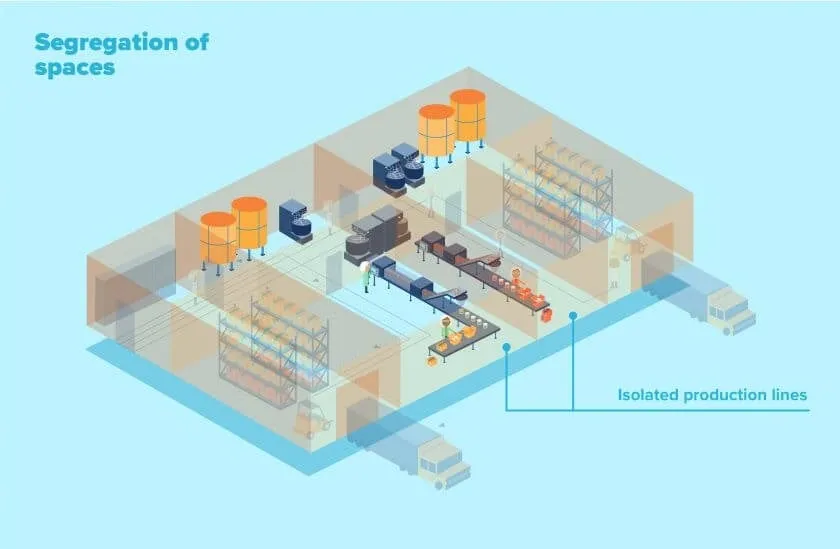
Image Source: CRB
Preventing Allergen Cross-Contamination
The life-blood of effective food allergen control in manufacturing environments is cross-contact prevention. Allergen proteins differ from microbiological contamination – you can’t “kill” them or make them non-allergenic through cooking or processing. The only solution is physical removal or separation throughout production.
Common cross-contact scenarios
Cross-contact happens when allergens transfer from one food to another. Even tiny amounts invisible to our eyes can trigger reactions in sensitive people. Several situations create cross-contact risks:
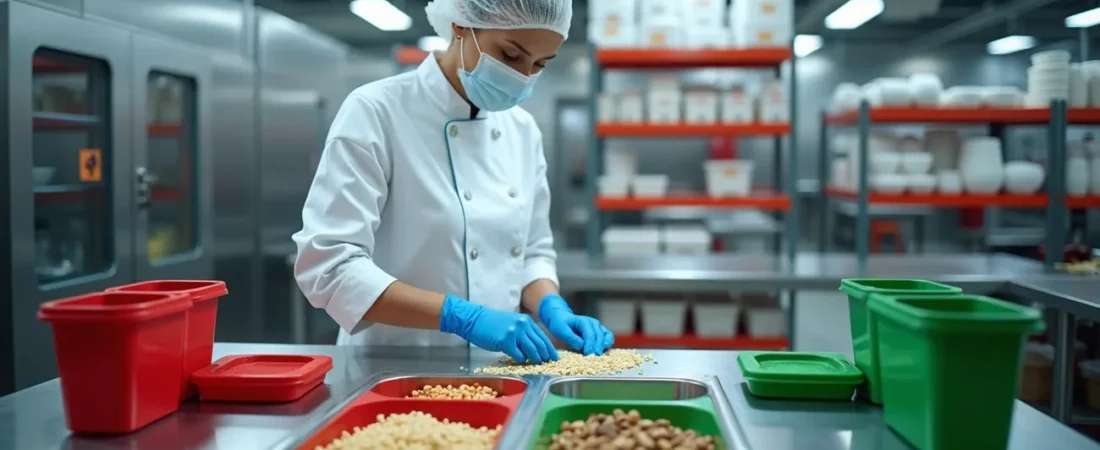
Direct food-to-food contact happens when allergenic ingredients touch or drip onto allergen-free products. Staff members who handle multiple ingredients without washing hands between tasks create food-to-hand-to-food contact. Equipment poses risks too. The core team must clean cutting boards, utensils, and preparation surfaces between allergenic and non-allergenic foods.
Production environments face these additional challenges:
- Shared fryers, grills or cooking surfaces (e.g., eggs cooked on the same grill as allergen-free products)
- Airborne flour and other powdered ingredients
- Rework (food reintroduced into production) with different allergen profiles
- Ingredient spills that need proper cleaning
Cross-contact risks exist at every stage of the food chain. This includes agricultural cross-contact during crop rotation, transport of different goods together, and multiple vectors during processing.
Cleaning and sanitisation protocols
The foundations of allergen management systems are effective cleaning protocols. Proper implementation of conventional cleaning methods removes allergen proteins.
Soap and water must clean all surfaces – wiping visible crumbs isn’t enough. Research showed that both bar and liquid soap remove protein residues effectively. Alcohol-based sanitizers don’t work. The most reliable method combines hot, soapy water with scrubbing.
Room temperature water with one tablespoon of concentrated bleach per gallon works best for sanitization. Hot water reduces bleach effectiveness. The solution loses strength over time.
Manufacturing environments need cleaning validation to confirm procedures remove allergens to non-detectable levels. This process includes:
- Choosing a “worst-case” target allergen with high protein content
- Testing final rinse water and first product off the line
- Repeating validation exercises three times across different shifts
Documentation of all cleaning procedures is vital. Staff needs proper training and enough time to complete thorough cleaning.
Storage and segregation practises
The best defence against cross-contact lies in proper storage and segregation. Manufacturers should follow clear separation guidelines:
Allergenic ingredients need sealed, clearly labelled containers in dedicated areas away from non-allergenic materials. When separate storage isn’t possible, allergenic items go below allergen-free products to prevent accidents. Colour-coded storage containers and equipment help staff maintain segregation.
Designated areas for allergenic products work best during production. Space limitations might require strict scheduling instead – process allergen-free products first, followed by those with allergens. Thorough cleaning between production runs becomes essential.
Raw materials need special attention. The team must check supplier allergen data carefully. Reliable procedures help handle ingredient substitutions that might change a product’s allergen profile.
Workflow and kitchen design considerations
Smart facility design and production workflow reduce cross-contact risks. Physical separation between allergen-handling and allergen-free zones works best. Dedicated production lines offer the most reliable protection against cross-contact.
Linear workflows from allergen-free to allergenic production help when complete separation isn’t possible. Temporary production areas with thorough cleaning between different allergen profiles provide another option.
Staff assignments affect cross-contact risks. Specific team members should handle raw food at specific times. Rigorous hand-washing between tasks is mandatory. The team must change personal protective equipment like gloves when moving between allergen-containing and allergen-free production.
Equipment choices matter. Complex machines like slicers, mincers and vacuum packing equipment need dedication to specific allergen profiles. Their intricate parts make thorough cleaning difficult. Complete disassembly and cleaning between uses becomes necessary if dedication isn’t possible.
Labelling and Allergen Information for Consumers
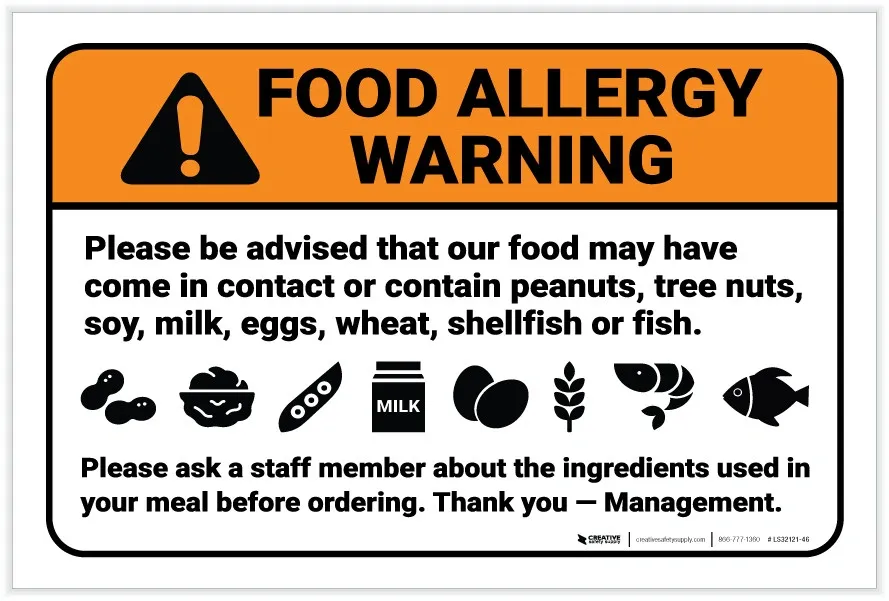
Image Source: Creative Safety Supply
Labelling and Allergen Information for Consumers
Food allergen labels are the last line of defence to keep allergic consumers safe. These labels help people make safe food choices, even with the best manufacturing practises in place.
Clear and consistent allergen labelling
Pre-packed foods must show allergenic ingredients clearly in the ingredients list. Manufacturers can use bold text, contrasting colours, underlining, or capital letters to highlight allergens. The chosen method needs to stay the same across the label [9]. Labels work best when they include an allergen advice statement that explains how allergens are marked, like “Allergen advice: for allergens, see ingredients in bold” [10].
The way allergen information looks on a label makes a big difference. Labels that are messy or use different formats don’t help consumers spot allergen information easily [9]. That’s why manufacturers need to make allergen information easy to see and read without other elements getting in the way [10]. Any packaging larger than 80cm² must use text that’s at least 1.2mm in x-height [10].
Research shows people with allergies find it hard to spot, find, read and understand allergen information on food labels [9]. UK manufacturers can fix this by putting related information together and using the same order on all labels.
Precautionary allergen labelling (PAL)
PAL statements warn about possible unexpected allergens from cross-contact. These warnings should only appear after getting a full picture that shows a real risk that can’t be removed through better management [11].
About half of food labels (52.1%) use PAL statements, and “may contain traces” appears most often (76%) [9]. Using too many warnings limits what people can eat and makes the warnings mean less. This can lead people to take risks [11]. The FSA says to skip these warnings unless they’re absolutely needed [12].
PAL statements work better when they name specific allergens instead of using general terms like “may contain allergens” [11]. To name just one example, see how “may contain peanuts and tree nuts” gives clearer information than “may contain nuts” [13]. This helps people make better choices about what they can eat.
Labelling for ‘free-from’ claims
‘Free-from’ claims tell people if foods are safe if you have specific allergies or intolerances. These products need strict controls from start to finish. UK manufacturers must make sure their products don’t contain the allergen they’re free from and are made in places with reliable allergen controls [14].
“Gluten-free” is unique – it’s the only ‘free-from’ claim with its own laws. Products can have up to 20mg/kg of gluten and still be “gluten-free” [45, 46]. All other allergens must be completely absent for a ‘free-from’ claim [14].
Every ‘free-from’ claim needs backing from proper testing using proven methods [15]. You can’t have a PAL warning and a ‘free-from’ claim for the same allergen – a product can’t be “free-from milk” but also “may contain milk” [11]. Gluten is different though. A “gluten-free” claim can appear with a wheat warning if tests show gluten stays under 20mg/kg [10].
Training and Staff Responsibilities

Image Source: LIQUORexam.com
Personnel training is the foundation of food allergen control in manufacturing environments. Staff must consistently implement proper procedures to protect allergic consumers. The effectiveness of even the most resilient systems depends on the people who run them.
Front of house vs back of house roles
Staff duties vary substantially based on their position in the production chain. Back of house personnel must prevent cross-contamination while handling and preparing foods [16]. They need to follow strict protocols for ingredient segregation, equipment cleaning, and accurate recipe preparation. Front of house staff must handle allergen information requests accurately and make sure allergen-free products reach the right customers [17].
Clear communication between these areas remains crucial. The best approach involves writing down allergen requests instead of verbal communication. Information can get lost or misunderstood in busy kitchens [1]. Many facilities assign one staff member to handle all orders with specific dietary needs, which ensures consistent allergen management [1].
Onboarding and refresher training
Food business operators need to create complete onboarding programmes that teach food allergen management [3]. The original training should cover how to identify allergens, prevent cross-contamination, and follow proper communication protocols. Every staff member, including seasonal workers, needs to complete the Food Standards Agency’s free food allergy online training [1].
High staff turnover is common in food production, so scheduled refresher courses help keep personnel updated on the latest regulations and best practises [3]. These sessions strengthen knowledge and ensure everyone follows safety protocols consistently. Companies must keep training records with dates, attendees and topics to track compliance and spot knowledge gaps [3].
Creating a culture of accountability
Having allergen champions for both front and back of house operations builds stronger accountability [18]. These team members should complete advanced training like the Level 3 Award in Food Allergen Management to develop expertise in identifying potential hazards [18]. Their “allergen trained” badges help customers and colleagues find knowledgeable staff quickly.
Senior staff should set good examples, watch daily practises, and act quickly when they spot problems [19]. This leadership approach makes allergen safety everyone’s responsibility rather than an afterthought.
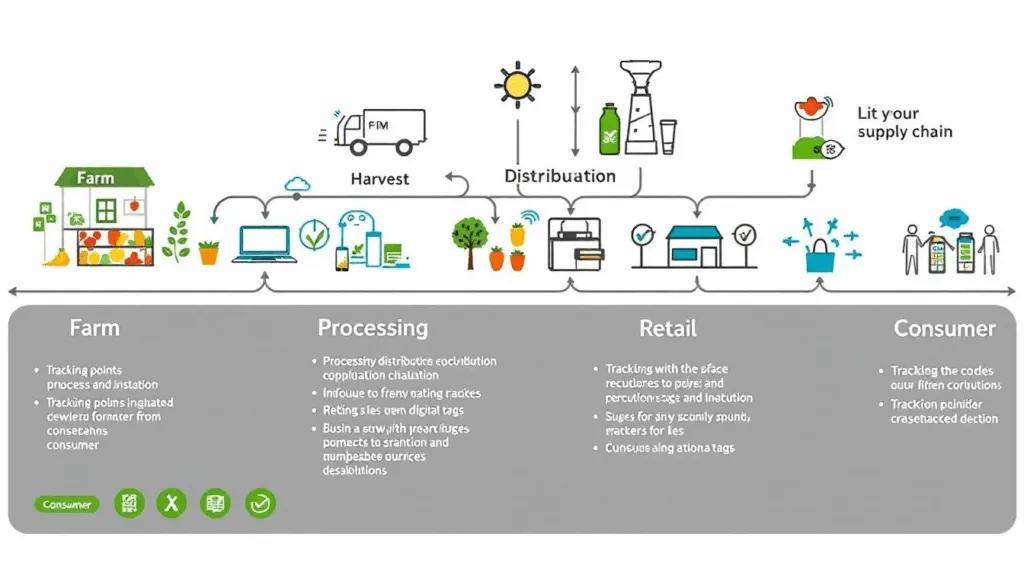
Image Source: Orders In Seconds
Supplier Management and Ingredient Traceability
Supply chain management plays a crucial role in controlling food allergens within manufacturing facilities. Ingredient changes might introduce unexpected allergen risks. Manufacturers need reliable systems to monitor and verify their entire supply network.
Verifying supplier allergen data
Getting accurate allergen information from suppliers takes constant attention. Manufacturers should ask for yearly updates from suppliers. They need to compare ingredient lists with product labels to ensure accurate allergen declarations. Product testing for undeclared allergens provides additional verification. A full picture of vendor capabilities helps identify potential risks by asking these questions:
- What allergenic products do they process
- Do they use shared equipment for allergenic ingredients
- What protocols prevent cross-contamination
- Do their employees receive allergen safety training
Handling substitutions and recipe changes
Recipe changes pose serious allergen risks. Staff must check the allergen status of replacement ingredients. Any substitute product that adds a new allergen needs immediate attention. Teams must update recipes, allergen information, and training materials right away. Adding an allergenic ingredient creates more risk than removing one and needs a complete review.
Maintaining traceability records
Traceability systems track products one step forward and one step back in the supply chain. UK regulations require documentation of supplier and customer details, product identification, and transaction dates. Raw materials should stay in original packaging to help retrieve traceability information. These records are the foundations of a reliable tracking system.
Product Recall and Emergency Procedures
Food manufacturers must prepare actively to handle allergen-related emergencies. UK product recalls happen mostly due to food allergens, which can damage both consumer health and business reputation.
When and how to issue a recall
A recall is different from a withdrawal. Recalls remove unsafe food and tell consumers to act, while withdrawals happen before products reach consumers. Manufacturers must start a recall right away if they find their food is harmful, unfit to eat, or breaks legal requirements. The first steps include documenting product details and working out the recall scope based on batch numbers and distribution data.
Communicating with authorities and customers
Manufacturers must tell their local authority or port health authority as soon as they spot an allergen problem. The FSA incidents team needs to know if unsafe food has reached consumers. The FSA might issue a recall notice that explains the risk and tells consumers what to do. Food businesses can also use the FSA’s allergen alert system so consumers get updates about recalled products.
Post-incident review and improvement
Every recall needs a full root cause analysis. Teams usually use the Fishbone Diagram or Five Whys technique to find the mechanisms at work. Manufacturers should create specific fixes based on what they find. These might include better allergen declaration processes or improved checking procedures. A review period helps check if these preventive measures work and deepens their commitment to food allergen control systems.
Conclusion
UK manufacturers have a crucial duty to control food allergens and stay watchful at every production stage. Good allergen management goes way beyond the reach and influence of just following rules. It helps protect at-risk consumers from life-threatening reactions and keeps the business’s reputation intact.
A detailed allergen control starts with a good grasp of the 14 major allergens and where they might show up in manufacturing. This knowledge helps create systematic risk assessments that spot possible cross-contamination points and guide prevention steps. The risk of allergen cross-contact drops by a lot when manufacturers use strict segregation, confirmed cleaning methods, and smart facility design.
Natasha’s Law has made allergen management rules tougher. Food businesses now need to provide clear allergen details that are available for all products, especially prepacked foods for direct sale. They should use precautionary allergen labels only as a last option, when real risks can’t be removed through management actions.
Staff training turns allergen policies into daily practise. Front and back of house teams need specific knowledge for their roles, plus regular updates to stay sharp. Allergen champions help promote responsibility throughout the company.
The core team must manage supplier relationships carefully because ingredient changes might bring unexpected allergen risks. Strong checking procedures and detailed tracking systems help manufacturers keep control over allergen status in their supply chain. These systems also prove valuable during emergencies by enabling quick, focused recalls when needed.
Creating a culture where allergen safety comes first at every stage leads to successful allergen control. This includes everything from picking ingredients to talking with consumers. Companies that adopt this comprehensive approach do more than meet legal requirements – they show real dedication to consumer safety. This builds trust, keeps their reputation strong, and creates a safer food environment for millions of UK residents with food allergies.
Key Takeaways
Effective food allergen control in UK manufacturing requires a comprehensive approach that protects consumers whilst ensuring regulatory compliance and business sustainability.
• Implement systematic allergen risk assessments to identify cross-contamination points and establish validated cleaning protocols that physically remove allergen proteins • Comply with Natasha’s Law by providing complete ingredient lists with emphasised allergens on all prepacked foods for direct sale • Train all staff on allergen management with designated champions for accountability and regular refresher sessions to maintain awareness • Establish robust supplier verification systems and traceability records to manage ingredient changes that could introduce unexpected allergen risks • Use precautionary allergen labelling sparingly—only when genuine risks exist that cannot be eliminated through proper management controls
FAQs
Q1. What are the key requirements of Natasha’s Law in the UK? Natasha’s Law mandates that all pre-packaged food for direct sale must display a full ingredients list with allergens clearly emphasised. This applies to foods prepared and packaged on the same premises from which they are sold, such as sandwiches and salads in cafes or takeaways.
Q2. How can food manufacturers effectively prevent allergen cross-contamination? To prevent cross-contamination, manufacturers should implement strict segregation practises, use dedicated equipment where possible, establish validated cleaning protocols, and design production workflows that minimise allergen contact. Regular staff training and clear labelling of allergenic ingredients are also crucial.
Q3. What are the 14 major allergens that must be declared in the UK? The 14 major allergens that must be declared are: celery, cereals containing gluten, crustaceans, eggs, fish, lupin, milk, molluscs, mustard, peanuts, sesame, soybeans, sulphur dioxide/sulphites, and tree nuts. These allergens must be emphasised on product labels when used as ingredients.
Q4. How should manufacturers handle ingredient substitutions to manage allergen risks? When substituting ingredients, manufacturers must verify the allergen status of replacements and update recipes, allergen information, and staff training materials if a new allergen is introduced. Any change that adds an allergenic ingredient should trigger a comprehensive review process.
Q5. What steps should a food business take if an allergen-related issue is discovered? If an allergen-related issue is discovered, the business should immediately document affected product details, determine recall scope, notify local authorities and the FSA if necessary, and communicate with customers. Following the incident, a thorough root cause analysis should be conducted to prevent recurrence.
References
[1] – https://www.devonsomersettradingstandards.gov.uk/business/food-law-guidance/allergens-in-food/
[2] – https://www.food.gov.uk/business-guidance/allergen-labelling-for-food-manufacturers
[3] – https://www.anaphylaxis.org.uk/business/training-programmes-for-food-businesses/
[4] – https://www.fdf.org.uk/globalassets/resources/publications/guidance/allergen-recall-prevention-guidance.pdf
[5] – https://sites.manchester.ac.uk/foodallergens/information-for-food-businesses/manufacturing/risk-assessment/
[6] – https://www.rssl.com/insights/food-consumer-goods/designing-a-successful-allergen-cleaning-validation-strategy/
[7] – https://www.food.gov.uk/business-guidance/allergen-checklist-for-food-businesses
[8] – https://www.highspeedtraining.co.uk/hub/food-allergen-risk-assessment-checklist/
[9] – https://pmc.ncbi.nlm.nih.gov/articles/PMC8048984/
[10] – https://www.food.gov.uk/business-guidance/food-allergen-labelling-and-information-requirements-technical-guidance-part-1-guidance-for-businesses-providing-prepacked-food
[11] – https://www.food.gov.uk/business-guidance/precautionary-allergen-labelling
[12] – https://labelservice.co.uk/labelling-for-allergen-safety-what-uk-food-brands-need-to-know-this-year/
[13] – https://www.nutricalc.co.uk/expert-papers/food-precautionary-allergen-labelling/
[14] – https://www.fdf.org.uk/fdf/resources/publications/guidance/guidance-on-free-from-allergen-claims/
[15] – https://www.fdf.org.uk/globalassets/resources/publications/brc-free-from-guidance.pdf
[16] – https://www.food.gov.uk/business-guidance/allergen-guidance-for-food-businesses
[17] – https://www.food.gov.uk/business-guidance/allergy-training-for-food-businesses
[18] – https://saferfoodscores.co.uk/how-to-manage-food-allergies-in-a-restaurant/
[19] – https://www.thesafetyexpert.co.uk/allergen-management-ultimate-guide/