How to verify allergen cleaning remains a critical challenge for food manufacturers. Complete research on this topic was last published 15 years ago. Industry best practise requires validation exercises to be repeated three times, yet many facilities struggle with developing reliable protocols. Technical managers and quality assurance teams will find a systematic approach to allergen cleaning validation procedure development here. The following sections cover everything in groundwork, protocol design, testing methods and trial execution. They also cover implementation of validated allergen cleaning procedures that satisfy regulatory requirements and audit expectations.
What is Allergen Cleaning Validation and Why It Matters
Definition of allergen cleaning validation
Allergen cleaning validation provides documented evidence that a cleaning regimen removes allergen residues consistently and works [1]. The process confirms that cleaning procedures at a food production site reduce allergens to an acceptable level [2]. Validation addresses whether the correct procedures are in place to handle potential risks through scientific proof, unlike routine cleaning verification [1].
The validation process gets into cleaning under challenging or worst-case scenarios. This ensures methods can handle the most demanding conditions [1]. Testing might involve the lowest chemical strength or temperature in an acceptable range. Equipment that presents the greatest cleaning difficulty may also be evaluated [3]. Quantitative testing methods establish whether allergen cross-contact has occurred after cleaning and by how much [4].
Regulatory requirements in the UK
BRCGS Global Food Safety Standard establishes specific requirements for allergen cleaning validation. Clause 5.3.8 states that a site’s cleaning methods must be ‘validated to ensure they work and the procedure’s effectiveness routinely verified’ [2]. Clause 3.5.1.1 of Issue 9 requires food production sites to undertake ‘a documented risk assessment of each raw material or group of raw materials’ that takes into account ‘the potential for allergens (allergen content and potential contamination)’ [2].
Retained Regulation (EC) No 852/2004 on food hygiene establishes that primary responsibility for food safety rests with the food business operator [3]. The legislation underpins the requirement that operators implement and maintain permanent procedures based on HACCP principles [3]. Validation becomes necessary given that allergen management functions as a control measure within the food safety management system [3].
The EU stipulates detailed allergen labelling requirements. It reinforces the necessity of complete cleaning validation procedures to guarantee allergens are removed during food processing stages [1]. Regulatory bodies emphasise minimising reliance on precautionary labelling and instead support strict observance of Good Manufacturing Practises to reduce allergens and avoid cross-contamination [1].
Difference between validation and verification
Validation and verification serve distinct purposes in allergen control programmes [5]. Validation gathers evidence to prove that a cleaning regime can remove allergen soils repeatedly [4]. This process demonstrates that the cleaning procedure reduces the hazard to an acceptable level [3]. Validation studies ask whether the cleaning method will remove allergens [5].
Verification proves that the validated allergen cleaning regime was performed correctly and remains effective [4]. It demonstrates that previously validated cleaning protocols have been performed properly on an ongoing basis [5]. Confidence in the allergen cleaning protocol increases when validation studies are repeated several times through verification [5].
The difference proves critical for developing allergen cleaning validation protocols. Validation requires testing the same worst-case scenario and using the same testing method across multiple trials [4]. The regime can be considered valid if each data set shows that the target allergen residue was removed and no cross-contact occurred [4].
When allergen cleaning validation is required
Allergen cleaning validation should be carried out before implementing a new cleaning regime [4]. Validation becomes necessary when changes occur in the manufacturing or cleaning process. These include reformulation of products, modifications to equipment, alterations in scheduling times or sequences, and changes to cleaning protocols [5].
Sites must revalidate cleaning procedures when introducing new products, changing product formulation, switching raw material suppliers, installing new equipment, or modifying packaging materials [6]. The frequency of revalidation depends on the allergen map and risk assessment of the facility [6]. Different formulations may need separate validation, especially when you have variations in the food product matrix or allergen types, forms, or protein loads among formulations made on shared equipment [2].
Validation proves essential for facilities producing allergen-free goods. Cleaning procedures confirmed to work prevent accidental allergen inclusion [1]. Facilities cannot be certain that an allergen cleaning regime remains adequate without documented proof [4]. The implementation of validated practises lines up with regulatory body requirements to adhere to food safety measures [1].
Preparing for Allergen Cleaning Validation: Essential Groundwork
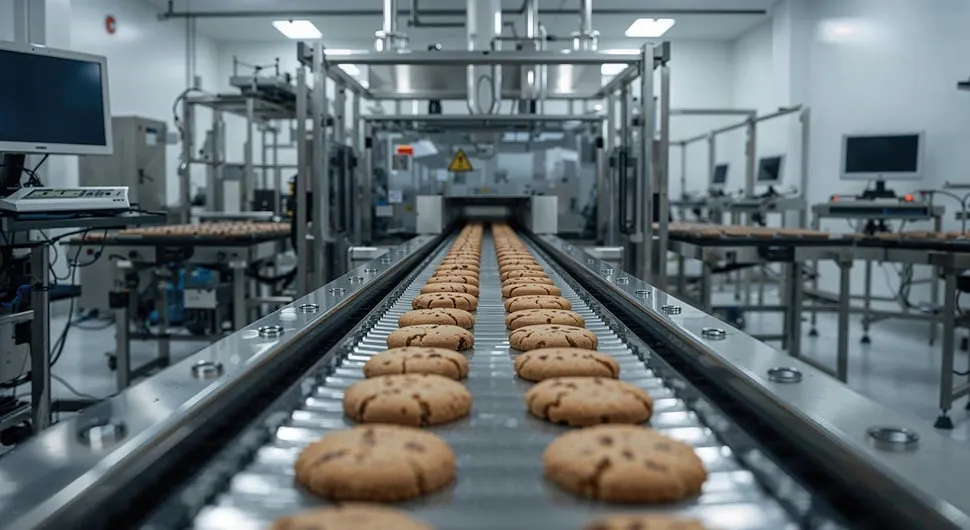
Image Source: Neogen
The process of conducting a cleaning validation begins with allergen mapping and thinking about what allergens exist on site [7]. Multi-disciplinary teams comprised of technical, quality, production, procurement, state-of-the-art, and maintenance staff produce the most effective allergen risk assessments [8]. This team-based approach mirrors HACCP food safety risk assessments and will give proper thought to everything in allergen control.
Conducting allergen mapping
Allergen mapping functions as an effective tool to identify and track allergens within a facility [8]. The visual guide produced through this process pinpoints allergen locations and identifies areas and process steps most at risk from allergen cross-contamination [8]. Several preparatory documents support complete allergen mapping activities.
Sites should first list all raw materials and the allergen status of each ingredient, processing aid, work-in-process, and rework product [8]. Cross-referencing this list with current product specifications and product information forms confirms that all declared allergens have been captured [8]. Verification against actual products stored in the warehouse and NPD store confirms ‘what we think we have, is actually what we have’ [8].
The physical form of allergens carries the most important weight in risk assessment. Powdered allergens such as flour, milk powder, and soy isolate present greater risk of becoming airborne and spreading to other facility areas than particulate allergens like sesame or tree nuts, which spread through people movement and cleaning practises [8]. Current process flow diagrams for each unique production process serve as guides to query the potential for allergen cross-contamination from equipment and the environment [8].
Physical walk-throughs of the facility in the sequence shown on process flow diagrams reveal the presence of allergens and possibilities of allergen cross-contact at each process step [8]. Teams should get into receival and storage areas for effective segregation between allergens and non-allergens, signage that helps designated storage areas, and procedures to contain allergen spills [8]. Production scheduling for allergen sequencing, shared equipment with production hang-up between batches, and waste-handling protocols all warrant scrutiny [8].
Performing allergen risk assessment
The requirement to undertake a formal allergen risk assessment before applying precautionary allergen labelling remains poorly understood, with no SME business in one study understanding this requirement [9]. Risk assessment exercises highlight which equipment is shared and which allergens are involved [7]. Where shared equipment exists between allergen and non-allergen ingredients or products and cleaning has been identified as a control measure, this requires subjection to an allergen cleaning validation protocol [7].
The allergen risk assessment team must think over probable risk against remote chance for allergen contamination or cross-contact [8]. Probable risks require practicable and green control measures to eliminate, reduce, or prevent the allergen contamination risk [8]. Cross-contact points represent areas within the food processing environment where allergenic substances may inadvertently mix with non-allergenic products [9].
Identifying worst-case scenarios
Worst-case scenario determination will give strong validation that withstands scrutiny [9]. Equipment reviews identify areas most difficult to clean, which assists in determining the worst-case scenario and will be assessed for cleanability during the validation process [9]. Several factors affect worst-case selection decisions.
The selected product may have the strongest adhering soil, the highest level of allergens, or the hardest allergen to remove [9]. Processing parameters also affect soil removal, including the longest processing time, the highest temperature, or the period of time equipment sits idle before cleaning [9]. Validating the worst-case scenario theoretically confers validation to cleaning programmes for all allergens used when multiple allergens are checked by the same cleaning programme [9].
Selecting target allergens for validation
Target allergen selection for validation study design focuses on allergens present at high levels with high protein content that prove hard to clean away from the line [9]. Showing that the clean works in the most challenging situations provides assurance that cleaning will function in a variety of scenarios where cleaning is less challenging [9]. Selecting easily cleaned targets would not allow this assumption [9].
Allergen load, defined as the total protein amount from the allergenic source of concern present in food components, represents the second thought when conducting a cleaning validation study [9]. The allergenic source with the highest intact protein load in the product formulation typically receives selection for cleaning procedure effectiveness assessment [9]. Sites must have good laboratory test methods that exist to detect the chosen allergen in samples, ideally using quantitative methods [9].
Defining Your Allergen Cleaning Validation Protocol Scope
Scope definition transforms preparatory work into actionable verification parameters. The protocol scope determines which aspects of the cleaning process require testing and sets measurable success criteria that line up with regulatory expectations. It establishes boundaries for the verification exercise.
Setting clear objectives
The main goal centres on ensuring the absence of detectable allergens in food products that undergo processing following the cleaning [7]. This goal is different from attempting to prove ‘zero allergen forever’, which remains neither practical nor achievable. Rather, the objective confirms that the cleaning process reduces allergen residues to an acceptable level. Cross-contact risk remains controlled this way [10].
Sites must first define the products and process lines that the validation study design will cover, among the type of cleaning to be verified [7]. Differences include product changeover cleaning versus end-of-production cleaning and open plant cleaning versus closed plant clean-in-place systems. Each cleaning scenario presents different challenges. Separate verification objectives are required.
Clear objectives also specify whether the verification addresses wet cleaning, dry cleaning, or both methodologies. The nature of the allergenic food influences this decision. Powders, pastes, liquids and particulates each respond to cleaning methods differently [2]. Objectives should account for the highest loads of allergenic foods. Verification procedures should focus more heavily on equipment exposed to these loads.
Selecting equipment and surfaces to verify
Equipment selection follows a risk-based approach that prioritises areas where allergen build-up could occur or residual allergenic proteins could become trapped [9]. The sampling plan must include pneumatic lines with product contact, conveyor belts, fillers, mixers, silos, bulk tanks, packaging equipment, hand utensils, shovels, scrapers, aprons and gloves.
Hygienic design reviews prove beneficial at this stage. The main purpose identifies equipment areas most difficult to clean. This assists in determining validation requirements and which areas will be assessed to consider cleanability during the verification process [7]. Sites may need to strike a balance between places that are hardest to clean but require specialist access equipment or engineering support to dismantle and places that are hard to clean yet remain accessible.
Food-contact surfaces receive priority attention. Non-food-contact surfaces within the processing and packaging environment also warrant attention [9]. Storage areas, employee wardrobe facilities and environmental surfaces can harbour allergen residues that later contaminate production lines. The cleaning methods selected should be appropriate for the processing environment, the equipment type, the product or ingredient characteristics and the identified allergen.
Choosing product types and formulations
Several factors influence product selection to verify. The chosen product may possess the strongest adhering soil, contain the highest level of allergens, or feature the hardest allergen to remove [7]. When a product contains two or more allergens, allergen cleaning validation procedures using allergenic techniques should focus on the highest percent allergen within the formula or other things such as allergens most difficult to remove from the food processing environment [9].
Processing conditions also affect soil removal characteristics. Think about the longest processing time, the highest temperature exposure, or the period equipment sits idle before cleaning commences [7]. The form of the allergenic food matters. These foods can be present as particulates, powders, pastes, liquids or aerosols [2]. Different formulations may need separate verification, especially when you have the food product matrix or allergen types, forms, or protein loads vary among formulations made on shared equipment.
Documenting the verification plan
Written verification procedures establish documented proof that cleaning methods remove allergenic food residue effectively [9]. Documentation should identify what is intended to be cleaned. This includes processing and transport equipment, utensils and food contact surfaces. A defined frequency of cleaning specific to targeted allergenic food residues must be set. This frequency varies dependent upon processing schedules, equipment types, products produced and allergens involved.
The verification plan provides detailed instructions on equipment breakdown to clean where appropriate, along with specific protocols, chemicals, concentrations, temperature set-points, solution flow rates, or any factors critical to cleaning process effectiveness [9]. Sites should already possess cleaning instruction cards that record the cleaning programme. Certain parameters such as the number of cleaning operatives and the required cleaning window often receive insufficient attention [7]. Health and safety legislation implications should be thought about. COSHH assessments should be completed for chemicals intended to use during verification.
Developing and Documenting the Cleaning Procedure
Written procedures are the foundations of any allergen cleaning validation protocol and must include all instructions needed to ensure equipment and utensils are cleaned and sanitised effectively. Regulatory guidance states that documentation should identify what requires cleaning, define cleaning frequency specific to targeted allergenic food residues, provide detailed equipment breakdown instructions where appropriate, and define specific protocols including chemicals, concentrations, temperature set-points, solution flow rates, or any factors critical to cleaning effectiveness [11].
Wet cleaning validation considerations
Wet cleaning represents the most common methodology the food industry uses and proves most effective for allergen removal when designed properly [7]. The process involves application of a chemical product solution in water at a certain temperature for the required time to dissolve or loosen soil deposits. Mechanical action of the cleaning fluid helps remove residue [2]. Chlorinated alkaline detergents demonstrate excellent effectiveness for removing protein soils, as do alkaline or caustics with hydrogen peroxide and enzyme-based formulations [12]. So alkaline or caustic solutions and detergent builders with surfactants show fair to very good results, whilst acids perform poorly and water alone achieves poor to fair removal [12].
Temperature application plays a critical factor in wet cleaning efficacy. Warm or hot water removes some food soils better than cold or ambient water, although effectiveness depends on the food soil type and surface composition being cleaned [7]. Facilities must establish validated protocols for CIP systems that have been tested for effectiveness, as these systems provide automated cleaning that can be applied consistently once procedures are validated and monitored [11].
Dry cleaning validation considerations
Dry cleaning does not involve water or chemicals and may be accomplished by brushing, wiping, or hoovering up [11]. This methodology suits dry allergens with little to no oil content but has limited efficacy for allergen removal, even when surfaces appear visually clean [2]. Note that sanitisers do not remove residue, including allergen protein, which represents a fundamental difference from microbiological cleaning [11]. The use of compressed air and grit blasting to remove food residue from difficult-to-clean areas should be avoided or other equipment and areas must be protected from allergenic materials during cleaning, as these methods can disperse allergens from one area to another [11].
CIP and COP procedures
Clean-in-place systems benefit facilities by enabling automated cleaning that can be applied consistently once how to validate allergen cleaning procedures confirm effectiveness [11]. Clean-out-of-place procedures prove effective for removing allergen residues from equipment parts that can be disassembled, with water and cleaning chemistry offering good approaches when combined with physical removal of as much food soil as possible [9]. Care must be taken to ensure COP tanks are not overloaded and that circulation remains sufficient, with turbulent flow of water and cleaning chemistry able to flow through and around submerged equipment [9].
Hard-to-clean equipment challenges
Sampling plans must include all equipment where allergen build-up could occur or residual allergenic proteins could be trapped, including pneumatic lines with product contact, conveyor belts, fillers, mixers, silos, bulk tanks, packaging equipment, hand utensils, shovels, scrapers, aprons, and gloves [11]. Older food processing equipment not designed to be cleaned presents particular challenges [12]. Equipment pre- and post-cleaning swabs should be obtained at multiple locations on each processing line, with swabs obtained pre-cleaning serving as positive control samples [11].
Hygienic design factors
Hygienic design enables cleaning to an appropriate microbiological, allergenic, or chemical standard by preventing contamination of food products [13]. Equipment and factories of poor hygienic design prove difficult to clean, with residues retained in crevices and dead areas [13]. Because of these design limitations, improperly or insufficiently cleaned equipment presents a potential allergen risk and cannot be disinfected effectively [13]. The right hygienic design remains paramount to aid fast and effective cleaning, as inadequately designed equipment requires more severe procedures using aggressive chemicals and longer cleaning cycles [13].
Selecting Appropriate Testing Methods and Sampling Techniques

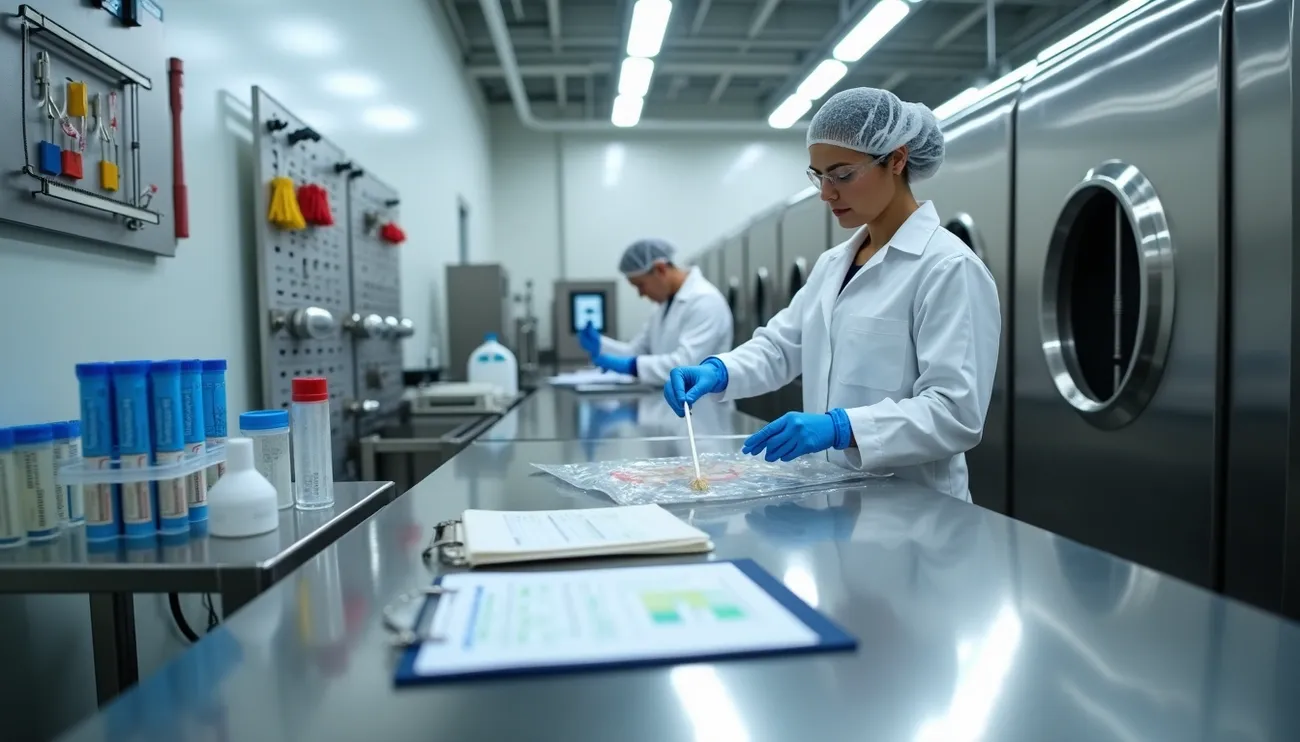
Image Source: ALS Global
Selecting the right testing methodology determines whether validation exercises produce reliable, defendable results. Each testing approach offers distinct advantages and limitations that must arrange with validation objectives and ongoing verification requirements.
ELISA testing for allergen validation
Enzyme-linked immunosorbent assays represent the most common method for food allergen detection, quantification, and test method validation [14]. Validation exercises should use ELISA wherever possible, as these assays look for protein and provide quantitative results within a defined range [12]. Protein triggers allergic reactions in consumers, so detection methods targeting protein offer the most relevant risk assessment for allergen monitoring programmes.
ELISA-based methods prove less prone to matrix interference and deliver more reliable protein detection accuracy. Package contents match label declarations this way [10]. Commercial ELISA kits exist for detecting residues of all priority allergenic foods [2]. These tests should be performed manually with a reader or using standard microtiter plate automation equipment. Manufacturers provide method and system validation reports that show test performance [14].
Lateral flow devices and rapid tests
Lateral flow immunoassays can screen surfaces or equipment for the presence of allergenic proteins quickly [10]. These qualitative tests reveal whether allergens are present but not specific levels [9]. Sites should run lateral flow devices alongside quantitative ELISA tests during validation to prove correlation between the two methods, especially if lateral flow devices will be used for ongoing cleaning verification protocols [7].
Commercial lateral flow devices have detection levels suitable for proving sanitation standard operating procedures right [2]. But testing soiled surfaces known to contain allergen residues serves as a positive control first. This ensures the device will detect the form of allergenic food being used [2]. Ingredients with low allergen loads, such as soy lecithin, often contain insufficient allergen levels for detection, especially when these ingredients comprise minor formulation components [2].
Protein swabs and ATP testing limitations
Testing for adenosine triphosphate yields unreliable results for allergen detection purposes [10]. ATP testing indicates surface cleanliness, but it does not function as an effective allergen control tool because ATP exists in all living and once-living cells rather than showing allergenic protein presence [10].
The A3 system detects ATP, ADP, and AMP but cannot identify or assay allergenic proteins [15]. Research comparing detection limits across 40 regulated allergenic foods showed the A3 system had lower detection limits than conventional ATP tests. The system showed heightened sensitivity for 35 products compared to protein swabs [15]. Despite this improved performance, the A3 system cannot replace allergen testing [15].
Protein swabs detect protein and a wide range of allergens but show reduced efficiency when dealing with low contamination levels [15]. These tools prove less effective than the A3 system for verifying remaining food debris amounts [15]. But if sites plan to use ATP or protein swabs for verification, operators must understand they measure general hygiene indicators rather than allergens themselves [7].
Defining sampling locations
Representative sampling requires testing each site that represents a unique surface material, complexity, and location, alongside unique cleaning protocols and product compositions [11]. Sampling strategies should focus on areas that might harbour residues, including nooks and crannies [2]. Sites may use random selection procedures to pick sampling spots on specific processing lines during each validation exercise [2].
Zone-based sampling proves effective. Zone 1 surfaces contact product and receive priority attention [11]. Testing these food-contact surfaces identifies allergen cross-contact hot spots that affect product and product-contact surfaces [11]. Zones 2, 3, and 4 represent non-contact surfaces of lessening contamination probability [11].
Establishing sample collection techniques
Multiple sample types support complete validation studies. Post-clean samples include swabs, rinse waters, or purge material. Sample type depends on the cleaning method performed [12]. Focus on the most challenging areas to clean when deciding collection locations, as these represent worst-case scenarios [12].
Environmental swabs designed for allergen testing must be used with lateral flow devices. Cotton swabs and micro sponges prove unsuitable [2]. Lateral flow devices can also test rinse waters in clean-in-place operations that contain no cleaning chemistry [2]. Testing smaller sample numbers proves adequate for CIP final rinse waters, as allergen residues distribute uniformly [2].
Next off-line product testing represents the only direct measure of consumer exposure [12]. This involves the first ingredient or product that contacts equipment after cleaning completion [12]. Some facilities test samples from the first and last product passing through the line [9].
Setting acceptance criteria and detection limits
Allergen guidelines express measurements in parts per million, which suits final product concentrations but does not translate to environmental surfaces easily [11]. Facilities should use a scoring scale system for environmental swab results tested with quantitative methods therefore [11]. Scoring on green, yellow, and red scales eliminates confusion when interpreting parts per million results [11].
Any result above the published limit of detection should be considered positive and trigger recleaning, due to the sensitivity of quantitative ELISA assays [11]. Industry best practise requires achieving non-detectable results for all post-clean and next off-line samples across three consecutive rounds [12]. The sanitation standard operating procedure can be considered effective for allergen removal when no detectable residues appear using appropriate swabs and lateral flow devices at suitable numbers and locations of sampling sites [2].
Conducting Validation Trials and Collecting Data
Running validation replicates
You must repeat the allergen cleaning validation procedure at least three times to execute trials properly [9][7][12]. Best practise in the industry calls for including different work periods to show that cleaning performs consistently, whatever who executes it [12]. Validation exercises at varying times account for different cleaning teams and seasonal variation in raw ingredients. They also account for variation in production pressures and other factors [7].
Testing positive controls
Positive controls prove the source of allergen contamination and confirm that test methods can detect the allergen [12]. Equipment pre-cleaning swabs at multiple locations on each processing line serve as positive control samples [16]. You should test these controls once to ensure allergen detection at expected levels rather than for every validation round [12][17].
Post-clean surface sampling
Post-clean samples include swabs, rinse waters, or purge material depending on cleaning methodology [12]. Visual monitoring should occur when equipment remains disassembled after cleaning [16]. Samples must come from equipment where allergen build-up could occur or residual allergenic proteins could be trapped [16].
Rinse water analysis
Final rinse water testing applies to clean-in-place operations [2][7]. You should avoid testing rinse waters containing residual cleaning chemistry, as cleaning chemicals interfere with allergen testing [2].
First-off product testing
First-off product represents the only direct measure of consumer exposure [12]. Facilities test samples from the first, middle and last product passing through the line [9][7].
Ensuring consistency across trials
Validation requires testing the same worst-case scenario and analysing the same type of samples. You must use the same testing method in all trials [4]. Running lateral flow immunoassays with quantitative tests proves correlation between methods [9].
Analysing Results and Determining Validation Success
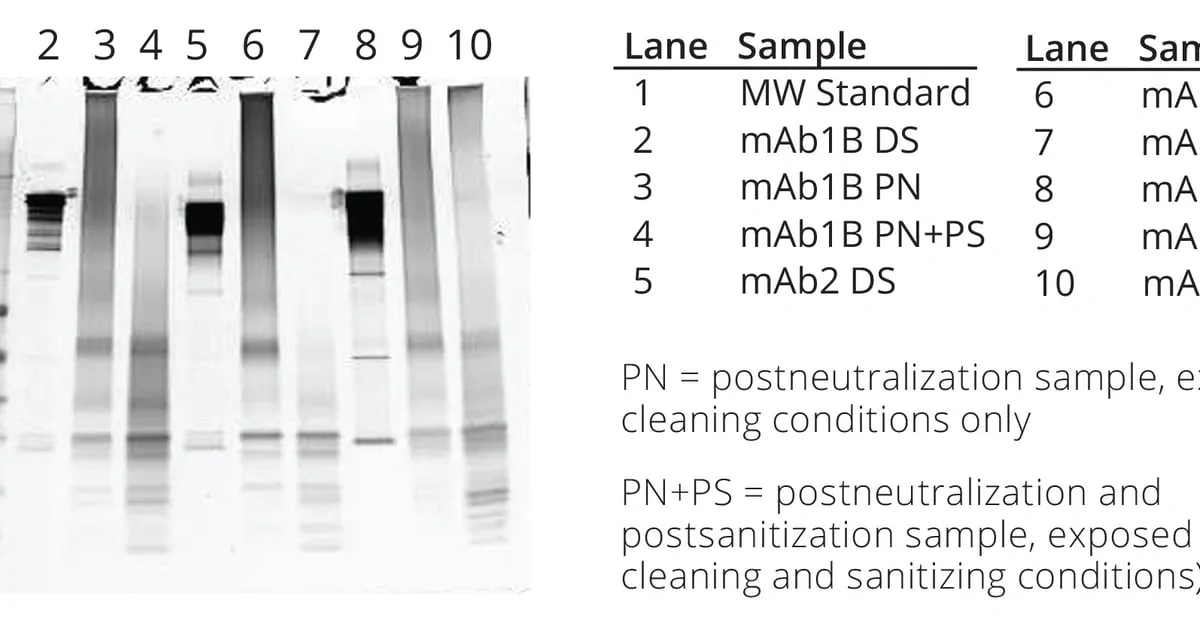
Image Source: BioProcess International
Analysing Results and Determining Validation Success
Interpreting test results
Quantitative ELISA tests establish measures for effective cleaning and reveal how close facilities were to achieving acceptable results when tests fail [9]. Cleaning achieves desired results when both product and food-contact surfaces remain free from allergens [7]. Allergen detection indicates cleaning has not met objectives and requires amendments before rerunning validation [7].
Data interpretation and statistical confidence
Facilities should use scoring scales (green, yellow, red) for environmental swab results, as parts per million measurements suit final product concentrations but do not translate to surfaces with ease [18]. Any result above the published limit of detection should be positive and require recleaning [18]. Statistical confidence builds through consistent results across three validation rounds using similar worst-case scenarios.
Addressing failed validation attempts
Root Cause Analysis helps determine why cleaning failed and which stages require targeting [9]. Sites must review where detected results originated and understand potential causes before repeating exercises [12].
Common mistakes in validation studies
Variations between test kit outputs when testing for the same allergen create interpretation challenges [19]. Different limits of detection and quantification across manufacturers affect practical conclusions [13].
Environmental and airborne contamination
Allergens distribute between settled dust and airborne compartments [20]. Facilities must verify whether adjacent line dust accumulates to high levels that cause non-allergen products to test positive [21].
Implementing the Validated Allergen Cleaning Procedure
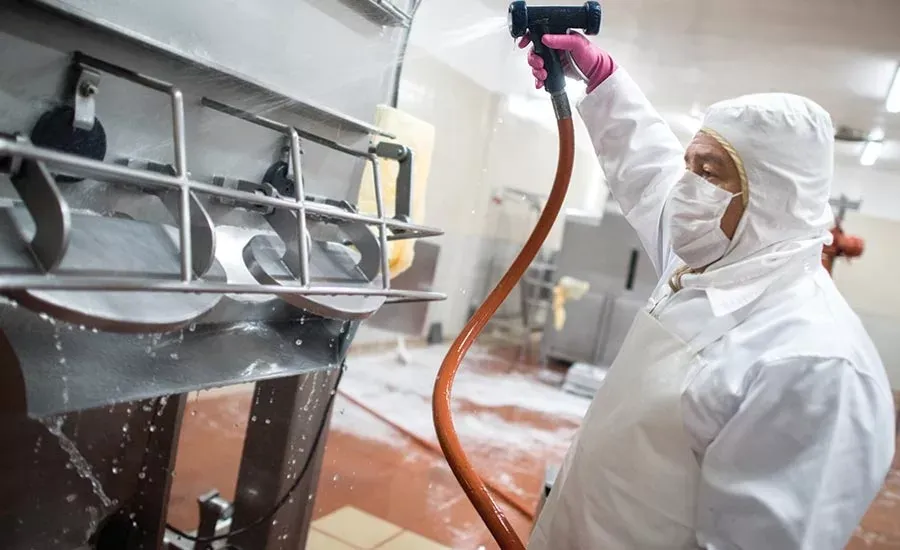
Image Source: Food Engineering
Successful confirmation studies need structured implementation across operational, training and monitoring systems. Reliable standard operating procedures will turn confirmed protocols into repeatable daily practises.
Creating standard operating procedures
Each processing line exposed to priority allergenic ingredients should have a Sanitation Standard Operating Procedure [2]. Written procedures must have all instructions needed to clean equipment and utensils the right way [16]. Cleaning procedures that work will vary according to equipment design, the form of allergenic food, protein load from the allergenic source and the form of finished product [2].
Training staff on confirmed procedures
Staff should be trained not just on what allergens are but how they apply to their specific roles in receiving, storage, production, sanitation or labelling [22]. Training programmes for personnel who collect samples and perform analyses will give consistency [16]. Training should be reinforced on a regular basis, when new products, ingredients or procedures are introduced [22].
Setting up verification and monitoring protocols
Visual inspection remains the gold standard and should be used when particulate residues are a source of concern [2]. Verification can be done using ATP testing or general protein swabs as a more economical approach that sets up records [2]. Facilities must understand these measure general hygiene indicators rather than allergens themselves [2].
Setting revalidation criteria and triggers
If certain allergen-containing products are manufactured on a recurring basis, reconfirmation at a frequency of 2-4 times per year is recommended depending on cleaning procedure complexity [2]. Reconfirmation is also recommended when any changes are made to formulation, equipment matrix, processing conditions, SSOP parameters or allergen test kit type [2]. Confirmations should be reviewed at least once a year or when any parameter changes [7].
Audit expectations and evidence requirements
Good records of results and outcomes are a given, but documenting all decisions made before starting cleaning confirmation is just as important [17]. This has everything from reasons behind which allergen to target to decisions on where to take swabs [17]. All this documentation is part of a site’s due diligence and becomes vital if an incident occurs [17].
Integration with HACCP and allergen control plans
Allergens must be part of the food safety management system [3]. Effective allergen control programmes integrate confirmed cleaning procedures within broader HACCP plans. Cross-functional staff involvement during review identifies practical improvements, as frontline experience is valuable for refining plans [22].
Conclusion
Allergen cleaning validation looks complex, yet a structured approach transforms regulatory requirements into manageable procedures. Technical managers who implement these protocols gain documented evidence that cleaning methods remove allergenic residues, satisfy BRCGS audits and protect consumers.
Success depends on careful preparation. You need allergen mapping and risk assessment first. Then run three consecutive validation trials using quantitative ELISA testing. Written SOPs and staff training ensure consistent execution across all shifts. Sites should expect the original validation exercises to require several weeks. Validated procedures deliver long-term confidence in allergen control programmes.
Revalidation maintains effectiveness when formulations, equipment or processes change. This keeps facilities compliant with UK food safety standards.
Key Takeaways
Effective allergen cleaning validation requires systematic preparation, rigorous testing, and documented procedures to ensure regulatory compliance and consumer safety.
• Conduct thorough allergen mapping and risk assessment before validation to identify worst-case scenarios and target allergens with highest protein loads
• Run three consecutive validation trials using quantitative ELISA testing on the same equipment, surfaces, and cleaning procedures for statistical confidence
• Focus validation on food-contact surfaces and hard-to-clean areas where allergen build-up occurs, using swab sampling and rinse water analysis
• Achieve non-detectable results across all post-clean samples and first-off products to demonstrate effective allergen removal
• Implement validated procedures through written SOPs, comprehensive staff training, and regular verification monitoring using visual inspection
• Revalidate cleaning procedures when formulations, equipment, or processes change, typically 2-4 times annually for recurring allergen products
Proper validation transforms regulatory requirements into manageable daily practises whilst providing documented evidence that cleaning methods effectively protect consumers from allergen cross-contamination.
FAQs
Q1. What methods should be used for allergen cleaning validation? Allergen cleaning validation typically combines cleaning validation evidence, targeted verification testing, and controlled decision rules. This approach demonstrates that a facility can effectively remove or control allergen residues to acceptable levels and prevent allergen-related labelling failures.
Q2. How do you validate a cleaning procedure using swab testing? Direct sampling, also known as the swab method, involves systematically rubbing sterile material across a surface to analyse for residue presence. This technique forms a core component of cleaning validation, particularly when testing food-contact surfaces for allergen removal effectiveness.
Q3. What are the key stages in an effective cleaning process? An effective cleaning process follows seven stages: removing visible debris, rinsing with high-pressure warm water, applying detergent, inspecting surfaces, sanitising, disinfecting, and allowing surfaces to dry completely. Each stage plays a critical role in ensuring thorough allergen removal.
Q4. Why must allergen cleaning validation be repeated three times? Industry best practise requires validation exercises to be repeated three times to establish statistical confidence and demonstrate consistency. Running trials across different shifts and conditions proves that cleaning procedures work reliably regardless of who performs them or when they’re executed.
Q5. When should allergen cleaning procedures be revalidated? Revalidation becomes necessary when changes occur to formulations, equipment, processing conditions, or cleaning protocols. For recurring allergen products, facilities should revalidate 2-4 times annually, with frequency depending on the complexity of the cleaning procedure.
References
[1] – https://foodindustryhub.com/food-industry-knowledge-centre/know-allergen-cleaning-validation/
[2] – https://www.food-safety.com/articles/11362-best-practise-considerations-to-enhance-the-effectiveness-of-allergen-cleaning-and-validation
[3] – https://www.food.gov.uk/research/review-of-the-literature-and-guidance-on-food-allergen-cleaning-report-summary-and-discussion
[4] – https://www.hygiena.com/news/allergen-cleaning-validation-and-verification
[5] – https://www.factssa.com/news/infographic-the-difference-between-allergen-cleaning-validation-and-verification/
[6] – https://glenwood.ph/2019/06/allergen-cleaning-procedure-validation-vs-verification/
[7] – https://www.romerlabs.com/en/library/knowledge/detail/10-steps-to-validating-and-verifying-allergen-cleaning-procedures
[8] – https://www.bsigroup.com/globalassets/localfiles/en-hk/pdf/bsi-allergens-facility-mapping-guide_hk.pdf
[9] – https://www.klipspringer.com/blogs/allergen-cleaning-validation-a-practical-guide-for-food-factories/
[10] – https://www.neogen.com/en/usac/neocenter/blog/why-atp-testing-is-not-sufficient-for-allergen-control-programmes/?srsltid=AfmBOooq2p_fSoAvOGooDugJcB-grHJDC09mjjjiUfJKvfSH-p8QAqOS
[11] – https://www.neogen.com/en/usac/neocenter/blog/validation-for-food-allergens-in-an-environmental-monitoring-programme/?srsltid=AfmBOooTlJkQaGomutdOJmLMlmC-C3p3mdQXhOXjDelKtQScYjmsn_GL
[12] – https://www.rssl.com/insights/food-consumer-goods/designing-a-successful-allergen-cleaning-validation-strategy/
[13] – https://www.food.gov.uk/research/review-of-the-literature-and-guidance-on-food-allergen-cleaning-results
[14] – https://www.hygiena.com/documents/68351/allergen-detection-in-food-safety—analysis–application.pdf
[15] – https://www.klipspringer.com/blogs/protein-swabs-vs-a3-testing-everything-you-need-to-know/
[16] – https://www.fda.gov/media/129671/download
[17] – https://www.rssl.com/media/faad4ehy/rssl-white-paper-cleaning-validation-in-allergen-management.pdf
[18] – https://www.neogen.com/en/usac/neocenter/blog/validation-for-food-allergens-in-an-environmental-monitoring-programme/?srsltid=AfmBOopKGW0o4dMKSc7AAh4PganD8ZzQsD59KV-XhwhEEQAZnWC5kl1y
[19] – https://www.food.gov.uk/research/review-of-allergen-analytical-testing-methodologies-executive-summary-and-introduction
[20] – https://pmc.ncbi.nlm.nih.gov/articles/PMC6333298/
[21] – https://www.food-safety.com/articles/3812-allergen-validation-analytical-methods-and-scientific-support-for-a-visually-clean-standard
[22] – https://www.fooddocs.com/post/haccp-allergen-control-programme