Food allergies in the UK are rising at an alarming rate, making BRCGS allergen requirements more crucial than ever. The Food Standards Agency reports that food allergies affect roughly 2% of adults and up to 8% of children. This means over 2 million people could face serious allergic reactions . Food anaphylaxis admissions jumped from 1.23 to 4.04 per 100,000 population yearly between 1998 and 2018 . Children under 15 showed the steepest rise from 2.1 to 9.2 per 100,000 population each year .
UK food manufacturers must comply with recognised standards to ensure allergen safety. Small food businesses can now get their food safety credentials verified through the SALSA allergen audit process . ISO 22000 allergen control frameworks offer detailed approaches to handle allergen risks. These food safety certification allergen standards have evolved substantially. Recent updates now focus on building a resilient Food Safety Culture . BRCGS Issue 9 requires approval and monitoring procedures that include certification or supplier audits . SALSA certification serves as an acceptable ‘supplier audit’ option .
This piece examines allergen audit requirements in major UK food safety frameworks. Food manufacturers will find practical steps to prepare for allergen audits and implement verified allergen removal solutions that line up with regulatory expectations.
Understanding Allergen Audits in the UK
Image Source: Complete Food Safety
Allergen audits are the life-blood of food safety management systems in the UK food industry. These complete assessments have become more significant as allergic reactions affect more of the population. This creates major challenges for food businesses across the supply chain.
What is an allergen audit?
An allergen audit helps food businesses review how they identify, control, and communicate allergen risks in their operations. The review shows how well a company’s allergen management plan works. This documented system identifies, controls, educates about, and communicates allergen risks from raw materials through to finished products [1].
The audit looks at:
- Allergen risk assessment processes and cross-contamination controls
- Supplier approval and ingredient verification systems
- Cleaning validation procedures and effectiveness
- Staff training on allergen handling and awareness
- Labelling accuracy and compliance with regulations
- Documentation of allergen control measures
Companies can conduct complete allergen audits internally or have external bodies do them as part of certification programmes. To cite an instance, the AllergyWise® Audit programme offers independent compliance testing. Expert auditors review allergen procedures and information at food establishments [2].
Why allergen audits matter for UK food manufacturers
UK food manufacturers don’t deal very well with allergen management challenges. Incorrect allergen management has led to many product withdrawals and has become the most common cause of recalls [1]. Three main reasons emerge from root cause analysis: unintentional allergen presence through cross-contact, mis-packing due to poor changeover controls, and incorrect labelling from specification errors or poor change management [1].
So, strict allergen audits help manufacturers spot and fix these risks before they get pricey or harm consumers. Recent audit data shows some worrying trends – 62% of customers lack confidence in staff members’ allergen knowledge and the information they receive during service [3]. The business reputation and success depend on good allergen management since 87.5% of people with allergies would leave a restaurant if they weren’t confident about the allergen information [3].
Food businesses must base their allergen management regime on Hazard Analysis and Critical Control Points (HACCP) principles. Risk assessments develop from these principles [2]. Manufacturers can confirm their critical control points through systematic allergen audits and verify they have the right measures in place.
Overview of BRCGS, SALSA, and ISO 22000 standards
The UK’s three major food safety standards handle allergen control differently:
BRCGS (Brand Reputation Compliance Global Standards) puts a lot of focus on allergen management throughout its requirements. The standard just needs strict controls for allergens. Issue 9 includes specific clauses about supplier approval, traceability, and complete documentation [1]. BRCGS guidance treats allergen management as vital to food safety since incorrect management leads to most product recalls [1].
SALSA (Safe and Local Supplier Approval) certification shows compliance with strict food safety standards made for smaller producers. The standard emphasises allergen management and includes compliance with Natasha’s Law for pre-packed for direct sale (PPDS) foods. Clear labelling of the 14 regulated allergens remains essential [4]. SALSA Version 6 makes these requirements even stronger with specific rules for allergen control.
ISO 22000 includes allergen control in its broader food safety management system framework. This international standard merges allergen management with its prerequisite programmes (PRPs) and HACCP systems [2]. Organisations must identify allergen hazards, set up control measures, and prove they work through proper documentation and verification.
UK food manufacturers need to understand these standards and prepare well for allergen audits to stay compliant and build customer trust. They can show their steadfast dedication to consumer safety while protecting their reputation by implementing proper allergen control systems that line up with these standards.
Many UK manufacturers use validated solutions like DrCleanish to support compliance with these food safety standards. These solutions provide verified allergen removal capabilities that they can document during audits.
BRCGS Allergen Control Requirements
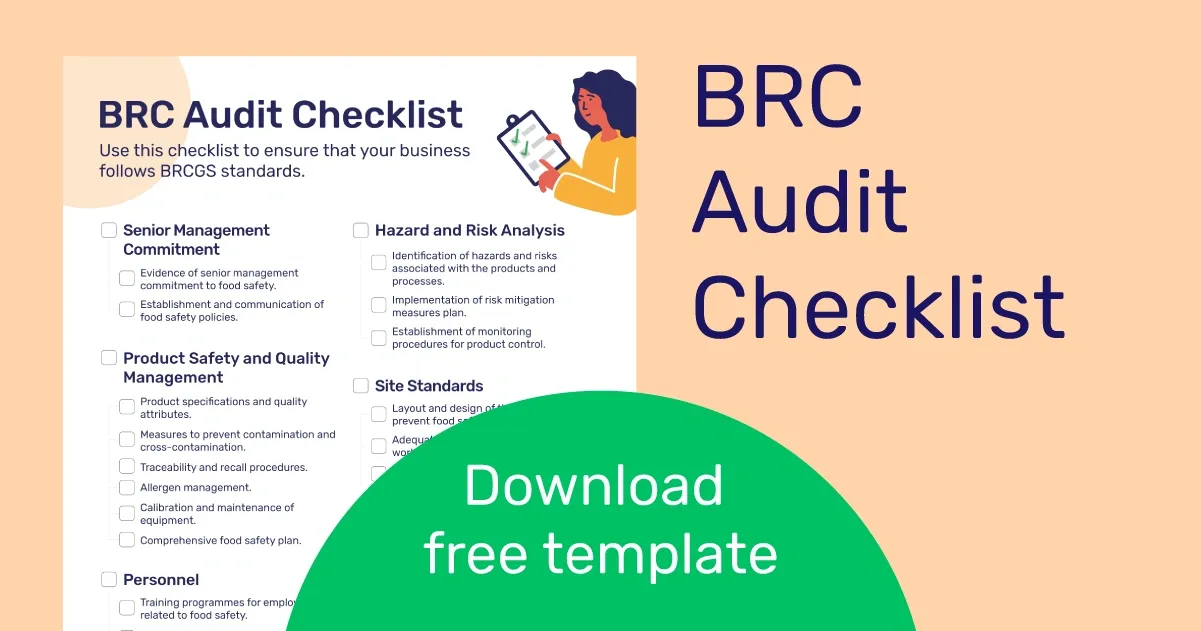
Image Source: FoodDocs
BRCGS certification’s life-blood is the way it handles allergens. This represents one of the standard’s most critical requirements. The BRCGS Food Safety Standard Issue 9 marks allergen control as a fundamental clause. Any failure leads to an automatic audit failure [5]. This shows how much importance BRCGS places on managing allergens.
Key allergen clauses in BRCGS Issue 9
Clause 5.3 of BRCGS Issue 9 forms the foundations of allergen management requirements. This fundamental clause lays out complete controls that food manufacturers must put in place. These controls prevent cross-contamination and ensure consumers get accurate information. The standard acknowledges that poor allergen management has led to many product withdrawals. It remains the most common cause of recalls [6].
The main causes of allergen-related recalls are:
- Unplanned allergen presence through cross-contact during production or accidental addition from recipe errors
- Mis-packing incidents from wrong packaging due to poor changeover controls
- Wrong labels on packaging due to specification errors, poor change management with recipe updates, or weak printing controls [6]
Pet food and animal feed manufacturers must follow allergen management laws in their target sales countries. In spite of that, some markets lack legislation for allergens in pet food/animal feed. Products heading to these countries might call it “not applicable” [7].
Supplier approval and traceability expectations
Supplier approval processes play a vital role in allergen management. Manufacturers must build strong supplier approval and monitoring procedures. These include checking certifications or auditing suppliers [8]. Such procedures must show that suppliers can make safe products and meet quality standards, including allergen control.
A BRCGS-compliant supplier approval needs:
- Complete allergen declarations for all raw materials
- Clear allergen status in specifications
- Regular checks on supplier’s allergen management
- Risk assessment of possible allergen cross-contact through the supply chain
- Checks on supplier’s allergen control measures
These strict supplier controls create the first defence against allergen contamination. They manage risks right from the start of production.
Audit documentation and evidence needed
A BRCGS audit needs precise documentation to show allergen management compliance. Auditors usually want to see at least 90 days of clean, complete records [9]. These records must prove that allergen controls work well.
Essential documentation includes:
- An allergen management plan that tracks and controls allergens from start to finish
- Risk assessments for allergen cross-contact and control measures
- Records that prove cleaning removes allergens
- Staff training records about handling allergens
- Product specifications and correct allergen labels
- Proof that includes cleaning checks, test results and fixes [9]
Companies can prepare better for audits by using proven allergen removal solutions like DrCleanish. These solutions match BRCGS requirements and show that cleaning works. Such systems can create documentation that supports BRCGS compliance while showing dedication to allergen safety.
Auditors often check things live during inspections. They ask practical questions about allergen procedures: “How do you check allergen changeovers?” or “Where are your SOPs and how do you track compliance?” [9]. Staff must really understand allergen procedures, not just follow written rules.
UK food manufacturers must create complete allergen management systems. These systems need to meet exact BRCGS standards. This protects consumers and maintains brand reputation through an all-encompassing approach to allergen management.
SALSA Allergen Audit Essentials
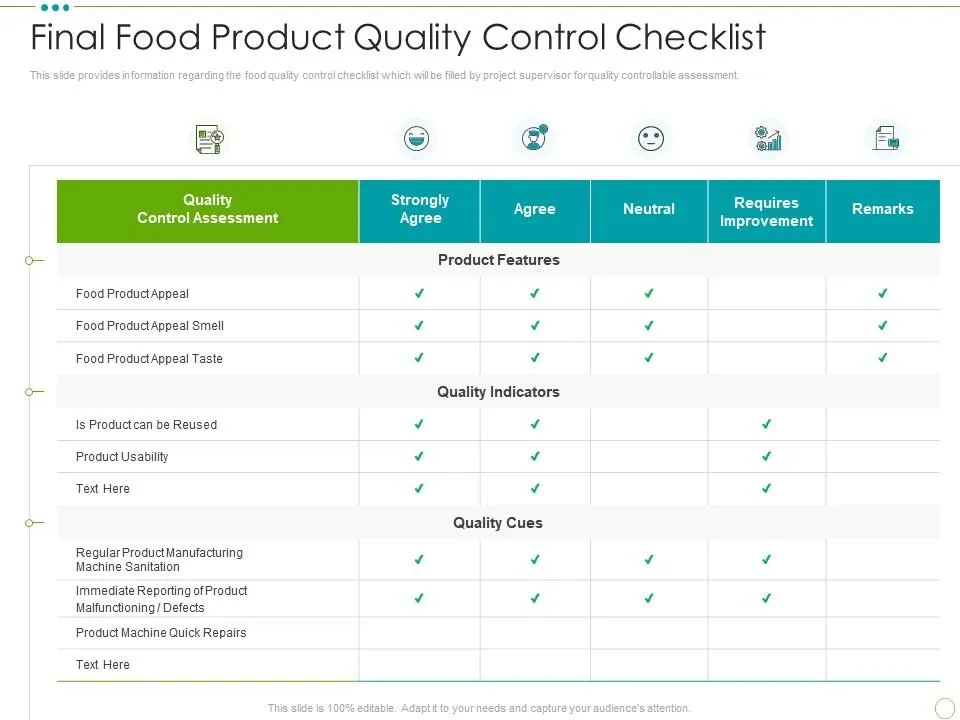
Image Source: SlideTeam
SALSA (Safe and Local Supplier Approval) works differently from larger food safety frameworks. It gives smaller UK food producers a custom certification path that manages to keep strict allergen control standards. Small and medium-sized food manufacturers need to understand SALSA’s allergen requirements to get certified.
SALSA allergen audit structure and scope
SALSA’s allergen management requirements fall under section 1.4. Auditors look at four key control areas:
- Allergen identification: Manufacturers must identify all allergens handled on site or brought onto premises and document cross-contamination risks [10]
- Management procedures: A detailed allergen management system must prevent cross-contamination from intake to despatch [10]
- Labelling accuracy: All allergen information on labels and packaging must be legally compliant and accurate [10]
- Validation of claims: Allergen suitability claims need verification through accredited testing methods [10]
These requirements are the basic contours of SALSA’s approach to allergen safety. Auditors check how well businesses apply and run these systems. Record keeping plays a significant role—SALSA needs all allergen management records to be available for inspection.
Changes in SALSA Version 6
SALSA Version 6 shows a fundamental change in handling allergen risks. The standard now has allergen management as an improved, separate section [2]. This is different from older versions where allergen controls were part of contamination prevention.
Version 6 brings several key updates:
- Raised allergen management to its own section with better guidance [2]
- Added stronger staff training rules for allergen awareness [11]
- Created clearer allergen procedures, including specific training requirements [11]
- Improved labelling guidance, covering website claims [2]
These changes match growing concerns about allergen-related incidents in the UK food industry, especially after Natasha’s Law took effect.
Common pitfalls in SALSA allergen compliance
Many businesses find it hard to meet SALSA’s allergen requirements. Here are the most common issues:
- Insufficient risk assessment: Not finding and documenting all possible cross-contamination points in production
- Inadequate staff training: Missing the allergen-specific training that Version 6 requires [11]
- Poor verification procedures: Not having proper testing methods to check allergen removal during cleaning
- Incomplete documentation: Poor record-keeping that doesn’t show consistent allergen control
- Inaccurate labelling: Making allergen claims without proper testing verification [10]
Small producers often struggle with allergen management verification. Solutions like DrCleanish are a great way to get verified cleaning results that meet food safety certification needs.
SALSA might seem simpler than BRCGS, but its allergen requirements are strict. Auditors focus heavily on cross-contamination control and verification methods. Becoming skilled at these requirements helps smaller UK food manufacturers show their dedication to food safety and compliance.
ISO 22000 and Allergen Risk Management
ISO 22000 offers a complete international framework for food safety management systems. It treats allergens as critical food safety hazards that need systematic control throughout the food supply chain. UK food manufacturers can use this standard as a well-laid-out approach to manage allergen risks and stay compliant with food safety regulations.
How ISO 22000 addresses allergen control
The standard’s framework clearly identifies allergens as food safety hazards [12]. Organisations must control food safety hazards, including allergens, to make sure their food is safe to consume. ISO 22000 now includes specific allergen requirements with the release of prerequisite programme PAS220 [13].
Paragraph 10.3 of the standard lists these allergen management requirements:
- You must label allergen presence from cross-contamination on consumer products and products for further processing
- You need to prevent cross-contamination throughout production
- Rework is allowed only in products with similar allergens or where you can prove allergens are removed or destroyed
- The team needs training on allergen risks and how production affects them [13]
These requirements are the foundations of a complete allergen management programme that lines up with broader food safety goals.
Integration with HACCP and PRPs
ISO 22000’s strength comes from combining allergen management with Hazard Analysis Critical Control Points (HACCP) principles and Prerequisite Programmes (PRPs). We focused on having organisations do a full hazard analysis to spot potential food safety hazards, including allergens [3].
Organisations start by gathering all information about raw materials, ingredients, processing aids, packaging materials, and finished products. They must then identify intentional allergens and check for possible sources of unplanned allergen presence [3].
The standard builds on prerequisite programmes as its base to manage allergens effectively. These PRPs cover important areas like:
- Facility design and layout to stop allergen cross-contact
- Supplier management, with specifications for incoming materials
- Cleaning and sanitation procedures confirmed for allergen removal [3]
Organisations must set up Operational Prerequisite Programmes (OPRPs) or Critical Control Points (CCPs) in their HACCP plan when hazard analysis finds allergen hazards that need control beyond simple PRPs [3].
ISO 22000 allergen documentation requirements
You need complete documentation to show compliance with ISO 22000 allergen requirements. ISO 22002-1:2009’s technical specification helps you create and implement an allergen management programme based on scientific risk analysis and HACCP principles [12].
ISO 22000 needs organisations to keep documented information about their allergen control programme, including:
- Hazard analysis documents that identify allergen risks
- CCP monitoring logs for allergen control
- Results that confirm control measures work
- Supplier communications about allergen status
- Cleaning logs that verify allergen removal
- The team’s allergen awareness training records [3]
UK food manufacturers looking for ISO 22000 certification can use validated allergen removal solutions like DrCleanish. These solutions are a great way to get documentation evidence for auditors and maintain consistent allergen safety standards. These systems help with ISO 22000 compliance by providing verified cleaning effectiveness that meets food safety certification needs.
The standard also emphasises creating complete verification and validation programmes. These programmes confirm that allergen control measures work as planned and turn theoretical controls into real food safety results [3].
Preparing for an Allergen Audit: Step-by-Step
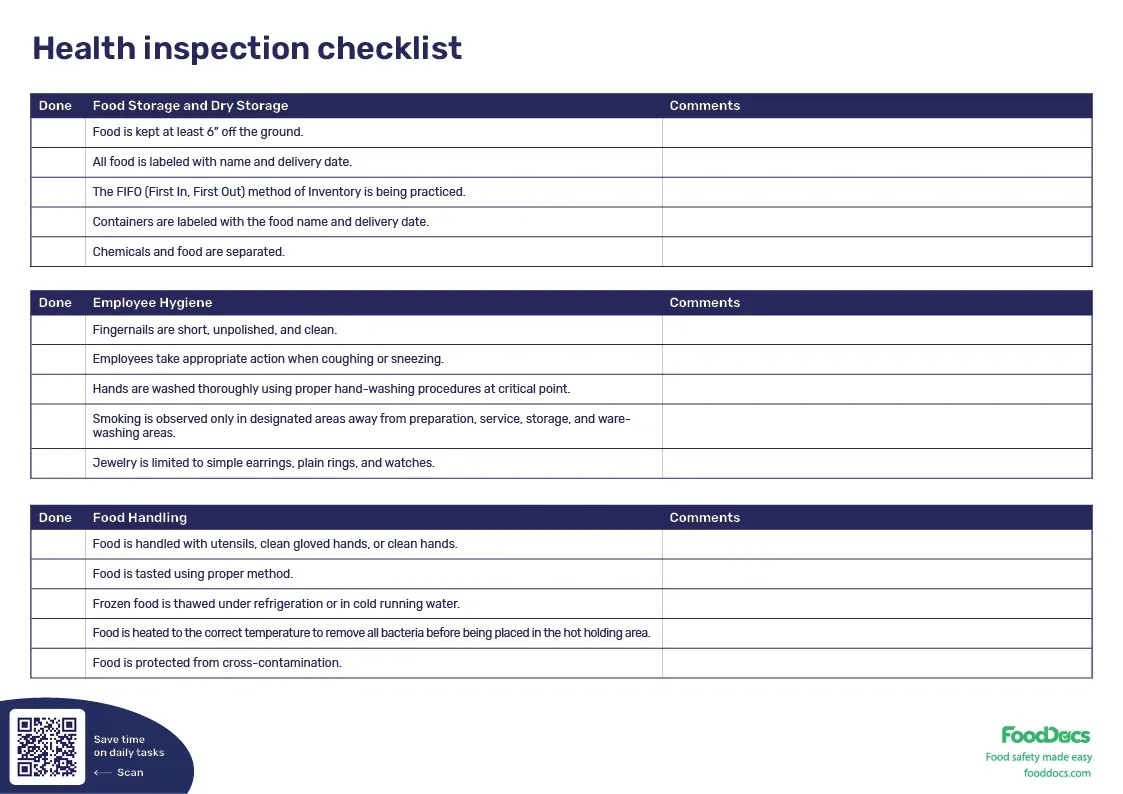
Image Source: FoodDocs
Food manufacturers need to prepare well for allergen audits across their operations. When facing BRCGS, SALSA, or ISO 22000 audits, they must show both compliance with standards and how they put allergen controls into practise. Here’s how manufacturers can get ready for upcoming allergen audits.
1. Conduct an internal allergen risk assessment
A detailed allergen risk assessment is the foundation of audit preparation. This assessment should spot all possible allergen sources at your premises, both planned and unplanned. The main goal is to understand how unplanned allergen cross-contamination might happen across your supply chain, from raw materials to finished products.
Good risk assessments look at:
- Where allergens might enter during manufacturing
- How allergens exist (powders, liquids) and their spread risk
- How equipment design might trap allergens
- How allergenic ingredients are and what processing does to them
For manufacturers who follow HACCP principles, allergen hazards need to fit within this framework. You should use your HACCP process flow to assess allergen risks separately, as this lines up with food safety certification needs.
2. Review supplier allergen declarations
Managing suppliers is vital for allergen safety. You need a system to assess the allergen status of all incoming ingredients. This should cover:
- Regular reviews of specifications with suppliers
- Clear agreements about notifying allergen status changes
- Proper checks of incoming goods to spot damaged packaging
- Written documentation of allergen information
Many audit failures happen because of poor supplier allergen documentation. Your business needs current records of supplier allergen declarations that are available during audits.
3. Verify cleaning procedures with allergen swabs
Cleaning validation proves your allergen removal methods work well. Unlike microorganisms, you can’t “kill” allergens or make them non-allergenic—you must remove them physically.
Good validation needs:
- Tests of the same worst-case scenario multiple times
- Analysis of the same sample types
- The same testing method each time
- Positive control samples to set a baseline
The best practise in the industry is to do validation three times. You need non-detectable results for all post-clean and next off-line samples in three consecutive rounds. Visual checks and analytical testing with systems like DrCleanish help show compliance with food safety standards by proving allergen removal.
4. Train staff on allergen handling and labelling
Staff training is essential for allergen control. Food business operators must give their team proper allergen management education that focuses on:
- The 14 major allergens in UK regulations
- Cross-contamination risks in food handling
- Proper cleaning between allergen-containing products
- Correct allergen information on labels
Training should help staff understand and prevent food allergen cross-contact. Keep detailed training records ready for audit review to show your dedication to allergen safety.
5. Use a checklist to simulate the audit process
Before official audits, run through the inspection using detailed checklists that match your certification standard. This helps find possible problems before auditors arrive.
Your allergen audit checklist should check:
- Allergen mapping and risk assessment documents
- Supplier management methods and specifications
- Cleaning validation records and results
- Staff training records and skills
- Storage and handling procedures
- Label and packaging controls
This preparation helps you spot and fix gaps in your allergen management system. It also builds confidence in team members who will talk to auditors during the official inspection.
Allergen Cleaning and Verification Best Practises
Image Source: Hygiena
Allergen cleaning is the life-blood of cross-contamination prevention in food manufacturing environments. You cannot make allergens “safe” through heat treatment or other physical methods because these processes generally do not destroy allergenic proteins [14].
Why cleaning validation is critical
Cleaning validation shows that cleaning procedures can remove allergenic residues to acceptable levels consistently. This process becomes vital because allergenic proteins are hard to remove from surfaces. Their adhesion levels change based on the food matrix complexity [15]. Cleaning validation is part of an integrated food safety management system. It helps food businesses provide accurate information about allergens that might be unintentionally present [16].
The difference between “microbiologically clean” and “allergen clean” is a major challenge for manufacturers. A systematic process must confirm effective cleaning through at least three consecutive successful cleaning cycles. Each cycle should show consistent allergen removal [1].
Using DrCleanish for verified allergen removal
DrCleanish gives you a validated allergen removal solution that lines up with UK food safety certification frameworks including BRCGS, SALSA, and ISO 22000. The system supports compliance by providing verification data for audits. This helps manufacturers show effective allergen control measures.
Industry best practise suggests using multiple detection technologies to get complete assurance. DrCleanish combines this approach with practical implementation support. Manufacturers can verify cleaning procedures and manage testing costs [17]. The system works great for manufacturers who handle multiple allergens on shared equipment.
How to document cleaning effectiveness
Visual inspection starts the proper documentation of cleaning effectiveness—it’s always the first monitoring control point. Clean-looking surfaces might still contain allergen residues, so you need additional verification methods [16].
Effective documentation should include:
- Results from validated testing methods with clear acceptance criteria
- Evidence of consistent cleaning performance across multiple cycles
- Records showing appropriate corrective actions when verification fails
- Environmental monitoring data from high-risk zones
These records are crucial evidence during audits. They show that allergen controls work as intended. Manufacturers should use a systematic approach that focuses on objective evidence rather than subjective assessments throughout the documentation process [14].
To learn more about allergen control in UK manufacturing, visit the Complete Guide to Food Allergen Control in UK Manufacturing.
Labelling and Traceability Compliance
Clear allergen labelling stands as the last defence in preventing allergen-related incidents. Recent regulatory changes have pushed UK manufacturers to direct their efforts toward meeting complex requirements that ensure consumer safety and compliance.
Meeting Natasha’s Law requirements
Natasha’s Law came into effect in October 2021. The law requires all foods labelled as prepacked for direct sale (PPDS) to display a full ingredient list with highlighted allergens [4]. This groundbreaking legislation came after the tragic death of Natasha Ednan-Laperouse, who died from a fatal allergic reaction to an unlabelled allergen [18]. Food businesses must now display detailed allergen information on packaging instead of verbal communication.
The law’s implementation shows positive results. Life quality improved for 40% of people with food hypersensitivities, especially among young adults aged 18-34 [19]. While businesses face compliance challenges, 91% know about the law, and 68% confirm they have the information needed for implementation [19].
How to label allergens correctly
UK regulations demand clear identification of 14 major allergens on food labels. The ingredients list must highlight these allergens through:
- Bold text
- CAPITAL LETTERS
- Underlining
Manufacturers must add brackets for “hidden” allergens with unfamiliar terms (e.g., casein, whey). An example would be “whey powder (MILK)” [20]. Note that Precautionary Allergen Labelling (PAL) statements like “may contain” should only appear after a full risk assessment shows real cross-contamination risks that cannot be eliminated [21].
Maintaining traceability from raw material to shelf
Strong supplier management forms the foundation of reliable traceability. Suppliers must agree to notify any changes in their ingredients’ allergen profiles [22]. Manufacturers should also create and test documented food recall plans through mock exercises [23].
Records play a crucial role in audit preparation. These records should show allergen movement throughout production, starting from raw materials and continuing through processing, cleaning, labelling and distribution of finished products [23]. DrCleanish’s verified allergen removal solutions can help document this process. This provides proof that strengthens traceability claims during audits.
Wrong declarations, packaging errors, and false “free-from” claims cause most allergen recalls [22]. These issues show why dependable traceability systems remain essential for consumer safety and regulatory compliance.
Building a Food Safety Culture Around Allergens
Creating a strong food safety culture forms the basis of all technical allergen controls. The way an organisation handles allergen risks daily depends more on its culture than its procedures and equipment.
Staff training and awareness
Complete staff education is the starting point for good allergen management. The UK has about 1-2% of adults and 5-8% of children who live with food allergies [24]. This makes proper training essential. Food business operators must ensure their staff:
- Know procedures when asked to provide allergen information
- Can handle allergen information requests accurately
- Make sure allergen-free meals reach the correct customer
- Understand cross-contamination risks and prevention methods [25]
The Food Standards Agency gives free food allergy training that covers six key modules. These include allergen physiology, labelling requirements, and prevention of cross-contact [24]. Staff members who score 85% or higher can download certificates worth three hours of Continuing Professional Development.
Creating SOPs for allergen control
Standard Operating Procedures give you a practical framework that ensures consistent allergen management. Good allergen SOPs should identify the core team, detail cleaning protocols between allergen handling, and set up monitoring procedures [26].
Your SOPs should include colour-coded cleaning utensils for specific products and areas. Visual aids work better than text in many cases [27]. Wet cleaning—especially foam cleaning—works really well for allergen control. You should avoid high-pressure cleaning because it can spread allergenic particles through the air [27].
Encouraging accountability and reporting
A culture that promotes shared responsibility makes allergen safety stronger. You need a dedicated allergen control team with people from management, quality assurance, and production departments to oversee the programme [28]. This helps spread allergen awareness across all departments.
The team needs training on emergency procedures, especially what to do if someone is exposed to allergens or if there’s a mislabelling problem [28]. You can find more guidance on building a reliable allergen safety culture at The Complete Guide to Food Allergen Control in UK Manufacturing.
Conclusion
Allergen management is a vital part of food safety for UK manufacturers. Food safety certification frameworks like BRCGS, SALSA, and ISO 22000 have strict allergen control requirements that protect consumer safety. Food businesses just need to build reliable systems to identify, control, and confirm allergen risks in their operations.
A successful allergen audit starts with a detailed risk assessment that looks at potential cross-contamination points in production. Manufacturers should check supplier declarations, confirm their cleaning procedures work, train their staff well, and keep proper records that show consistent allergen control.
Cleaning validation is significant because allergenic proteins don’t break down through regular sanitization methods. Manufacturers who use confirmed allergen removal solutions like DrCleanish have an edge during audits. These solutions show their cleaning methods line up with food safety certification standards.
Clear labelling is the last line of defence against allergen-related incidents. Recent changes in rules, especially when you have Natasha’s Law, have made allergen communication requirements stricter. Manufacturers must keep detailed traceability systems that connect raw materials to finished products and ensure exact allergen details appear on packaging.
Beyond these technical controls, a strong food safety culture shapes how well allergen management works. Staff training, clear SOPs, and shared responsibility create an environment where allergen safety becomes part of daily work rather than just audit prep.
UK food manufacturers who handle these connected elements build allergen management systems that keep consumers safe and meet regulatory requirements while passing tough certification audits. Companies looking to learn about developing reliable allergen control programmes should check out The Complete Guide to Food Allergen Control in UK Manufacturing for more industry insights and best practises.
Key Takeaways
UK food manufacturers must master allergen control across BRCGS, SALSA, and ISO 22000 standards to protect consumers and maintain certification compliance.
• Allergen audits are fundamental requirements – BRCGS treats allergen control as a fundamental clause where failure results in automatic audit failure, whilst SALSA Version 6 elevates allergen management to a dedicated enhanced section.
• Cleaning validation is critical for compliance – Unlike microorganisms, allergens cannot be destroyed and must be physically removed through validated cleaning procedures with documented verification evidence.
• Comprehensive preparation prevents audit failures – Conduct internal risk assessments, review supplier declarations, validate cleaning procedures, train staff thoroughly, and maintain 90+ days of complete documentation records.
• Natasha’s Law compliance is mandatory – All prepacked for direct sale foods must display full ingredient lists with allergens emphasised through bold text, capitals, or underlining since October 2021.
• Food safety culture underpins technical controls – Staff training, detailed SOPs, and shared accountability create environments where allergen safety becomes integrated into daily operations rather than audit preparation alone.
Effective allergen management requires systematic implementation across supplier approval, cleaning validation, staff training, and documentation—with validated solutions like DrCleanish supporting compliance evidence during certification audits.
FAQs
Q1. What are the key allergen control requirements for BRCGS certification? BRCGS requires comprehensive allergen management, including risk assessment, supplier approval, cleaning validation, staff training, and detailed documentation. Allergen control is a fundamental clause where failure results in automatic audit failure. Manufacturers must implement rigorous controls to prevent cross-contamination and ensure accurate consumer information.
Q2. How does SALSA Version 6 address allergen management for smaller food producers? SALSA Version 6 elevates allergen management to a dedicated enhanced section. It requires thorough allergen identification, comprehensive management procedures, accurate labelling, and validation of allergen claims. The standard also emphasises staff training specifically on allergen awareness and handling.
Q3. What documentation is needed for ISO 22000 allergen compliance? ISO 22000 requires documented information describing the allergen control programme, including hazard analysis, CCP monitoring logs, verification results, supplier communications, cleaning logs with allergen removal verification, and staff training records specific to allergen awareness.
Q4. How can food manufacturers prepare for an allergen audit? Preparation involves conducting internal allergen risk assessments, reviewing supplier allergen declarations, validating cleaning procedures with allergen swabs, training staff on allergen handling and labelling, and using checklists to simulate the audit process. Maintaining at least 90 days of clean, complete records is crucial.
Q5. What are the labelling requirements under Natasha’s Law in the UK? Natasha’s Law, implemented in October 2021, requires all prepacked for direct sale (PPDS) foods to carry a full ingredient list with allergens emphasised. Allergens must be highlighted using bold text, capital letters, or underlining. For ‘hidden’ allergens, the allergen must be included in brackets after the ingredient name.
References
[1] – https://www.rssl.com/insights/food-consumer-goods/designing-a-successful-allergen-cleaning-validation-strategy/
[2] – https://www.salsafood.co.uk/newsDetail.php?n=522
[3] – https://processus.training/allergen-management-under-iso-22000-requirements-a-complete-guide-for-food-safety/
[4] – https://www.food.gov.uk/business-guidance/introduction-to-allergen-labelling-changes-ppds
[5] – https://fsns.com/how-to-prepare-for-a-brcgs-food-safety-audit/
[6] – https://www.brcgs.com/media/2170588/allergen-mgt-22-sample.pdf
[7] – https://ascconsultants.co.za/brcgs-for-food-safety-changes-product-control/
[8] – https://www.ifsqn.com/forum/index.php/topic/49591-brcgs-requirements-for-supplier-approval/
[9] – https://www.alleratech.com/blog/brc-audit
[10] – https://www.salsafood.co.uk/file/e45c339a-63cd-48a2-83b8-916f28614549
[11] – https://foodsafetyassist.co.uk/new-salsa-food-safety-accreditation/
[12] – https://pecb.com/en/article/the-importance-of-allergen-management-in-food-industry
[13] – https://www.allergenenconsultancy.nl/en/nieuws/iso-22000-nu-ook-allergeneneisen?srsltid=AfmBOorUZbg37EPwh_5Glr3ykp9S6qAld4Iol83KHYVy33G6yPlYewH3
[14] – https://www.neogen.com/en/usac/neocenter/resources/food-allergen-validation-and-verification-best-practises/?srsltid=AfmBOooI7myshwuurRS0HNFB2V8ou8Vy2Ve6vzgf3lDix8ttzYCHG67X
[15] – https://www.food.gov.uk/research/review-of-the-literature-and-guidance-on-food-allergen-cleaning-introduction
[16] – https://www.campdenbri.co.uk/case/food-allergen-cleaning.php
[17] – https://www.food-safety.com/articles/3634-practical-and-holistic-allergen-cleaning-verification
[18] – https://www.gov.uk/government/news/natashas-legacy-becomes-law
[19] – https://www.narf.org.uk/what-is-natashas-law
[20] – https://www.allergyuk.org/wp-content/uploads/2023/12/Decoding-labelling-Mobile-friendly-design-4.pdf
[21] – https://www.anaphylaxis.org.uk/business/precautionary-allergen-labelling-checklist/
[22] – https://www.fdf.org.uk/globalassets/resources/publications/guidance/allergen-recall-prevention-guidance.pdf
[23] – https://allergenbureau.net/wp-content/uploads/2023/11/Food_Industry_Guide_to_Allergen_Management_and_Labelling_ANZ_2022_V3.pdf
[24] – https://allergytraining.food.gov.uk/
[25] – https://www.food.gov.uk/business-guidance/allergy-training-for-food-businesses
[26] – https://sarep.ucdavis.edu/sites/g/files/dgvnsk9171/files/inline-files/SOP_Allergen Control.pdf
[27] – https://www.solenis.com/en/resources/blog/best-practise-standard-sanitation-operating-procedures-for-allergen-control-in-food-processing/
[28] – https://www.fooddocs.com/post/haccp-allergen-control-programme