About 2.4 million people in the UK live with diagnosed food allergies . Allergen cross-contamination remains a huge challenge to food businesses. Even trace amounts of an allergen can trigger severe, life-threatening reactions in affected individuals .
UK law requires food businesses to provide accurate allergen information . The Food Standards Agency handles around 300 allergen-related incidents each year . Allergen cross-contact control goes beyond regulatory compliance – it’s a vital safety measure that protects both consumers and businesses. A business’s reputation can be destroyed by a single incident that could result in customer loss and serious legal consequences including fines or imprisonment .
This piece gets into the detailed ways to prevent, detect, and control allergen cross-contamination in UK food operations. You’ll discover practical strategies to assess allergen risks, methods to verify compliance, and how verified allergen removal solutions like DrCleanish support UK food safety frameworks. Food manufacturing professionals need to understand these protocols to maintain the highest standards of allergen management and protect their consumers and business.
Understanding Allergen Cross-Contamination
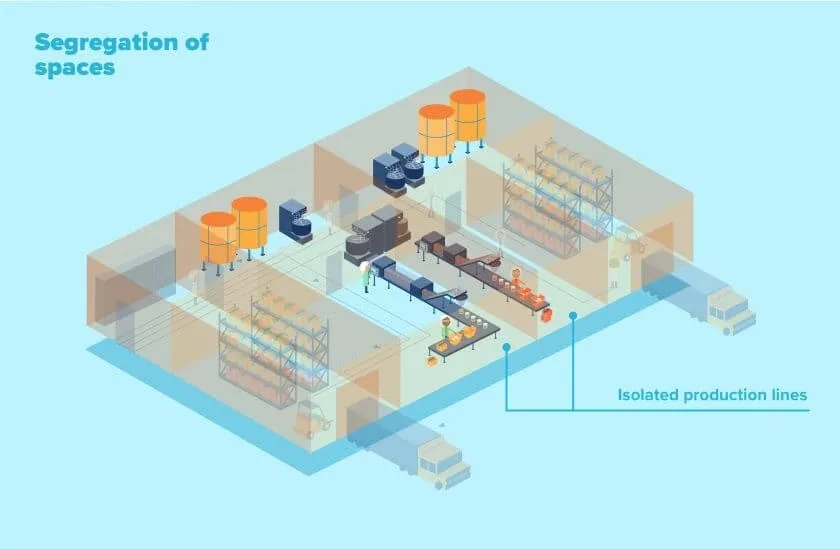
Image Source: CRB
Food businesses across the UK need to understand allergen cross-contamination. Research shows 1-2% of adults and 5% of children in western countries have a true food allergy [1]. Even tiny exposure to allergens can trigger severe reactions.
What is allergen cross-contact?
Allergen cross-contact happens when proteins from an allergenic food end up in a food that shouldn’t contain that allergen. This is different from simple contamination because it involves mixing food proteins. These transferred amounts are usually invisible but still pack enough protein to cause allergic reactions [2].
People now use “cross-contact” instead of the older term “cross-contamination” when talking about allergen management. This helps everyone understand that allergen risks are unique compared to other food safety hazards [2].
Allergens can transfer between foods anywhere in the food chain. Here’s how it happens from farm to fork:
- Equipment and surfaces get shared without proper cleaning
- Allergenic and non-allergenic ingredients sit too close in storage
- Staff touch allergenic ingredients and then other foods
- Air particles carry allergen proteins in prep areas
- Product with one allergen profile gets mixed into another during rework [2]
How cross-contamination is different from direct contamination
The difference between cross-contamination (microbiological) and cross-contact (allergen) plays a vital role in food safety management. The biggest difference shows up in how these hazards react to cooking.
Proper cooking will reduce or eliminate standard cross-contamination from bacteria or viruses [2]. But with allergen cross-contact, cooking does not reduce or eliminate the risk [2]. Allergen proteins stay stable even after heating, freezing, or other processing methods.
This explains why allergen control needs special protocols beyond regular hygiene practises. To name just one example, see how wiping a knife used for peanut butter before spreading jam isn’t enough—invisible peanut proteins stick around and can cause reactions. Hot, soapy water must clean all equipment before preparing allergen-free food [2].
Why trace amounts matter in food production
People with food allergies can have serious reactions even to tiny amounts of allergens. Research shows allergic individuals react to different allergen quantities, often with a 4-5 log-fold gap between most and least sensitive people [3].
Safety thresholds exist but vary by a lot between individuals and allergens. Here’s what we know:
- All but one of these people with peanut allergy react to just 40 mg of peanut seed
- Shrimp allergy usually needs several grammes to trigger a reaction [1]
This variation makes it hard to set universal safety thresholds. Current data doesn’t give risk assessors like the European Food Safety Authority enough certainty to estimate population thresholds [1].
Studies show proper cleaning methods work well for removing allergens. The research tells us:
- Soap and water remove allergen proteins from surfaces effectively
- Alcohol-based sanitisers alone don’t remove allergen proteins from hands
- Commercial detergents (like Clorox®, Lysol®) work well on environmental surfaces
- A 2004 study found dishwashing liquid alone couldn’t remove peanut allergen [4]
UK food businesses must understand these differences to create an effective allergen risk assessment. Prevention through verified cleaning systems remains the primary control measure since allergens stick around once they show up. DrCleanish gives you a verified allergen removal solution that fits UK food safety frameworks without claiming specific accreditation or certification.
UK Legal Framework for Allergen Control
The UK has a strong legal framework that guides allergen management in food businesses. These regulations set clear rules about allergen control, labelling, and consumer safety protocols that all food operations must follow.
Food Information Regulations 2014
The Food Information Regulations 2014 (FIR) are the domestic enforcement measures for EU Regulation No 1169/2011 on the provision of food information to consumers (EU FIC). These regulations spell out what information businesses must give to consumers when they buy food and how to present that information [5].
One of the most important changes in these regulations extends allergen rules to all non-prepacked foods. This includes food sold loose and in catering situations, and businesses must give accurate allergen information [5]. These rules require food businesses to:
- Give allergen information for both prepacked and non-prepacked foods
- Handle and manage food allergens safely during preparation
- Keep detailed records of ingredients with allergens
- Track all food ingredients [6]
Businesses can choose how to give allergen information for non-prepacked foods, including verbal communication. All the same, if staff will give the information verbally, businesses must post a written notice telling customers they can ask staff about allergens [3].
On top of that, food businesses that sell through phone or internet must make sure customers can see mandatory allergen information when they decide to buy [3].
Natasha’s Law and PPDS requirements
Starting October 1, 2021, Natasha’s Law brought stricter labelling rules for prepacked for direct sale (PPDS) foods [7]. The law’s name honours Natasha Ednan-Laperouse, who died from an allergic reaction to unlisted sesame in a pre-packaged sandwich. This law aims to prevent such tragedies [7].
PPDS foods are packaged where they’re sold and before customers order or select them. Here are some examples:
- Sandwiches and bakery items packed on-site before selection
- Fast food packaged before ordering
- Pre-packaged items like salads or pasta pots
- Foods one operator packages and sells elsewhere (e.g., at market stalls) [8]
The law requires all PPDS foods to show:
- The food’s name
- A complete ingredients list
- Clear emphasis of any of the 14 major allergens (usually in bold) [9]
This law changed everything from earlier rules that let businesses give allergen information in any way, even just verbally [7]. DrCleanish helps businesses meet these requirements with a confirmed allergen removal solution that helps stop cross-contamination.
Food Safety Act 1990: Sections 7, 14, and 15
The Food Safety Act 1990 goes beyond specific allergen labelling and sets broader food safety obligations. Three sections are especially important for allergen control:
Section 7: Makes it illegal to make food harmful to health by adding anything, using certain ingredients, or treating it in specific ways [10]. This means businesses must prevent allergens from accidentally getting into foods where they shouldn’t be.
Section 14: Says selling food that isn’t what the customer just needs is illegal [10]. This directly applies when undeclared allergens contaminate food products.
Section 15: Makes it illegal to describe or present food in misleading ways about what it is [10]. This reinforces the need for accurate allergen information.
Breaking these rules can lead to serious problems like improvement notices, fines, and damage to your reputation [6]. More than that, businesses must include allergen controls in their food safety management systems as part of HACCP procedures [3].
Food operations that want to stay compliant with these laws should get a full picture of their allergen risks and use confirmed cleaning systems.
The 14 Major Allergens and Hidden Sources
Managing food allergens requires careful attention to ingredients that need control. About 6% of UK adults have a food allergy. This number doesn’t include people with food intolerances [2]. Food production needs a detailed understanding of all possible allergen sources.
Overview of the 14 allergens
UK food businesses must declare 14 major allergens in any food they sell or provide [4]. These allergens cause the most severe allergic reactions if you have food allergies [11]. They are:
- Cereals containing gluten (wheat, rye, barley, oats)
- Crustaceans (prawns, crabs, lobsters)
- Eggs
- Fish
- Peanuts
- Soybeans
- Milk
- Tree nuts (almonds, hazelnuts, walnuts, etc.)
- Celery
- Mustard
- Sesame
- Sulphur dioxide and sulphites (at concentrations above 10mg/kg)
- Lupin
- Molluscs (mussels, oysters, squid, etc.)
A tiny amount of food can trigger an allergic reaction in sensitive people—a drop of milk, a fragment of peanut or just one or two sesame seeds [2]. Symptoms range from mild (itching, rashes) to severe (vomiting, difficulty breathing, anaphylaxis, and death) [2].
Common hidden sources in UK manufacturing
Allergens show up in unexpected places throughout food production. Food businesses need to watch out for more than just obvious sources:
Additives and processing aids with allergens in the final product need declaration [12]. To cite an instance, manufacturers use soya lecithin as an emulsifier in chocolate and salad dressings. Egg white sometimes helps in wine processing and leaves trace egg proteins.
Preservatives like sulphites get added to dried fruits and make their way into products like chutneys. These often reach levels that require declaration [12].
Cross-contamination numbers raise concerns. Studies found more than 20% of samples in England had undeclared allergens. Peanuts topped the list, followed by gluten, egg and milk [13].
Names can mislead at first glance. Some foods have “nut” in their names (coconut, pine nuts, nutmeg), but allergen regulations don’t classify them as tree nuts [12]. Peanuts belong to the legume family rather than true nuts, which explains their separate listing [12].
Vegan and ‘free-from’ labelling misconceptions
The Food Standards Agency research reveals a critical misunderstanding about vegan labelling and allergen safety. People with allergies to animal-based products, or those shopping for them, believe products labelled “vegan” are safe to eat 62% of the time [14].
Vegan labelling serves a different purpose than allergen labelling:
- Vegan labels show that products don’t intentionally contain animal products
- Free-from labels guarantee strict processes to eliminate cross-contamination risks for specific allergens
This difference hasn’t stopped consumers from using vegan labels to check for allergens. About 54% of people with food allergies and 53% who shop for others with allergies use vegan labelling to check food safety [15].
The numbers get more worrying. Only 47% of these people also check for cross-contamination risks [15].
The Food and Drink Federation published guidance to clear up these misconceptions. They explained that vegan claims don’t automatically make food safe for allergic consumers [16]. Chantelle Adkins, Director of Business Development at the Vegan Society, stated: “We do not claim that products registered with our Vegan Trademark alone will be suitable for people with allergies” [16].
Food businesses must communicate allergen risks clearly, whatever the product’s vegan status. DrCleanish helps meet this requirement by providing a verified allergen removal solution. This helps prevent cross-contamination in all production environments, from conventional to vegan and free-from products.
How Allergen Cross-Contamination Happens
Allergen cross-contamination can happen anywhere in the food production chain. It starts from primary production and continues through manufacturing to final preparation. Businesses need to understand how contamination happens to protect consumers and meet regulations through targeted control measures.
Shared equipment and surfaces
Food businesses process multiple products on the same production lines, which creates many chances for allergen cross-contact. Equipment becomes a major source when allergenic residues stay on surfaces that later touch non-allergenic products [17].
Some types of allergens are particularly hard to clean:
- Particulate allergens such as sesame seeds, slivered nuts, and grated cheese pose special problems because they don’t mix well with other foods. They stay concentrated and easily spread to other production areas [17]
- Sticky or fatty allergens like nut pastes, sesame seeds, and milk proteins stick firmly to surfaces and need more thorough cleaning [17]
- Powdered ingredients like flour can float through the air and land on surfaces throughout a facility
Equipment design plays a big role in contamination risk. Poor equipment design and inadequate cleaning can let production residues stay behind and contaminate later production runs [17]. Note that areas that are hard to clean need extra attention, and sometimes equipment must be taken apart to remove allergen residues from areas with powders, pastes, and seeds [3].
Storage and delivery risks
Poor storage practises create many ways for cross-contact to occur. Products can exchange allergens during transport, handling, and storage—even in packages if containers get damaged [3].
To work well, allergen control must start when raw materials arrive. Here’s where contamination can happen during this phase:
- Raw material handling that lets allergenic and non-allergenic ingredients touch
- Poor separation during transport in shared vehicles or containers
- Wrong labels or identification of allergenic materials
- Ingredient swaps without proper allergen checks [18]
Storage design is vital to prevention. The best option is to give allergenic products their own storage areas. When space is tight—especially in smaller operations—keeping allergenic ingredients below non-allergenic ones helps stop accidental contamination from spills or drips [3].
Human error and poor hygiene practises
People are one of the biggest sources of allergen incidents. In fact, even with strict rules and new technologies, human error shows up regularly in food safety problems [19]. Here’s how people often cause contamination:
Food handlers can spread allergens through their clothes, hair, hands, and shoes without knowing it [18]. Poor personal hygiene then leads to cross-contamination through “food to hand to food contact”—like when staff handle different allergen-containing ingredients without washing hands between tasks [3].
Poor training lies behind many allergen incidents. Staff might not understand proper food handling, allergen risks, or critical control points [19]. This lack of knowledge shows up in practises like wrong ingredient washing or using the same utensils for foods with different allergen profiles [19].
Production scheduling affects contamination risk too. Smart production scheduling moves from least allergenic to most allergenic products. To cite an instance, gluten-free products might be made early in the day, followed by products containing gluten [3]. Without this approach, product changeovers become dangerous points for cross-contamination.
DrCleanish offers a verified allergen removal solution that tackles these cross-contamination challenges. It helps food businesses meet UK food safety rules through verified cleaning procedures that line up with industry best practises. To learn more about allergen control strategies, check out the Complete Guide to Allergen Control in UK Manufacturing.
Prevention Strategies in Manufacturing Environments
Food manufacturers need systematic approaches, not quick fixes, to prevent allergen cross-contamination. Multiple control measures must work together to create strong barriers against allergen cross-contact.
Zoning and segregation of allergenic ingredients
Physical segregation stands out as the best method for allergen control where possible. The ideal setup places allergenic food production in physically separated areas with their own equipment and staff [6]. Since this setup isn’t always practical, facilities often use these other segregation methods:
- Separate production lines within the same facility for spatial segregation
- Production scheduling for time-based separation (non-allergenic products first, then allergenic ones)
- Smart storage systems that place allergenic ingredients below non-allergenic ones to stop contamination from spills [20]
Production scheduling is an economical control measure that deserves special attention. Manufacturers can substantially reduce cross-contact risks by organising schedules to isolate allergen-containing products at shift ends or on dedicated lines [1]. Careful planning of equipment cleaning and dismantling between production runs also helps prevent allergen carryover.
Dedicated utensils and colour-coded systems
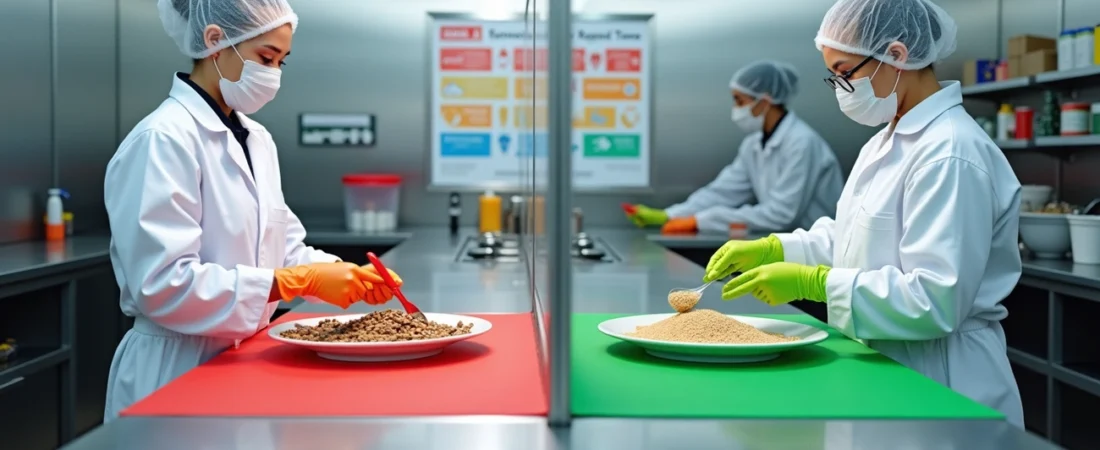
Colour-coding is the life-blood of good allergen management. This system lets workers quickly spot equipment meant for specific allergens or allergen-free zones [21]. The best colour-coding systems:
- Use bright colours (orange, pink, purple, lime) for allergen-related equipment
- Have shadow boards with matching colour outlines to track and store items
- Use the same colours for cleaning tools, utensils and spill kits [21]
Equipment design plays a vital role in allergen control. Tools and utensils need hygienic design features like one-piece construction, smooth surfaces, and proper materials [22]. Stainless steel proves easiest to clean, while wood and cloth are the hardest to keep allergen-free [23].
Staff hygiene and protective clothing protocols
Staff members can spread allergens through poor handling practises. Good staff protocols include:
- Hand washing between handling different allergens
- Special or colour-coded protective gear for allergen areas
- Limited movement between allergen and non-allergen zones [24]
- Different uniforms to identify staff working with various allergens [24]
Training is vital for successful allergen management. Even the strongest programmes will fail if employees don’t understand their role in preventing contamination [1]. Every staff member needs proper education about allergen risks and specific protocols for their duties.
How DrCleanish supports allergen removal
Clean equipment is the foundation of allergen control. Regular cleaning methods that work for microbes often don’t remove allergens properly [1]. DrCleanish offers a verified allergen removal solution that meets UK food safety standards.
The system uses a three-step approach that lines up with industry best practises:
- Custom cleaning procedures for specific manufacturing environments
- Proper cleaning controls to prevent cross-contact risks
- Testing to verify cleaning effectiveness [5]
Learn more about complete allergen management strategies at The Complete Guide to Allergen Control in UK Manufacturing.
Detection and Verification Methods
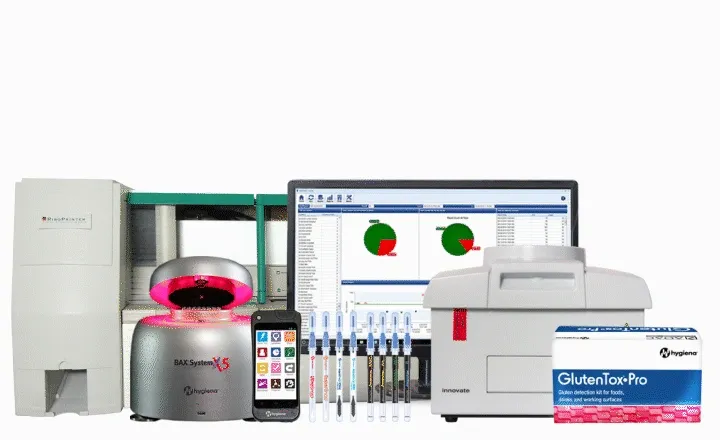
Image Source: rapidmicrobiology
Food manufacturers need reliable ways to confirm that allergens are gone after cleaning. Detection systems give solid proof that cleaning steps remove allergen proteins to safe levels.
Swab testing and surface validation
Testing methods must be scientifically sound to confirm allergen cleaning procedures work. ELISA (Enzyme Linked Immunosorbent Assay) testing is the gold standard to validate cleaning. It detects specific protein residues and gives measurable results [25]. The technique uses antibodies that target allergens or specific marker proteins. These create colour changes we can measure with great accuracy [26].
Lateral Flow Devices (LFDs) work better for day-to-day checks after the original validation. These quick tests show yes/no results in minutes, which makes them perfect for checks between production runs [27]. Most manufacturers compare ELISA and LFD results during validation. This ensures the simpler daily testing method remains reliable [28].
When taking samples, you should check the hardest-to-clean spots first. These spots represent the worst scenarios. If these tough areas pass the test, the easier surfaces usually do too [29].
Visual inspections vs scientific verification
The first step is always a ‘visually clean’ check before any scientific testing begins [30]. But looking with your eyes isn’t enough – research shows that surfaces that look clean might still have allergens lurking around [30].
ATP (Adenosine Triphosphate) testing gives quick results but can’t spot specific allergens. The A3 test (which finds ATP+ADP+AMP) does a better job at finding food bits that might contain allergens [31]. Studies show the A3 test catches more than protein swab tests for most allergen sources. The only exception is extracted proteins like gelatin [31].
A smart testing approach might use:
- ELISA methods for the original validation
- LFDs for regular checks
- A3 testing between specific allergen tests
Using DrCleanish as a reference system
DrCleanish serves as a proven allergen removal solution because it uses measurement-based testing concepts. This system lines up with food safety reference measurement systems that use agreed-upon standards—specifically how much total protein comes from allergenic ingredients [9].
The system follows best practises by covering the whole testing cycle: original validation with sensitive detection methods, regular monitoring steps, and paperwork ready for audits. The Complete Guide to Allergen Control in UK Manufacturing offers detailed frameworks for companies that need more guidance on allergen control strategies.
You need several complementary approaches rather than just one method to test effectively. A well-laid-out testing system proves that your allergen cleaning steps consistently do what they should.
Allergen Risk Assessment and HACCP Integration
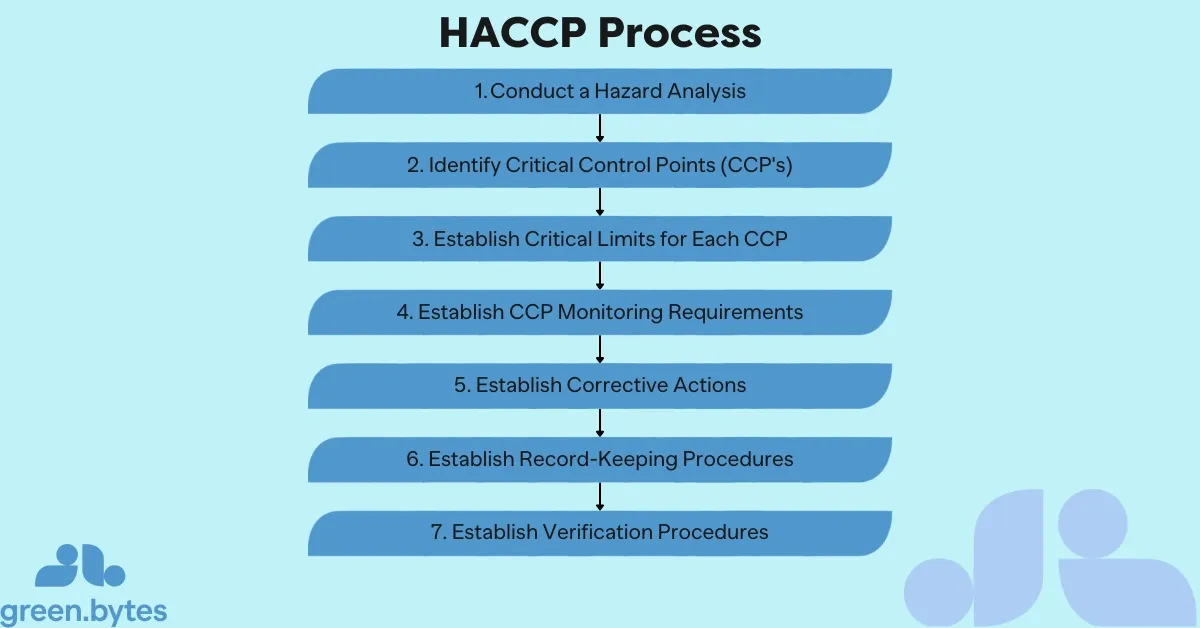
Image Source: Medium
Food businesses must build allergen management into their safety systems through careful assessment and control. A structured approach to identify and reduce potential hazards helps companies stay compliant with regulations.
How to conduct an allergen risk assessment
The risk assessment shows if food products contain unplanned allergens [7]. The main goal is to review if products need allergen warning labels based on possible cross-contact [7]. A proper assessment looks at:
- Which allergy-causing foods might accidentally touch your products
- The quantity that typically causes allergic reactions
- The frequency of bad reactions to specific foods
- The risk levels for different groups of people
- The physical state of ingredients (powders can spread through air more easily)
- The chances and ways cross-contact could happen [7]
Small and medium manufacturers often think their HACCP plans’ microbiological risk checks are enough to handle allergen risks [32]. The reality shows most companies check only some allergens instead of getting a full picture [32].
Incorporating allergens into HACCP plans
HACCP systems are the life-blood of food safety and must include clear allergen control steps [20]. Smaller businesses can use Safer Food, Better Business packs that have sections about managing allergens [20].
Companies need these basics in place before adding allergens to HACCP:
- Well-laid-out kitchens with proper handwashing spots
- Systems to confirm suppliers give accurate allergen details
- Clear labelling and tracking methods
- Good cleaning and waste handling
- Regular team training [20]
After setting up these basics, the HACCP process finds allergens in products, spots where cross-contamination might happen, and creates clear steps to control these risks [20].
Monitoring and reviewing control points
Regular checks keep allergen controls working properly. Companies should make sure their teams follow procedures and review them yearly or when operations change [20].
DrCleanish helps monitor allergen removal without claiming specific certifications. Companies that want complete guidance can check the Complete Guide to Allergen Control in UK Manufacturing.
The checks must prove through scientific testing, not just visual inspection, that control measures reduce or eliminate allergen cross-contamination to safe levels [10].
Supplier and Labelling Controls
Image Source: Food Standards Agency
Supply chain management acts as a crucial control point to minimise allergen risks. Food businesses need strict protocols that ensure allergen information stays accurate from ingredient sourcing to final product labelling.
Verifying supplier allergen declarations
Food businesses should set up structured systems to assess incoming ingredients’ allergen status. These systems typically include:
- Regular specification reviews with suppliers
- Alerts about any changes to allergen status
- Appropriate checks on incoming deliveries that identify damaged packaging
- Regular checks to confirm labels match specifications
- Risk evaluation during supplier changes, such as different processing plants [3]
Clear communication channels with suppliers prevent unexpected allergen introduction. Most manufacturers use supplier questionnaires or audit programmes to gather detailed allergen information before materials reach their facilities.
Managing substitutions and reformulations
Product reformulations need careful allergen oversight. Businesses must take these steps during ingredient changes:
- Document all substitutions or recipe modifications
- Brief the core team about changes to maintain accurate customer information
- Evaluate effects on barcode/Global Trade Item Number codes for B2B transactions [33]
- Complete allergen risk assessments for any new formulation
Additional allergens in formulations need extra caution. Manufacturers highlight such changes on packaging with “New Recipe” or “Allergen Update” notices to alert consumers quickly [33].
Accurate labelling and ‘may contain’ usage
Precautionary allergen labelling (PAL) should not replace good manufacturing practises [3]. PAL statements like “may contain” should appear only after a full risk assessment shows cross-contact risks that cleaning or segregation cannot eliminate [34].
Proper PAL implementation requires:
- Documentation of all cross-contact allergens from ingredients, processes and premises
- Selective labelling that limits declarations to relevant products
- Specific language instead of general statements (“may contain peanuts” instead of “may contain nuts”) [35]
DrCleanish supports supplier verification by offering a confirmed allergen removal solution that helps manufacturers maintain documentation for audit purposes.
Conclusion
UK food businesses face ongoing challenges with allergen cross-contamination that go beyond meeting regulations. The best way to handle this involves an integrated approach. This covers physical separation, proven cleaning methods, detailed staff training, and resilient verification systems. Visual inspections alone won’t suffice – businesses must use scientifically proven methods to confirm allergen removal.
The core team carries a heavy burden in managing allergen risks. They must pay close attention at every stage – from receiving raw materials through production to final labelling. This helps prevent life-threatening risks for allergic consumers. Precautionary allergen labels should never replace good manufacturing practises. Instead, they should come from a full picture of real, unavoidable cross-contact risks.
Getting allergen control right depends on having accurate ingredient details throughout the supply chain. Companies must check supplier declarations regularly and track recipe changes carefully. This gives them complete allergen traceability. Such an approach protects consumers and shields businesses from legal issues and damage to their reputation.
Allergen management might seem daunting at first. However, putting control measures in place builds confidence and consistency over time. Solutions like DrCleanish help food manufacturers arrange their operations with UK food safety standards. Teams should review allergen controls regularly, especially when processes change.
Food businesses aiming for excellence in allergen control should create detailed management plans that follow HACCP principles. These plans must tackle every critical point – from ingredient specs to production schedules and final product checks. You can find more guidance on setting up complete allergen control systems in the Complete Guide to Allergen Control in UK Manufacturing.
Key Takeaways
Effective allergen cross-contamination control requires systematic prevention, detection, and verification rather than relying solely on visual inspections or precautionary labelling.
• Implement physical segregation and colour-coded systems – Use dedicated equipment, temporal scheduling, and visual identification to prevent allergen cross-contact during production.
• Establish validated cleaning procedures with scientific verification – Visual cleanliness alone is insufficient; use ELISA testing for validation and lateral flow devices for routine monitoring.
• Integrate allergen controls into HACCP systems comprehensively – Conduct thorough risk assessments covering all 14 major allergens and establish critical control points throughout production.
• Maintain rigorous supplier verification and accurate labelling – Verify allergen declarations, manage reformulations carefully, and use “may contain” statements only after proper risk assessment.
• Train staff extensively on allergen risks and protocols – Human error remains a leading cause of contamination; ensure all personnel understand proper handling procedures and cross-contact prevention.
Remember that allergen proteins remain stable even after cooking, making prevention through validated cleaning systems the primary control measure. Unlike microbial contamination, allergen cross-contact cannot be eliminated through heat treatment, emphasising the critical importance of robust prevention strategies throughout the entire food production chain.
FAQs
Q1. What are the 14 major allergens that UK food businesses must declare? The 14 major allergens that must be declared are: cereals containing gluten, crustaceans, eggs, fish, peanuts, soybeans, milk, tree nuts, celery, mustard, sesame, sulphur dioxide and sulphites (above 10mg/kg), lupin, and molluscs.
Q2. How can food businesses prevent allergen cross-contamination in manufacturing environments? Food businesses can prevent allergen cross-contamination by implementing zoning and segregation of allergenic ingredients, using dedicated utensils and colour-coded systems, enforcing strict staff hygiene and protective clothing protocols, and employing validated cleaning procedures.
Q3. Is visual inspection sufficient for verifying allergen removal after cleaning? No, visual inspection alone is not sufficient. While it serves as an initial step, scientific verification methods such as ELISA testing, lateral flow devices, and ATP testing are necessary to confirm effective allergen removal.
Q4. How should allergen risks be incorporated into HACCP plans? Allergen risks should be explicitly included in HACCP plans by identifying allergens present in products, assessing where cross-contamination might occur, and implementing documented procedures to manage these risks. This should be supported by appropriate prerequisite programmes.
Q5. What should food businesses consider when using ‘may contain’ labelling for allergens? ‘May contain’ labelling should only be used after a thorough risk assessment identifies cross-contact risks that cannot be eliminated through cleaning or segregation. It should not be used as a substitute for good manufacturing practises, and businesses should avoid over-labelling by limiting declarations to relevant products.
References
[1] – https://www.solenis.com/en/resources/blog/effective-allergen-management-and-control-in-food-manufacturing/
[2] – https://www.food.gov.uk/business-guidance/food-allergen-labelling-and-information-requirements-technical-guidance-general-background-on-allergens
[3] – https://www.food.gov.uk/business-guidance/precautionary-allergen-labelling
[4] – https://www.food.gov.uk/sites/default/files/media/document/top-allergy-types.pdf
[5] – https://cleanroomtechnology.com/allergen-management-in-food-production-203245
[6] – https://www.food.gov.uk/business-guidance/allergen-guidance-for-food-businesses
[7] – https://sites.manchester.ac.uk/foodallergens/information-for-food-businesses/manufacturing/risk-assessment/
[8] – https://www.devonsomersettradingstandards.gov.uk/business/food-law-guidance/allergens-in-food/
[9] – https://publications.jrc.ec.europa.eu/repository/handle/JRC132347
[10] – https://www.food.gov.uk/research/review-of-the-literature-and-guidance-on-food-allergen-cleaning-introduction
[11] – https://www.allergyuk.org/types-of-allergies/food-allergy/top-14/
[12] – https://www.thesafetyexpert.co.uk/the-14-allergens-uk/
[13] – https://www.unchecked.uk/2020/01/allergens-article/
[14] – https://www.vegansociety.com/news/news/vegan-society-support-new-fsa-campaign
[15] – https://science.food.gov.uk/api/v1/articles/126198-vegan-labelling-use-and-understanding-by-consumers-with-food-hypersensitivities.pdf
[16] – https://www.anaphylaxis.org.uk/media-centre/press-release/the-fdf-publishes-guidance-on-allergen-free-and-vegan-claims/
[17] – https://www.bsigroup.com/globalassets/localfiles/en-za/Food Documents/allergens.pdf
[18] – https://www.hygiena.com/documents/66561/allergen-cross-contamination.pdf
[19] – https://smartfoodsafe.com/the-human-factor-in-food-safety/
[20] – https://www.thesafetyexpert.co.uk/allergen-management-ultimate-guide/
[21] – https://www.vikan.com/us/services/vikan-blog/optimise-your-allergen-control-through-use-of-colour/
[22] – https://www.newfoodmagazine.com/article/93879/optimise-your-allergen-control-with-colour-coding/
[23] – https://www.food.gov.uk/research/review-of-the-literature-and-guidance-on-food-allergen-cleaning-overview-and-acknowledgements
[24] – https://www.fda.gov/media/129670/download
[25] – https://www.food-safety.com/articles/3812-allergen-validation-analytical-methods-and-scientific-support-for-a-visually-clean-standard
[26] – https://www.als-testing.co.uk/services/foodanddrinktesting/allergens
[27] – https://www.romerlabs.com/en/library/knowledge/detail/10-steps-to-validating-and-verifying-allergen-cleaning-procedures
[28] – https://www.klipspringer.com/blogs/allergen-cleaning-validation-a-practical-guide-for-food-factories/
[29] – https://www.rssl.com/insights/food-consumer-goods/designing-a-successful-allergen-cleaning-validation-strategy/
[30] – https://www.campdenbri.co.uk/case/food-allergen-cleaning.php
[31] – https://www.sciencedirect.com/science/article/pii/S0362028X22103376
[32] – https://www.food.gov.uk/sites/default/files/media/document/Precautionary Allergen Labelling – risk analysis SME FBOs_Clean_May 2022.pdf
[33] – https://www.fdf.org.uk/globalassets/resources/publications/guidance/fdf-guidance-change-allergen-info.pdf
[34] – https://www.anaphylaxis.org.uk/business/precautionary-allergen-labelling-checklist/
[35] – https://www.anaphylaxis.org.uk/business/labelling-and-information-availability/food-allergen-labelling-for-prepacked-food/