Allergen Cleaning Validation & Verification: Evidence-Based Protocols for UK Food Safety Audits
UK food manufacturers face significant challenges with allergen cleaning validation. Documentation of cleaning procedures makes up 18.3% of non-conformities at food production sites worldwide. A newer study on allergen cleaning hasn’t been published in 15 years, yet these procedures remain crucial control measures to prevent cross-contamination in food businesses.
Research shows that cleaning methods must match specific operational needs. Wet cleaning proves more effective than dry cleaning when removing allergenic soil. Proper verification of allergen removal needs systematic protocols and testing methods that meet regulatory standards. Industry guidelines state that cleaning validation protocols must confirm procedures can remove allergens or reduce them to safe levels.
This piece breaks down proven approaches to allergen cleaning validation and verification for UK food manufacturers. You’ll learn the key differences between validation and verification, along with step-by-step protocols, testing methods that work, and mistakes to watch out for. Food safety professionals who want audit-ready systems need to understand these validated approaches to comply with BRCGS, SALSA, and FSA requirements.
Understanding Allergen Cleaning in UK Food Manufacturing
Food manufacturers face growing pressure to manage allergens as 44% of British adults deal with at least one allergy [1]. The industry must find ways to keep consumers safe while following regulations.
Why allergen cleaning matters for food safety
Products can become contaminated when allergens mix during manufacturing, handling, transport, or storage [2]. Small traces of allergens can trigger severe reactions in people with sensitivities. This makes proper cleaning vital [2].
Poor allergen control creates serious problems. Over half of all food recalls in the UK happen due to allergens [1], which costs businesses heavily. Up to 20% of deadly anaphylactic reactions in England and Wales happen in food service settings [3]. This shows how dangerous allergen cross-contact can be.
Cross-contamination usually happens these ways:
- Dirty equipment between production runs
- Shared cooking oils or processing aids
- Poorly cleaned utensils or storage containers
- Staff spreading allergens through clothes or handling
Clean equipment plays a crucial role in stopping contamination between products with different allergens. In spite of that, cleaning alone isn’t enough – it should be part of a complete allergen management system [4].
Legal obligations under UK and EU regulations
UK food businesses must follow strict allergen management rules. The Food Information Regulations 2014 and EU Food Information for Consumers Regulation (EU FIC) set the legal standards for allergen information [3]. Breaking these rules can lead to big fines and damage to reputation [2].
Commission Regulation (EU) 2021/382 created legal requirements for good hygiene practises. These rules help limit allergenic substances in equipment and containers. Equipment used for both allergenic and non-allergenic foods “should be cleaned and checked at least for the absence of any visible debris” [5].
Regulation (EU) No 1169/2011 still applies in the UK. Food businesses must label these 14 allergens when used as ingredients [6]:
- Cereals containing gluten
- Crustaceans
- Eggs
- Fish
- Peanuts
- Soybeans
- Milk (including lactose)
- Nuts (including almonds, hazelnuts, walnuts, cashews, pecan nuts, Brazil nuts, pistachio nuts, macadamia)
- Celery
- Mustard
- Sesame seeds
- Sulphur dioxide and sulphites (at concentrations >10mg/kg)
- Lupin
- Molluscs
The law brought several changes. These include better readable information with minimum font sizes, clearer allergen marking through emphasis by font or background colour, and required allergen information for non-prepacked foods in restaurants and cafes [6].
The general food law retained Regulation (EC) No. 178/2002 requires food business operators to make safe food. So, cleaning becomes essential to remove or reduce allergens to safe levels [5].
Link to: The Complete Guide to Food Allergen Control in UK Manufacturing
Our Complete Guide to Food Allergen Control in UK Manufacturing gives detailed guidance on setting up a reliable allergen management system that meets UK rules. You’ll learn about allergen mapping, risk assessment methods, and proven cleaning protocols that match BRCGS, SALSA, and FSA requirements.
DrCleanish offers a proven allergen removal solution that matches UK food safety standards. Our audit-ready cleaning system has passed third-party testing in UKAS-accredited labs. This helps food manufacturers achieve consistent allergen control throughout production.
Validation vs Verification: What’s the Difference?
The difference between validation and verification is a basic concept in allergen control systems. Food businesses often mix up these terms. Each term has its own role in making allergen management work properly.
Definition of cleaning validation
Cleaning validation proves through evidence and documentation that cleaning procedures can remove allergens to safe levels. Companies need to do this before making any cleaning method part of their daily operations.
The validation process needs a scientific evaluation under controlled conditions. This confirms if cleaning protocols work well. Unlike verification, validation shows that cleaning methods can stop cross-contamination when done right.
A detailed validation study has:
- Visual assessment followed by analytical testing
- Multiple replications to demonstrate consistency
- Testing under worst-case scenarios
- Documentation of all results and methodologies
- Statistical analysis of data to confirm reliability
Validation shows if standard cleaning procedures will work or if you need better protocols. The main question validation answers is: “Can this cleaning method work well when done correctly?”
Definition of cleaning verification
Validation shows that cleaning methods can work. Verification proves they did work during actual production. Verification checks if validated cleaning procedures keep working as expected during normal operations.
Quick testing methods like lateral flow devices (LFDs), ATP swabs, or visual checks help verify cleaning effectiveness. These tests show if staff followed procedures correctly rather than testing if the procedures themselves work.
Verification monitors allergen control systems daily. It spots any problems with validated procedures and triggers fixes when needed.
When to use each approach
You need validation:
- When setting up new cleaning procedures
- After big changes to equipment, ingredients, or processes
- When adding new allergens to production
- After cleaning failures to create better protocols
- Every year to check effectiveness
You need verification:
- During routine quality control
- Between production runs with different allergens
- After equipment maintenance
- When staff changes or training new workers
- To answer customer or regulatory questions
Validation and verification are vital parts of allergen control. You can’t use one instead of the other. Food manufacturers need both to manage allergens properly.
The Hazard Analysis and Critical Control Points (HACCP) system uses both concepts. Validation proves the HACCP plan can control hazards. Verification shows the plan works in real life.
Food businesses should keep records of their validation studies and verification checks. These records help during food safety audits by showing a systematic approach to allergen control.
DrCleanish provides a verified allergen removal solution that meets UK food safety standards. Our cleaning system has passed third-party tests in UKAS-accredited labs. We help food manufacturers set up validation and verification processes that meet regulatory requirements.
To learn more about building detailed allergen management systems, check our Complete Guide to Food Allergen Control in UK Manufacturing.
Step-by-Step Cleaning Validation Protocols
Food businesses need a structured approach to develop their allergen cleaning validation protocols. These protocols build on basic allergen management principles. You must follow a step-by-step method to show your cleaning works well during safety audits.
1. Allergen mapping and flow analysis
A detailed allergen mapping serves as the starting point for effective allergen cleaning validation. Your map should show where allergens are and which areas face cross-contamination risks [7].
Here’s how to create an effective allergen map:
- Make a list of raw materials with their allergen status, including ingredients, processing aids, work-in-process and rework products
- Check this list against current product specifications to confirm all declared allergens
- Check actual products in warehouses against your documents
- Document each allergen’s form since powdered allergens pose greater airborne risks than particulates [7]
Get current process flow diagrams for each unique production process. Walk through your facility and follow these steps to spot potential cross-contact points. Look carefully at receiving areas, storage zones, production lines, and waste handling protocols [7].
Next, mark allergen storage and handling areas on facility floor plans. Note any factors that might affect your observations, such as peak production times or seasonal changes [7].
2. Risk assessment and hazard identification
Your allergen mapping should include a full allergen risk assessment. This helps you find places where allergens might move from intended to unintended areas. The process spots where cleaning serves as a critical control measure to prevent cross-contamination [8].
Allergen risk assessment differs from standard food safety checks. Research shows many SME food businesses don’t deal very well with this assessment systematically [9].
HACCP frameworks work well for most risks, but we focused on microbiological, chemical and physical hazards – not allergens. A dedicated allergen risk assessment helps catch specific allergen cross-contact hazards [9].
Your risk assessment should assess:
- Receiving and storage segregation practises
- Production scheduling for allergen sequencing
- Shared equipment that might keep product between batches
- Air handling systems that could spread airborne allergens
- Waste handling protocols that might spread allergens [7]
3. Selecting worst-case scenarios
Pick your worst-case scenarios before validation testing. This shows that cleaning methods work in the toughest conditions. Your protocols will work even better in easier situations [10].
Think over these factors for worst-case scenarios:
- Products with highest allergen percentages
- Longest production runs causing maximum soiling
- Raw materials hardest to clean [5]
- Surface areas most likely missed during cleaning
- Equipment areas left longest before cleaning [10]
Your validation should look at worst-case cleaning factors:
- Shortest cleaning or contact times
- Lowest cleaning temperatures
- Minimum chemicals used [5]
4. Planning the validation study
Create a detailed plan before starting validation work. This prevents extra sampling and testing. Quick validation attempts often lead to more samples and repeated testing due to unexpected results [8].
A good validation plan covers these key elements:
- Target allergen selection (high levels, high protein content, hard to clean)
- Appropriate testing methods (quantitative for establishing baselines)
- Strategic sample selection (based on equipment risk assessment)
- Swabbing point identification (focusing on hard-to-clean areas) [8]
Your documents must show that cleaning procedures hit acceptable levels consistently. Most industry experts aim for non-detectable allergen levels after cleaning [8].
DrCleanish provides validated allergen removal solutions for UK manufacturing sites seeking food safety accreditation. These solutions help you comply with BRCGS, SALSA and FSA requirements. Check out The Complete Guide to Food Allergen Control in UK Manufacturing for full guidance on setting up reliable allergen control systems.
Choosing the Right Testing Methods
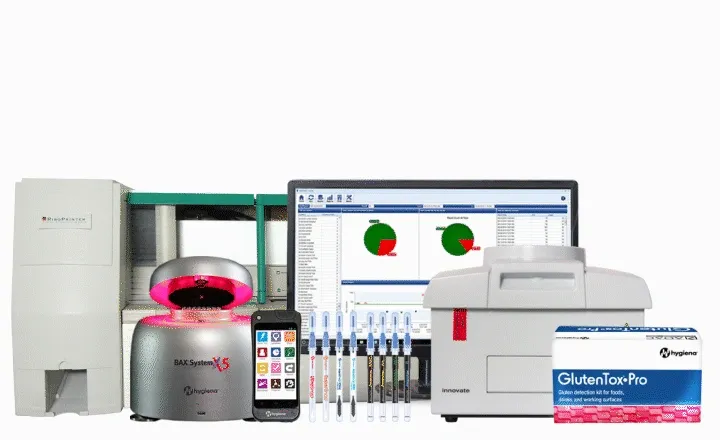
Image Source: rapidmicrobiology
The right testing methods are vital for allergen management. Companies must arrange their analytical approach to match specific testing goals. These goals could be to prove new cleaning procedures work or check daily effectiveness.
ELISA: quantitative allergen detection
Enzyme-Linked Immunosorbent Assay (ELISA) remains the gold standard for quantitative allergen detection in food safety laboratories. This sensitive method detects specific allergen proteins with antibodies and gives precise concentration measurements needed for validation studies [1].
ELISA gives several benefits:
- Detects tiny allergen concentrations (parts per million)
- Provides quantitative results to assess risks and determine thresholds
- Targets specific allergens through antibody targeting
ELISA testing has its limits despite wide adoption. Food processing—especially heat treatment—can change protein structure substantially. This might affect how well the test works [4]. The biggest problem comes from data varying between different kits that test for the same allergen [4]. To name just one example, see how ELISA kits that detect milk in cheese need careful selection based on how much the milk proteins have broken down [4].
LFDs: fast on-site verification
Lateral Flow Devices (LFDs) offer quick, qualitative allergen detection through antibody-based immunochromatographic technology. These test strips or cassettes show results in about 11 minutes, including extraction time [11]. The sample flows through a membrane containing antibodies attached to coloured particles, usually colloidal gold. A visible line shows up if the target allergen exists [12].
LFD testing shines in these areas:
- Testing on-site without lab equipment
- Simple steps that need minimal training
- Quick results for urgent production decisions
- Works well with environmental swabbing and CIP rinse water [13]
LFDs work best as screening tools rather than giving exact measurements. They tell you if an allergen is present or absent at specific sensitivity levels, usually between 1-10 ppm depending on the allergen and kit [14].
ATP and protein swabs: limitations and use cases
ATP (Adenosine Triphosphate) testing finds biological residues but has clear limits for allergen checks. The core team uses this method in 36% of food production sites [15], but ATP testing can’t replace allergen-specific verification [3].
Food safety experts point out that “ATP is part of the cleaning and hygiene verification process, NOT part of the company Allergen management” [3]. ATP detects all biological residues instead of picking out allergen proteins. Sanitizers can also mess with results and create false negatives [3].
Regular protein swabs detect all proteins, whatever their allergy risk. These tests help check if cleaning works well overall rather than targeting allergens.
Allergen swab testing: when and how to use
Allergen-specific swab testing targets surface cleanliness checks directly. These tests use either ELISA or LFD technologies modified for surface sampling. Swabbing helps make real-time decisions when checking if cleaning removes allergens effectively [16].
Getting the most from allergen swab testing requires:
- Testing high-risk areas found through allergen mapping
- Using proven swab devices made for allergen recovery
- Following the maker’s instructions exactly for extraction and handling
- Keeping detailed records ready for audits
Food manufacturers should use different testing methods together strategically. Quick tests like LFDs give immediate answers, while ELISA testing gives the full picture needed for validation studies and checking unclear results.
The Complete Guide to Food Allergen Control in UK Manufacturing offers more guidance on creating effective allergen testing strategies. DrCleanish provides a proven allergen removal solution that fits UK food safety accreditation frameworks. This helps manufacturers pick the right testing methods for their specific needs.
Cleaning Methodologies and Their Effectiveness
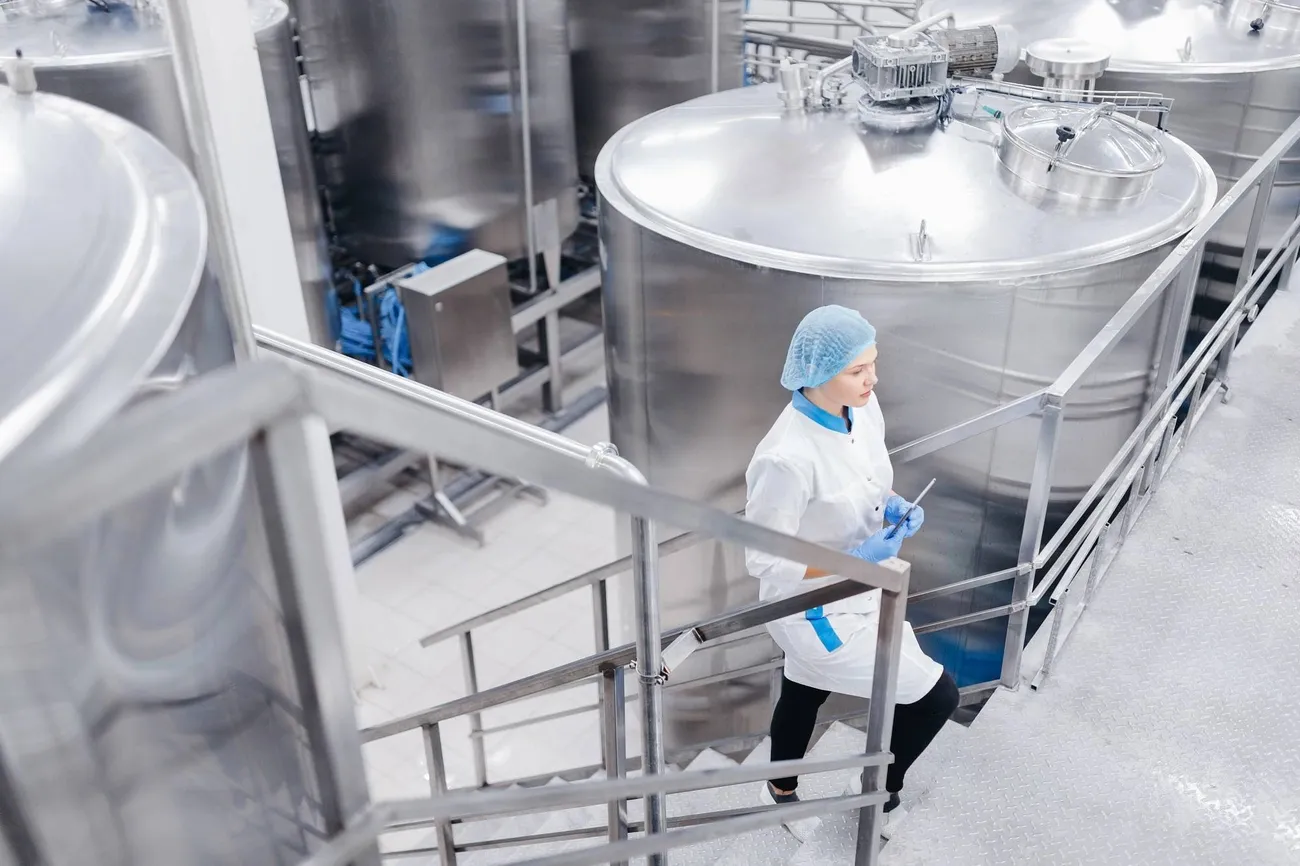
Image Source: NSF
Food manufacturers need to pick the right cleaning methods based on their operations and allergen risks. Each cleaning approach works differently at removing allergenic residues from surfaces that touch food.
Dry cleaning: risks and limitations
Dry cleaning methods like brushing, scraping, and hoovering up remove dirt without water or chemicals. These methods keep moisture away from dry processing areas but don’t deal very well with allergen control.
Research keeps showing that dry cleaning by itself can’t remove enough allergenic residues from food contact surfaces. Even when surfaces look clean after dry cleaning, tests often find leftover allergens [17]. One study found that surfaces cleaned with dry paper wipes or terry cloth still tested positive for peanut, milk, egg and other allergens via lateral flow devices [18].
High-efficiency vacuuming works better than brushing or scraping but showed only 50% effectiveness at removing soy protein from stainless steel in controlled studies [6]. Lab tests proved that scraping was nowhere near as good as brushing. Tests kept finding allergenic residues even when surfaces looked clean [6].
The biggest problem might be that dry cleaning methods can spread allergenic particles instead of removing them. Experts strongly advise against using air hoses because they scatter allergens throughout facilities [19].
Wet cleaning: best practises
Wet cleaning with water and chemical agents works much better than dry methods at removing allergens. Industry guides recommend this method most often [20].
Temperature plays a significant role in removing allergens. Research shows that chlorinated alkaline cleaners can remove milk residues at room temperature, but peanut butter residues need higher temperatures (62.8°C) for complete removal [6]. Cleaning solutions must stay at the right temperatures as specified in confirmed protocols.
The choice of chemicals substantially affects how well cleaning works:
- Chlorinated alkaline cleaners usually work better than acid detergents for allergenic foods [20]
- Foam made with sodium hydroxide and sodium hypochlorite works particularly well for removing wheat residue [6]
- Adding surfactants helps remove tough soils
The surface material makes a difference in cleaning results. Polypropylene, stainless steel and glass are usually easier to clean than wood, which can trap allergenic proteins [6].
Push-through and CIP systems
Push-through cleaning uses product or ingredients to physically “push” residues from equipment. This method works best where surfaces are enclosed and hard to reach. Companies must carefully test the right purge volumes and address specific allergen hazards in each production setting [19].
Clean-in-place (CIP) systems automate the cleaning of enclosed processing equipment. These systems give consistent and tested results once properly set up. Good CIP cycles follow specific steps: pre-rinse, detergent cleaning, rinsing, optional acid cleaning, disinfection and final rinsing [21].
CIP systems for allergen control should:
- Use wash water only once
- Keep >60 PPM titratable sodium hypochlorite in wash cycles
- Run wash cycles again after producing items with allergens
- Have separate gaskets and rubber parts for different allergen profiles [22]
Controlled wet cleaning in food service
Food service settings can’t always do full wet cleaning. “Controlled wet” cleaning offers a practical option instead. This method uses commercial wet wipes or cloths dampened with specific cleaning solutions [2].
Studies in school canteen kitchens found that dishwashers alone might not remove all allergens from utensils [2]. However, proper wash-rinse-sanitise-air dry steps worked really well at removing allergens from food prep surfaces [18].
Food service settings get the best results when they:
- Scrape surfaces before starting full cleaning
- Keep cleaning cloths in sanitizer solution to reduce allergen transfer
- Remember that textured plastic surfaces are particularly hard to clean [18]
The Complete Guide to Food Allergen Control in UK Manufacturing offers complete guidance on allergen management systems that meet regulatory requirements. DrCleanish provides a tested allergen removal solution that fits UK food safety accreditation frameworks and helps manufacturers use effective cleaning methods.
Factors That Impact Cleaning Efficacy
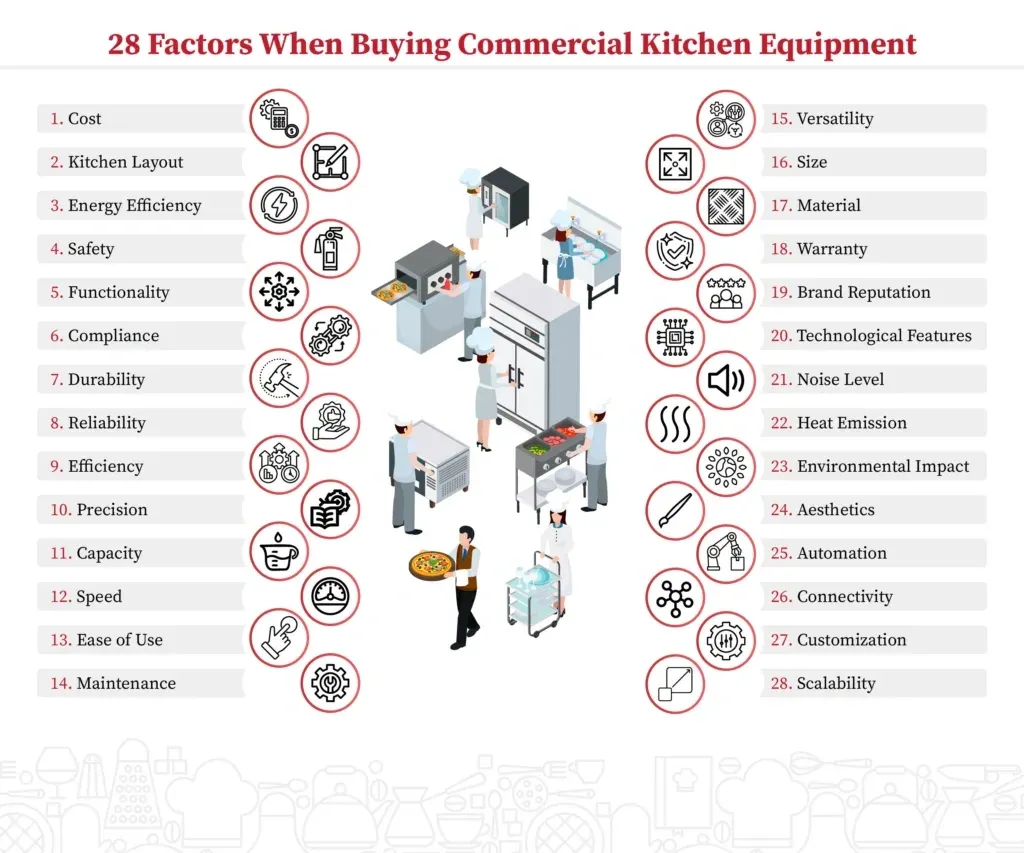
Image Source: Chefs Deal
Food manufacturers need to master several key factors that affect the success of allergen cleaning procedures. The right cleaning methods and understanding of these factors help optimise allergen removal verification programmes.
Surface type and cleanability
The material’s makeup plays a huge role in how well cleaning works. Studies show that stainless steel is the easiest surface to clean, while wood and cloth don’t deal very well with cleaning [2]. Even the best materials can cause problems when they’re worn down – damaged equipment can trap allergens in spots that were once easy to clean [2].
Textured surfaces pose unique challenges. Research shows allergens stick more to textured plastic than to stainless steel or maple wood surfaces [17]. Proteins have a strong attraction to stainless steel, which raises the chances of leftover product after production runs [22].
Food matrix and soil type
The physical state of allergens shapes cleaning needs. Sticky pastes are harder to clean than dry residues, though cleaning methods can change this [2]. You need to see if allergens are solids, liquids, pastes, particles or powders—each needs its own approach.
Heat-treated allergens are tougher to handle. Heat changes proteins and makes them stick harder to surfaces [2]. Older residues also get harder to remove – the longer they sit, the harder they are to clean [2].
Cleaning agents and temperature
Temperature makes a big difference in how well cleaning works. Tests show that temperatures between 40°C and 73.8°C work differently based on what’s being cleaned [6]. To name just one example, chlorinated alkaline cleaners removed milk residues at room temperature, but peanut butter needed higher heat (62.8°C) to come off completely [6].
The cleaner’s chemical makeup matters too. Chlorinated alkaline detergents with 0.1-1.0% NaOH or KOH and 60-1,000 PPM sodium hypochlorite work great at removing protein from stainless steel [22].
Equipment accessibility and design
Equipment design is the biggest factor in cleaning success. Good hygienic design – smooth surfaces and fewer hidden spots – makes cleaning much easier [23]. Hard-to-reach areas become spots where allergens build up during production [24].
Scraping off visible particles before using cleaning agents improves results and cuts down on recontamination risks [23]. Equipment that comes apart easily lets you clean parts you couldn’t otherwise reach [23].
The Complete Guide to Food Allergen Control in UK Manufacturing offers detailed guidance on allergen management systems that cover these factors. DrCleanish provides a verified allergen removal solution that lines up with UK food safety accreditation frameworks.
Verification Techniques for Ongoing Compliance
A cleaning validation process must confirm that procedures work before verification can maintain allergen control systems. Regular checks provide proof that validated cleaning protocols deliver consistent results under normal operating conditions.
Routine allergen swab testing
Regular swab testing gives crucial information to verify cleaning effectiveness. ATP testing and protein swabs serve different verification purposes. ATP quickly detects biological contamination, while protein swabs show possible allergen presence [23]. High-risk products need verification after each changeover. Medium-risk products require monthly checks, while quarterly testing works for low-risk items [25].
Visual inspection vs analytical testing
Visual checks are essential but they can’t stand alone as a verification method. Clean-looking surfaces might still contain detectable allergen residues [20]. Teams should complete visual inspections before analytical testing. These checks are the starting point before using more sensitive detection methods [20].
Setting acceptable limits and thresholds
Using thresholds helps make verification decisions consistent. Reference doses serve as scientific measures for acceptable limits. These doses typically affect 1% or 5% of allergic populations (ED01 or ED05) [26]. This method creates consistency in verification decisions and sets clear standards to determine when precautionary labelling becomes needed [26].
Documentation and audit readiness
Good record-keeping supports successful verification. Documentation needs to include:
- Sampling dates and personnel
- Test locations and methods
- Results and corrective actions [27]
Positive results demand quick corrective actions. Teams must restrict area access, inspect equipment parts, take new samples, and clean really well before operations restart [27]. Keep verification records that show ongoing compliance with your 5-year-old cleaning protocols to stay audit-ready.
This piece offers complete guidance on implementing verification systems that work. Check out The Complete Guide to Food Allergen Control in UK Manufacturing. DrCleanish provides a confirmed allergen removal solution that fits UK food safety accreditation frameworks.
Common Pitfalls and How to Avoid Them
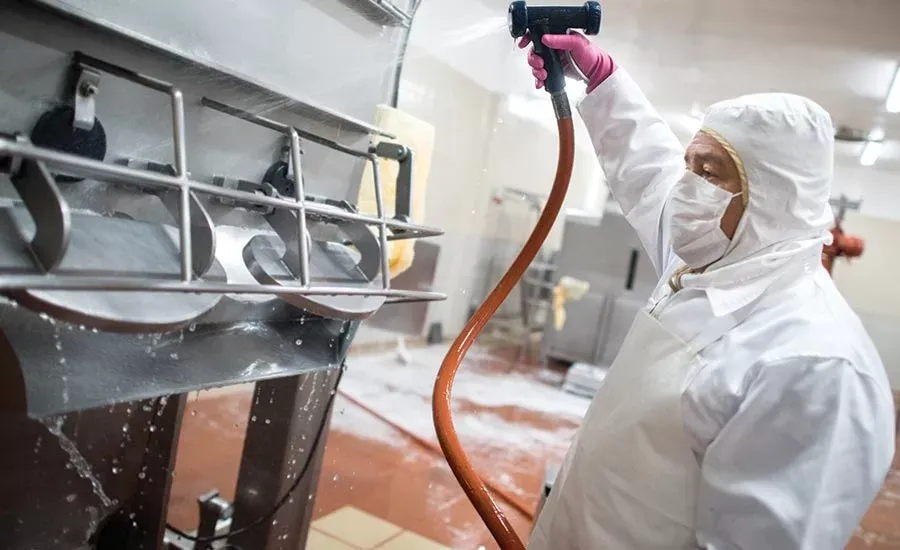
Image Source: Food Engineering
Food manufacturers still face challenges that affect their allergen management systems, even with strong safety measures in place. Companies can improve their allergen cleaning validation protocols by recognising these common mistakes.
Over-reliance on visual checks
Visual inspections don’t provide enough proof that allergens have been removed. Surfaces might look clean but could still contain detectable allergen residues [28]. A clean appearance doesn’t guarantee allergen elimination. Testing through analytical methods must support visual checks to confirm thorough allergen removal.
Inconsistent cleaning across shifts
Different cleaning practises between shifts and staff members create major safety risks. Most allergen-related food recalls happen because of poor training and supervision [29]. Teams need standardised cleaning procedures with clear documentation to stay consistent. Regular checks confirm that everyone follows these protocols.
Improper test selection
The wrong testing methods can compromise allergen control efforts. Each analytical method has its limits—biological tests can show both false negatives and positives [30]. Protein structures might change during processing so much that tests can’t detect them, which leads to false negative results [30]. Tests can also show false positives when they mistake similar proteins for target allergens [30]. Testing with positive controls helps spot these limitations before putting methods into practise [30].
Lack of root cause analysis
Finding the root cause is vital but often overlooked in allergen management [31]. Companies often fix immediate problems without looking at why they happen or fixing system-wide issues [31]. A full root cause analysis helps manufacturers take targeted actions that stop problems from coming back.
The Complete Guide to Food Allergen Control in UK Manufacturing offers detailed guidance on allergen management systems. DrCleanish provides a confirmed allergen removal solution that fits UK food safety accreditation frameworks.
Conclusion
A detailed allergen management system needs effective cleaning validation and verification as key components. This piece has helped us get into evidence-based protocols that UK food manufacturers need to prevent allergen cross-contamination and meet regulatory requirements. Without doubt, allergen management needs a systematic approach to distinguish between validation—proving cleaning methods can work—and verification—confirming they worked during actual production.
Visual inspection alone cannot provide enough evidence of allergen removal for food businesses. A combination of suitable testing methods tailored to specific operational contexts gives more reliable results. ATP testing, protein swabs, lateral flow devices, and ELISA serve different purposes in a complete verification programme.
Surface materials, food matrices, and equipment design affect cleaning methods’ effectiveness substantially. Wet cleaning removes allergens better than dry cleaning, though each facility must confirm protocols based on their unique production environment. On top of that, temperature, chemical composition, and contact time play crucial roles in developing cleaning procedures.
Food safety professionals who want audit-ready systems should focus on detailed documentation showing both original validation and ongoing verification. This approach helps comply with BRCGS, SALSA, and FSA requirements while protecting consumers from potentially life-threatening allergic reactions.
Food manufacturers should use standardised procedures with clear documentation and routine verification instead of visual checks or inconsistent cleaning practises. A full picture helps businesses identify and fix systemic weaknesses before they cause allergen-related recalls.
DrCleanish gives a confirmed allergen removal solution that fits UK food safety accreditation frameworks. This audit-ready cleaning system, verified through third-party testing in UKAS-accredited laboratories, helps food manufacturers achieve reliable allergen control throughout their production processes.
To learn about implementing reliable allergen management systems that meet all UK regulatory requirements, check our Complete Guide to Food Allergen Control in UK Manufacturing. This resource gives a detailed explanation about allergen mapping, risk assessment methods, and confirmed cleaning protocols needed for food safety compliance.
Key Takeaways
Understanding the distinction between validation and verification is fundamental to effective allergen control—validation proves cleaning methods can work, whilst verification confirms they did work during actual production.
• Allergen cleaning validation requires systematic protocols including allergen mapping, risk assessment, worst-case scenario testing, and comprehensive documentation to meet UK regulatory requirements.
• Wet cleaning consistently outperforms dry cleaning methods for allergen removal, with temperature and chemical composition significantly impacting effectiveness across different surface materials.
• Visual inspection alone provides insufficient evidence of allergen removal—analytical testing using ELISA, lateral flow devices, or allergen-specific swabs must supplement visual checks.
• Routine verification through strategic swab testing and proper documentation ensures ongoing compliance with validated cleaning protocols and supports audit readiness.
• Common pitfalls include over-reliance on visual checks, inconsistent cleaning practises across shifts, improper test selection, and failure to conduct thorough root cause analysis when issues arise.
Effective allergen management combines validated cleaning procedures with ongoing verification to prevent cross-contamination and protect consumers from potentially life-threatening allergic reactions. Food manufacturers must implement both approaches systematically to achieve comprehensive allergen control that satisfies UK food safety accreditation frameworks.
FAQs
Q1. How often should allergen cleaning validation be performed in food manufacturing facilities? Allergen cleaning validation should be performed initially when establishing new cleaning procedures, after significant changes to equipment or processes, when introducing new allergens, following cleaning failures, and periodically (typically annually) to reconfirm effectiveness.
Q2. What is the difference between allergen cleaning validation and verification? Validation establishes that cleaning methods can effectively remove allergens to predetermined levels, while verification confirms that validated cleaning procedures are working as expected during routine operations. Validation is done before implementing a method, while verification is ongoing.
Q3. Which testing method is considered the gold standard for quantitative allergen detection? Enzyme-Linked Immunosorbent Assay (ELISA) is considered the gold standard for quantitative allergen detection in food safety laboratories. It provides precise concentration measurements essential for validation studies.
Q4. Why is wet cleaning generally preferred over dry cleaning for allergen removal? Wet cleaning, involving water and often chemical agents, consistently outperforms dry methods for allergen removal. It is more effective at removing allergenic residues from food contact surfaces, even when surfaces appear visually clean after dry cleaning.
Q5. What are some common pitfalls in allergen cleaning procedures? Common pitfalls include over-reliance on visual checks, inconsistent cleaning practises across shifts, improper test selection, and lack of root cause analysis when issues arise. These can undermine the effectiveness of allergen management systems.
References
[1] – https://www.hygiena.com/learning-centre/technology-guide/elisa-in-food-safety-testing-a-complete-overview
[2] – https://www.food.gov.uk/research/review-of-the-literature-and-guidance-on-food-allergen-cleaning-report-summary-and-discussion
[3] – https://www.romerlabs.com/en/library/knowledge/detail/why-atp-isnt-a-substitute-for-allergen-verification
[4] – https://www.food.gov.uk/research/review-of-allergen-analytical-testing-methodologies-overall-conclusions-and-future-direction
[5] – https://www.foodmanufacture.co.uk/Article/2020/07/17/Food-safety-the-importance-of-validations-and-worst-case-scenarios/
[6] – https://www.food.gov.uk/research/review-of-the-literature-and-guidance-on-food-allergen-cleaning-results
[7] – https://www.bsigroup.com/LocalFiles/en-GB/food-and-drink/documents/allergens-facility-mapping-guide.pdf
[8] – https://www.rssl.com/insights/food-consumer-goods/designing-a-successful-allergen-cleaning-validation-strategy/
[9] – https://www.food.gov.uk/sites/default/files/media/document/Precautionary Allergen Labelling – risk analysis SME FBOs_Clean_May 2022.pdf
[10] – https://www.klipspringer.com/blogs/allergen-cleaning-validation-a-practical-guide-for-food-factories/
[11] – https://www.romerlabs.com/en/agrastrip-pro-allergens
[12] – https://www.prognosis-biotech.com/news-events/the-science-of-allergen-detection-lateral-flow-and-elisa-explained/
[13] – https://www.invitek.com/en/allergen-detection/allergen-lateral-flow-assays
[14] – https://www.hygiena.com/documents/68351/allergen-detection-in-food-safety—analysis–application.pdf
[15] – https://www.klipspringer.com/blogs/allergen-testing-and-the-a3-system-everything-you-need-to-know/
[16] – https://www.biocheck.uk/food-allergens/onsite/
[17] – https://www.fda.gov/food/retail-food-protection/allergen-removal-and-transfer-using-wiping-and-cleaning-methods-retail-food-establishments
[18] – https://www.sciencedirect.com/science/article/pii/S0362028X22103480
[19] – https://www.qualityassurancemag.com/article/aib0811-allergen-cleaning-life-threatening-contaminant-risk/
[20] – https://www.campdenbri.co.uk/case/food-allergen-cleaning.php
[21] – https://www.s4engineering.co.uk/how-to-design-effective-clean-in-place-system/
[22] – https://www.solenis.com/en/resources/blog/best-practise-standard-sanitation-operating-procedures-for-allergen-control-in-food-processing/
[23] – https://foodindustryhub.com/food-industry-knowledge-centre/know-allergen-cleaning-validation/
[24] – https://www.commercialfoodsanitation.com/news/building-a-safer-tomorrow-the-role-of-hygienic-design-in-allergen-risk-mitigation/
[25] – https://www.rochestermidland.com/blog/checklist-9-considerations-for-allergen-control-in-the-food-industry/
[26] – https://www.food.gov.uk/board-papers/precautionary-allergen-labelling-and-allergen-thresholds
[27] – https://cdnmedia.eurofins.com/eurofins-us/media/12158865/whitepaper-food-allergen-environmental-monitoring-guide.pdf
[28] – https://info.allergenbureau.net/infographic/cleaning/
[29] – https://www.fdf.org.uk/globalassets/resources/publications/guidance/allergen-recall-prevention-guidance.pdf
[30] – https://www.rssl.com/insights/food-consumer-goods/food-allergen-detection-choosing-the-right-testing-method/
[31] – https://www.brcgs.com/media/2170689/insights_issue-2_0422.pdf